Recipe
Ingredients
Method
- Cover the tray tightly with foil. Bake for 45 minutes.
- Remove the foil and check the liquid level. If the tray looks dry, add 60 ml water. If there is a large amount of liquid, leave it uncovered so it can reduce.
- Turn the vegetables carefully with a wide spoon. Return the tray to the oven uncovered.
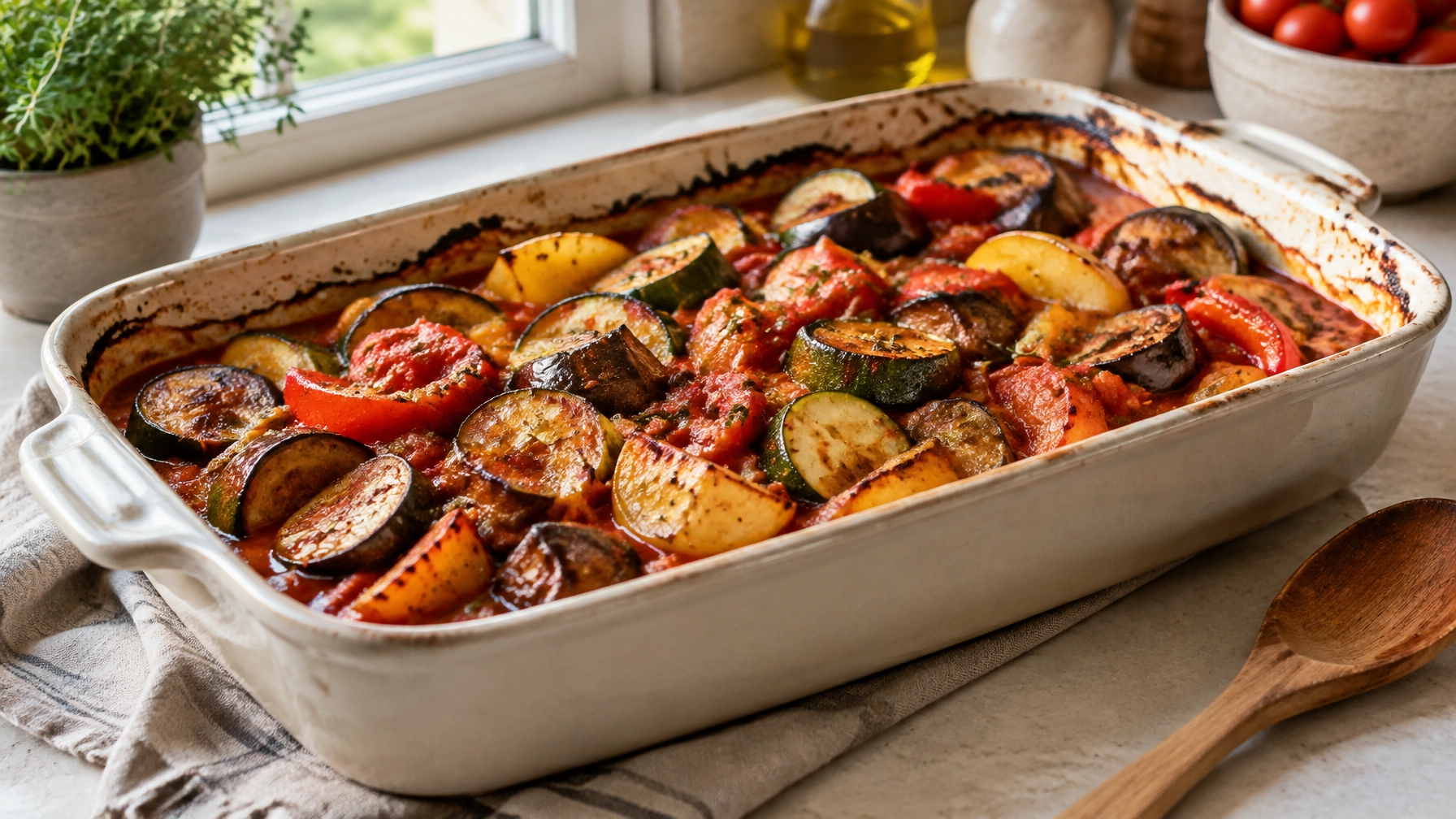
- Continue baking for 40 to 55 minutes, turning the vegetables once more if necessary. The potatoes should be completely tender when pierced with a knife. The aubergine should be soft, and the edges of the vegetables should show light browning.
- Remove the tray from the oven and leave it to stand for 10 minutes. The sauce will thicken slightly as it cools.
Briam (Greek Roasted Vegetables, One Tray)
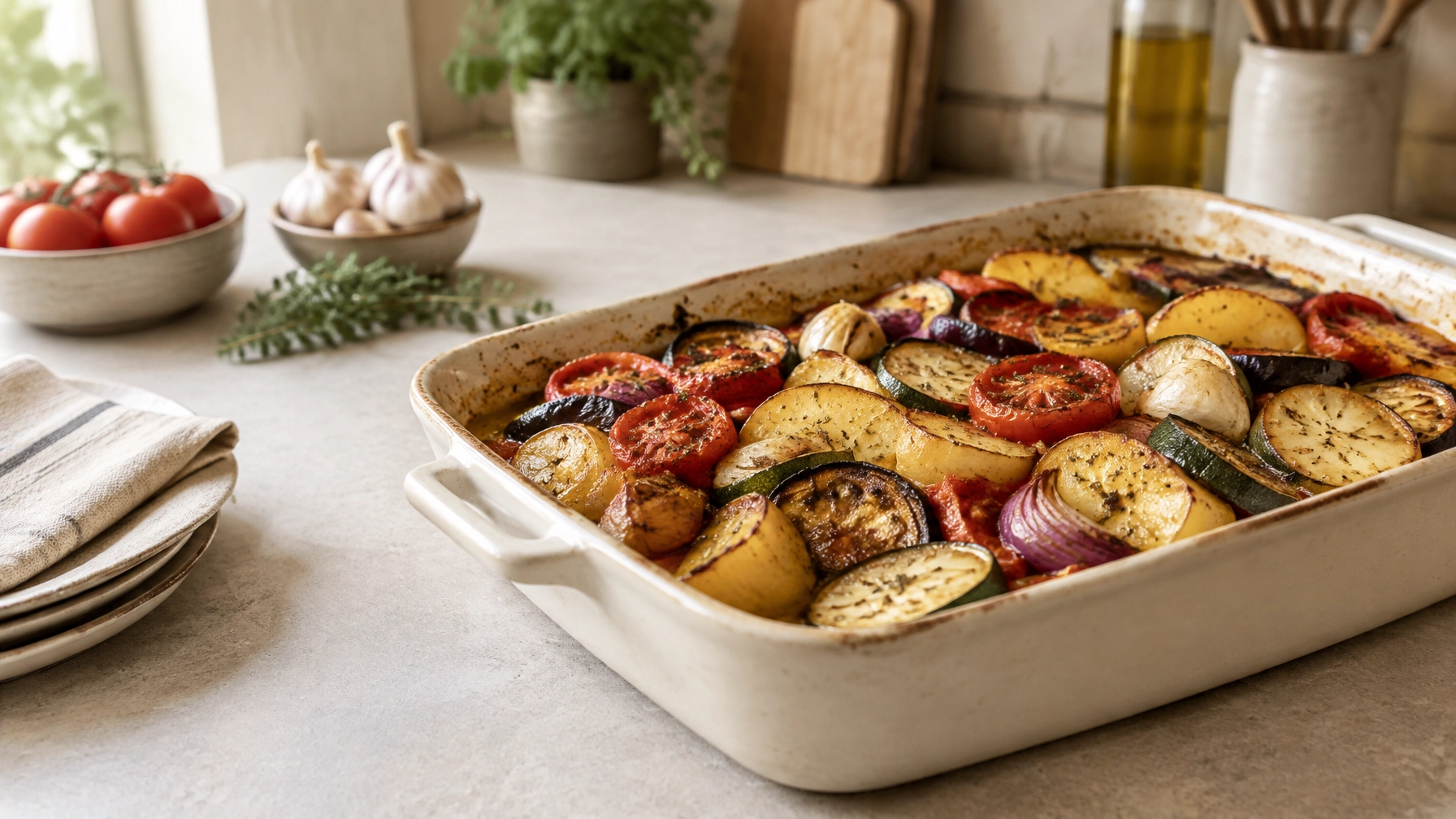
Briam is a Greek vegetable traybake made with potatoes, zucchini, aubergine, tomatoes, onion, garlic, herbs and olive oil.
OVERVIEW
Briam is a practical vegetarian main course built around slow roasting. The vegetables cook together in a wide tray until soft, concentrated and lightly caramelised. Tomato juices form the cooking liquid. Olive oil carries the flavour and prevents the vegetables from drying during the long bake.
The method is simple. Cut the vegetables, season them, add tomatoes and olive oil, then bake until the potatoes are tender. Covering the tray at the beginning helps the vegetables soften. Removing the cover allows the liquid to reduce and the edges to brown.
This is suitable for a vegetarian weeknight meal because it requires limited preparation and no separate sauce. It can be served hot, warm or at room temperature. Add bread, feta or a simple green salad if required.
For more meat-free dinner ideas, see the vegetarian recipes collection and the vegetarian category.
PREPARATION
Preheat the oven to 190°C conventional or 170°C fan.
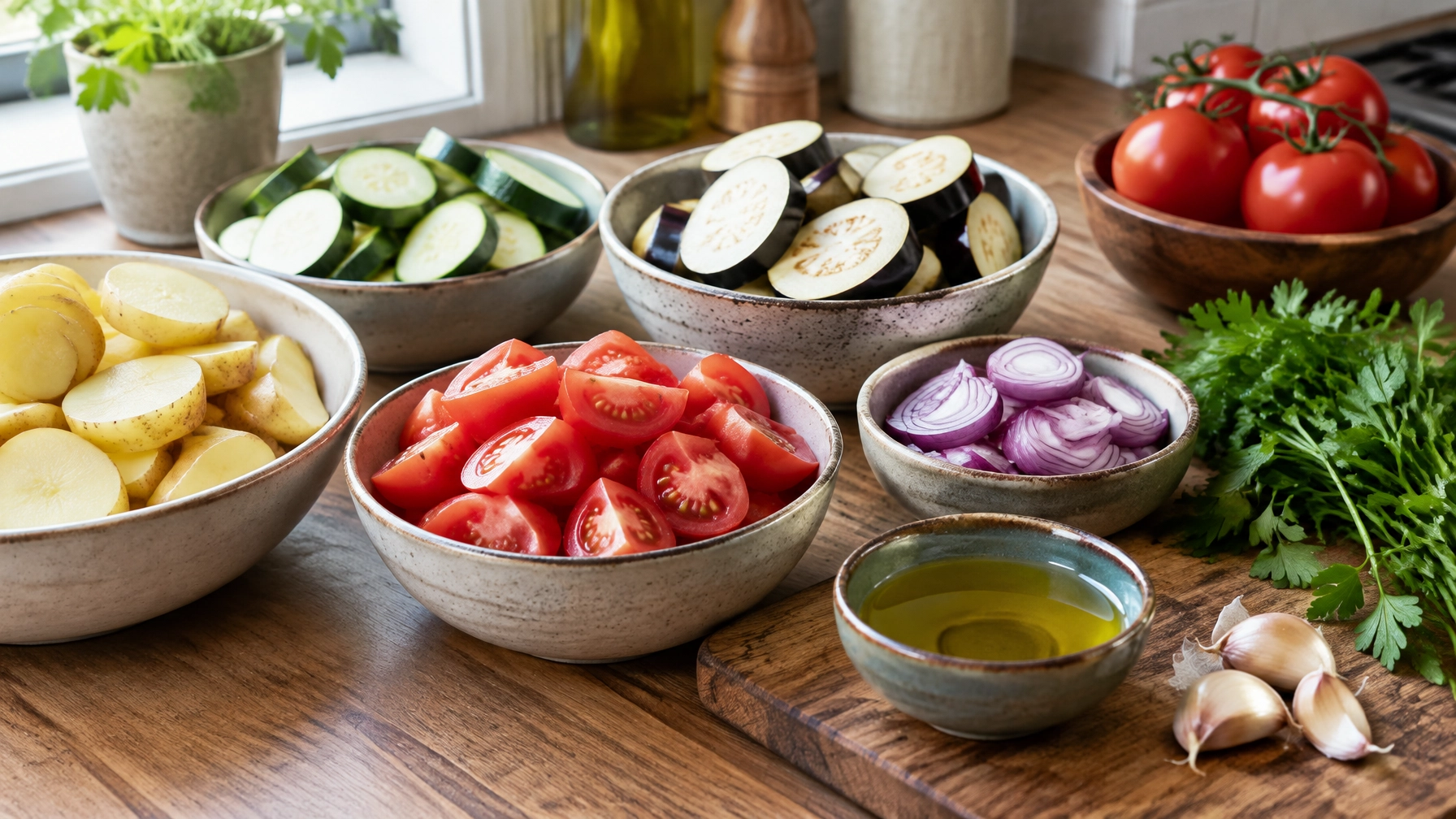
Peel the potatoes and cut them into slices approximately 1 cm thick. Trim the aubergines and cut them into similar slices or large half-moons. Slice the zucchini into rounds. Cut the tomatoes into thick slices. Slice the onion and finely chop the garlic.
Aubergines can be salted for 20 minutes before cooking if preferred. Pat them dry before adding them to the tray. This step is optional and is not required when using fresh, mild aubergines.
Use a large, shallow roasting tray. The vegetables should fit in a reasonably even layer. A crowded deep dish will retain more liquid and produce a softer, more braised result. A wide tray encourages reduction and browning.
Arrange the potatoes, aubergines, zucchini, onion and half of the tomatoes in the tray. Add the garlic, oregano, salt, pepper and parsley. Pour over the olive oil and water. Toss carefully, or mix the vegetables in a large bowl before transferring them to the tray. Place the remaining tomato slices over the top.
Do not worry about creating a perfect pattern. Briam is a homestyle dish. Even distribution is more important than presentation before cooking.
SERVE
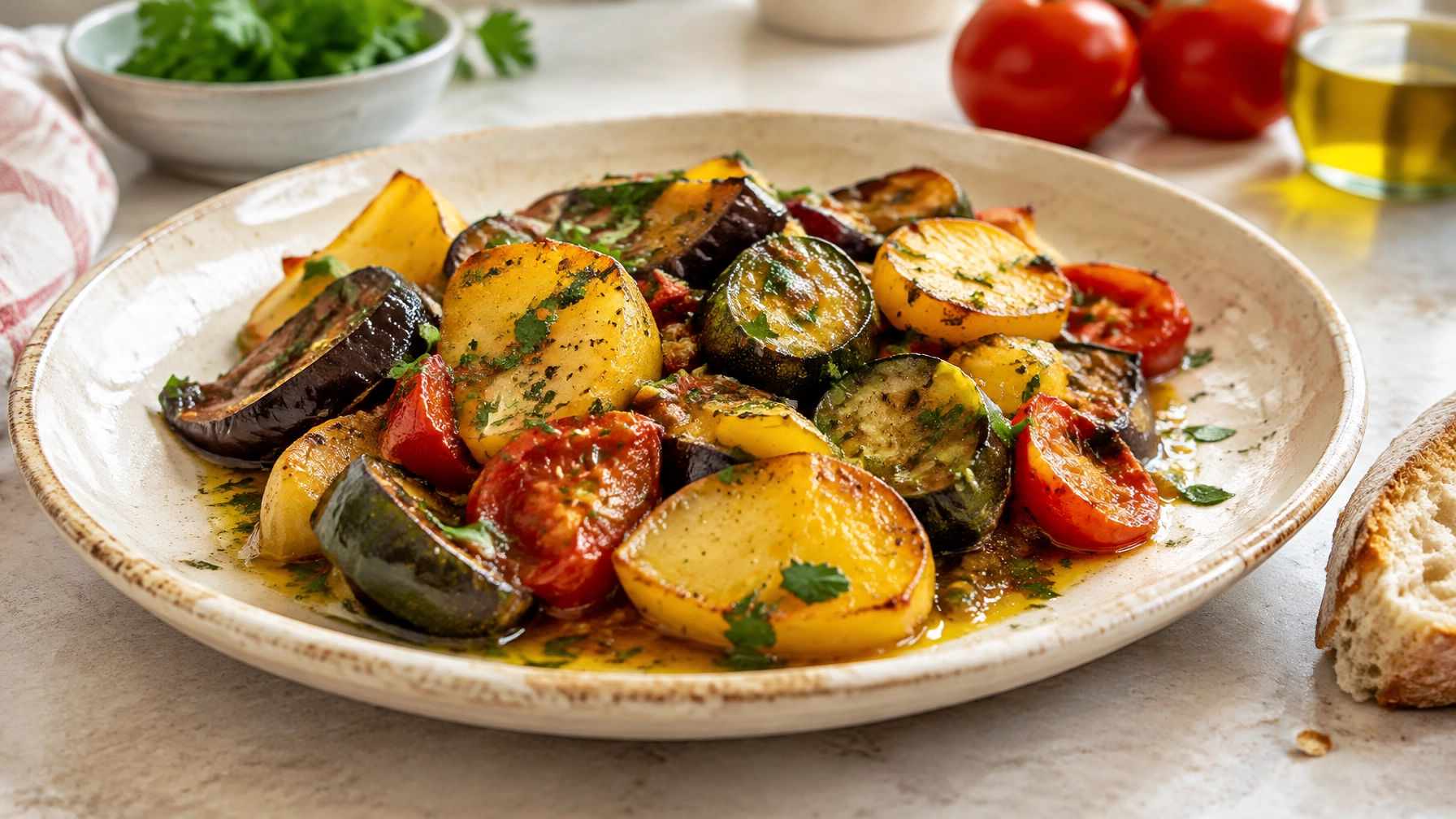
Serve briam warm or at room temperature. Spoon the vegetables onto plates with the tomato and olive oil juices from the bottom of the tray.
Bread is useful for absorbing the sauce. Feta provides a salty contrast, although it is not required. A plain green salad adds freshness without introducing another rich component.
Briam also works as a component of a larger vegetarian meal. Serve it with cooked beans, lentils or a grain such as bulgur. The dish is substantial enough to function as a main course because the potatoes provide body and the olive oil gives the vegetables a more complete texture.
Store leftovers in a sealed container in the refrigerator for up to three days. Reheat in a covered ovenproof dish at 170°C until hot. The vegetables may become softer after storage, but the flavour will remain concentrated.
NOTES
Cut consistently. Potatoes take longer to cook than zucchini. Keeping the potato slices thin and even prevents the other vegetables from becoming overcooked before the potatoes are ready.
Use a wide tray. Surface area improves evaporation. This produces a thicker sauce and more defined roasted edges.
Season in layers. Add salt before cooking, then taste after the vegetables have softened. Tomatoes and aubergines absorb seasoning during the bake.
Avoid excessive stirring. The vegetables become fragile as they cook. Turn them gently once or twice rather than mixing repeatedly.
Adjust the liquid. Juicy tomatoes may provide all the moisture required. Drier tomatoes may need the full quantity of water listed. The finished tray should contain a small amount of thick sauce, not a watery broth.
Add herbs at the correct stage. Dried oregano can be added before baking. Fresh parsley is suitable before cooking or as a finishing herb. A small amount of fresh mint can also be used if preferred.
FAQ
Can briam be made ahead?
Yes. Prepare and bake the dish up to one day ahead. Cool it promptly, cover it and refrigerate it. Reheat until hot before serving, or serve it at room temperature.
Can I use canned tomatoes?
Yes. Replace some or all of the fresh tomatoes with chopped canned tomatoes. Drain excess liquid if the tomatoes are very watery, then adjust the added water to prevent the tray from becoming soupy.
Does briam need to be covered?
Covering is useful during the first part of cooking because it helps the potatoes and aubergines soften. The final uncovered stage is necessary for reducing the sauce and browning the vegetables.
Is briam suitable for vegans?
The basic recipe is vegan because it contains vegetables, olive oil, herbs and seasoning. Check any optional additions separately. Feta is vegetarian but is not vegan.