Recipe
Serves
4 1×
Serves 4Prep 10 minCook 35 minTotal 45 min
Ingredients
Method
- Heat the olive oil in a large pot over medium heat.
- Add the onion, carrots, celery, and salt. Cook for 8 to 10 minutes.
- Add the garlic and chilli flakes. Cook for 1 minute.
- Stir in the tomato paste and cook for 2 minutes.
- Add the potato, stock, beans, bay leaf, rosemary, and black pepper.
- Simmer for 10 to 12 minutes, until the potato is nearly tender.
- Add the cavolo nero and Savoy cabbage. Simmer for 8 to 10 minutes.
- Remove the herb stems and bay leaf. Stir in the stale bread.
- Simmer for 4 to 5 minutes, then turn off the heat.
- Rest for 5 minutes. Serve with olive oil and optional grated cheese.
Ribollita (Tuscan Bread and Bean Soup, 45 Minutes)
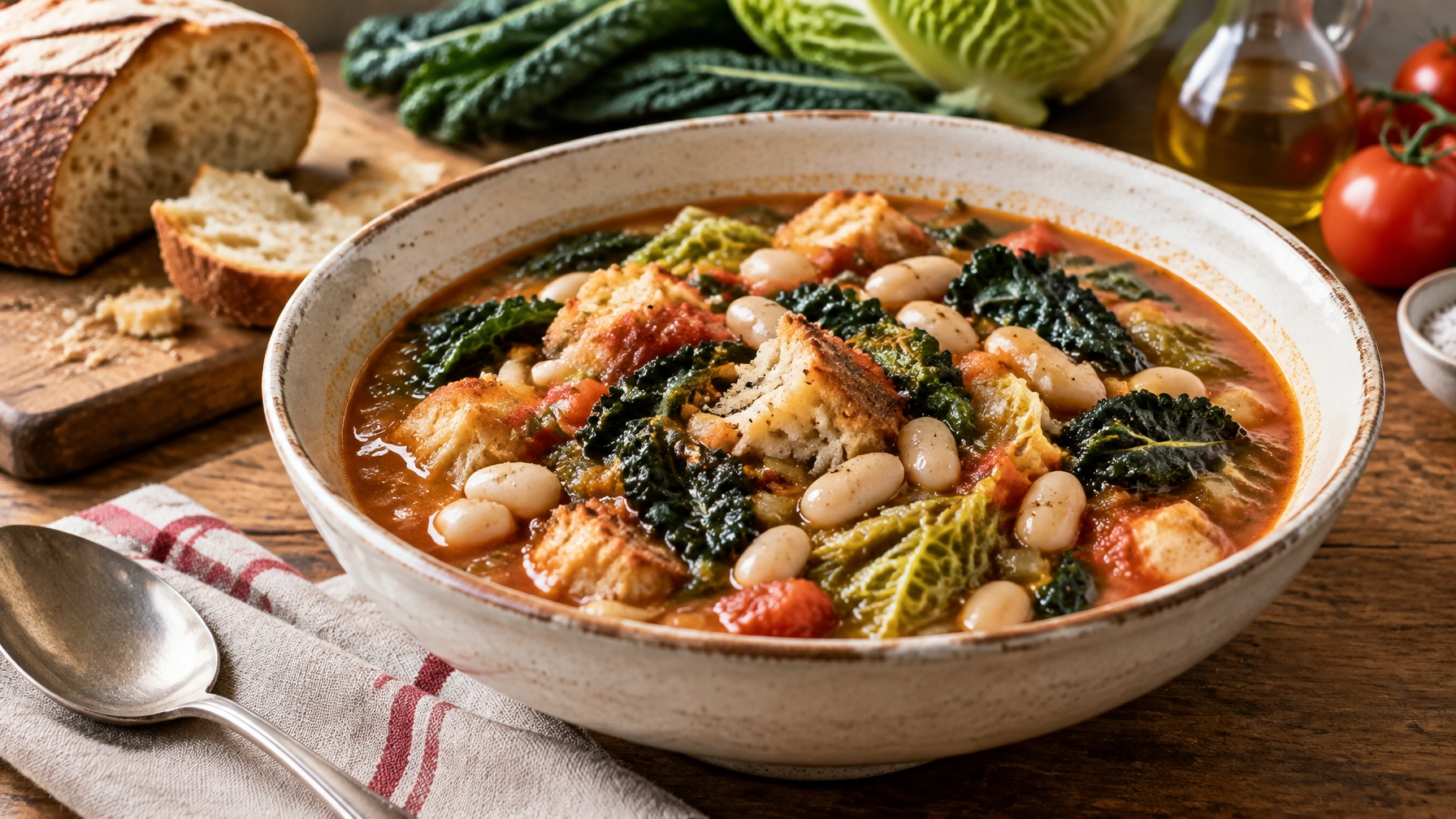
Ribollita is a thick Tuscan soup made with cannellini beans, dark leafy greens, vegetables, tomato, and stale bread. This 45-minute version uses cooked beans and prepared stock for a practical weeknight method while keeping the defining character of the dish.
Ribollita translates broadly as "re-boiled." Traditionally, the soup was prepared in advance, then reheated with bread on the following day. The resting and reheating process thickens the broth and deepens the flavour. This version creates a similar texture in one cooking session.
The finished soup should not be thin. Bread absorbs the broth, beans add body, and the vegetables should remain visible throughout the bowl.
Texture
Ribollita should sit between soup and stew. The broth should be thick enough to coat a spoon, but the dish should still be moist. If it becomes too dense, add hot stock or water one ladle at a time.
For the most traditional texture, keep some beans whole and crush only a small portion. Whole beans provide contrast while the crushed beans help bind the broth.
The bread should be distributed throughout the pot rather than placed only on top. This allows it to absorb the seasoned tomato broth and become part of the dish.
Timing
The 45-minute schedule assumes the use of canned beans and prepared vegetable stock.
- Preparation: 10 minutes
- Soffritto and tomato base: 12 minutes
- Bean and potato simmer: 12 minutes
- Greens and bread: 11 minutes
- Total: 45 minutes
Dried beans require soaking and a separate cooking period. They are suitable for a traditional preparation but are not compatible with this short method unless already cooked.
Tips
- Use a wide pot. A wide cooking surface helps the vegetables soften evenly and gives the bread enough room to absorb the broth.
- Do not omit the stale bread. Bread is a structural ingredient, not a garnish.
- Season in stages. Stock and canned beans may already contain salt. Add a small amount at the beginning, then adjust near the end.
- Rinse canned beans. Rinsing removes excess liquid and reduces the chance of a metallic or overly salty flavour.
- Remove tough kale stems. The leaves cook quickly, while thick stems can remain fibrous.
- Rest before serving. Five minutes is sufficient for this version. The soup will continue to thicken as it cools.
- Reheat carefully. Add a little water or stock before reheating because the bread will continue to absorb liquid.
Variations
White bean ribollita: Use only cannellini beans and omit the potato. Crush a larger portion of the beans to create a dense texture.
Vegetable ribollita: Add diced courgette, leeks, or finely chopped fennel with the carrot and celery.
Spicy ribollita: Add dried chilli flakes with the garlic. Keep the quantity moderate so the greens and beans remain identifiable.
Herb ribollita: Add thyme with the rosemary. Remove the woody stems before serving.
Vegan ribollita: Use vegetable stock and omit the cheese. The soup remains substantial because the beans and bread provide the main body.
Next-day ribollita: Cool the soup, refrigerate it, then reheat it gently the next day with a splash of stock. This more closely follows the traditional re-boiled method.
FAQ
What is ribollita?
Ribollita is a Tuscan bread and vegetable soup made with beans, greens, vegetables, tomato, and stale bread. Its defining feature is a thick, spoonable texture.
Can I use ordinary kale?
Yes. Cavolo nero is preferred for its firm leaves and slightly earthy flavour, but curly kale is a suitable substitute. Remove the thick stems before chopping.
What bread is best for ribollita?
Use stale rustic bread with a firm crumb. Country loaf, sourdough, or unsalted Italian-style bread will work. Avoid soft packaged sandwich bread because it can break down too quickly.
Can ribollita be made ahead?
Yes. It can be made up to three days ahead and stored in the refrigerator. Add stock or water when reheating because the bread will continue to absorb liquid.
Can ribollita be frozen?
It can be frozen, although the bread may become softer after thawing. For better results, freeze the soup before adding the bread, then add fresh stale bread during reheating.
Why is my ribollita too thick?
The bread may have absorbed more liquid than expected. Stir in hot stock or water gradually until the preferred consistency is reached. Taste again because added liquid may reduce the seasoning.
Is ribollita a soup or a stew?
It is generally described as a soup, but its final texture is closer to a thick vegetable stew. The amount of bread and the length of the resting period determine the result.