Recipe
Servings
4 1×
Serves 4Prep 10 minCook 20 minTotal 30 min
Ingredients
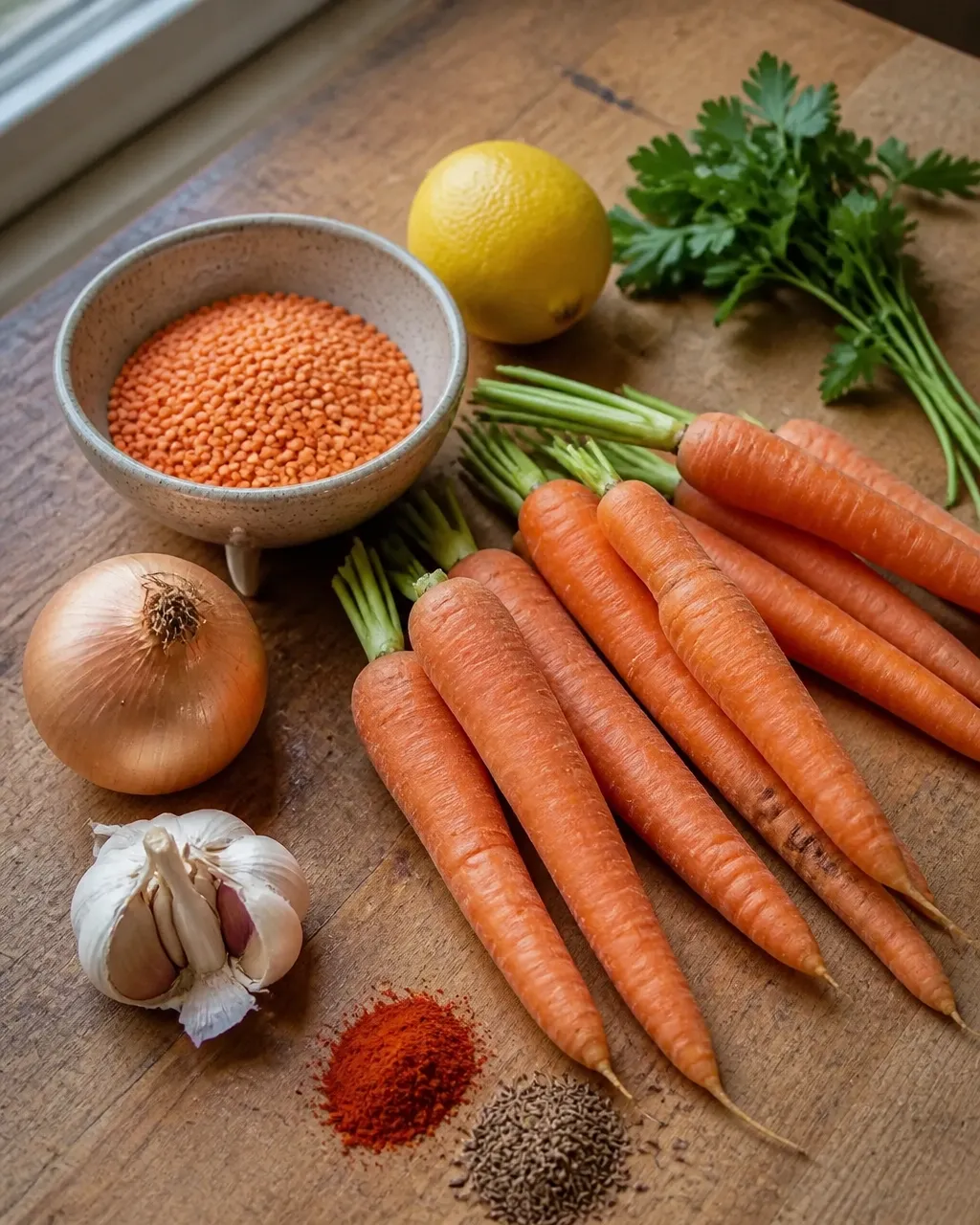
- 1 tablespoon olive oil or vegetable oil
- 1 medium onion, chopped
- 2 garlic cloves, minced
- 4 large carrots, sliced
- 1 cup red lentils, rinsed
- 1 teaspoon ground cumin
- 1 teaspoon paprika
- 4 cups vegetable stock or water with a stock cube
- Salt and black pepper
- A splash of milk, plant milk, or coconut milk, optional
- Lemon juice and fresh parsley or cilantro, to finish
Method
- Warm the oil in a large pot. Soften the onion, then add the garlic and cook until fragrant.
- Stir in the carrots, cumin, and paprika. Cook briefly to coat everything in the spiced oil.
- Add the lentils and stock. Bring to a boil, then reduce to a gentle simmer.
- Cook until the carrots and lentils are completely soft, about 15–20 minutes.
- Blend until smooth. Stir in the optional milk, then season with salt, pepper, and lemon juice.
- Serve hot with herbs, seeds, bread, or your preferred topping.
A Golden Soup That Makes a Little Go a Long Way
Some soups are complicated. This one is not interested in showing off.
Creamy carrot and red lentil soup turns inexpensive staples into a thick, satisfying bowl with gentle sweetness, earthy warmth, and a bright finish. It is exactly the kind of recipe I reach for when I want healthy dinner ideas without a long shopping list or a sink full of washing-up. Add it to your collection of quick family meals, and keep a few portions tucked away for the evenings when cooking feels like a heroic act.
Tips & Technique: The Science Behind the Creaminess
Let the aromatics build the foundation
Start by giving the onion time to soften before adding the rest of the soup. This is not wasted time; it is flavour development.
As onion heats, its sharp sulphur compounds mellow and its natural sugars become more noticeable. You do not need to caramelise it for half an hour. A few minutes over medium heat is enough to take it from raw and harsh to sweet and savoury.
Add garlic briefly, then move on. Garlic contains delicate aromatic compounds that can turn bitter if pushed too far. Cook it until fragrant, not brown and brooding.
Bloom the spices in fat
Add your cumin and paprika to the warm oil before introducing the liquid. This small step makes a noticeable difference.
Many flavour compounds in spices dissolve more effectively in fat than in water. Warming them in oil helps release their aroma and spreads that flavour throughout the soup. Think of the oil as a tiny taxi service for spice. It picks up the aromatic compounds and drives them straight into the onions and carrots.
Keep the heat moderate. Burnt spices taste dusty and bitter, and no amount of blending can fully disguise them.
Cut carrots evenly enough to cook together
Aim for roughly similar pieces rather than perfect cubes. You are making soup, not entering a carrot geometry competition.
Uniform pieces soften at a similar rate, which matters because the lentils need to break down at the same time. If some carrot pieces are large and others are tiny, the small ones can become waterlogged while the larger pieces remain firm. The final blend may then taste uneven and require extra cooking.
Use a gentle simmer rather than a furious boil. Aggressive boiling can make the outside of the vegetables collapse before the centres are tender, and it can reduce the liquid too quickly.
Trust red lentils to thicken the pot
Red lentils are split and hulled, so they cook much faster than many whole lentils. As they simmer, their structure softens and their starches move into the cooking liquid.
Those released starches are the secret to the soup’s body. They thicken the broth naturally, giving you a creamy texture without relying on a flour-based roux or a large amount of dairy. The lentils also add plant protein and fibre, which helps the soup feel like a proper meal rather than a starter wearing a very orange coat.
Rinse the lentils before cooking to remove loose dust and inspect them quickly for any stray debris. Then allow them to soften fully. Half-cooked lentils will leave the soup gritty, and gritty soup is not a texture anyone has requested.
Blend warm, but blend carefully
Once the carrots and lentils are completely tender, blend the soup until smooth. An immersion blender is the easiest option because you can work directly in the pot.
If you use a countertop blender, cool the soup slightly and blend in small batches. Hot liquids expand, and a sealed blender full of steaming soup can become an alarming kitchen volcano. Remove the centre cap if your blender allows it, cover the opening with a folded towel, and start on low speed.
Blend longer than you think you need to. Carrots contain fibres that can leave a slightly coarse texture if they are only briefly blitzed. A thorough blend helps the lentil starches and vegetable fibres trap water evenly, creating a smoother mouthfeel.
Finish with acid, not just more salt
Carrots bring natural sweetness, while lentils contribute earthy, savoury notes. Those flavours are comforting, but they can taste flat without contrast.
Add lemon juice at the end, after cooking. Acidity brightens the soup and makes the other flavours feel more defined. It does not simply make the soup sour; it changes your perception of sweetness, saltiness, and aroma.
Taste after adding the lemon. Then adjust the seasoning. Follow this order because salt and acid affect one another, and you may need less salt once the soup is properly brightened.
Add richness only if you need it
Blended carrots and lentils already create a creamy base, so dairy or plant milk is optional. Use a small splash if you want a softer, rounder finish.
A little fat improves mouthfeel because it coats the tongue and carries fat-soluble aromas. However, too much can make the soup heavy and hide the delicate sweetness of the carrots. Keep the richness supporting the soup, not taking over the entire bowl like an uncle with a microphone at a wedding.
Variations: Keep the Base, Change the Mood
Use this soup as a flexible template rather than a rigid performance.
For a Moroccan-inspired version, add a little coriander, cinnamon, or mild chilli alongside the cumin. Finish with fresh cilantro and lemon for a warmer, spiced profile.
Make it coconutty by replacing some of the finishing milk with coconut milk. The gentle sweetness works beautifully with carrots, but add extra lemon or lime so the soup does not become too rich.
Add greens once the soup is blended. Stir in chopped spinach or kale and let it wilt in the residual heat. This gives you flecks of colour and a fresh, slightly bitter contrast.
For more texture, reserve a small ladleful of cooked lentils before blending. Stir them back into the finished soup with toasted seeds or crunchy croutons. Smooth soup with a little bite is much more interesting than a bowl of uniform puree.
If you are cooking for a baby or anyone sensitive to spice, leave out the chilli and keep the seasoning mild. Add stronger toppings to individual bowls instead of changing the whole pot.
Side Dish Pairings: Add Contrast, Not Competition
Serve the soup with something crisp or chewy to balance its soft texture. Rustic whole-grain bread is the simplest choice and turns the bowl into a filling lunch or light dinner.
Try a sharp cucumber and herb salad for freshness. Its cool crunch and gentle acidity cut through the soup’s creamy texture without adding much cost.
A small plate of roasted cauliflower or broccoli also works well. The browned edges bring savoury depth, while the vegetables add a firmer bite.
For a more substantial spread, pair the soup with a simple open-faced toast topped with white beans or mashed avocado. If you are planning air fryer recipes dinner around this soup, use the air fryer for crisp chickpeas or bread, then scatter them over the bowl just before serving.
Keep the sides lightly seasoned. The soup already has sweetness, earthiness, and spice, so let the accompaniments provide texture and brightness.
FAQ: What If the Soup Does Not Turn Out Quite Right?
What if my soup is too thick?
Add warm water or stock a little at a time and stir thoroughly. Red lentils continue absorbing liquid as they sit, so a soup that looks perfect in the pot may become spoon-standingly thick after ten minutes.
Avoid adding a large amount of liquid all at once. You can always loosen the soup, but reducing an overly thin soup takes time and may intensify the seasoning too much.
What if my soup is too thin?
Simmer it uncovered for a few minutes to evaporate excess water. Stir often so the base does not catch on the bottom.
You can also blend in a little more cooked lentil if you have some available. Do not add dry lentils directly at the end unless you are prepared to cook them fully; undercooked lentils will create an unpleasant grainy texture.
Why does my soup taste bland even though I seasoned it?
Check the balance, not only the salt. Carrots and lentils need enough salt to taste lively, but they also benefit from acidity and aromatic spices.
Add lemon juice gradually, taste again, and then adjust the salt. If the soup still feels quiet, add a little more cumin or paprika. Warm spices can fade during simmering, especially when using older ground spices.
Can I make this soup without a blender?
Yes. The soup will be rustic rather than silky. Mash the softened carrots and lentils with a potato masher, or crush some of the vegetables against the side of the pot with a wooden spoon.
Do not worry about making it perfectly smooth. Texture is a preference, not a moral achievement. Keep a few soft pieces if you enjoy a heartier bowl.
What if my lentils stay hard?
Give them more time and check the simmer. Red lentils should soften relatively quickly, but older lentils can take longer. A weak simmer, insufficient liquid, or acidic ingredients added too early can also slow softening.
Add lemon only after the lentils are tender. Acid can make legumes take longer to soften, so save it for the finish.
Can I freeze the leftovers?
Yes. Cool the soup promptly, portion it into airtight containers, and leave a little room for expansion. Freeze it for up to three months for the best quality.
Thaw it in the refrigerator or reheat it gently from frozen in a saucepan. Add a splash of stock or water because the lentils will continue to absorb liquid. Stir well after reheating and refresh the flavour with a small squeeze of lemon.
Is this soup filling enough for dinner?
It can be, especially when served with whole-grain bread, a bean toast, or a crunchy salad. The lentils provide fibre and plant protein, while the carrots supply satisfying carbohydrate and natural sweetness.
For an especially hungry table, add a side of roasted chickpeas or a simple grilled cheese. Build the meal around contrast and practicality, and this inexpensive soup will happily do the heavy lifting.
For more simple pantry cooking, browse Cookpedia’s one-pot meals, healthy recipes, or try our creamy tomato lentil pasta.