Recipe
Serves
6 1×
Serves 6Prep 15 minCook 35 minTotal 50 min
Ingredients
Method
- Brown the beef.
- Cook the vegetables.
- Add the cabbage.
- Build the soup.
- Simmer.
- Adjust the consistency.
- Finish and serve.
Cabbage Roll Soup (Hearty One-Pot Dinner)
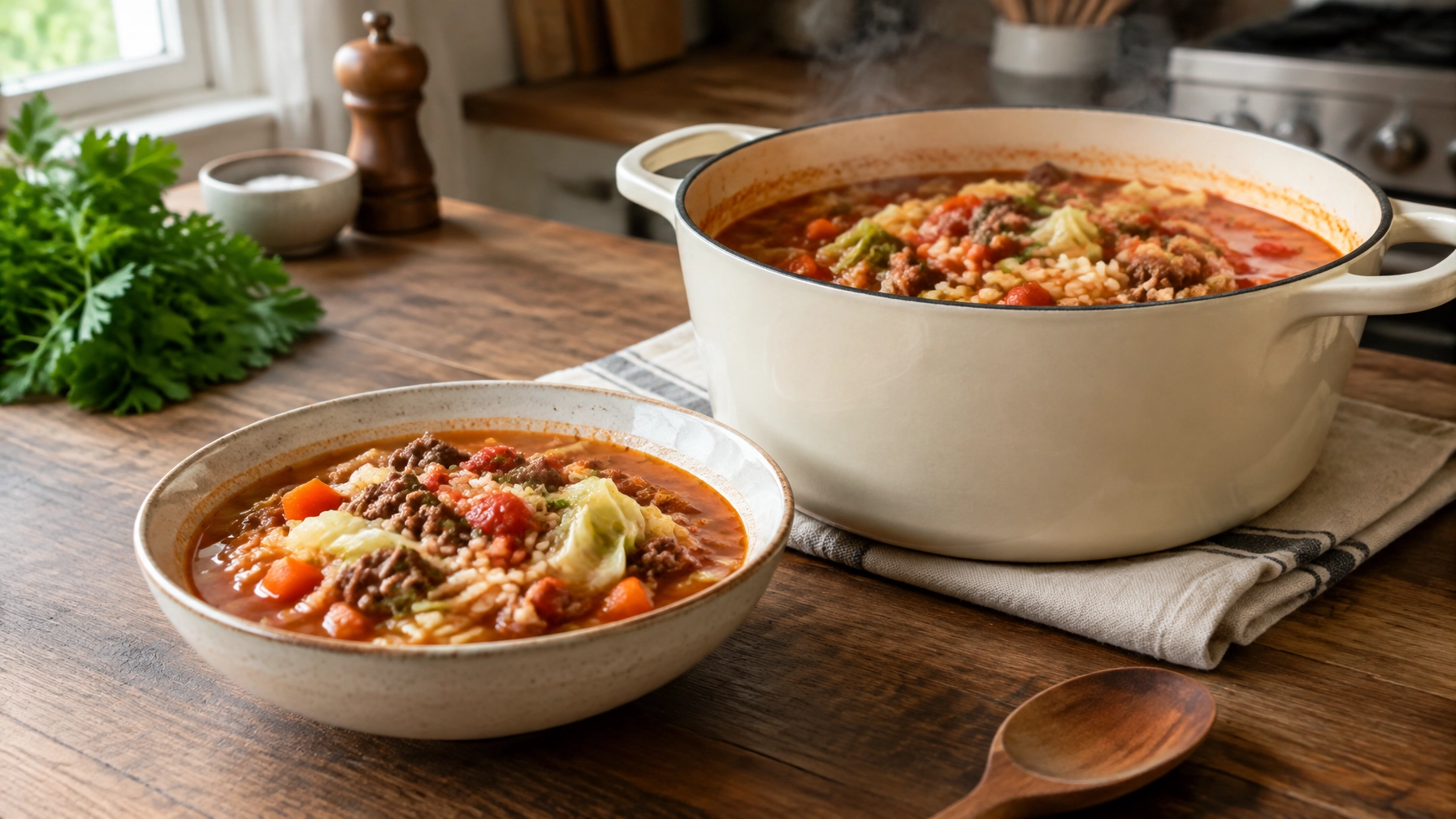
Cabbage roll soup combines the familiar ingredients of stuffed cabbage rolls in a practical one-pot format. Ground beef, tender cabbage, rice, carrots, tomatoes, and herbs simmer together in a rich broth. There is no rolling, stuffing, or baking required.
This recipe makes approximately six servings and is suitable for a weeknight dinner, make-ahead lunch, or freezer meal. The rice cooks directly in the soup, helping create a filling texture while keeping preparation simple.
Why You’ll Like This Soup
Traditional cabbage rolls require several preparation stages. The cabbage must be softened, the filling mixed, and each leaf carefully rolled before the dish goes into the oven. This soup uses the same basic flavor profile while reducing the process to one pot.
The result is a hearty meal with protein, vegetables, and rice in every serving. It also stores well, although the rice will continue absorbing broth as the soup sits. Add extra broth when reheating if a thinner consistency is preferred.
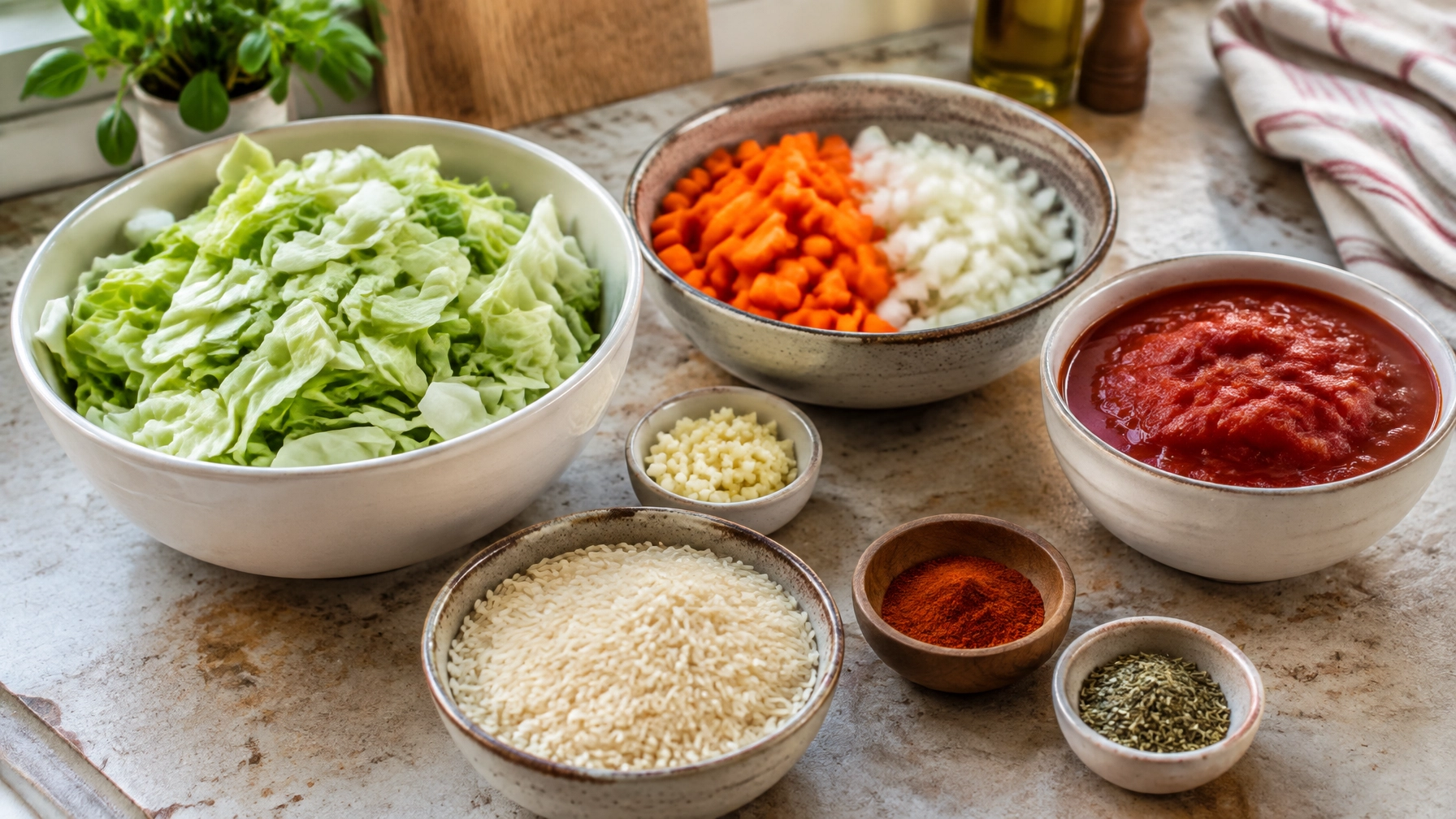
Recipe
Cabbage Roll Soup
Servings: 6
Prep time: 15 minutes
Cook time: 35 minutes
Total time: 50 minutes
Category: Soup
Method: One-pot stovetop cooking
Tips for the Best Results
Chop the cabbage evenly
Cut the cabbage into pieces approximately 1 inch wide. Smaller pieces become very soft and can disappear into the broth, while oversized pieces may remain firm after the rice is cooked.
Use low-sodium broth
Tomato sauce, Worcestershire sauce, and beef broth all contribute salt. Starting with low-sodium broth allows the seasoning to be adjusted at the end.
Avoid overcooking the rice
Begin checking the rice around the 20-minute mark. Once tender, remove the pot from the heat. Continued simmering can make the rice overly soft and may cause the soup to become very thick.
Brown the meat properly
Allow the beef to make contact with the hot pot before stirring frequently. Browning creates more developed flavor than simply cooking the meat in the broth.
Balance the tomato flavor
The brown sugar is optional, but a small amount can soften sharp acidity from the tomatoes. Lemon juice added at the end provides contrast and keeps the soup from tasting too heavy.
Check the meat temperature
Ground beef should reach a minimum internal temperature of 160°F (71°C). The USDA safe temperature chart provides current food-safety guidance for ground meats and leftovers.
Variations
Use ground turkey
Replace the ground beef with ground turkey. Because turkey is generally leaner, add an extra teaspoon of olive oil if the pot appears dry while the vegetables cook.
Add sausage
For a deeper, more savory flavor, replace half of the ground beef with mild Italian sausage or pork sausage. Reduce the added salt because sausage can already be well seasoned.
Make it gluten-free
Use certified gluten-free beef broth and Worcestershire sauce. Check the labels of all packaged ingredients before cooking.
Substitute brown rice
Brown rice can be used, but it usually requires a longer cooking time and additional liquid. Cook it separately if you want precise control over the soup’s consistency, then stir it into the finished pot.
Add beans
For additional fiber and a more substantial meal, add one drained and rinsed can of white beans or kidney beans during the final 10 minutes of cooking.
Make it spicy
Add ¼ teaspoon of red pepper flakes with the dried herbs, or use hot sausage in place of part of the ground beef.
Storage and Reheating
Allow the soup to cool slightly, then transfer it to shallow airtight containers. Refrigerate within two hours of cooking. Properly refrigerated leftovers should generally be eaten within 3 to 4 days.
The rice will absorb more broth during storage. Reheat individual portions with a splash of broth or water. Heat leftovers to 165°F (74°C); soups should be heated thoroughly before serving. For longer storage, freeze the soup in individual portions for up to 3 months. The texture of the cabbage and rice may soften after thawing, but the flavor remains suitable for a make-ahead meal.
Frequently Asked Questions
Can I make cabbage roll soup without rice?
Yes. Leave out the rice and reduce the broth by approximately 1 cup. You can add cooked rice directly to each bowl, or replace the rice with diced potatoes, barley, or cauliflower rice.
Can I use red cabbage?
Yes, although red cabbage can change the soup’s color and provide a slightly different flavor. Green cabbage is closer to the traditional cabbage roll profile and softens more evenly in this recipe.
Can I make this soup in a slow cooker?
For best results, brown the beef first and soften the onion, carrots, and garlic in a skillet. Transfer those ingredients to a slow cooker with the cabbage, tomatoes, broth, and seasonings. Add uncooked rice during the final 45 to 60 minutes so it does not become excessively soft. Cooking times vary by appliance.
Why did my soup become too thick?
Rice continues to absorb liquid as it cooks and cools. Stir in additional beef broth or water until the desired consistency is restored. Reheat gently and adjust the seasoning if necessary.
Can I freeze cabbage roll soup?
Yes. Cool the soup promptly, portion it into freezer-safe containers, and leave space for expansion. Thaw it in the refrigerator overnight, then reheat thoroughly. If possible, slightly undercook the rice before freezing to help preserve its texture.
What should I serve with cabbage roll soup?
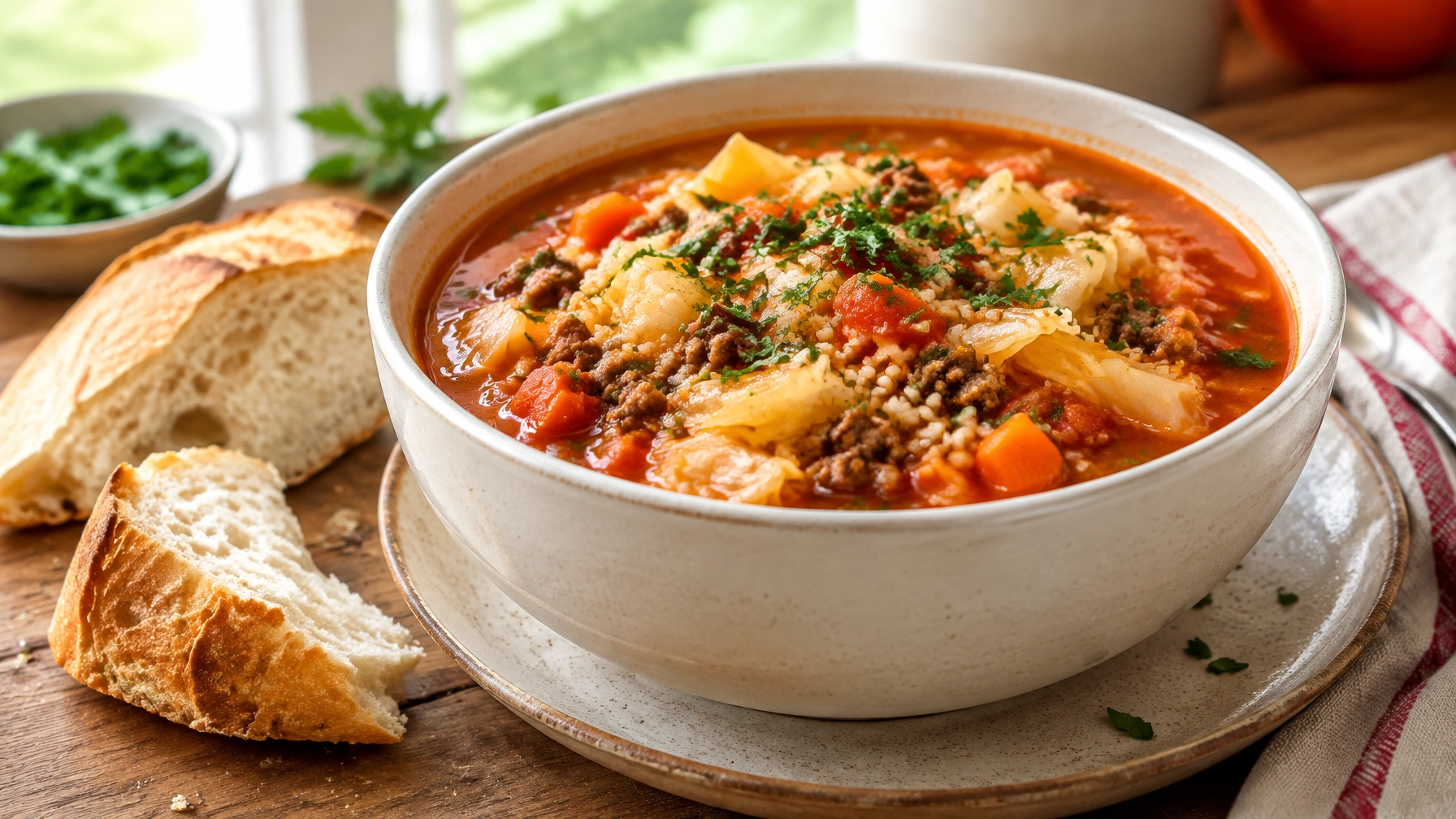
Serve it with crusty bread, rye bread, a green salad, or a spoonful of sour cream. Fresh parsley, dill, or sliced green onions can also be added just before serving.
Is this the same as traditional cabbage rolls?
The ingredients and overall flavor are similar, but the preparation is different. Traditional cabbage rolls use whole cabbage leaves wrapped around a meat and rice filling. This version uses chopped cabbage and cooks everything together as a soup.