Recipe
Serves
8 1×
Serves 8Prep 35 minCook 1H25 minTotal 2H20 min
Ingredients
Method
- Place the flour and salt in a mixing bowl. Rub in the cold butter until the mixture resembles fine breadcrumbs.
- Add the egg yolk and 2 tablespoons of cold water. Mix with a table knife until the dough begins to come together. Add the remaining water only if required.
- Tip the dough onto a lightly floured surface and bring it together without kneading. Flatten it into a disc, wrap it and chill for 30 minutes.
- Peel and thinly slice the onions. Heat the butter and oil in a large frying pan over a low to medium heat. Add the onions and salt.
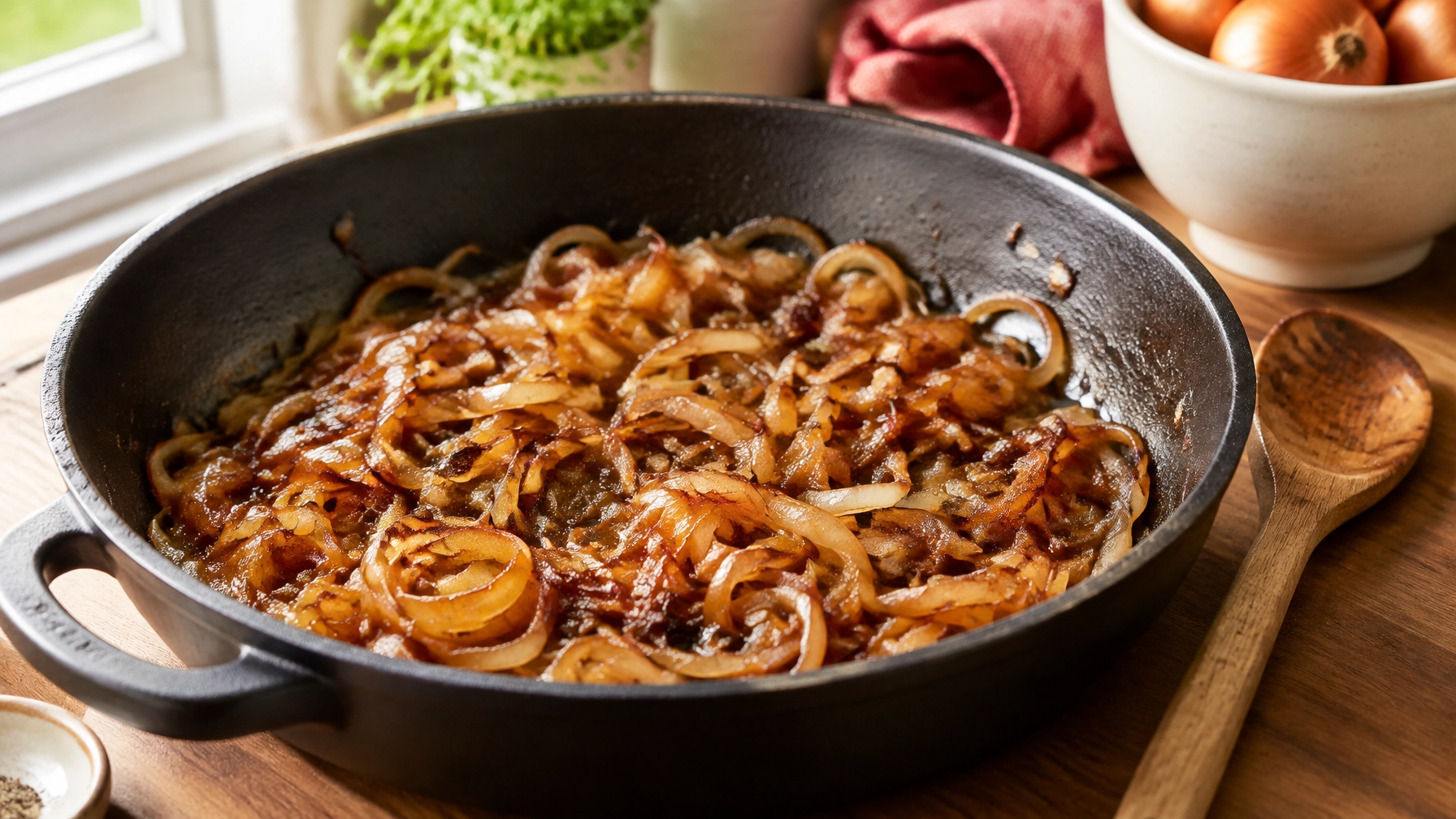
- Cook the onions for 30 to 40 minutes, stirring regularly, until soft, collapsed and deep golden. Set aside to cool slightly.
- Roll out the chilled pastry until it is approximately 3 mm thick. Use it to line the tart tin, pressing it gently into the corners without stretching it. Trim the edge.
- Chill the lined tin for 20 minutes. Heat the oven to 200°C, or 180°C fan, with a baking tray inside.
- Line the pastry case with parchment and fill it with baking weights. Place it on the hot tray and bake for 15 minutes.
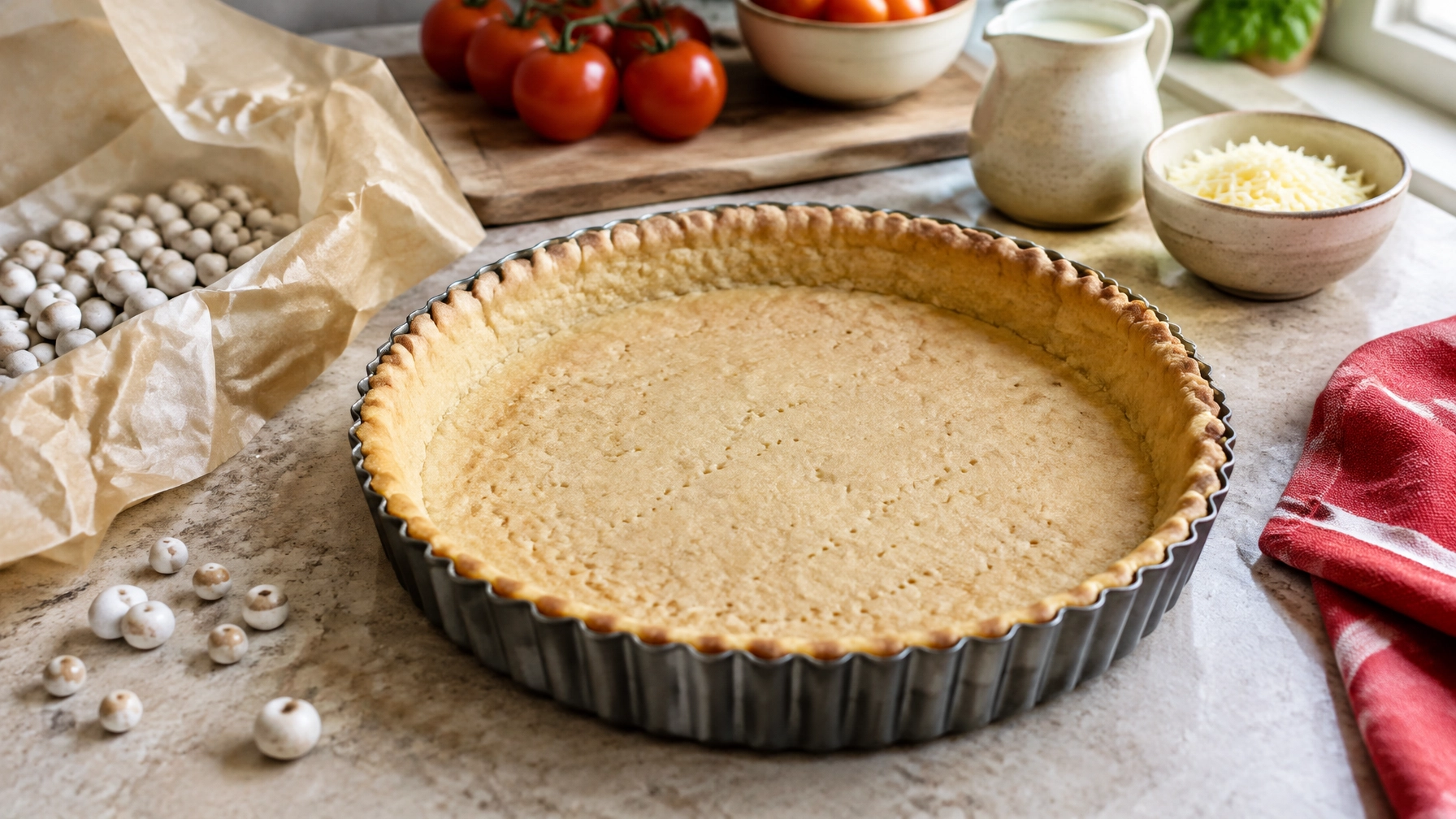
- Remove the parchment and weights. Return the pastry case to the oven for 10 to 12 minutes, until the base is dry and lightly golden.
- Reduce the oven to 170°C fan. If the pastry base still looks pale or soft, bake it for a few additional minutes before filling.
- Whisk the eggs, egg yolks, double cream, milk, black pepper and optional nutmeg in a jug. Avoid whisking in excess air.
- Spread the caramelised onions over the pastry case. Sprinkle over approximately two thirds of the Gruyere.
- Pour in the custard until it sits just below the rim. Sprinkle over the remaining cheese.
- Bake at 170°C fan for 35 to 40 minutes. Remove the quiche when the edges are set and the centre has a slight controlled wobble rather than a liquid ripple.
- Leave the quiche in the tin for at least 20 minutes. Remove the outer ring, slice and serve warm or at room temperature.
Caramelised Onion and Gruyere Quiche
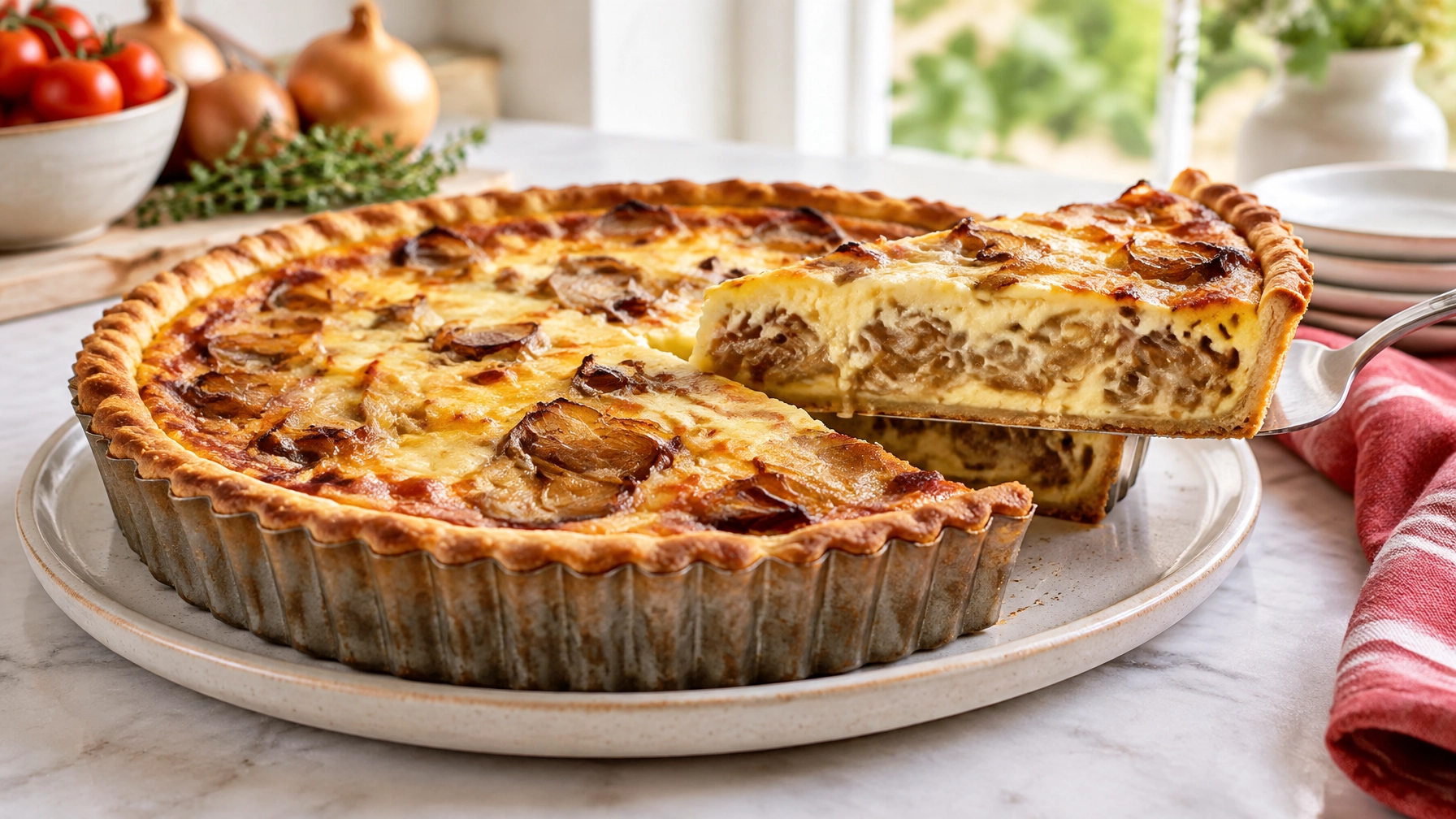
A savoury quiche recipe with slow-cooked onions, nutty Gruyere and a smooth cream and egg custard in a crisp shortcrust case.
Overview
This caramelised onion quiche is built on a properly blind-baked shortcrust case. The onions are cooked slowly until soft, dark golden and sweet. Gruyere adds a firm, savoury flavour, while the cream and egg custard sets gently around the filling.
It is suitable for lunch, a light evening meal or a prepared vegetarian centrepiece. It is distinct from a frittata because the filling is baked inside pastry. It is also different from a savoury pie because the filling is an open, shallow custard rather than a fully enclosed mixture.
Use a 23 cm loose-bottomed tart tin. The recipe serves eight moderate slices.
Pastry
A reliable quiche starts with a dry, well-set pastry case. Rub cold butter into plain flour until the mixture resembles fine breadcrumbs. Add the egg yolk and enough cold water to form a dough. Do not knead it heavily. Excess handling can make the pastry tough.
Chill the dough before rolling, then chill the lined tin again. The second chilling period helps the pastry hold its shape in the oven.
Blind baking is essential. It cooks the pastry before the wet filling is added, reducing the risk of a soft or soggy base.
Onions
Slice the onions thinly and cook them over a low to medium heat with butter, oil and salt. They should take approximately 30 to 40 minutes to become properly caramelised.
Do not increase the heat to shorten the process. High heat can brown the outside before the centre has softened. Stir at regular intervals and reduce the heat if the onions begin to catch.
The finished onions should be collapsed, glossy and deep golden. They should not contain excess liquid. Allow them to cool slightly before adding them to the pastry case.
Custard
The custard contains eggs, egg yolks, double cream and whole milk. The extra yolks provide richness and help the filling set with a smooth texture.
Season carefully. Gruyere is already salty, so use a moderate amount of salt and add black pepper or a small amount of grated nutmeg if required.
Whisk the custard until combined, but avoid incorporating a large amount of air. Bubbles can create an uneven surface during baking.
Scatter most of the cheese over the onions, pour in the custard and finish with the remaining Gruyere. Fill the case on the oven shelf if possible. This reduces the risk of spilling the liquid mixture while transferring the quiche.
Baking
Bake at 170°C fan for 35 to 40 minutes. The pastry should be golden and the outer edge of the filling should be set.
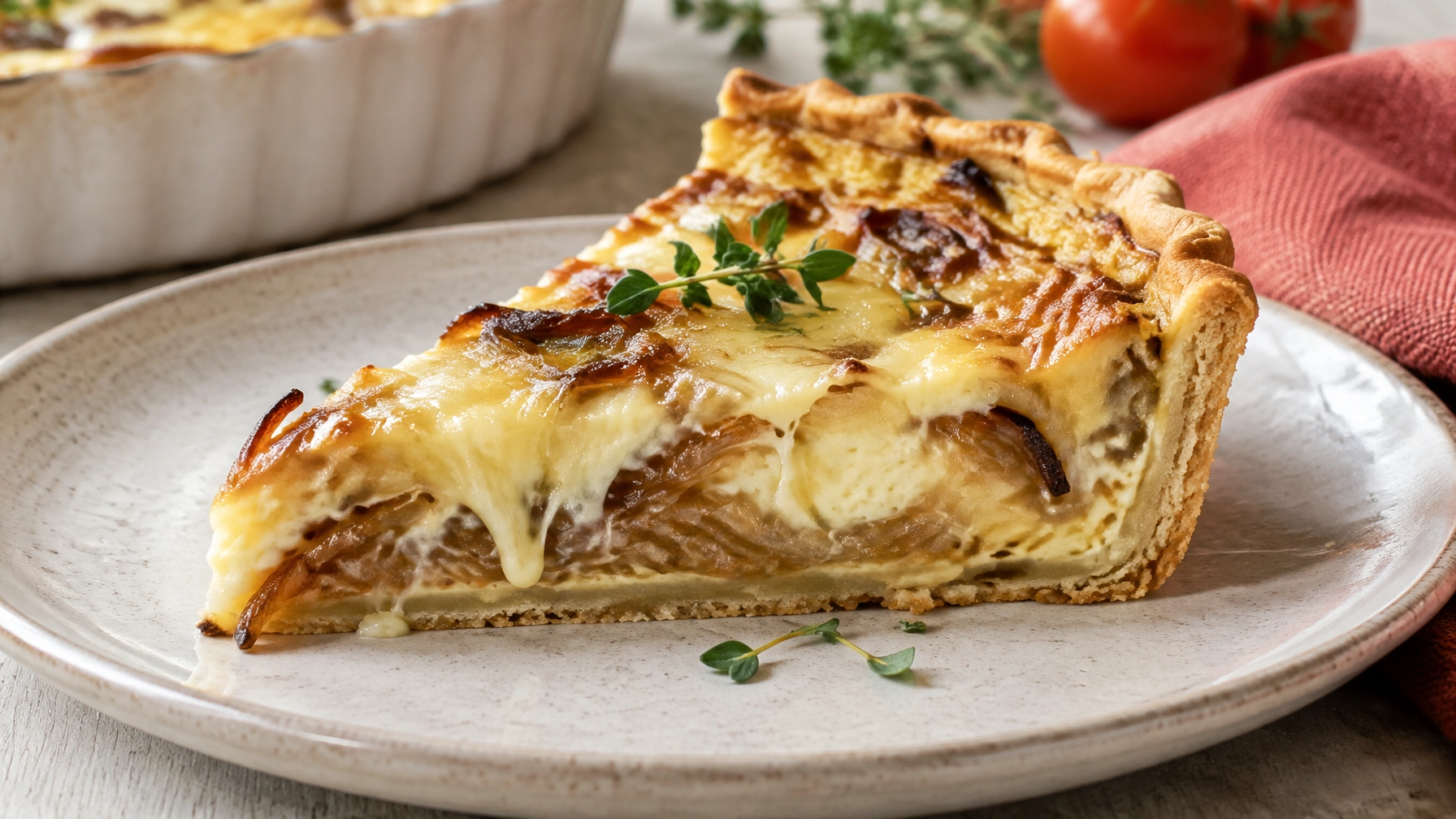
The centre should have a controlled wobble. This is not the same as being raw. A properly baked quiche may tremble slightly when the tin is moved, like set custard or jelly. The movement should be small and contained in the centre.
A raw quiche ripples as liquid, looks wet beneath the surface and may move in waves when tilted. Return it to the oven if the centre sloshes or the filling has not begun to set around the edges.
The custard continues to firm as the quiche rests. Remove it from the oven before the centre becomes completely rigid. Overbaking can produce a dry, rubbery texture.
Leave the quiche in the tin for at least 20 minutes before slicing. This allows the custard to finish setting and reduces the chance of the slices collapsing.
Storage
Cool the quiche promptly after cooking. Once cool, cover it and refrigerate it. The Food Standards Agency guidance on cooking food recommends thorough cooking for dishes containing eggs.
For home storage, keep the quiche chilled and eat it within 48 hours. It can be served cold or reheated until steaming hot throughout. Reheat it only once.
Do not leave the completed quiche at room temperature for a prolonged period. If transporting it, use a suitable cool bag with ice packs.