Recipe
Serves
4 1×
Serves 4Prep 10 minCook 20 minTotal 30 min
Ingredients
Method
- Bring a large pot of water to a boil. Add the salt and cook the pasta according to the packet directions until al dente. Before draining, reserve 1 cup of the pasta water. Drain the pasta and set it aside.
- While the pasta cooks, pat the chicken dry with kitchen paper. Season it with half of the black pepper and a small pinch of salt.
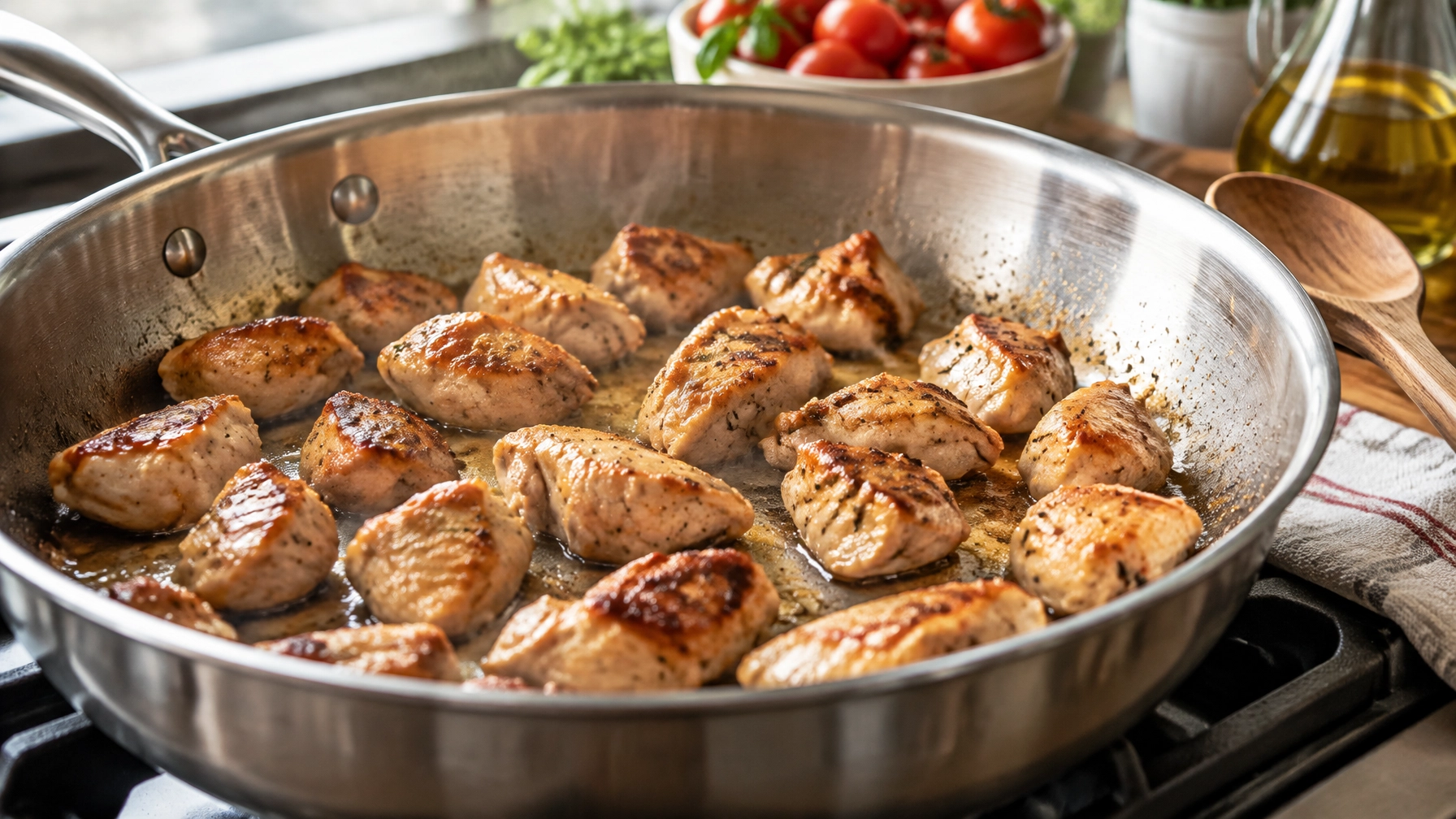
- Heat the olive oil in a large skillet over medium-high heat. Add the chicken in a single layer. Cook for 5 to 7 minutes, turning occasionally, until browned and cooked through. Check that the thickest pieces reach 165°F (74°C). Transfer the chicken to a clean plate.
- Reduce the heat to medium. Add the onion and bell pepper to the same skillet. Cook for 3 to 4 minutes, stirring occasionally, until the vegetables begin to soften.
- Add the garlic, sun-dried tomatoes, Italian seasoning, and red pepper flakes. Cook for 1 minute, stirring continuously, until the garlic is fragrant.
- Pour in the chicken broth. Scrape the bottom of the skillet with a wooden spoon to release the browned cooking residue. Simmer for 2 minutes.
- Add the cream and bring the mixture to a gentle simmer. Do not boil the sauce. Stir in the Parmesan and cook for 2 to 3 minutes, until the cheese has melted and the sauce has thickened slightly.
- Add the spinach. Stir for 1 to 2 minutes, until it wilts into the sauce.
- Return the cooked chicken and any collected juices to the skillet. Add the drained pasta and toss until evenly coated.
- Add reserved pasta water, 1 tablespoon at a time, if the sauce is too thick. Taste and adjust the salt and pepper. Garnish with basil or parsley and serve immediately.
Creamy Tuscan Chicken Pasta (30-Minute Dinner)
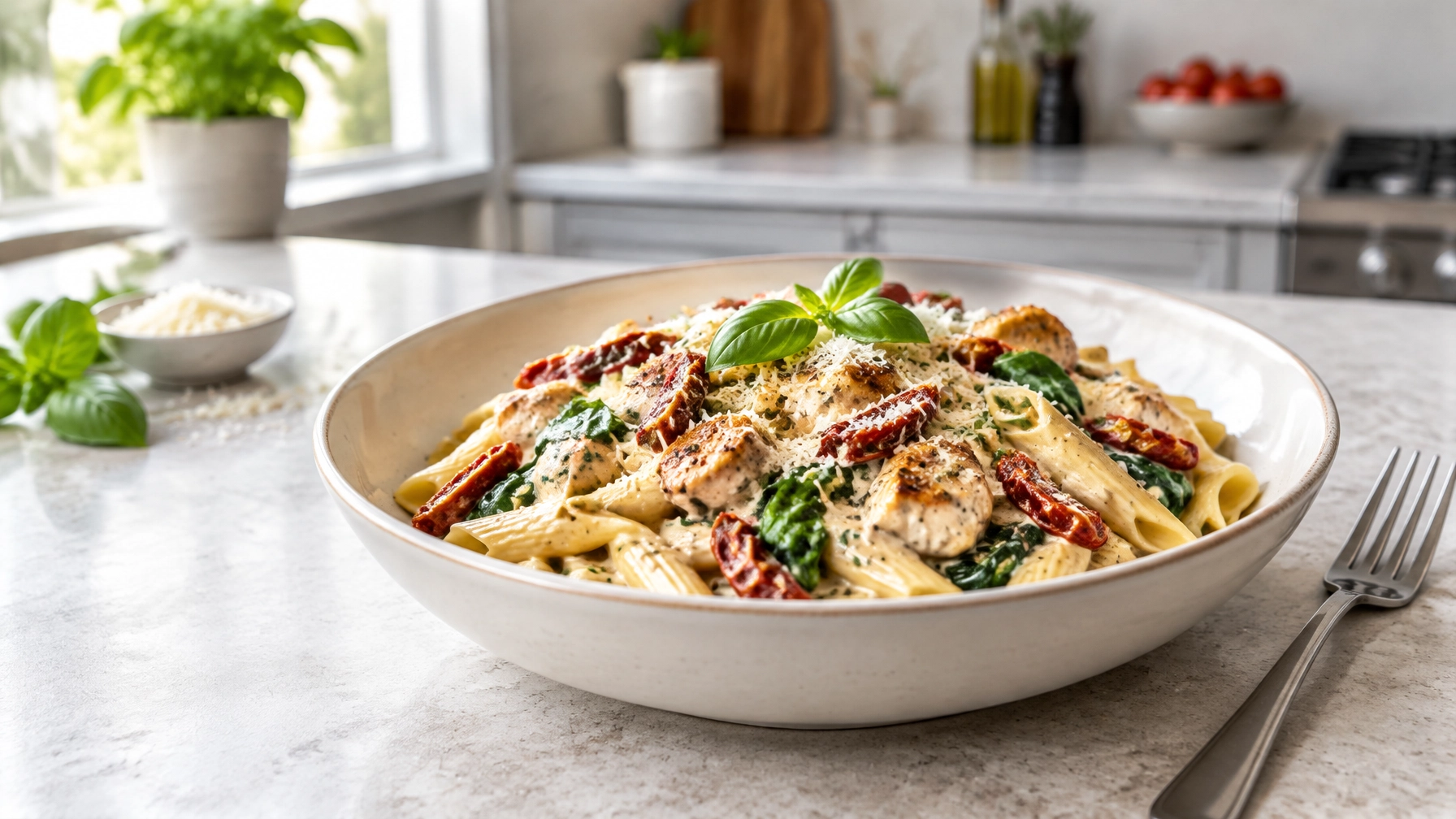
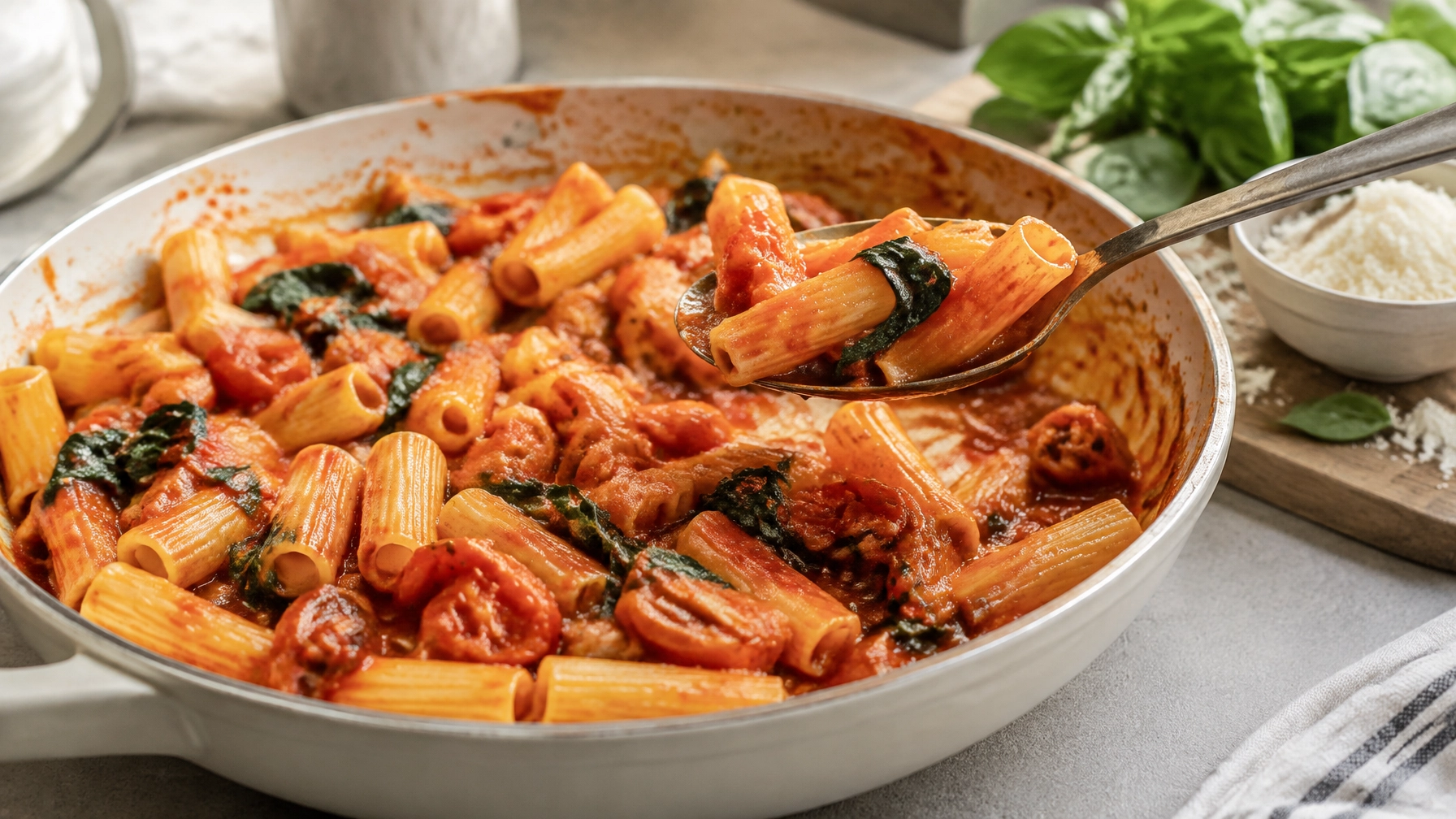
This creamy Tuscan chicken pasta is a complete weeknight dinner prepared in one skillet plus a pasta pot. Tender chicken, sun-dried tomatoes, spinach, garlic, and Parmesan combine in a smooth cream sauce that coats every piece of pasta.
The recipe serves four and uses straightforward ingredients. Cook the pasta while the chicken and sauce are prepared to keep the total time within 30 minutes. For safe preparation, chicken should reach an internal temperature of 165°F (74°C) before serving.
Preparation
Use a large skillet so the chicken browns rather than steams. Cut the chicken into evenly sized pieces so it cooks at the same rate. Reserve some pasta water before draining; its starch helps adjust the consistency of the sauce without diluting the flavour.
Penne, rigatoni, fusilli, or another short pasta works well. Short shapes hold the cream sauce, spinach, tomato, and chicken in each serving.
Recipe
Creamy Tuscan Chicken Pasta
Servings: 4
Prep time: 10 minutes
Cook time: 20 minutes
Total time: 30 minutes
Category: Dinner
Cuisine: Italian-inspired
Tips
- Use moderate heat for the cream sauce. A hard boil can cause dairy sauces to separate.
- Do not overcrowd the chicken. If the skillet is small, brown the chicken in two batches.
- Reserve pasta water before draining. The water provides a controlled way to loosen the sauce.
- Grate Parmesan finely. Large pieces take longer to melt and may leave the sauce uneven.
- Check the chicken with a thermometer. Colour alone is not a reliable indicator of doneness.
- Serve immediately. Cream sauces thicken as they stand. Add a small splash of warm water or milk when reheating.
- Store leftovers promptly. Refrigerate within two hours in a shallow, covered container and use within 3 to 4 days.
Variations
- Use chicken thighs: Boneless, skinless chicken thighs remain tender and provide a richer flavour. Cook until they reach 165°F (74°C).
- Make it lighter: Replace half of the cream with whole milk. The sauce will be less rich and may require additional Parmesan for thickness.
- Add mushrooms: Sauté 200 g sliced mushrooms with the onion and pepper.
- Use a different pasta: Rigatoni, fusilli, farfalle, and spaghetti can all be used. Adjust the cooking time according to the packet instructions.
- Increase the vegetables: Add courgette, peas, or extra spinach.
- Make it vegetarian: Omit the chicken and replace the chicken broth with vegetable broth. Add mushrooms or white beans for additional substance.
- Increase the heat: Add extra red pepper flakes or a small amount of finely chopped fresh chilli.
FAQ
#### Can I make Tuscan chicken pasta without heavy cream?
Yes. Use half-and-half, single cream, or a combination of whole milk and cream. Lower-fat substitutions produce a thinner sauce, so add the dairy gradually and allow the Parmesan to thicken the mixture.
#### Can I use pre-cooked chicken?
Yes. Add sliced or shredded pre-cooked chicken after the sauce has thickened. Warm it for 2 to 3 minutes rather than cooking it with the vegetables from the beginning.
#### Can I prepare this recipe ahead of time?
The chicken and sauce can be prepared ahead and refrigerated separately from the pasta. Reheat the sauce gently, then add freshly cooked pasta. If storing the complete dish, loosen it with a splash of milk, cream, or water during reheating.
#### Why is my cream sauce too thick?
Pasta continues to absorb sauce after cooking. Stir in reserved pasta water one tablespoon at a time until the desired consistency is reached. Avoid adding a large amount at once.
#### Why did my sauce separate?
The skillet may have been too hot, or the sauce may have boiled after the cream was added. Remove the pan from the heat, whisk in a small splash of warm pasta water, and return it to low heat.
#### Can I freeze creamy Tuscan chicken pasta?
Freezing is not recommended for the best texture because cream-based sauces can separate when thawed. Refrigerate leftovers instead and reheat them gently within 3 to 4 days.
#### What should I serve with this pasta?
Serve it with a simple green salad, steamed vegetables, or crusty bread. The pasta already contains chicken, spinach, and a substantial cream sauce, so additional side dishes should remain simple.
#### Is this recipe gluten-free?
Not as written. Use certified gluten-free pasta and confirm that the chicken broth, seasoning, and other packaged ingredients are gluten-free.
For general recipe comparison, see the published approaches from Foodtasia and Kitchen Sanctuary.