Recipe
Prep 15 minCook 25 minTotal 40 min
Ingredients
Method
- Put the egg yolks, buttermilk, sugar and ricotta in a large bowl. Whisk until combined.
- Add the flour, baking soda, baking powder, lemon zest and salt. Stir until the dry ingredients are incorporated. Do not beat the batter smooth.
- In a separate clean bowl, beat the egg whites until stiff but not dry. Fold them gently into the batter in two additions.
- Lightly grease a skillet or griddle and heat it over medium heat. For an electric griddle, aim for about 175°C. Add the batter in roughly 60 ml portions.
- Cook for about 2 minutes, until bubbles rise and burst and the edges begin to look set. Turn each pancake and cook for about 1 1/2 minutes on the second side. Serve hot with lemon wedges or a chosen topping.
Easy Lemon Ricotta Pancakes
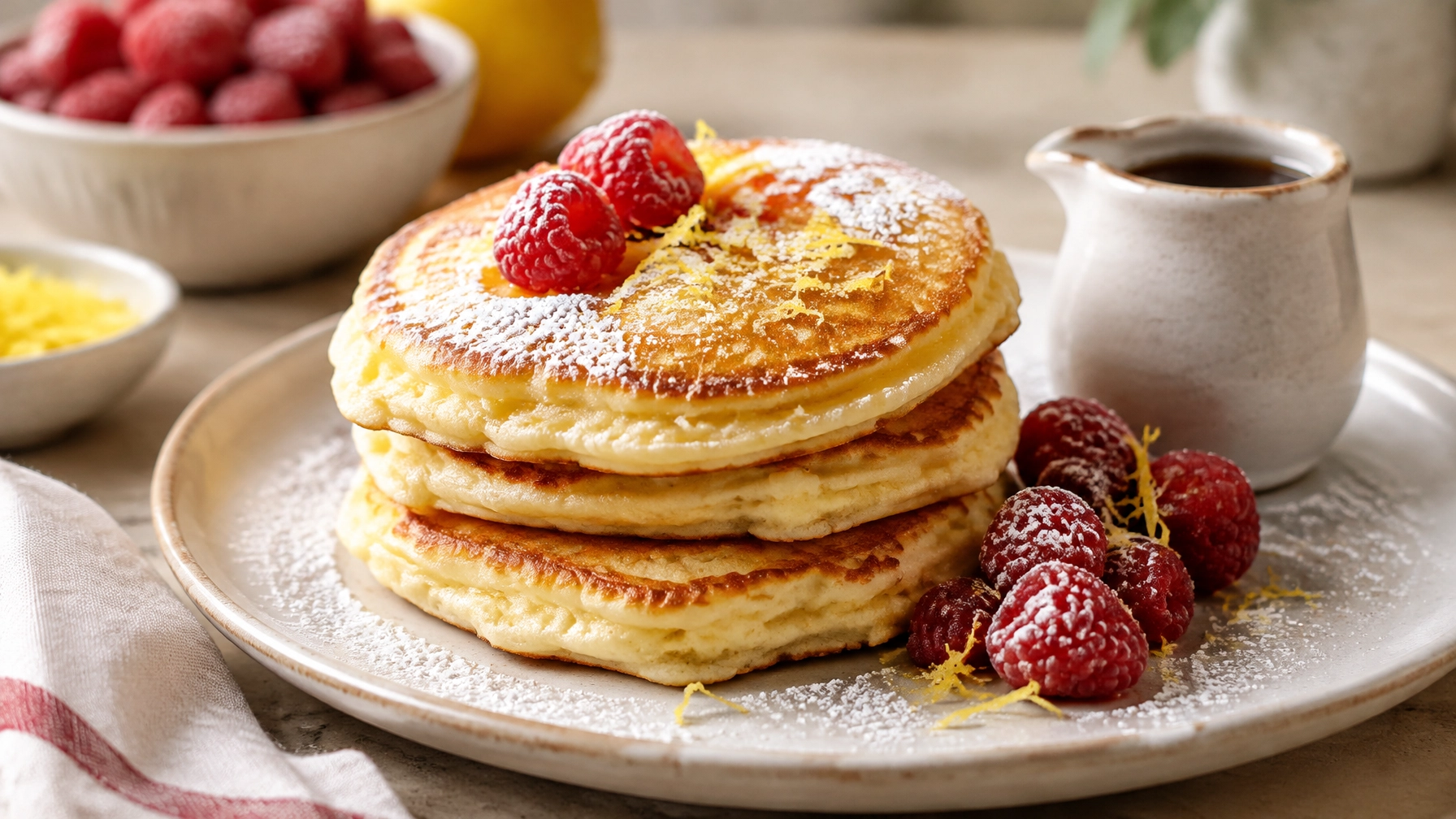
Lemon ricotta pancakes are soft, lightly tangy and suitable for a weekend breakfast or a slower weekday meal. Ricotta adds moisture and a tender texture, while lemon zest gives the batter a clear citrus flavour. Separate the eggs before mixing: folding beaten egg whites into the batter is the main step that gives these pancakes their lift.
Profile
This recipe makes about 24 small pancakes, or four per person for six servings. The batter is thicker than a basic pancake batter because it contains ricotta. It should fall from a spoon in a broad ribbon rather than pour like milk. Avoid adding extra flour simply because the mixture looks thick; a heavier batter helps produce pancakes that hold their shape.
The lemon flavour comes from zest, not juice. Zest contains aromatic oils that flavour the batter without adding extra liquid. Use a fine grater and remove only the yellow outer skin. The white layer beneath it is more bitter.
Terms
Ricotta (noun): a soft, mild cheese with a moist, slightly grainy texture. In pancake batter, it adds richness and tenderness.
Folding (verb): combining a light mixture with a heavier mixture using slow, broad movements. The purpose is to retain as much air as possible.
Zest (noun): the finely grated coloured outer layer of citrus fruit. It contributes fragrance and flavour without the acidity or liquid of the juice.
Texture
There are two useful stages in the mixing process. First, combine the ricotta with the egg yolks, buttermilk and sugar. This creates a moist base. Next, add the flour and raising agents, mixing until no dry pockets remain. The batter may contain small lumps; prolonged beating is unnecessary and can make the cooked pancakes less tender.
The separated egg whites are beaten in a clean bowl until stiff but not dry. They should hold their shape when the whisk is lifted, while still looking smooth rather than clumpy. Fold them into the batter in two additions. Stop once no large streaks of white remain. A few small streaks are preferable to vigorous mixing that knocks out the air.
Technique
The pan temperature affects the result more than speed. A pan that is too hot can brown the surface before the centre cooks. A pan that is too cool can make the pancakes spread and cook slowly. Start with medium heat and adjust after the first pancake. That first one is a useful check of both the pan and the batter portion.
Leave space between pancakes so they can be turned without touching. Cook in batches rather than crowding the pan. If the pan becomes dry, add a little more butter or coconut oil and allow it to heat before adding the next portion.
The stated cooking times are a guide. Pan material, burner strength and pancake size all affect how quickly the batter sets. Watch for the visual cues as well as the clock: bubbles on top, set edges, and a lightly golden underside.
Serving
Serve the pancakes while hot, with lemon wedges. Honey butter is an optional topping; plain ricotta pancakes also work with a modest amount of butter. For an even serving size, use the same measure for each portion of batter. This helps the batch cook consistently and makes the stated yield easier to divide.
If several batches are needed, place cooked pancakes in a single layer on a warm plate while finishing the rest. Stacking them for a short period is possible, but trapped steam softens the browned surfaces.
Storage
Cool any remaining pancakes promptly, then place them in a covered container in the refrigerator. Reheat until hot throughout before serving. A skillet over low to medium heat can restore some surface colour; a microwave is also suitable, though the pancakes may be softer.
Do not leave pancakes containing ricotta, buttermilk and eggs at room temperature for an extended period. The FDA advises discarding perishable food left at room temperature for more than two hours, or after one hour when the temperature is above 32°C. Follow current food-safety guidance when storing and reheating leftovers.