Recipe
Serves
2 1×
Serves 2Prep 5 minCook 5 minTotal 10 min
Ingredients
Method
- Crack the eggs into a bowl, add the milk and beat with a fork until just combined. Do not over-beat.
- Heat a non-stick frying pan over medium-low heat and melt the butter until it foams gently.
- Pour in the eggs. Stir slowly and continuously with a silicone spatula, scraping the base of the pan, for 3 to 4 minutes.
- When the eggs are softly set but still glossy, remove the pan from the heat. Residual heat finishes the cooking.
- Fold in the creme fraiche, smoked salmon and most of the chives. Season with black pepper. The salmon is already salty, so no extra salt is needed.
- Toast the bread and butter it if you like. Spoon the eggs over the toast.
- Scatter over the remaining chives and serve immediately.
Smoked Salmon and Chive Scrambled Eggs
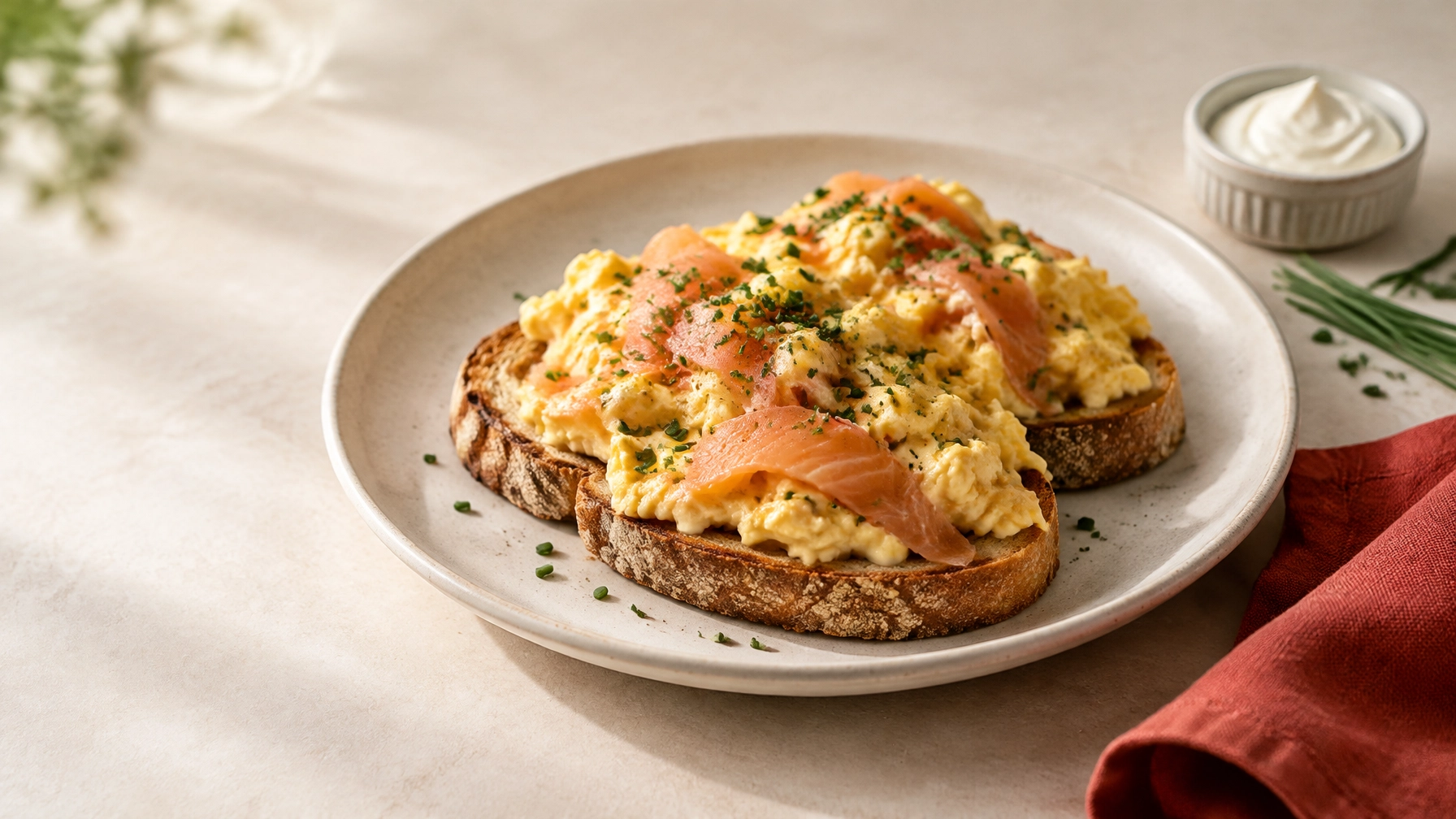
Smoked salmon and chive scrambled eggs pair soft, slow-cooked eggs with ribbons of hot-smoked salmon and a generous shower of fresh chives. A spoonful of creme fraiche keeps the curds tender and adds a gentle tang. Serve on buttered toast for a brunch that takes barely ten minutes from pan to plate.
The method depends on low heat and steady stirring. Eggs cook quickly, so have the salmon, creme fraiche, chives and toast ready before the pan goes on. Removing the pan while the eggs are still glossy helps prevent them becoming firm as they finish cooking.
Recipe
Servings: 2
Prep time: 5 minutes
Cook time: 5 minutes
Total time: 10 minutes
Tips
- Keep the heat at medium-low throughout. High heat can make the eggs cook too quickly, producing firm curds and liquid that separates from them. If the pan begins to sizzle loudly, lift it from the heat briefly and continue stirring.
- Take the pan off the heat just before the eggs look done. They continue cooking from the heat held in the pan, so waiting until they appear fully set can leave them overcooked by the time they reach the table.
- Cold salmon folded in at the end stays silky rather than turning chalky. If using cold-smoked salmon, cook it until steaming hot throughout before adding it to the eggs, in line with the food-safety note in the variations below.
- Have the toast ready before you start cooking. Scrambled eggs are best served as soon as they are made, and leaving them in the warm pan can make them firm.
- Use a flexible spatula to scrape the base and sides of the pan. Slow, continuous movement helps the eggs form small, tender curds instead of one large sheet.
- Add the creme fraiche after taking the pan off the heat. This cools the eggs slightly and adds creaminess without thinning the mixture during cooking.
- Taste before adding salt. Smoked salmon can be salty enough on its own; freshly ground black pepper adds seasoning without increasing the salt.
Variations
- Replace the creme fraiche with cream cheese for a thicker, richer finish. Full-fat Greek yoghurt also works, although it gives the eggs a more pronounced tang. Stir either option in after removing the pan from the heat.
- Add a squeeze of lemon just before serving. Use a small amount first, then taste; too much juice can overwhelm the mild flavour of the eggs and chives.
- Use hot-smoked salmon flakes for a firmer texture, or smoked trout in place of salmon. If using cold-smoked salmon, cook it until steaming hot throughout before adding it to the eggs.
- Serve the eggs on rye or sourdough, or spoon them onto warm toast without butter. The bread provides a firm base and makes the dish suitable for a light brunch.
FAQ
Can I make scrambled eggs ahead?
Scrambled eggs are best eaten straight away. They can hold for a few minutes in a warm bowl, but they will continue to set and become firmer. For the best texture, prepare the toast and measure out the other ingredients before cooking, then serve the eggs as soon as they are ready.
Which salmon should I buy?
Either cold-smoked or hot-smoked salmon can be used, but they have different textures. Hot-smoked salmon is cooked and breaks into firmer flakes. Cold-smoked salmon is softer and more delicate. If using cold-smoked salmon, cook it until steaming hot throughout before adding it to the eggs rather than folding it in cold.
Can I use milk alternatives?
Yes. Unsweetened oat or soya milk can replace whole milk in the same quantity. The curds may be slightly less rich, but the creme fraiche still contributes a creamy texture. Choose an unsweetened product so it does not alter the savoury flavour.
How do I stop the eggs going watery?
Cook the eggs gently and remove the pan from the heat while they are still glossy. Avoid adding salt before cooking, as it can draw moisture out of the eggs. Stirring continuously and serving promptly also helps prevent liquid from separating as the eggs stand.
Can I leave out the creme fraiche?
Yes. The eggs can be made without it, although the finished dish will be less creamy and tangy. If omitting it, remove the pan from the heat as soon as the eggs are softly set and glossy. A small spoonful of cream cheese or full-fat Greek yoghurt can be used instead.
Is this recipe suitable for a quick weekday breakfast?
The active cooking time is short, but the eggs are best served immediately. Measure the ingredients and prepare the toast first, then cook the eggs just before eating. The recipe makes two servings; adjust the ingredient quantities proportionally if making more.