Recipe
Serves
2 1×
Serves 2Prep 5 minCook 10 minTotal 15 min
Ingredients
Method
- Mash the bananas. Place the peeled bananas in a large mixing bowl. Mash with a fork until mostly smooth. A few small lumps are acceptable and provide additional banana texture.
- Add the wet ingredients. Add the egg, milk, and vanilla extract. Whisk until the mixture is evenly combined.
- Add the dry ingredients. Add the flour, baking powder, cinnamon, and salt. Stir with a spatula or wooden spoon until no large areas of dry flour remain. Do not overmix. The batter should remain slightly lumpy.
- Heat the pan. Place a non-stick skillet or griddle over medium heat. Lightly grease the surface with oil or butter. If the pan becomes too hot, reduce the heat to medium-low. Banana batter can brown quickly because of its natural sugars.
- Cook the first side. Pour approximately ¼ cup of batter into the pan for each pancake. Cook for 2–3 minutes, until bubbles appear on the surface and the edges look set.
- Flip and finish. Turn each pancake carefully. Cook for a further 1–2 minutes, until golden brown and cooked through. Repeat with the remaining batter, greasing the pan as required.
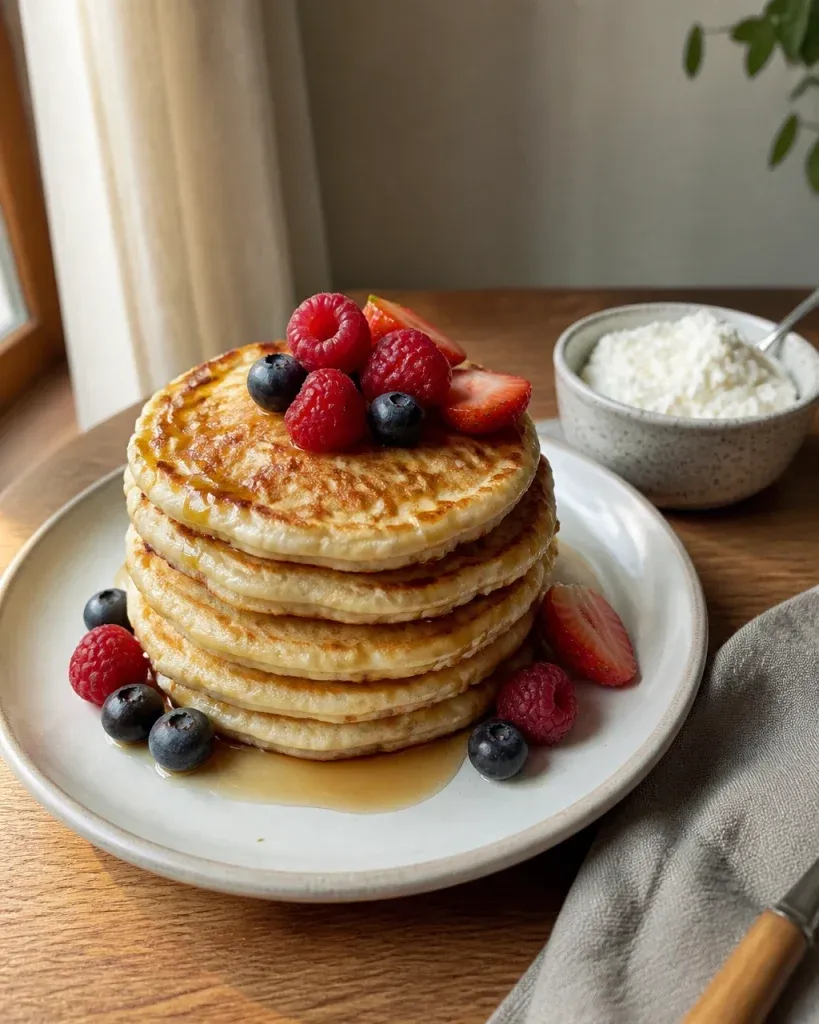
- Serve immediately. Transfer the pancakes to plates. Add banana slices, yoghurt, walnuts, chocolate chips, or a small amount of maple syrup if required.
Fluffy Banana Pancakes (15-Minute Breakfast)

banana pancake (noun): a griddle-cooked breakfast made with mashed banana folded into a lightly leavened batter.
These fluffy banana pancakes use ripe bananas for natural sweetness, moisture, and a clear banana flavour. The batter contains no added sugar. Baking powder creates a light texture, while cinnamon and vanilla provide a warm, rounded finish.
This is a straightforward recipe for two people. It produces approximately eight small pancakes and requires one bowl, one skillet, and 15 minutes.
Tips
Use ripe bananas. Bananas with brown spots are softer and sweeter than firm yellow bananas. They mash easily and reduce the need for added sugar.
Do not overmix. Excessive stirring develops the flour’s gluten and can produce dense pancakes. Stop mixing when the dry ingredients have been incorporated.
Control the heat. Medium heat is appropriate for most pans. If the outside becomes dark before the centre sets, the pan is too hot.
Use consistent portions. A ¼-cup measure produces pancakes that cook at a similar rate. Smaller pancakes are easier to turn than large ones.
Allow room between pancakes. Crowding the pan reduces heat circulation and makes flipping more difficult. Cook in batches when necessary.
Serve directly from the pan. Banana pancakes are lightest and most tender when served immediately. If holding them briefly, place them in a single layer rather than stacking them tightly.
Do not leave batter at room temperature for extended periods. Since the mixture contains egg and milk, cook it promptly. Refrigerate leftovers in a sealed container.
Variations

Chocolate chip banana pancakes: Fold 2 tablespoons of mini chocolate chips into the finished batter. Keep the quantity moderate so the banana remains the primary flavour.
Walnut banana pancakes: Add 2 tablespoons of finely chopped walnuts. Stir them in immediately before cooking. Larger pieces can make the pancakes difficult to turn.
Whole-wheat banana pancakes: Replace half of the plain flour with whole-wheat flour. The result will be slightly denser and may require 1–2 extra tablespoons of milk.
Dairy-free banana pancakes: Use an unsweetened dairy-free milk, such as soy, oat, or almond milk, in the same quantity. Confirm that the selected milk is suitable for the dietary requirement.
Extra-banana pancakes: Add a few thin banana slices to the batter just before each portion is placed in the pan. Do not add too many, as excess fruit can make the centre difficult to cook.
Yoghurt topping: Serve with plain Greek yoghurt and sliced banana for a creamy topping without relying on a large amount of syrup.
This recipe is intentionally different from blueberry pancakes. Blueberries can release liquid and sharp fruit flavour during cooking. Here, banana remains the central ingredient in the batter, topping, and overall flavour profile.
FAQ
Can I use very ripe bananas for banana pancakes?
Yes. Very ripe bananas are suitable if the flesh has no visible mould and does not smell fermented or alcoholic. They will produce sweeter, softer pancakes. Reduce the milk by 1 tablespoon if the bananas are unusually large or watery.
How do I make healthy banana pancakes fluffy?
Use fresh baking powder, avoid overmixing, and cook over moderate heat. The batter should be thick enough to spread slowly when poured into the skillet. A short rest of 1–2 minutes while the pan heats can also help the flour hydrate.
Can I make these banana pancakes without milk?
Yes. Replace the milk with an equal quantity of unsweetened dairy-free milk. Water can be used in an emergency, but the pancakes will have a less rich texture.
Can I prepare the batter in advance?
For best results, cook the batter immediately. If necessary, cover and refrigerate it, then use it within 24 hours. Stir gently before cooking. The pancakes may be slightly less fluffy than those made from freshly mixed batter.
Can I freeze banana pancakes?
Yes. Cool the cooked pancakes completely, place baking paper between them, and store them in an airtight freezer-safe container. Reheat in a toaster, skillet, or microwave until hot throughout.
Why are my pancakes raw in the centre?
The pan was likely too hot, the pancakes were too large, or the batter was too thick. Reduce the heat and use smaller portions. Cook until bubbles appear, the edges are set, and the centre no longer looks wet before flipping.
Sources
- USDA SNAP-Ed: Bananas
- Harvard T.H. Chan School of Public Health: Bananas
- Cookie and Kate: Healthy Banana Pancakes
- FoodSafety.gov: Four Steps to Food Safety