Recipe
Serves
6 1×
Serves 6Prep 25 minCook 3H45 minTotal 4H10 min
Ingredients
Method
- Soak the ham hock in cold water for 6 to 12 hours if it is strongly cured. Drain and discard the soaking water.
- Put the ham hock in a large pot and cover it with fresh cold water. Bring to the boil and skim away any foam.
- Reduce the heat to a gentle simmer. Partially cover the pot and cook for 2 1/2 to 3 hours, until the meat separates easily from the bone.
- Remove the hock and allow it to cool until safe to handle. Remove the skin, fat, and bone. Shred the meat.
- Strain the cooking liquid if required. Return 2 litres to the pot.
- Add the pearl barley, onion, carrot, celery, potato, leek, bay leaves, and thyme.
- Simmer uncovered for 35 to 45 minutes, until the barley and vegetables are tender.
- Return the shredded ham to the pot. Simmer for 5 minutes.
- Remove the bay leaves and thyme stems. Season with black pepper and add salt only if necessary.
- Rest for 10 minutes. Adjust the consistency with boiling water and serve with chopped parsley.
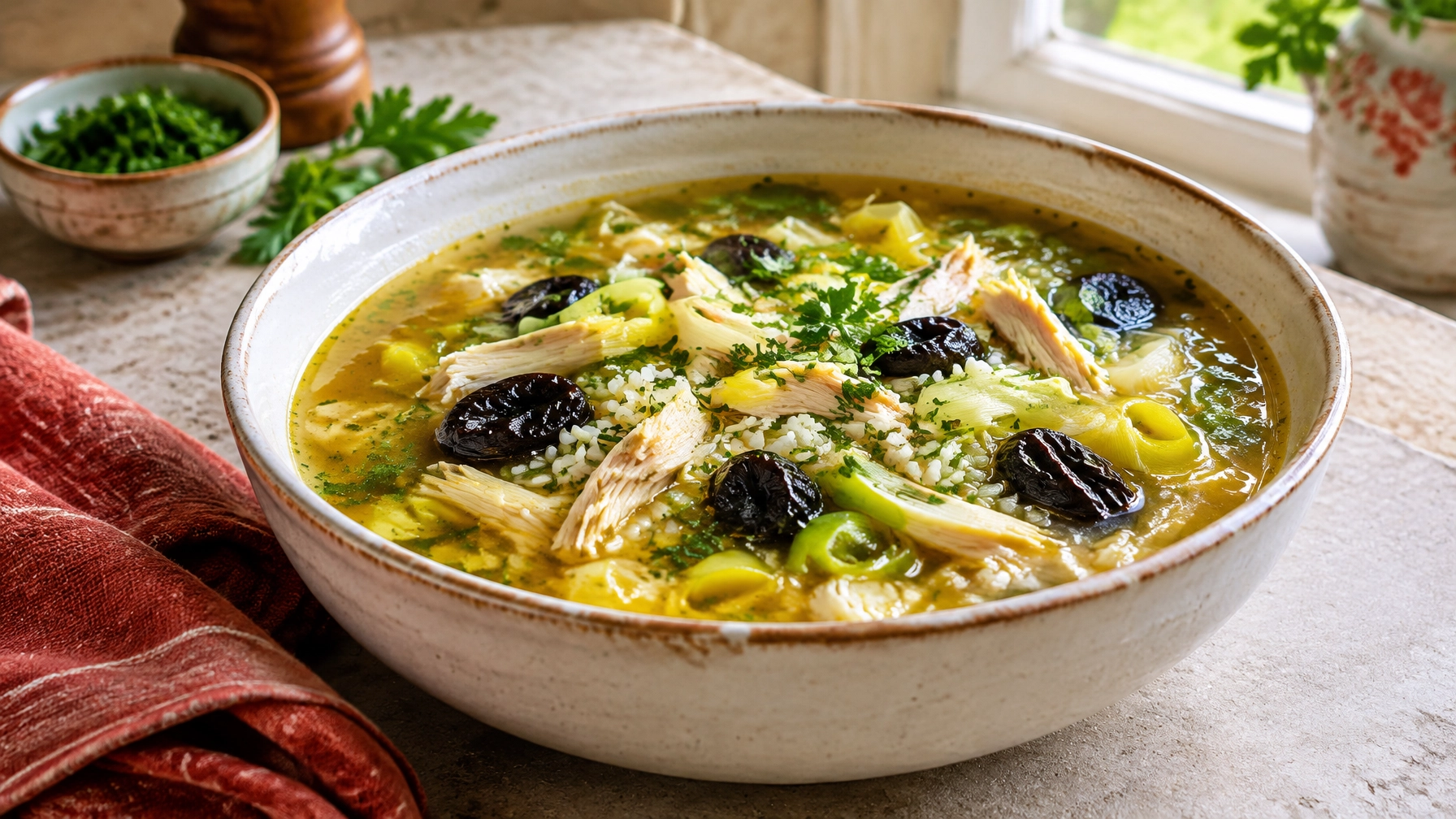
Ham Hock and Barley Broth (Slow Simmered)
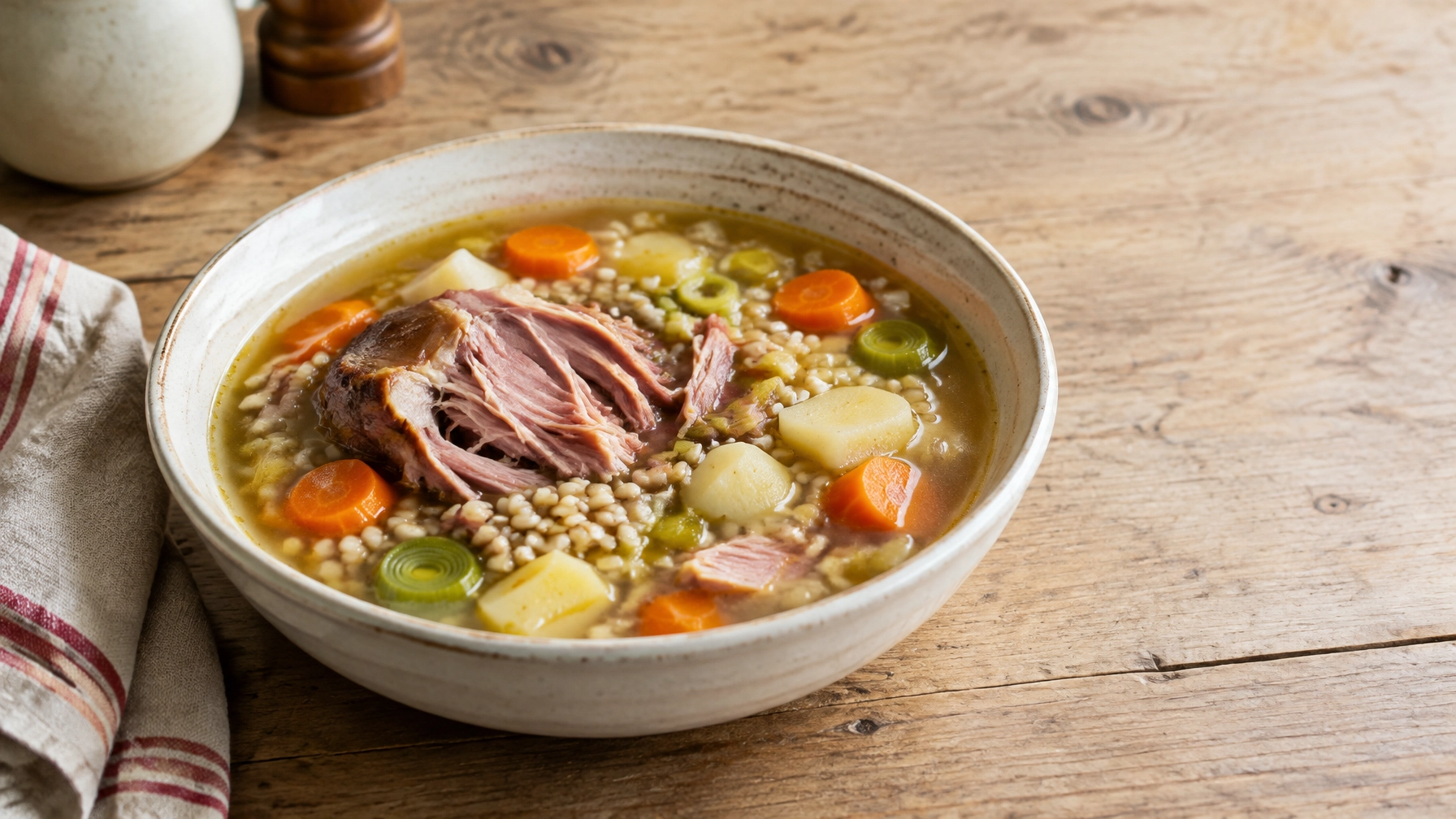
A slow-simmered British broth made with raw ham hock, pearl barley, and root vegetables.
Broth
Ham hock and barley broth is built around one process: cook the hock slowly until the meat separates easily from the bone, then use the cooking liquor as the base for pearl barley and vegetables.
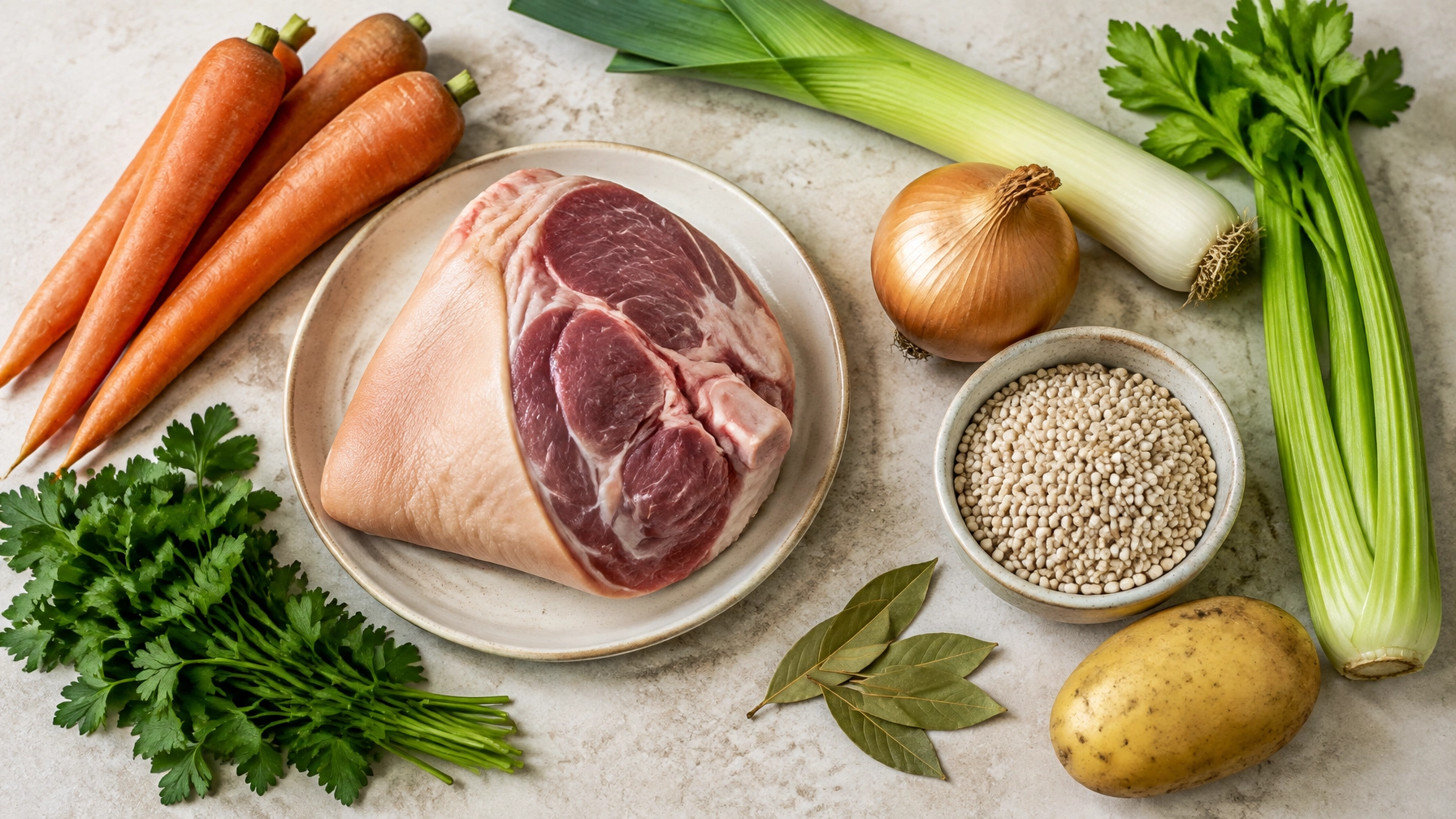
The hock is cooked from raw rather than added as leftover meat. This gives the broth time to develop a deep savoury flavour while the connective tissue softens into the liquid. Pearl barley adds body without making the broth heavy, while carrot, leek, onion, celery, and potato provide a practical root-vegetable base.
The result is thick enough to be substantial but still loose enough to qualify as a broth. It is suitable for batch cooking and becomes more concentrated after chilling.
Control
A gentle simmer is required throughout the main cooking stage. A rapid boil can make the broth cloudy and cause the meat to break into coarse fibres. A low simmer extracts flavour gradually and leaves the finished broth clearer.
The hock should be cooked until tender rather than judged by time alone. Larger joints may require an additional 30 minutes. The bone should expose itself as the meat contracts, and the meat should separate under light pressure from a fork.
Barley absorbs liquid continuously. If the broth is being served later, keep extra stock or boiling water available for adjustment. The same quantity can be a light broth on the first day and a thick barley soup on the second.
For general food safety guidance, consult the Food Standards Agency food safety information.
Storage
Cool the broth promptly after cooking. Divide it between shallow containers to reduce the cooling time, then refrigerate once the steam has reduced. Use refrigerated broth within 3 days.
Reheat only the portion required. Heat it until steaming hot throughout, stirring several times. Add water or unsalted stock if the barley has absorbed too much liquid.
The broth can also be frozen in individual portions. Leave room in each container for expansion. Defrost in the refrigerator and reheat thoroughly before serving. The barley may soften further after freezing, but the flavour remains suitable for a second serving.
Variations
For a stronger vegetable profile, replace half the potato with swede or parsnip. Cut either vegetable into small cubes so it cooks within the barley’s cooking time.
For a greener finish, stir in shredded kale during the final 5 minutes. Cabbage can be used in the same way, although it gives the broth a more pronounced brassica flavour.
For a thinner broth, use 75 g of pearl barley rather than 100 g and retain more of the ham cooking liquid. For a thicker result, use 125 g of pearl barley and allow the broth to stand for 15 minutes before serving.
If using a previously cooked ham hock, reduce the first simmer to 30 minutes and add the meat with the vegetables. The flavour will be less concentrated than when the hock is cooked from raw.
Questions
Can the ham hock be cooked the day before?
Yes. Cook the hock until tender, strain and refrigerate the cooking liquid, then remove the meat from the bone once cool. The following day, skim any solidified fat from the liquid, add the barley and vegetables, and finish the broth as directed.
Should pearl barley be soaked first?
No. Rinsing is sufficient. Soaking reduces the cooking time slightly but is not necessary for this method.
Why is the broth salty?
The hock may be heavily cured. Soaking it before cooking helps reduce the salt level. Do not season the broth until the ham has been shredded and returned to the pot.
Can this be made in a slow cooker?
Yes, but the hock should first be brought to the boil in a saucepan and any surface foam removed. Transfer it to the slow cooker with the cooking liquid and vegetables. Add the barley during the final 1 1/2 to 2 hours so it does not become excessively soft.
Can the broth be made without potato?
Yes. Replace the potato with extra carrot, swede, parsnip, or leek. The pearl barley will still provide the main thickening effect.