Recipe
Serves
4 1×
Serves 4Prep 10 minCook 20 minTotal 30 min
Ingredients
Method
- Start the rice. Place the rinsed rice in a saucepan with the water specified on the package. Bring it to a boil, cover, reduce the heat and cook until tender. Most white rice takes approximately 15 minutes. Keep it covered off the heat while the remaining components are prepared.
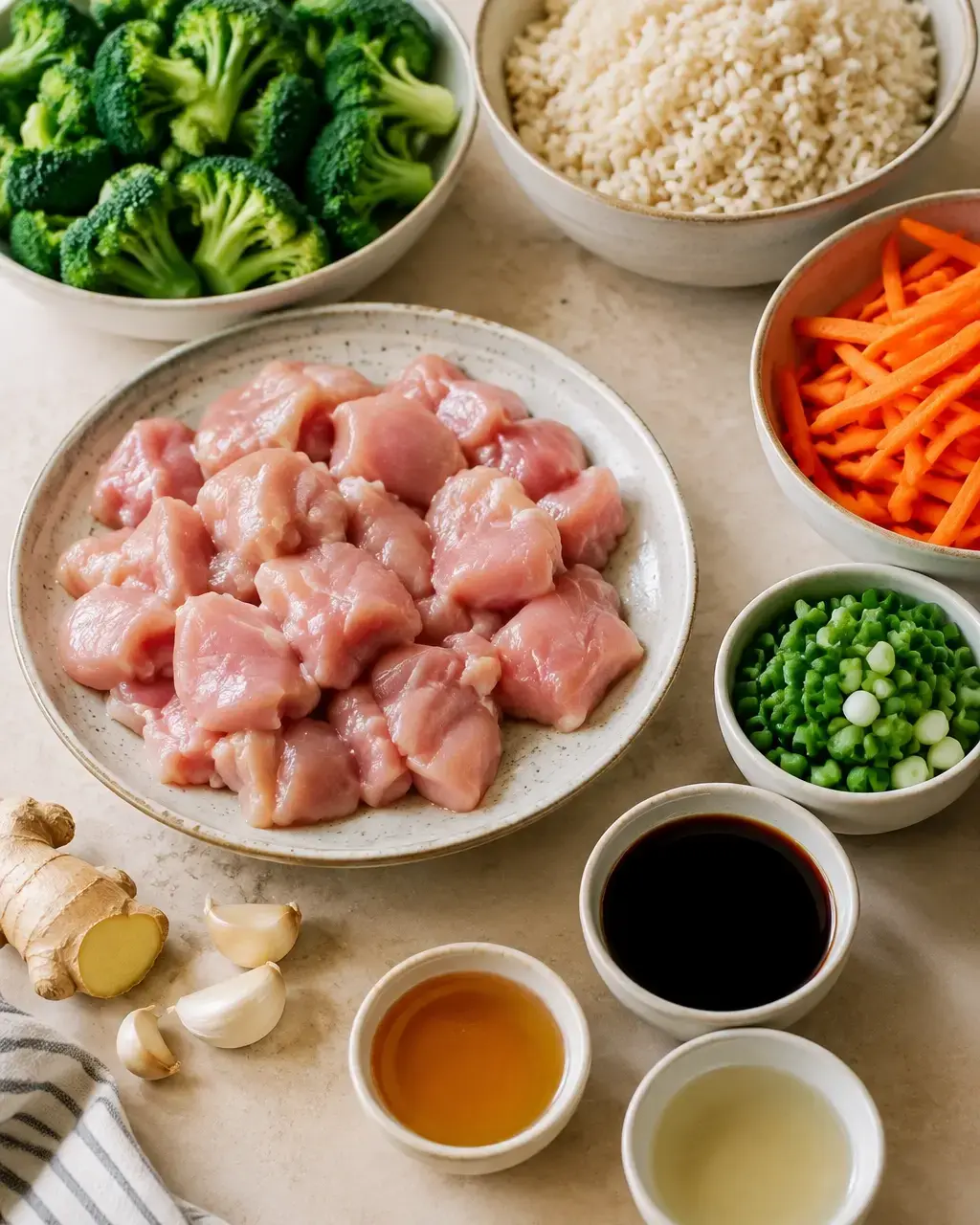
- Prepare the chicken and vegetables. Pat the chicken dry and cut it into pieces of similar size. Season with black pepper. Cut the broccoli and carrot so they cook quickly and evenly.
- Mix the sauce. In a bowl, whisk together the soy sauce, ¼ cup water, honey or maple syrup, rice vinegar, garlic, ginger and sesame oil. In a separate small bowl, whisk the cornstarch with 1 tablespoon cold water until smooth. This is the thickening slurry.
- Cook the chicken. Heat the oil in a large skillet over medium-high heat. Add the chicken in a single layer. Cook for 3 to 4 minutes without moving it, then stir and continue cooking for another 3 to 5 minutes.
- Cook the vegetables. Add the broccoli and carrot to the same skillet. Cook for 3 to 5 minutes, stirring regularly, until the vegetables are bright and tender-crisp. Add 1 tablespoon of water and cover the pan briefly if softer broccoli is required.
- Thicken the sauce. Reduce the heat to medium. Pour the prepared sauce into the skillet. Stir the cornstarch slurry once more, then add it gradually while stirring. Simmer for 1 to 2 minutes, until the sauce is glossy and lightly thickened.
- Combine. Return the cooked chicken to the skillet. Toss it with the sauce and vegetables for 1 to 2 minutes, until everything is hot and evenly coated.
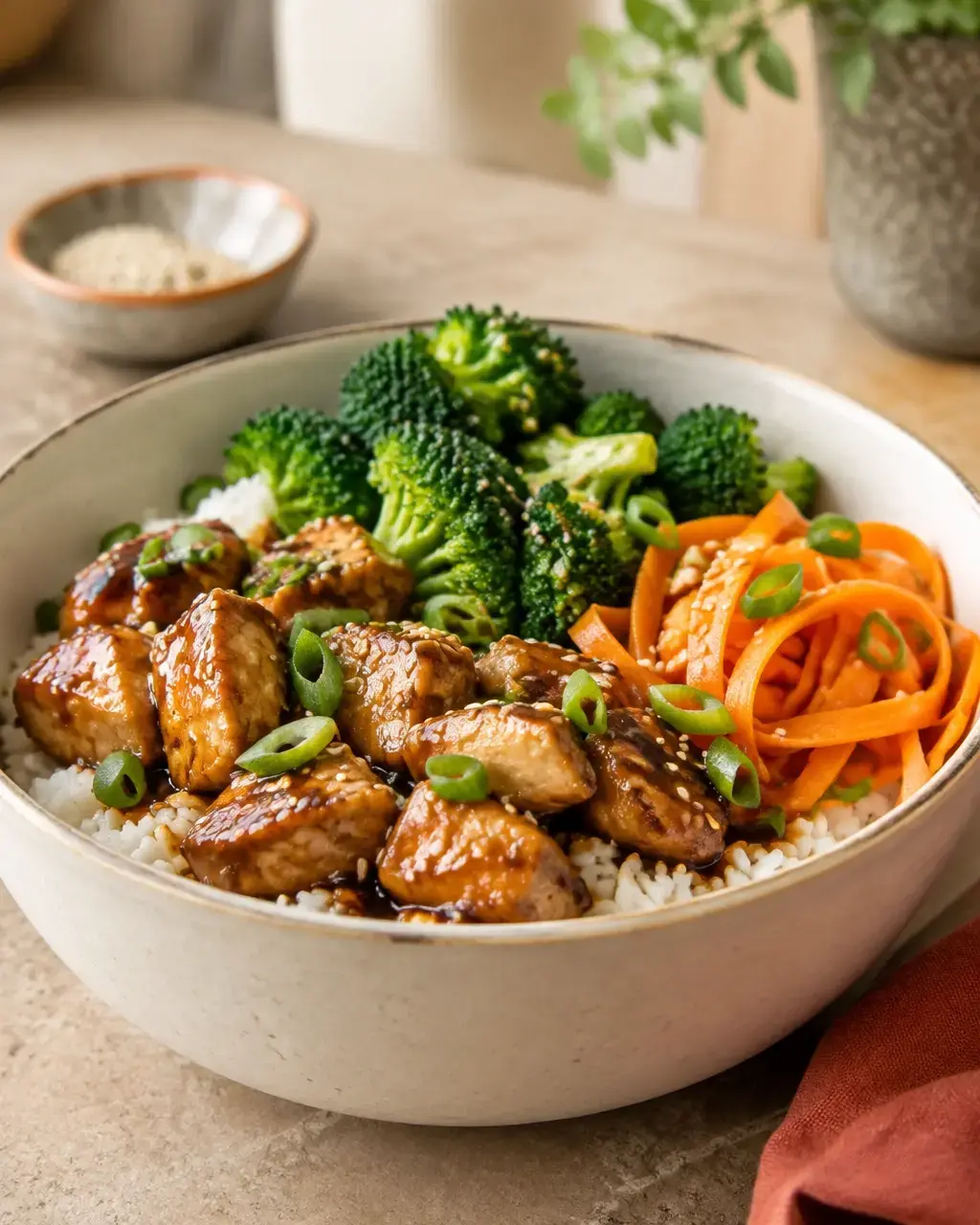
- Assemble the bowls. Divide the rice between four bowls. Add the chicken, broccoli and carrots. Finish with sliced scallions and sesame seeds, if used. Serve immediately.
Healthy Chicken Teriyaki Bowl (30-Minute)
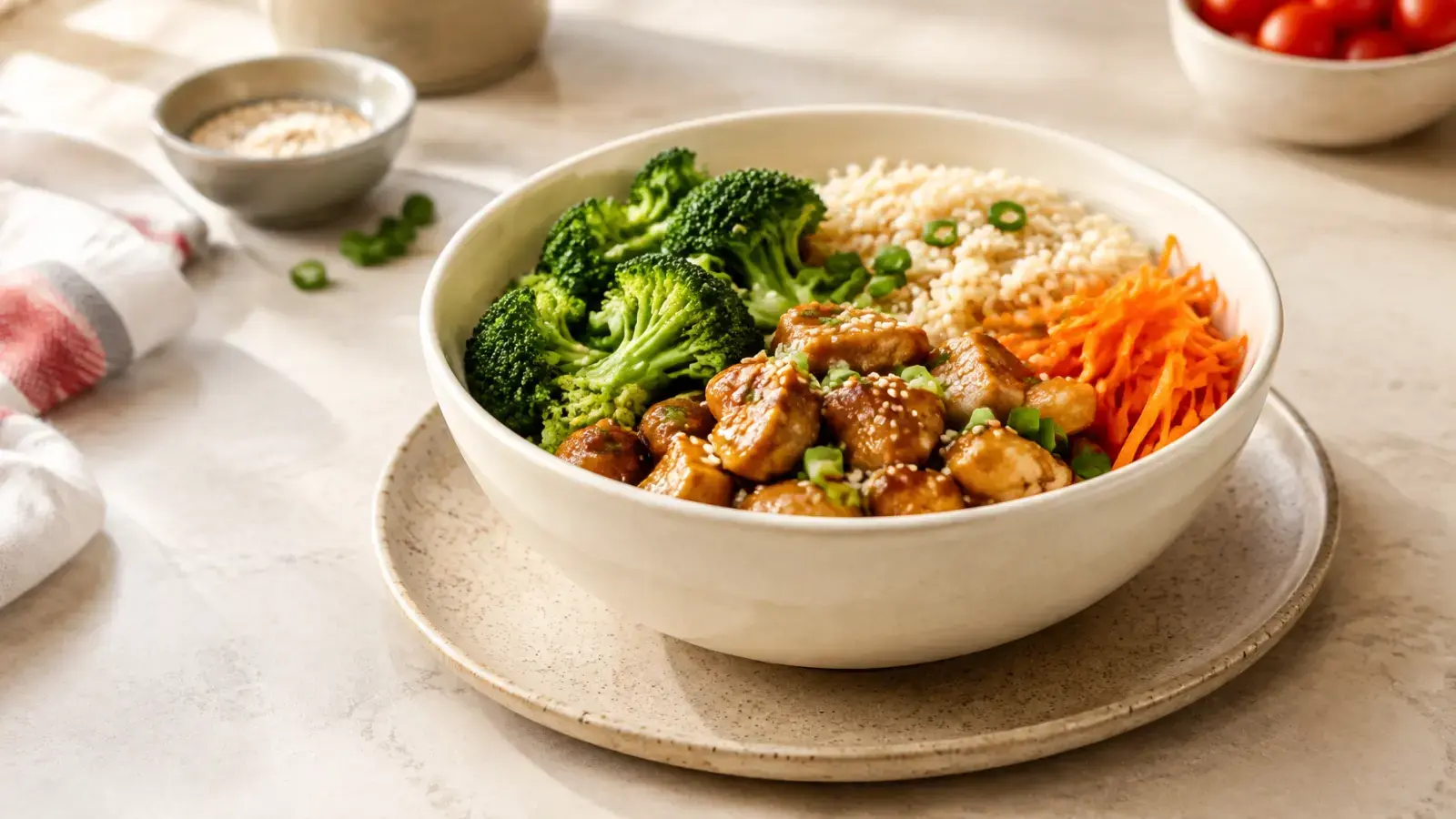
A chicken teriyaki bowl is a practical one-pan meal when the sauce is controlled and the vegetables remain prominent. This version uses lean chicken, broccoli, carrots, rice and a lightly sweetened teriyaki sauce made with low-sodium soy sauce.
The sauce is prepared separately. This avoids using liquid that has contacted raw chicken and gives better control over sweetness and sodium. For food safety, chicken must reach 165°F (74°C) in the thickest piece, consistent with FoodSafety.gov guidance.
Definition
teriyaki (noun): A Japanese-style cooking method involving a glossy sauce commonly made with soy sauce, sugar or another sweetener, and aromatics.
This recipe is not presented as a traditional regional preparation. It is a weeknight bowl using familiar teriyaki-style ingredients and a measured cooking process.
Tips
- Use a large skillet. Crowding the chicken causes it to steam rather than brown. Cook in two batches if the pan is small.
- Cut consistently. Pieces of approximately 1 inch cook more evenly than mixed-size pieces.
- Do not add extra salt automatically. Soy sauce already contributes sodium. Taste the finished sauce before making any adjustment.
- Use pre-cooked rice for strict timing. Brown rice generally requires longer than 30 minutes unless it has been prepared in advance.
- Keep the sauce separate from raw chicken. This recipe does not use a marinade. If any sauce has contacted raw chicken, it must be thoroughly boiled before use.
- Measure the oil and sweetener. These are the simplest ways to control the energy and sugar content of the bowl.
- Check the temperature. Colour and texture are not reliable substitutes for a food thermometer. Chicken should reach 165°F (74°C) in the thickest piece.
Variations
- Brown rice bowl: Use cooked brown rice. Prepare it in advance because its cooking time may exceed the stated 30 minutes.
- Lower-carbohydrate bowl: Replace the rice with cauliflower rice. Cook it separately until tender, then assemble as directed.
- Extra-vegetable bowl: Add sliced bell pepper, green beans, mushrooms or shredded cabbage with the broccoli.
- Gluten-free bowl: Replace soy sauce with certified gluten-free tamari. Verify all packaged ingredients before use.
- Spicy bowl: Add ½ teaspoon of red pepper flakes or 1 teaspoon of sriracha to the sauce.
- Tofu version: Replace the chicken with pressed extra-firm tofu. Brown the cubes in oil before adding the vegetables and sauce.
- Sesame chicken version: Add an additional teaspoon of sesame seeds immediately before serving. The nutritional profile will change slightly.
Nutrition
Nutrition values vary according to the chicken cut, rice portion, oil, soy sauce and sweetener used. The main protein source is chicken. Rice provides most of the carbohydrate, while broccoli and carrots contribute fibre and micronutrients. Low-sodium soy sauce reduces, but does not eliminate, the sodium content.
For the most precise information, calculate the recipe using the exact brands and quantities used. This is particularly relevant for soy sauce, rice and honey.
FAQ
Can I make this chicken teriyaki bowl ahead of time?
Yes. Cool the chicken, rice and vegetables promptly, then refrigerate them in airtight containers. Store for up to 3 days. Keep toppings such as scallions and sesame seeds separate where possible.
How should I reheat the leftovers?
Reheat the rice, chicken and vegetables until steaming hot throughout. The chicken should reach 165°F (74°C) when reheated. Add a teaspoon of water before microwaving if the rice has dried out.
Can I use chicken thighs instead of chicken breast?
Yes. Boneless, skinless chicken thighs remain moist and have a richer flavour. Trim visible fat and check the thickest piece with a thermometer. The required safe temperature remains 165°F (74°C).
Why is my teriyaki sauce too thin?
The cornstarch slurry may not have simmered long enough, or too much liquid may have been added. Simmer the sauce for another 30 to 60 seconds. If necessary, mix ½ teaspoon cornstarch with 1 teaspoon cold water and add it gradually.
Why is my sauce too thick?
Whisk in water, 1 teaspoon at a time, until the required consistency is reached. Avoid adding dry cornstarch directly to the hot pan because it can form lumps.
Can I use store-bought teriyaki sauce?
Yes, but check the label for sodium and added sugar. Use approximately ½ cup, or enough to coat the chicken and vegetables without making the bowl excessively wet. A homemade sauce provides more direct control over the ingredients.
Can I freeze this recipe?
The chicken and sauce can be frozen for up to 2 months in a sealed container. Rice can also be frozen if cooled and stored correctly. Broccoli may soften after freezing and reheating. Thaw in the refrigerator and reheat thoroughly.
Sources
- FoodSafety.gov: Safe minimum internal temperatures
- USDA FSIS: Safe temperature chart