Recipe
Ingredients
Method
- Place the chicken in a bowl. Add the soy sauce, rice vinegar, cornstarch and 1 teaspoon of oil. Toss until the chicken is evenly coated. Set aside while the remaining ingredients are prepared.
- In a separate bowl, whisk together the reduced-sodium soy sauce, chicken stock, rice vinegar, honey, cornstarch and chili-garlic sauce. The cornstarch must be fully dissolved before the sauce enters the hot pan.
- Heat a large wok or skillet over high heat. Add half of the stir-fry oil. When the oil is hot, add the chicken in one layer. Cook for 3 to 4 minutes, turning occasionally, until lightly browned. Transfer the chicken to a clean plate.
- Add the remaining oil to the pan. Add the dried chiles, garlic and ginger. Stir for 20 to 30 seconds. Do not allow the garlic to become dark brown.
- Add the bell peppers and broccoli or snow peas. Stir-fry for 3 to 4 minutes. The vegetables should be hot and crisp-tender. If the pan appears dry, add 1 tablespoon of water rather than additional oil.
- Return the chicken to the pan. Stir the prepared sauce once more, then pour it over the chicken and vegetables.
- Toss continuously for 1 to 2 minutes, until the sauce bubbles and becomes glossy. The chicken must reach an internal temperature of 74°C or 165°F in the thickest pieces.
- Remove the pan from the heat. Fold in the peanuts and scallions. Serve immediately with brown rice, cauliflower rice or additional vegetables.
Healthy Kung Pao Chicken (25-Minute Dinner)
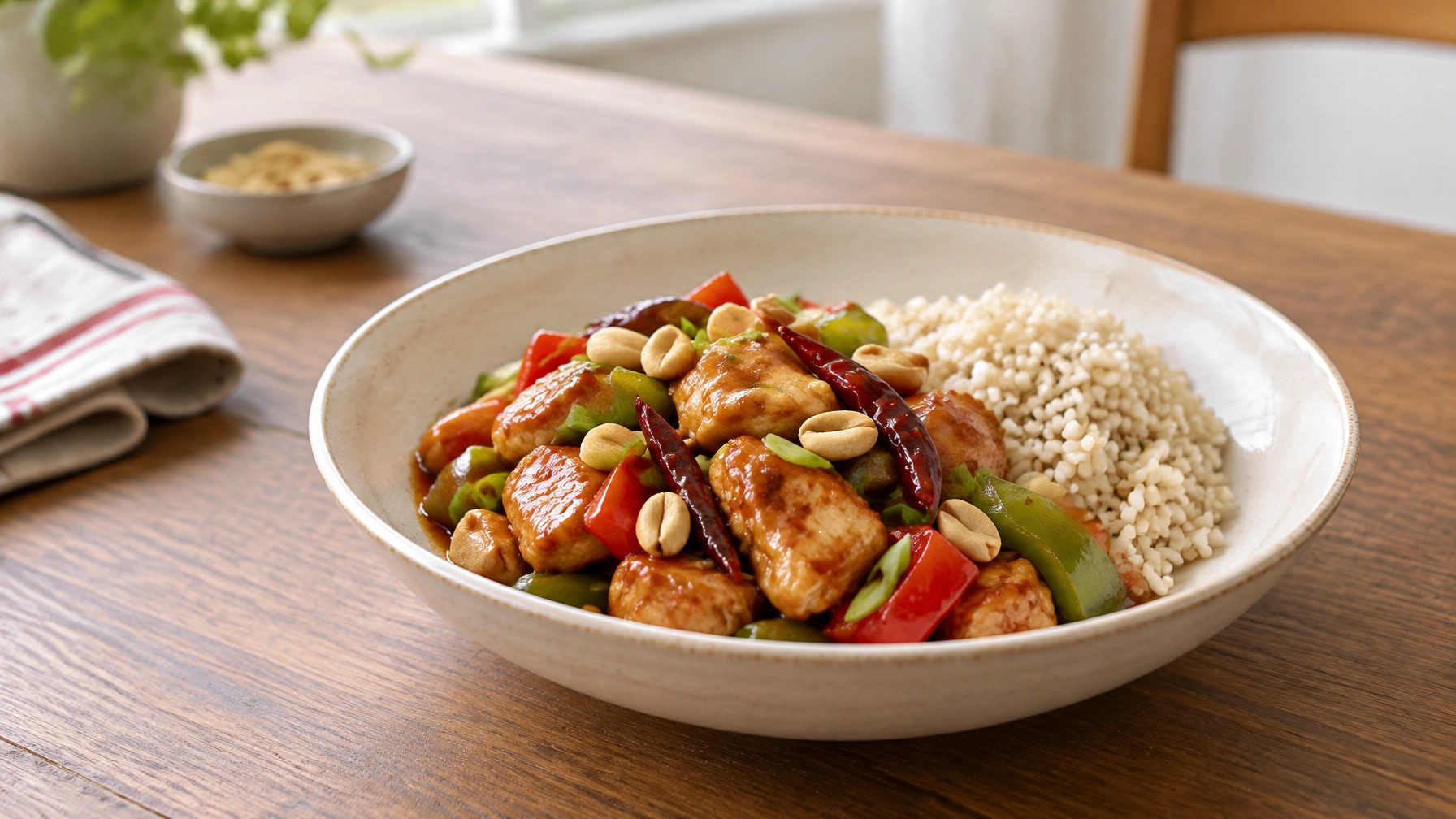
Kung pao (noun): a stir-fried dish combining small pieces of protein, vegetables, chiles, peanuts and a seasoned sauce.
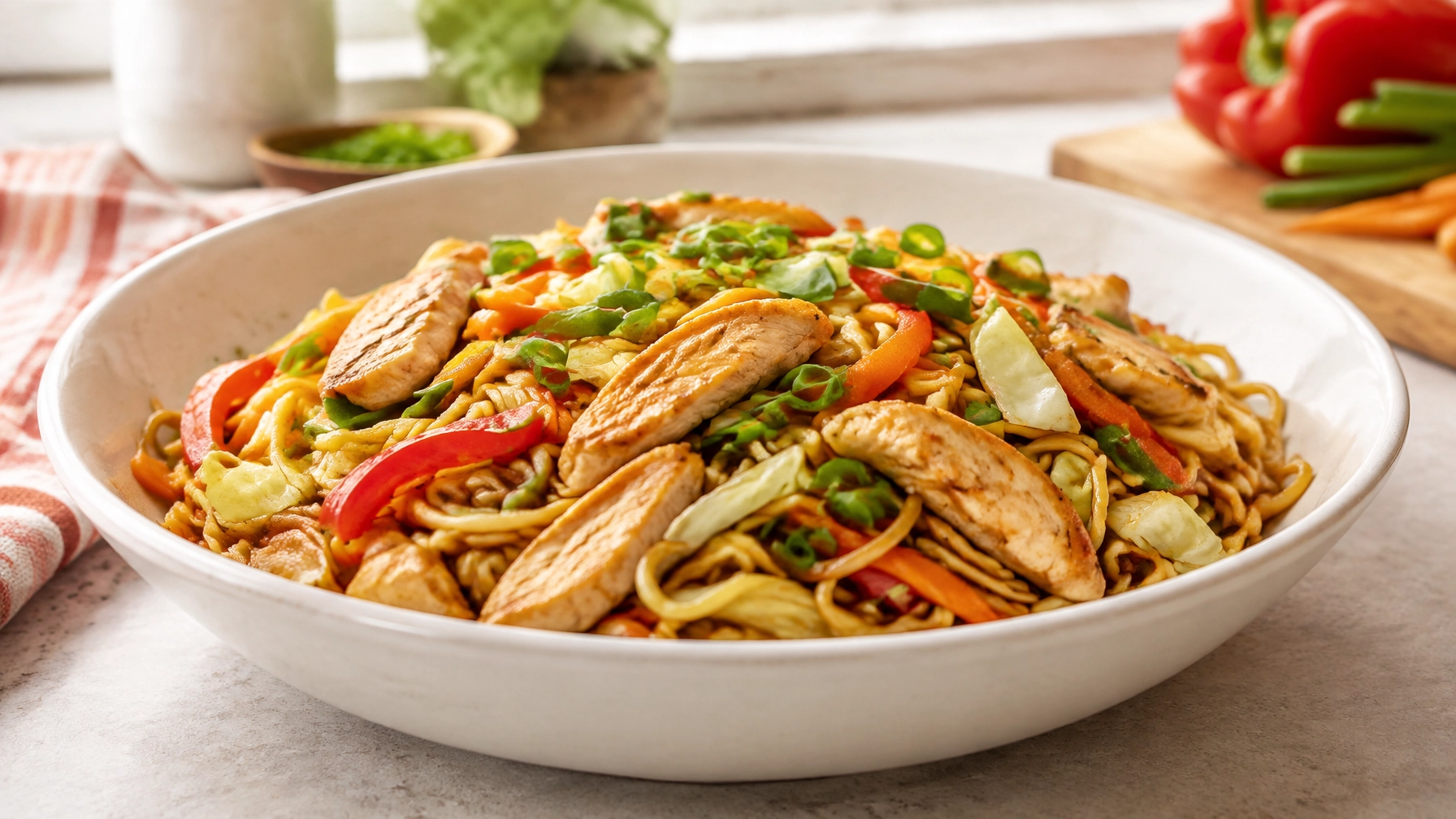
This healthy kung pao chicken is a 25-minute dinner prepared with lean chicken breast, crisp vegetables, a measured amount of oil and a lightly sweetened sauce. It remains glossy, spicy and crunchy without relying on a large quantity of sugar or bottled stir-fry sauce.
The method is administrative: prepare the sauce, heat the pan, cook the chicken, cook the vegetables, then combine. The result is suitable for a weekday meal and can be served with brown rice, cauliflower rice or additional vegetables.
Definition
The term "healthy" is used here in a limited and practical sense. This recipe uses:
- One tablespoon of cooking oil for four servings.
- Lean, boneless chicken breast.
- Four cups of vegetables.
- Unsalted peanuts in a controlled portion.
- Reduced-sodium soy sauce.
- A small amount of honey for balance.
- No packaged kung pao sauce.
The sauce remains sticky because of a small quantity of cornstarch. The texture does not require excess oil. The peanuts provide the required crunch. The dried chiles provide heat.
For sodium information, check product labels and refer to the FDA Daily Value guidance.
Schedule
The 25-minute estimate applies when all ingredients are prepared before cooking.
- Preparation: 10 minutes
- Cooking: 15 minutes
- Total: 25 minutes
- Servings: 4
Start rice before preparing the stir-fry if rice is being served. Use a large wok or skillet. A crowded pan loses heat and causes the ingredients to steam instead of brown.
Preparation
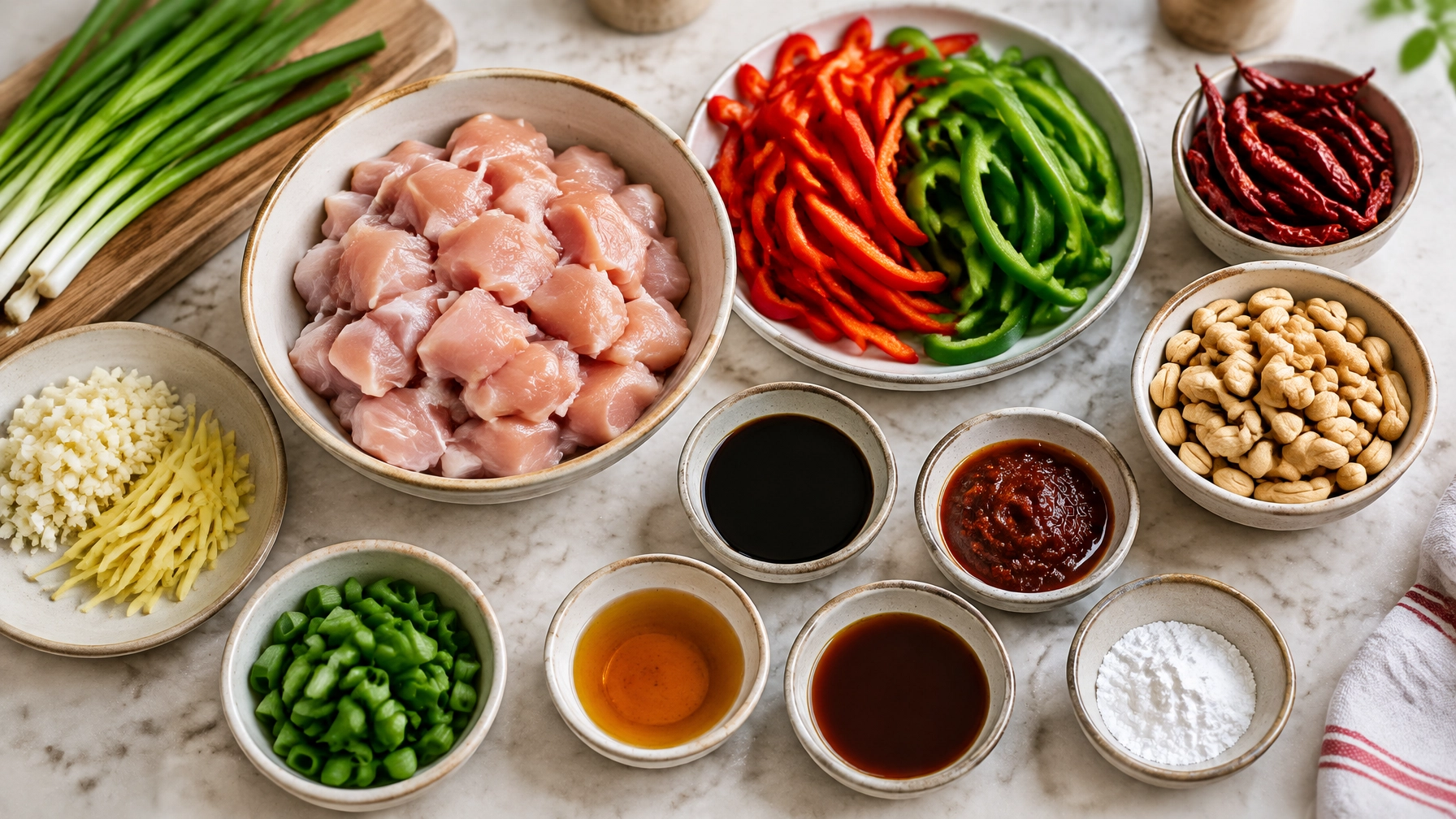
Cut the chicken into pieces of similar size. This supports even cooking and allows the internal temperature to be checked efficiently.
Prepare the sauce before heating the pan. Stir-frying moves quickly. Measuring ingredients during cooking increases the risk of burning the aromatics or overcooking the chicken.
The vegetables should remain slightly firm. Red bell pepper, green bell pepper, broccoli, snow peas and carrots are suitable. Use fresh vegetables or a plain frozen stir-fry mix.
Recipe
Technique
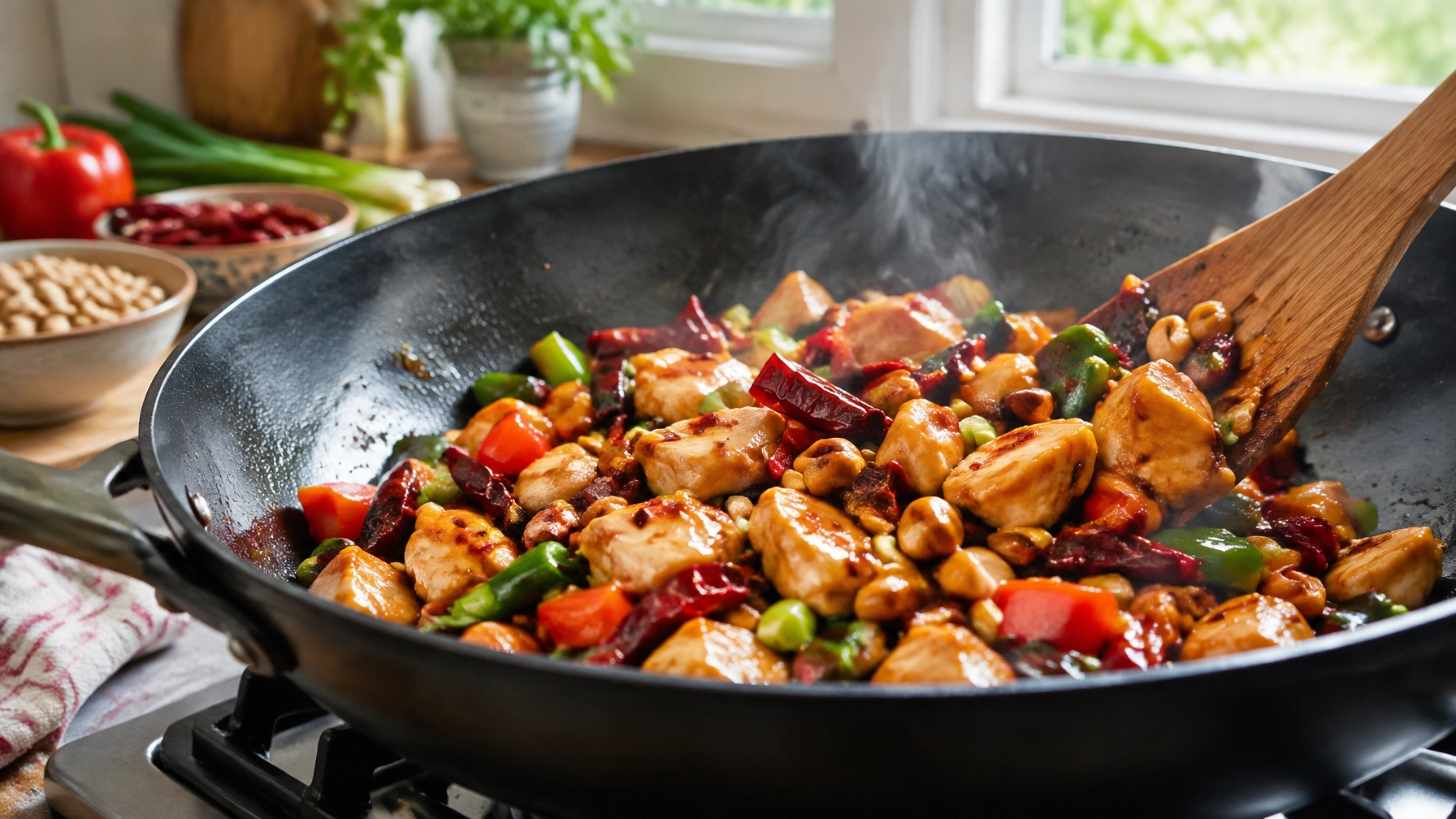
The pan must be hot before the chicken is added. A moderate temperature produces pale, wet chicken and extends the cooking time.
Cook the chicken separately from the vegetables. This gives both components direct contact with the pan and prevents the vegetables from becoming soft while the chicken cooks.
The sauce should be added only after the chicken and vegetables are nearly finished. Cornstarch thickens rapidly when heated. Early addition can cause the sauce to stick before the ingredients are cooked.
Do not use the raw-chicken plate for the finished food. Transfer the cooked chicken to a clean plate and wash hands, utensils and surfaces that contacted the raw chicken.
Variations
Lower carbohydrate: Replace the rice with cauliflower rice or serve the chicken over extra broccoli, peppers and snow peas.
Vegetarian: Use pressed extra-firm tofu. Cut it into cubes, coat lightly with cornstarch and sear until crisp before preparing the vegetables.
Chicken thighs: Boneless, skinless thighs provide a softer texture. Remove visible excess fat and confirm that the thickest pieces reach 74°C or 165°F.
Peanut-free: Omit the peanuts. Use unsalted sunflower seeds only if there is no seed allergy and cross-contact is controlled.
Gluten-free: Use certified gluten-free tamari in place of soy sauce. Check the labels of stock, chili-garlic sauce and other packaged ingredients.
More heat: Add more dried chiles or increase the chili-garlic sauce. Heat should be adjusted before serving, not after the sauce has reduced excessively.
Storage
Cool leftovers promptly and place them in a sealed container. Refrigerate for up to three days. Reheat in a skillet or microwave until steaming hot throughout.
Keep the rice separate where possible. Separate storage limits moisture transfer and preserves the texture of the vegetables.
Freezing is possible, but the peppers and sauce may soften after thawing. For the best result, prepare a fresh batch of vegetables and reheat only the chicken and sauce.
Questions
Can this be made without a wok?
Yes. Use the largest available skillet. The cooking surface should be wide enough to hold the chicken in a single layer. Cook in batches if necessary.
Is kung pao chicken supposed to be very spicy?
The heat level varies. Dried chiles provide direct heat, while chili-garlic sauce also adds acidity and seasoning. Start with a smaller amount and increase it at the table if required.
Why is my sauce not thickening?
The sauce may not have reached a simmer, or the cornstarch may not have been fully dispersed. Stir the sauce before adding it, then cook for 1 to 2 minutes while tossing.
Can I use frozen vegetables?
Yes. Do not thaw them first if they are suitable for stir-frying. Add them to a hot pan and allow excess water to evaporate before adding the sauce.
Can I prepare the chicken in advance?
Yes. Cut and season the chicken several hours in advance, then keep it covered in the refrigerator. Do not leave raw chicken at room temperature.
Is brown rice required?
No. Brown rice adds whole-grain texture, but the dish can be served with white rice, cauliflower rice, noodles or vegetables. The portion and side dish will affect the total nutrition of the meal.
Result
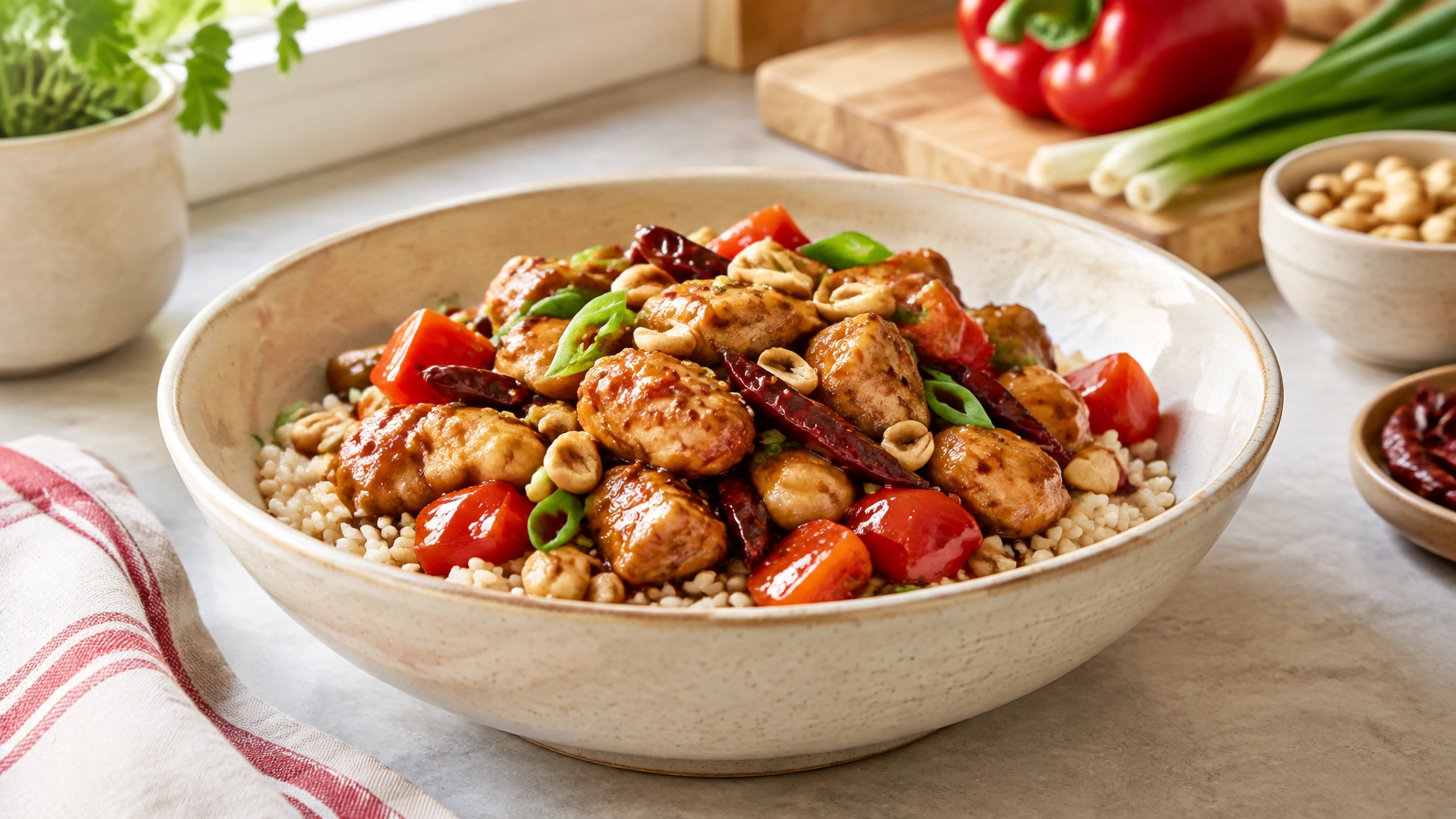
This recipe produces tender chicken, crisp vegetables, a controlled level of heat and a glossy sauce. The preparation remains within the 25-minute schedule when the ingredients are measured before cooking.
The governing requirements are simple: maintain high heat, avoid crowding, add the sauce at the end and verify the chicken temperature. Compliance with these requirements produces the intended result.