Recipe
Servings
Servings 1×
Ingredients
- Pork
- Apple
- Garlic
- Lemon
- Honey
- Mustard
- Cooking oil
- Salt
Method
- Keep the method simple, respect the heat, and let the pan do the heavy lifting.
- Use pork chops that are roughly ¾ to 1 inch thick.
- Start with a dry surface.
- Pat the pork and vegetables dry before seasoning or cooking.
- Give the pan enough heat before the food goes in.
- Arrange the sprouts cut-side down whenever possible so the flat surfaces make firm contact with the pan.
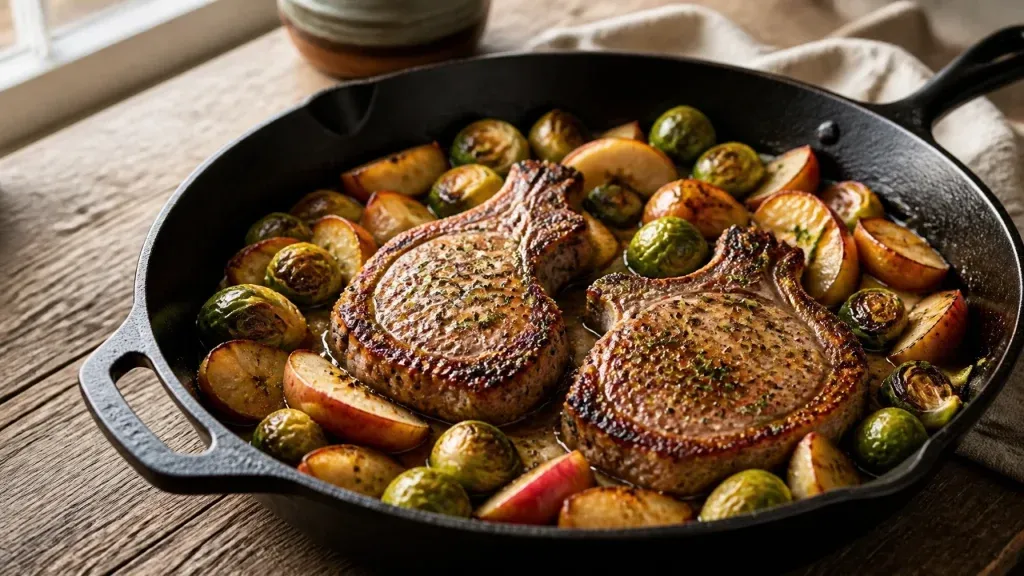
When dinner needs to be healthy, filling, and finished before everyone gets dramatic about being hungry, reach for this one-pan pork chop dinner. Juicy pork, sweet roasted apples, and crisp-edged Brussels sprouts bring protein, fiber, color, and plenty of flavor without creating a sink full of dishes. Keep the method simple, respect the heat, and let the pan do the heavy lifting.
Why This One-Pan Dinner Works
The magic here is contrast. Pork chops bring savory richness, apples add gentle sweetness, and Brussels sprouts contribute a slightly bitter, nutty edge. Together, they taste far more complicated than they are. That is exactly what you want from practical weeknight cooking.
Use pork chops that are roughly ¾ to 1 inch thick. Very thin chops can cook before they develop good browning, while extremely thick chops may need a longer oven finish. Bone-in chops usually stay a little juicier, but boneless loin chops work well when you keep a close eye on their temperature.
Start with a dry surface. Pat the pork and vegetables dry before seasoning or cooking. Water creates steam, and steam is the sworn enemy of browning. A dry surface lets the heat trigger the Maillard reaction, the series of chemical changes that creates the browned, savory flavors you associate with a good sear.
Salt the pork ahead of time when possible. Even 20 to 30 minutes gives the salt time to move slightly into the surface, seasoning the meat more evenly. If dinner is happening immediately, season just before cooking and carry on. There is no need to turn a Tuesday into a culinary scheduling meeting.
Give the pan enough heat before the food goes in. A large cast-iron or oven-safe stainless-steel skillet is ideal because it holds heat well and can move from stovetop to oven. If you use a sheet pan, preheat it in the oven. A hot cooking surface begins browning immediately instead of allowing the pork and vegetables to sit in their own moisture.
Create space between the Brussels sprouts. Crowding traps steam and leaves you with pale, soft vegetables. Arrange the sprouts cut-side down whenever possible so the flat surfaces make firm contact with the pan. That contact encourages browning and gives the sprouts a sweeter, toastier flavor.
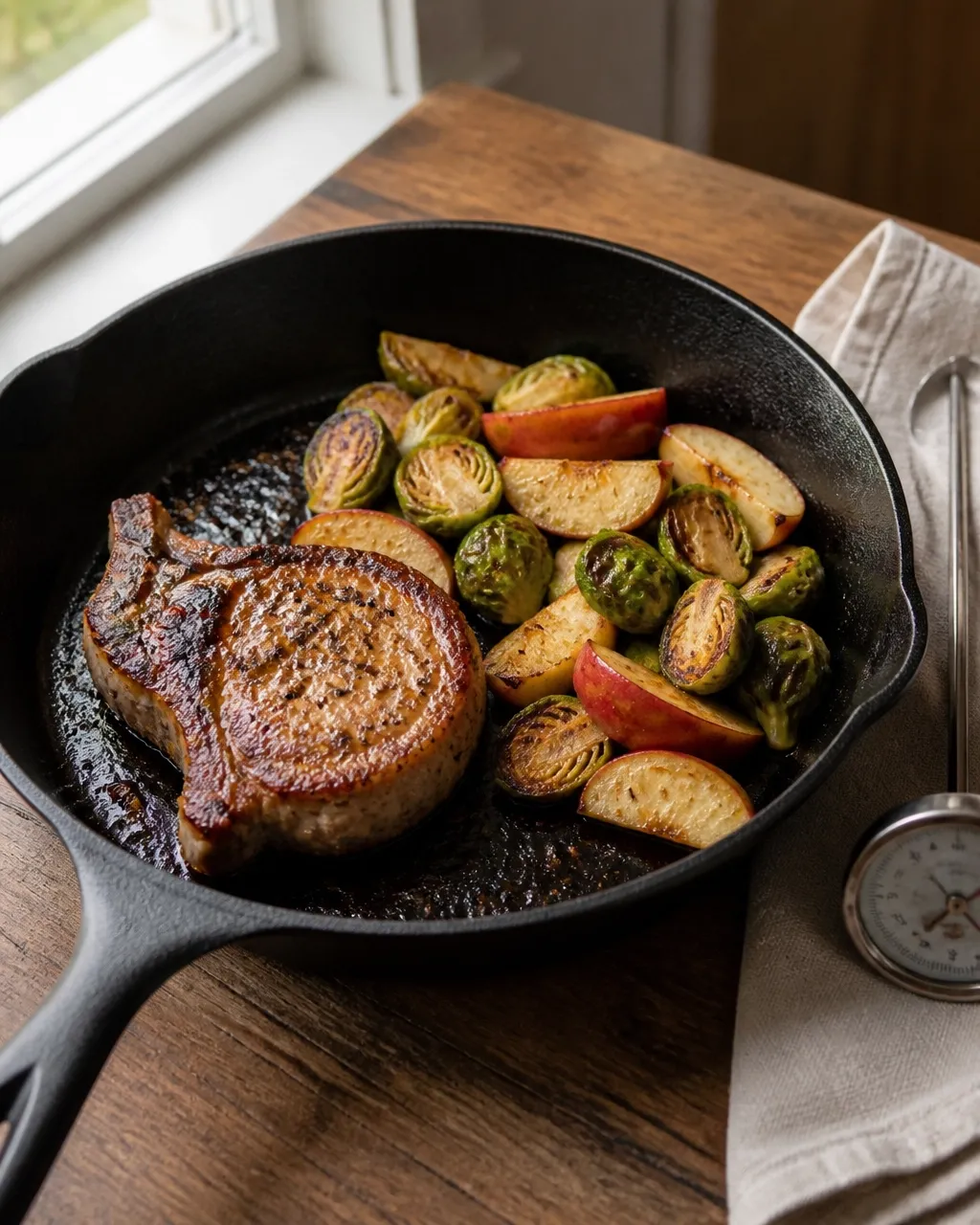
Watch the apples carefully. Apples soften faster than Brussels sprouts, particularly when sliced thinly. Cut them into sturdy wedges or generous chunks so they keep some shape while roasting. Choose a firm variety with a balance of sweetness and acidity, such as Honeycrisp, Pink Lady, or Granny Smith. The acidity helps keep the dish from tasting flat, while the natural sugars brown around the edges.
Do not drown the pan in oil. Use enough to lightly coat the vegetables and help transfer heat, but avoid turning the meal greasy. Pork releases some fat as it cooks, and the vegetables can pick up that flavor without swimming in it.
For the best texture, brown the pork first when using a skillet. Cook it undisturbed long enough to form a crust, then turn it once. Constant flipping cools the cooking surface and interrupts browning. After searing, arrange the vegetables around the chops and finish everything in the oven if needed.
Use a thermometer rather than guessing from color. The USDA safe temperature chart recommends cooking whole cuts of pork, including chops, to 145°F (63°C), followed by at least a three-minute rest. Insert the thermometer into the thickest part of the chop without touching the bone. Remove the pork when it reaches the safe temperature, then let it rest before slicing.
Resting is not optional if you want juicy pork. Heat pushes moisture toward the center of the meat. A short rest gives those juices time to redistribute instead of running across your cutting board. Use that pause to toss the vegetables with the browned juices in the pan.
Finish with acidity. A small splash of apple cider vinegar, lemon juice, or a sharp mustard-based pan sauce wakes up the sweetness and richness. Think of acidity as the volume control on flavor: it makes everything taste clearer without adding heaviness.
For another fast pork method, try Cookpedia’s Air Fryer Honey Garlic Pork Chops, or browse the 30-minute dinner collection when your evening needs a reliable shortcut.
Variations That Keep the Pan Interesting
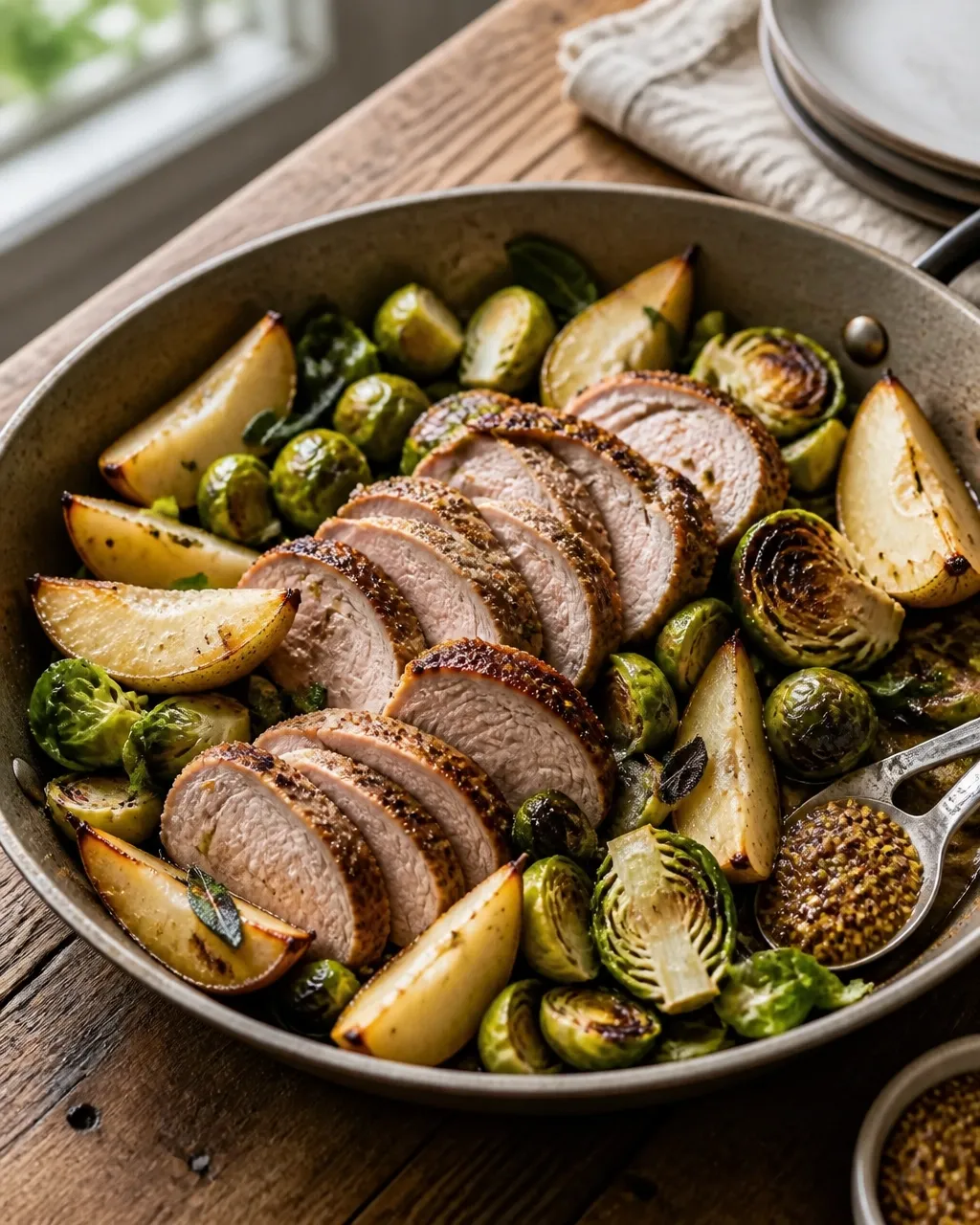
Swap apples for firm pears when you want a softer, floral sweetness. Pears can become tender quickly, so use larger pieces and add them later in the cooking process. For a sharper result, keep the apples and add a spoonful of whole-grain mustard to the finishing sauce.
Change the herb profile to suit the season. Rosemary gives the pork a piney, savory character, while sage leans earthy and autumnal. Thyme is milder and works well when you want the fruit and vegetables to take center stage. Add the herbs early enough for their oils to warm, but finish with a little fresh herb if you want a brighter aroma.
Use sweet potatoes or delicata squash in place of some of the Brussels sprouts for a heartier pan. Cut them small enough to cook within the same general window. Large pieces will remain firm while your pork threatens to overcook, which is not the kind of suspense anyone requested at dinner.
Make it dairy-free by keeping the pan sauce simple with stock, mustard, and cider vinegar. Add toasted walnuts or pumpkin seeds at the table for crunch. If you enjoy a little heat, use cracked black pepper, red pepper flakes, or a pinch of smoked paprika.
For leaner pork, choose boneless loin chops and avoid cooking beyond the recommended temperature. For more robust flavor, use bone-in rib chops and allow a little extra time for the center to heat through. The pan method stays the same; thickness controls the timing.
Side Dish Pairings for Balance
This pan already includes fruit and vegetables, so choose sides that add contrast rather than more of the same. A sharply dressed arugula salad is a natural match. Its peppery bite and lemony dressing cut through the pork’s richness while keeping the meal fresh.
Add a small portion of farro, barley, or brown rice when you need extra staying power. Their chewy texture makes the plate feel complete without requiring a heavy sauce. Keep the grain simply seasoned so it does not compete with the apples.
For a lighter option, serve the pork with steamed green beans or a crisp cabbage slaw. Both bring freshness and crunch, especially if the roasted apples are soft and sweet. A spoonful of mustard vinaigrette ties the vegetables together.
If you are feeding very hungry people, add a piece of crusty whole-grain bread for catching the pan juices. Keep the portion sensible; the pork, sprouts, and apples are already doing plenty of work.
Explore Cookpedia’s healthy recipe collection for more balanced combinations, or visit the quick meals section when you need more quick family meals for busy nights.
FAQ: One-Pan Pork Chops, Apples, and Brussels Sprouts
What if my pork chops are dry?
The most common causes are overcooking, very thin chops, or skipping the resting period. Check the internal temperature early, especially if the chops are less than ¾ inch thick. Remove whole-muscle pork at 145°F, then rest it for at least three minutes. Do not rely on a fixed cooking time alone because chop thickness, pan material, and oven temperature all change the result.
What if the Brussels sprouts are still hard when the pork is done?
Remove the pork and let it rest under loose foil while the vegetables continue cooking. Brussels sprouts vary greatly in size, so large halves need more time than small ones. Cut oversized sprouts into quarters before cooking, and keep the cut sides against the hot pan. If they are browning too quickly but remain firm, lower the heat slightly or add a small splash of water and cover briefly to soften the centers.
What if the apples turn mushy?
Use firm apples and cut them into thick wedges rather than thin slices. Add them after the Brussels sprouts have had a head start if your apple variety softens quickly. A little browning is desirable, but apples should still hold their shape. Avoid stirring constantly; gentle handling preserves their texture.
Can I make this with frozen Brussels sprouts?
You can, but expect less browning. Frozen sprouts contain more surface moisture, so they tend to steam before they roast. Thaw and dry them thoroughly if possible, then give them plenty of space in the pan. Fresh sprouts are the better choice when crisp edges are the priority.
Should I rinse pork chops before cooking?
No. Rinsing raw pork can spread bacteria around the sink and nearby surfaces. Pat the chops dry with paper towels, season them, and wash your hands and tools well after handling raw meat. A dry surface is also better for browning, so skipping the rinse improves both safety and texture.
Can I prepare this as one of my air fryer recipes dinner options?
The flavors can move to an air fryer, but the cooking setup changes. Air circulation is excellent for browning pork and Brussels sprouts, while apples may soften faster than expected. Cook in a single layer, avoid overcrowding, and check the pork with a thermometer. For a tested Cookpedia air-fryer pork option, use the honey garlic pork chop recipe.
Is this suitable for meal prep?
Yes, with one adjustment: cook the pork just to its safe temperature rather than taking it far beyond it. Store the pork and vegetables in airtight containers, then reheat gently so the meat does not dry out. Keep any acidic finishing sauce separate and add it after reheating. The apples and Brussels sprouts will soften slightly overnight, but their flavor will remain strong.
What if I do not have an oven-safe skillet?
Use a heavy sheet pan or sear the pork in a skillet, then transfer everything to a baking dish. The key principles remain the same: dry the food, preheat the cooking surface, avoid crowding, and use a thermometer. One-pan cooking is about reducing cleanup, not winning a cookware loyalty contest.
How do I make this one of my healthy dinner ideas without feeling restricted?
Focus on balance rather than subtraction. Keep the pork portion sensible, fill the pan with Brussels sprouts, use apples for natural sweetness, and finish with acidity instead of a heavy sauce. Serve a modest amount of whole grain if you need more carbohydrates. Good weeknight food should leave you satisfied, not searching the pantry 20 minutes later.