Recipe
Servings
4 servings 1×
Serves 4Prep 10 minCook 17 minTotal 27 min
Ingredients
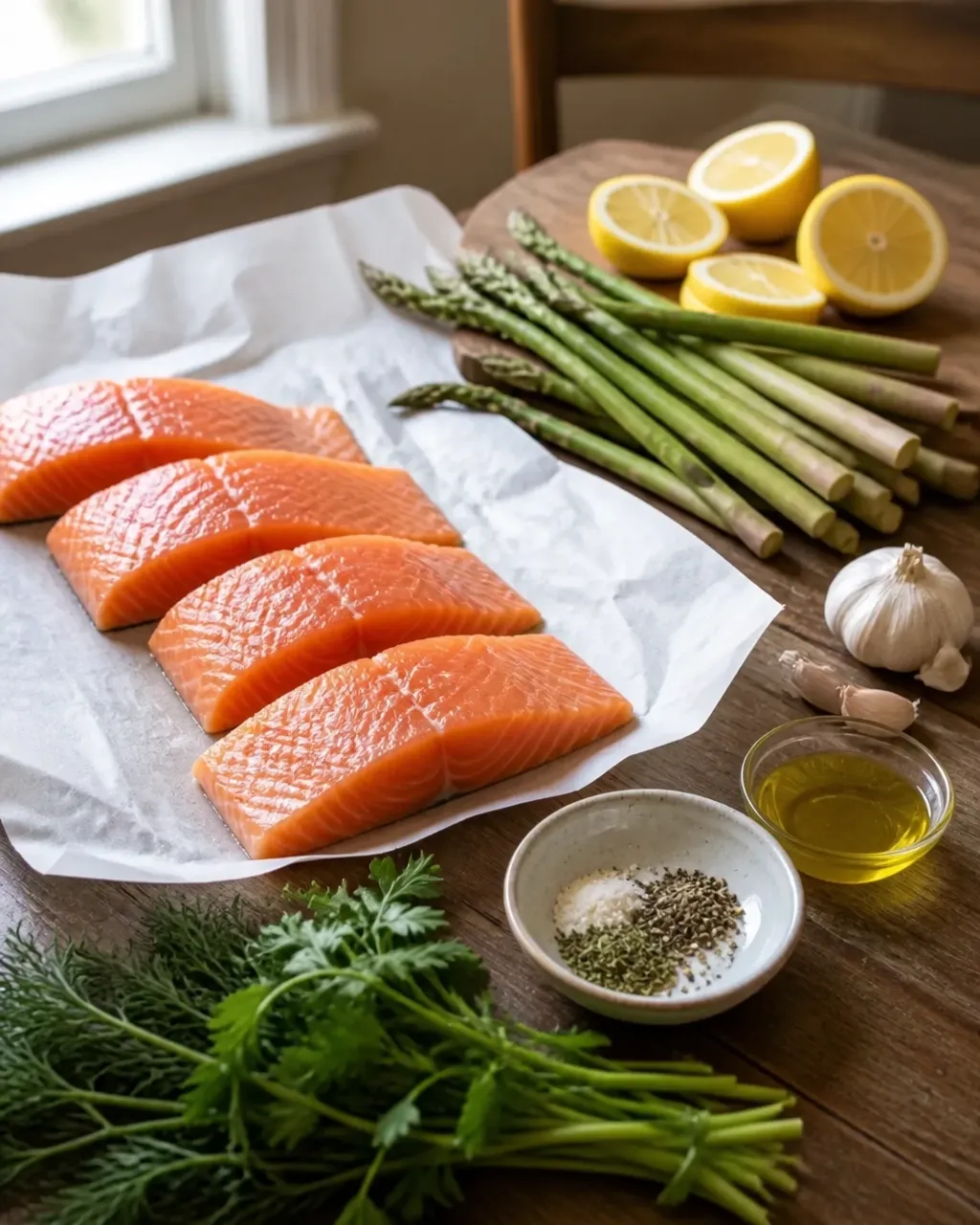
- 4 salmon fillets
- 1 pound asparagus, trimmed
- 2 tablespoons olive oil
- 1 lemon, zested and juiced
- 1 tablespoon chopped fresh dill, parsley, thyme, or oregano
- Salt and black pepper, to taste
Method
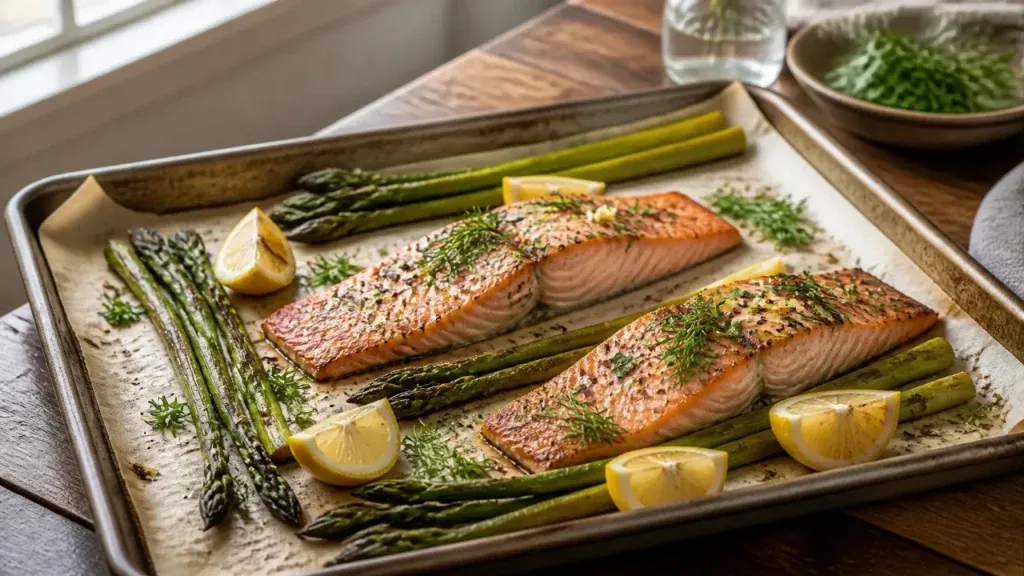
- Heat the oven to 425°F (220°C) and line a rimmed sheet pan with parchment. Pat the salmon dry.
- Toss the asparagus with half the olive oil, salt, pepper, and a little lemon zest. Spread it in a single layer and roast for 5 minutes.
- Place the salmon skin-side down among the asparagus. Brush it with the remaining oil and season with salt, pepper, lemon zest, and herbs.
- Roast for 10–12 minutes more, until the salmon flakes easily and the thickest part reaches 145°F (63°C).
- Let the fish rest briefly. Finish the salmon and asparagus with fresh lemon juice and serve.
Some dinners ask for three pans, a sink full of dishes, and the patience of a saint. This one asks for a sheet pan, a hot oven, and a little attention to timing. Sheet pan lemon herb salmon and asparagus gives you tender fish, crisp-tender vegetables, bright citrus, and plenty of flavor without turning Tuesday night into a cooking marathon. Keep the technique simple, and let the oven do the heavy lifting.
The Heat Equation: Why a Hot Oven Matters
Sheet pan cooking works because it concentrates heat. A hot oven quickly roasts the surface of the salmon and asparagus while keeping the center tender. Use an oven temperature around 400–425°F when you want lightly browned edges and a faster dinner.
Avoid putting the pan into a cold or barely warm oven. The food will spend too long warming gradually, which can leave the asparagus soft and the salmon pale. A properly preheated oven gives you better browning and more predictable cooking.
Choose a rimmed sheet pan rather than a completely flat baking tray. It keeps oil and juices from wandering into the bottom of your oven, where they may burn and create a smell that no amount of lemon can fix. Line the pan with parchment for easier cleanup, but leave enough exposed surface around the food for hot air to circulate.
Give every piece some breathing room. Crowding traps steam, and steam is the enemy of roasting. Arrange the asparagus in a single layer and keep the salmon portions from touching. If the pan looks like a vegetable traffic jam, use a second pan. One extra tray is better than a plate of steamed, floppy spears.
Moisture Management: Pat the Salmon Dry
Before seasoning, pat the salmon dry with a paper towel. This small move makes a surprisingly large difference. Surface moisture must evaporate before browning can begin. If the fish is wet, the oven spends its early energy boiling that moisture instead of creating roasted flavor.
Drying the surface also helps oil, herbs, salt, and pepper cling more evenly. Use enough oil to coat lightly, not enough to create a puddle. Oil improves heat transfer and helps the surface color, while too much can make the fish greasy and encourage the herbs to slide away.
Keep the salmon skin-side down if the fillets have skin. The skin acts as a protective layer between the delicate flesh and the hot pan. It also makes the fish easier to lift after roasting. You do not have to eat the skin, but you may discover that the oven has made it pleasantly crisp.
The Protein Question: How Salmon Changes in the Oven
Salmon contains proteins that tighten as they heat. The hotter the fish gets, the more moisture those proteins can squeeze out. That is why an overcooked fillet turns dry and firm, even when it began with plenty of natural fat.
Check the thickest part of the salmon with an instant-read thermometer rather than relying only on the clock. The United States Department of Agriculture recommends cooking fish to 145°F, or 63°C, for food safety. The fish should look opaque and flake easily when it reaches that temperature.
Expect the temperature to rise slightly while the salmon rests. This carryover cooking happens because the hotter outer layers continue transferring heat toward the center. Let the fish rest briefly before serving, but do not leave it sitting for a long time. Salmon is dinner, not a spa treatment.
Thickness matters more than the fillet’s total weight. A thick center needs longer to cook than a thin, wide piece. Check early if your portions are small, and expect a few extra minutes if they are particularly chunky.
Acidity and Aromatics: Build Brightness Without “Curing” the Fish
Lemon does more than make the plate look cheerful. Its acidity brightens rich salmon and balances the savory flavor of roasted asparagus. A little lemon juice applied shortly before cooking mainly seasons the surface, while fresh juice added after roasting gives you a sharper, more aromatic finish.
Avoid soaking salmon in lemon juice for hours. Acid gently changes the surface proteins, much like the process used in ceviche. A long marinade can make the outside firm, chalky, or oddly textured. Keep the lemon exposure short, or save most of the juice for the finished dish.
Use lemon zest when you want citrus aroma without adding too much liquid. The fragrant oils in the zest spread beautifully through olive oil and herbs. Dill, parsley, thyme, oregano, and basil all work well here, but choose one or two rather than creating a herb garden on your baking sheet.
Add delicate fresh herbs after roasting when possible. High heat can mute their greener flavors. Dried herbs handle the oven better, while fresh parsley or dill keeps the finished salmon tasting lively.
Asparagus Texture: Crisp-Tender Is the Non-Negotiable
Asparagus cooks quickly, especially thin spears. Very slender asparagus may become tender before the salmon finishes, so check it early. Thick spears can handle more oven time and may need to be placed toward the hotter edges of the pan.
Trim away the woody ends, but do not overthink it. The tender part should bend slightly and still have a little bite. Roasting develops deeper flavor than boiling because the surface loses water and concentrates the vegetable’s natural sweetness.
Use a light coating of oil and keep the spears separated. If they overlap, the trapped moisture softens them instead of allowing those delicious browned spots to form. A little unevenness is fine; real vegetables do not line up like soldiers, and your dinner does not need military discipline.
For more practical inspiration, browse Cookpedia’s healthy recipe collection, or compare this dinner with our baked lemon pepper tilapia and garlicky green beans.
Variations That Keep the Balance
Make It Mediterranean
Add sliced cherry tomatoes, olives, and a few crumbles of feta after roasting. The tomatoes bring sweetness, the olives add salty depth, and the feta contributes tangy richness. Finish with lemon and parsley to keep the plate fresh rather than heavy.
Make It Spicy
Add a pinch of red pepper flakes or a light brush of chili oil. Pair the heat with extra lemon or a spoonful of plain yogurt at serving. Spicy food needs contrast, and acidity or cool creaminess prevents the salmon from tasting one-dimensional.
Make It Grain-Bowl Friendly
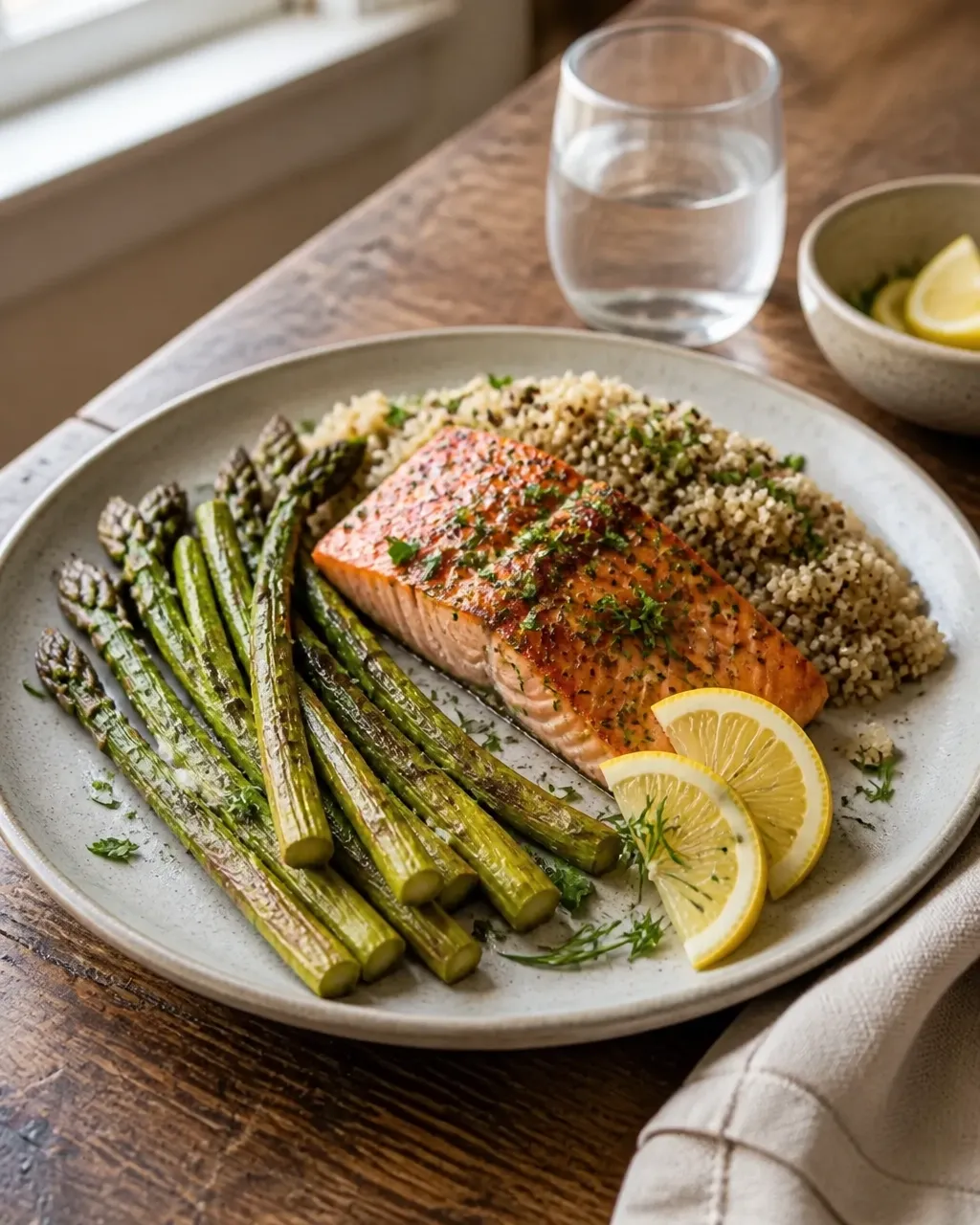
Serve the salmon and asparagus over quinoa, brown rice, or farro. The grains absorb the lemony juices and turn the sheet pan into a more filling meal. Add a simple yogurt-herb sauce if you want extra moisture, but keep it bright instead of overly rich.
Use Another Green Vegetable
Swap asparagus for broccolini, green beans, or zucchini. Match the vegetable to its cooking speed. Green beans and broccolini can usually roast alongside salmon, while thin zucchini may need less time. For more plant-forward inspiration, try Cookpedia’s roasted cauliflower and chickpea tahini bowls.
Side Dish Pairings: Add Contrast, Not Clutter
This salmon already brings protein, richness, and a bright finish, so choose side dishes that add texture or acidity. A simple arugula salad with cucumber, tomatoes, and a sharp lemon vinaigrette keeps the meal fresh. The peppery greens also cut through the salmon’s buttery texture.
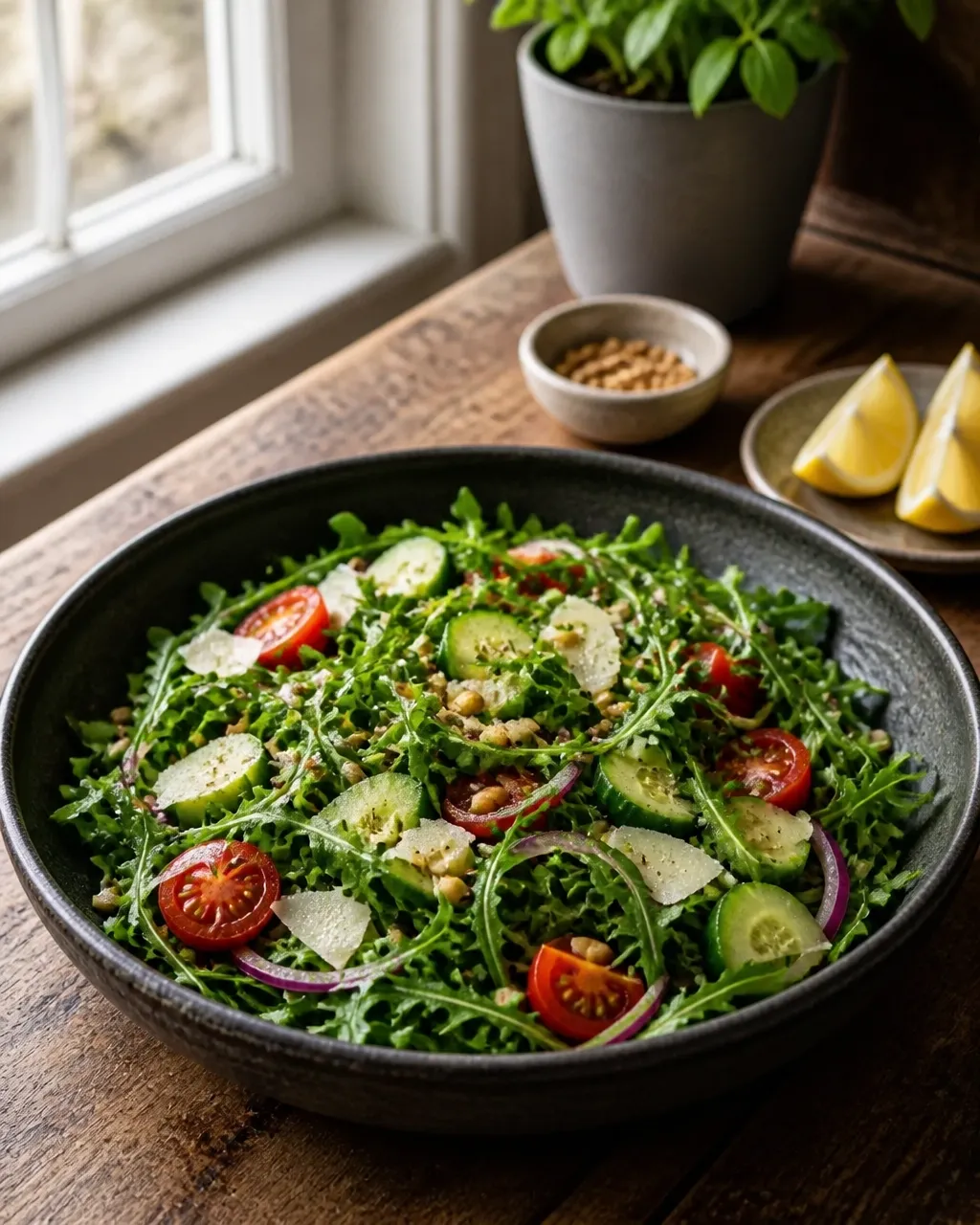
For a heartier plate, serve the fish with quinoa, roasted baby potatoes, or a small scoop of brown rice. Keep the starch lightly dressed so it supports the salmon instead of competing with it.
Add crusty bread if you want something for catching the lemony pan juices. Choose a crisp green salad when the salmon feels rich, or roasted carrots when you want a sweeter, cozier direction. For more weeknight inspiration, explore Cookpedia’s quick meals and 30-minute dinner recipes.
Frequently Asked Questions
Can I use frozen salmon?
Yes, but thaw it first for the most even cooking. Frozen fish releases extra water as it cooks, which can interfere with browning and make the asparagus steam. Thaw the salmon in the refrigerator, then pat it thoroughly dry before seasoning. If you cook it from frozen, expect a longer cooking time and a softer surface.
Why did my salmon turn out dry?
The most common reasons are overcooking, very thin fillets, or relying on time instead of temperature. Start checking the thickest part early with a thermometer. Remember that salmon continues cooking after leaving the oven, so remove it as soon as it reaches your chosen safe doneness. Do not use the same cooking time for every fillet; thickness changes everything.
Why is my asparagus soggy?
You probably crowded the pan, used too much oil, or started with wet spears. Dry the asparagus well and arrange it in one layer with space between pieces. Check thin spears earlier than thick ones. If your salmon needs extra time, remove the asparagus when it reaches crisp-tender texture and let the fish finish separately.
Can I prepare this dinner ahead of time?
Prepare the seasoning mixture, trim the asparagus, and portion the salmon earlier in the day. Store everything covered in the refrigerator, keeping raw fish separate from ready-to-eat foods. Do not leave salmon sitting in lemon juice for hours, because the acid can change the surface texture. Assemble the pan shortly before roasting for the best results.
Can I use another type of fish?
Absolutely. Arctic char, trout, or thick cod portions can work well. Adjust the cooking time according to thickness, not the name of the fish. Leaner fish such as cod can dry out more quickly, so check it early and use a light coating of oil. Always verify doneness in the thickest section.
Is this suitable for meal prep?
It can be, although salmon is at its best freshly roasted. Cool leftovers promptly and refrigerate them in a sealed container. Reheat gently, preferably in a low oven or microwave at reduced power, to avoid squeezing out more moisture. You can also flake cold leftovers over salad, grain bowls, or toast.
Can I make it in an air fryer?
Yes, but do not crowd the basket. An air fryer moves hot air quickly, so thin asparagus may finish before the salmon. Check both early and cook in batches if necessary. This is a useful option when you are collecting air fryer recipes for dinner, but the sheet pan remains easier for serving several people at once.
What makes this a healthy weeknight dinner?
The meal centers on salmon, a flavorful protein, and asparagus, a vegetable that needs very little added fat to taste satisfying. Roasting keeps the preparation simple, while lemon and herbs create impact without a heavy sauce. Pair it with a whole grain or a crisp salad, and you have one of those healthy dinner ideas that feels like real food( not a punishment arranged on a plate.)