Recipe
Prep 20 minCook 50 minTotal 2H30 min
Ingredients
Method
- Prepare the tin and oven. Heat the oven to 180°C conventional or 160°C fan. Grease a 900 g (2 lb) loaf tin and line its base and sides with baking paper.
- Cream the butter and sugar. Beat the softened butter with 225 g caster sugar until pale and creamy. Scrape down the sides of the bowl as needed so the mixture is evenly combined.
- Add the eggs. Beat in the eggs one at a time. Make sure each egg is incorporated before adding the next. If the mixture begins to look slightly separated, add a spoonful of the measured flour and continue mixing.
- Add the flour and zest. Fold in the self-raising flour and finely grated zest of 1 lemon. Stop mixing as soon as no dry flour remains. Overmixing can make the loaf less tender.
- Fill the tin. Spoon the batter into the lined tin and level it gently. Bake for 50 minutes. Check the centre with a skewer: it should come out clean, without wet batter. If the top browns quickly, loosely cover it with foil for the remaining baking time.
- Make the syrup. While the cake bakes, stir 85 g caster sugar with the juice of 1 lemon. The sugar does not need to dissolve completely before the syrup is used.
- Soak the warm loaf. Leave the cake in its tin for 5 minutes after baking. Prick the top with a skewer, spacing the holes across the surface without piercing all the way through to the base. Spoon the syrup over the loaf gradually, allowing it to absorb between additions.
- Cool completely. Leave the cake in the tin until cool, about 1 hour. Lift it out using the paper overhang. The loaf needs to be fully cool before icing or the icing will melt into the surface.
- Add the icing. Sift 100 g icing sugar into a bowl. Stir in lemon juice a little at a time until the icing is thick but falls easily from a spoon. Drizzle it over the loaf and leave for about 15 minutes to set before slicing.
Lemon Drizzle Loaf
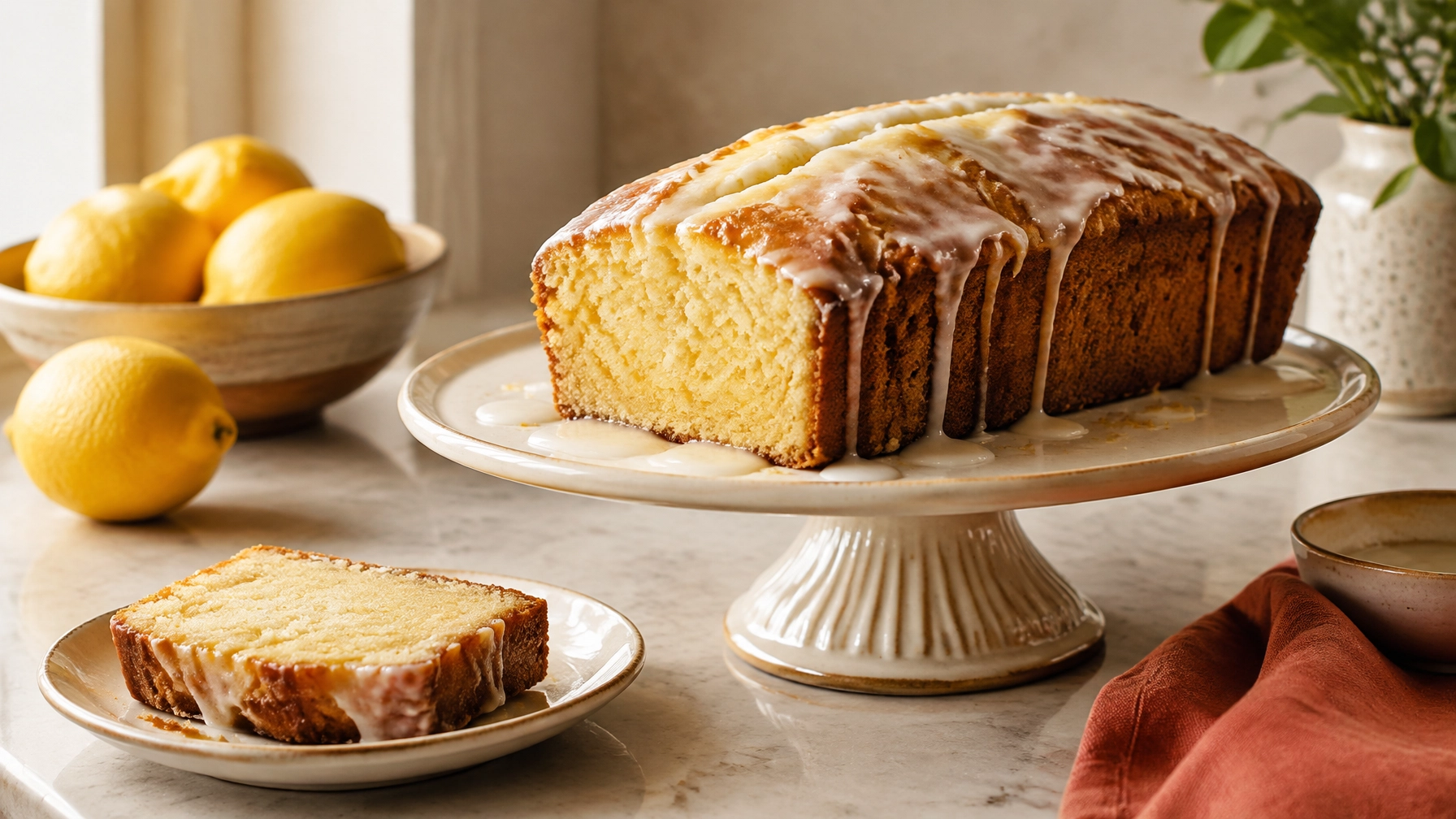
A classic British lemon drizzle loaf has a soft, buttery sponge, a sharp lemon syrup that soaks into the warm cake and a fine icing drizzle over the top. It is baked in a 2 lb loaf tin and sliced once completely cool.
The method keeps the sponge tender and gives the syrup time to settle into the crumb before the icing is added. The recipe makes 10 slices.
JUMP TO RECIPE
Recipe
Servings: Serves 10
Prep time: 20 minutes
Cook time: 50 minutes
Total time: 2 hours 30 minutes
Tips
- Weigh the flour accurately; too much can make the crumb dry.
- Check the loaf at 45 minutes, but allow the full 50 minutes if the centre is not yet baked.
- Spoon the syrup over gradually so it has time to soak in rather than run off the edges.
- Store the cooled loaf in an airtight container at room temperature for up to 3 days.
Variations
- More lemon: Add the finely grated zest of a second lemon to the cake batter.
- Poppy seed: Fold 1 tablespoon of poppy seeds into the batter with the flour.
- Thicker icing: Use less lemon juice in the icing for a thicker topping that sets in a more defined layer.
- No icing: Leave off the final drizzle and serve the loaf with its syrup-soaked top.
FAQ
How do I know when the loaf is baked?
Insert a skewer into the centre. The loaf is ready when it comes out clean, with no wet batter attached.
Why should the syrup go on while the cake is warm?
The warm crumb absorbs the lemon syrup more readily. Pricking the surface first helps it spread through the upper part of the loaf.
Can I freeze lemon drizzle loaf?
Yes. Freeze the cooled, uniced loaf in a well-sealed freezer-safe wrapping. Defrost it fully before adding the icing and serving.