Recipe
Serves
12 1×
Serves 12Prep 30 minCook 1HTotal 7H30 min
Ingredients
Method
- Lightly grease the base and sides of a 23 cm springform tin with the 10 g butter. Line the base with baking parchment. Set the tin aside while you prepare the biscuit base.
- Melt the 125 g butter gently in a small pan. Crush the digestive biscuits into fine crumbs, then stir them into the melted butter until evenly coated. Tip the mixture into the tin and press it into a compact, level layer using the back of a spoon. Chill for 30 minutes.
- Heat the oven to 180°C. If using a vanilla pod, split it lengthways and scrape out the seeds. Beat the cream cheese with the vanilla seeds or paste until smooth. Add the sugar and mix again. Add the eggs and yolks one at a time, mixing just until each is incorporated. Stir in the crème fraîche. Avoid beating for longer than necessary, as too much air can make the filling puff up in the oven.
- Wrap the outside of the springform tin securely in two layers of wide foil. Make sure the foil rises above the point where the water will reach, to help prevent water from leaking into the base. Pour the filling over the chilled biscuit base and smooth the surface.
- Place the foil-wrapped tin in a deep roasting tin. Set the roasting tin on an oven shelf, then carefully pour freshly boiled water into it until the water reaches about halfway up the sides of the springform tin. Take care not to splash water into the cheesecake.
- Bake for 10 minutes at 180°C. Without opening the oven door, reduce the temperature to 140°C and bake for a further 50 minutes. The outer part should look set, while the centre should have a gentle wobble when the tin is nudged. It should not look liquid or slosh.
- Turn the oven off and leave the cheesecake inside with the door slightly ajar for 1 hour. Remove the tin from the water bath and leave it to cool fully. Cover and chill for at least 5 hours before removing the springform ring. Slow cooling and thorough chilling help the filling set and make the cheesecake easier to slice.
- Run a thin knife around the inside edge of the tin, then unclasp the springform ring. For neat portions, cut with a sharp knife dipped in hot water and wiped dry between slices. Serve chilled.
Vanilla Baked Cheesecake
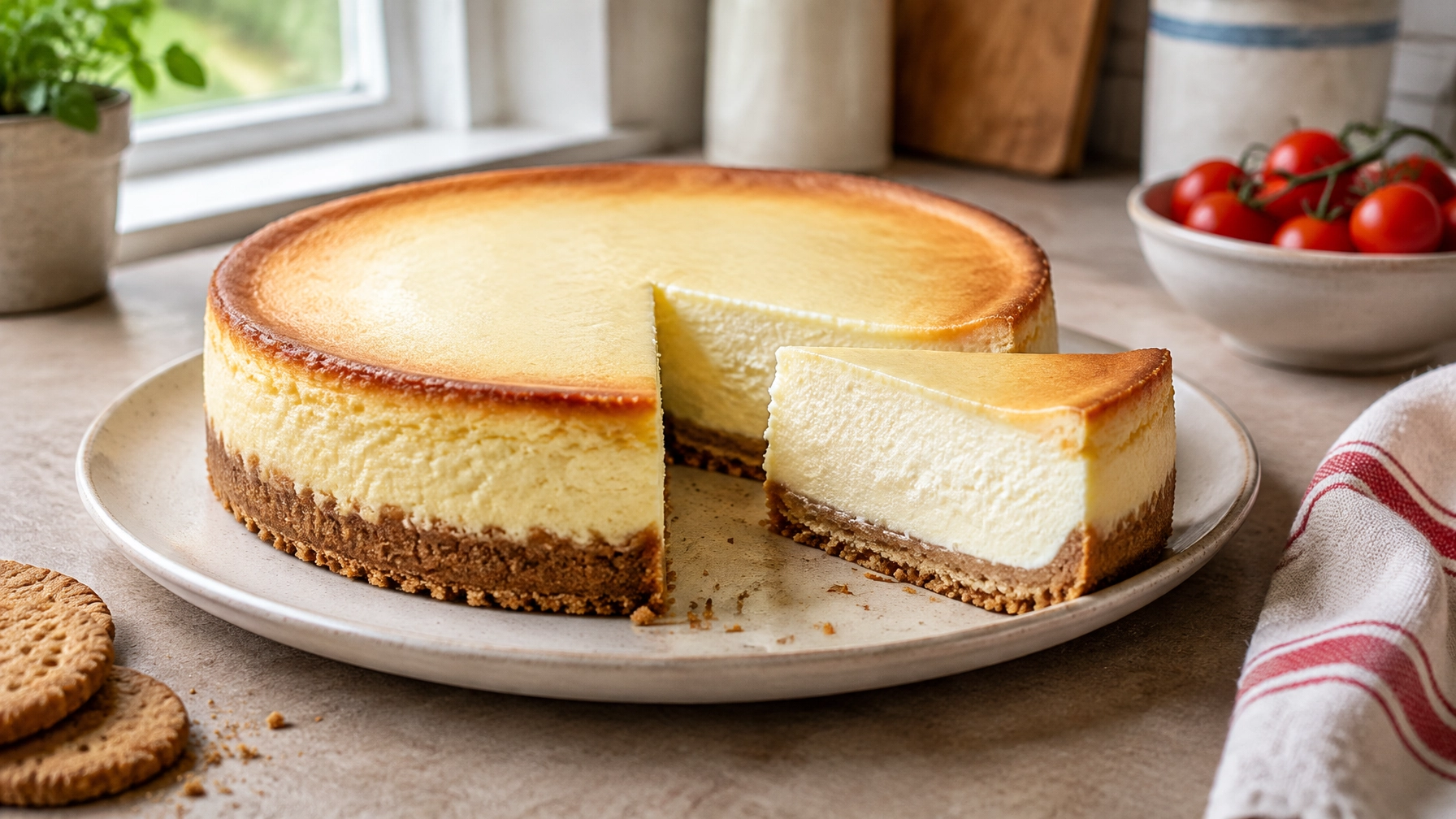
A classic baked cheesecake has a crisp digestive biscuit base and a smooth vanilla filling. Baking it in a water bath helps the filling cook gently and evenly.
Allow time for the cheesecake to cool and chill before serving. The centre should still wobble slightly when it leaves the oven; it will firm as it cools.
Recipe
Servings: 12
Prep time: 30 minutes
Cook time: 1 hour
Total time: 7 hours 30 minutes
Tips
- Bring the cream cheese, eggs and crème fraîche to room temperature before mixing. This helps them combine into a smoother filling without prolonged beating.
- Press the biscuit crumbs firmly into an even layer. A flat-bottomed glass or measuring cup is useful for compacting the base, especially around the edges.
- Use wide foil and check that it has no holes or gaps before setting the tin in the water bath. If water gets into the base, it can make the crumbs soft.
- Keep the central wobble slight. A fully rigid centre in the oven can indicate that the filling has baked too long; it will continue to set as it cools.
Variations
- Add the finely grated zest of one lemon to the filling for a light citrus note. Keep the lemon juice out, as extra liquid can change the filling’s consistency.
- Replace the vanilla pod with 1 teaspoon vanilla paste. Mix it into the cream cheese before adding the eggs.
- Use plain full-fat crème fraîche in place of the same quantity of sour cream. Keep the quantity at 150 ml so the filling remains balanced.
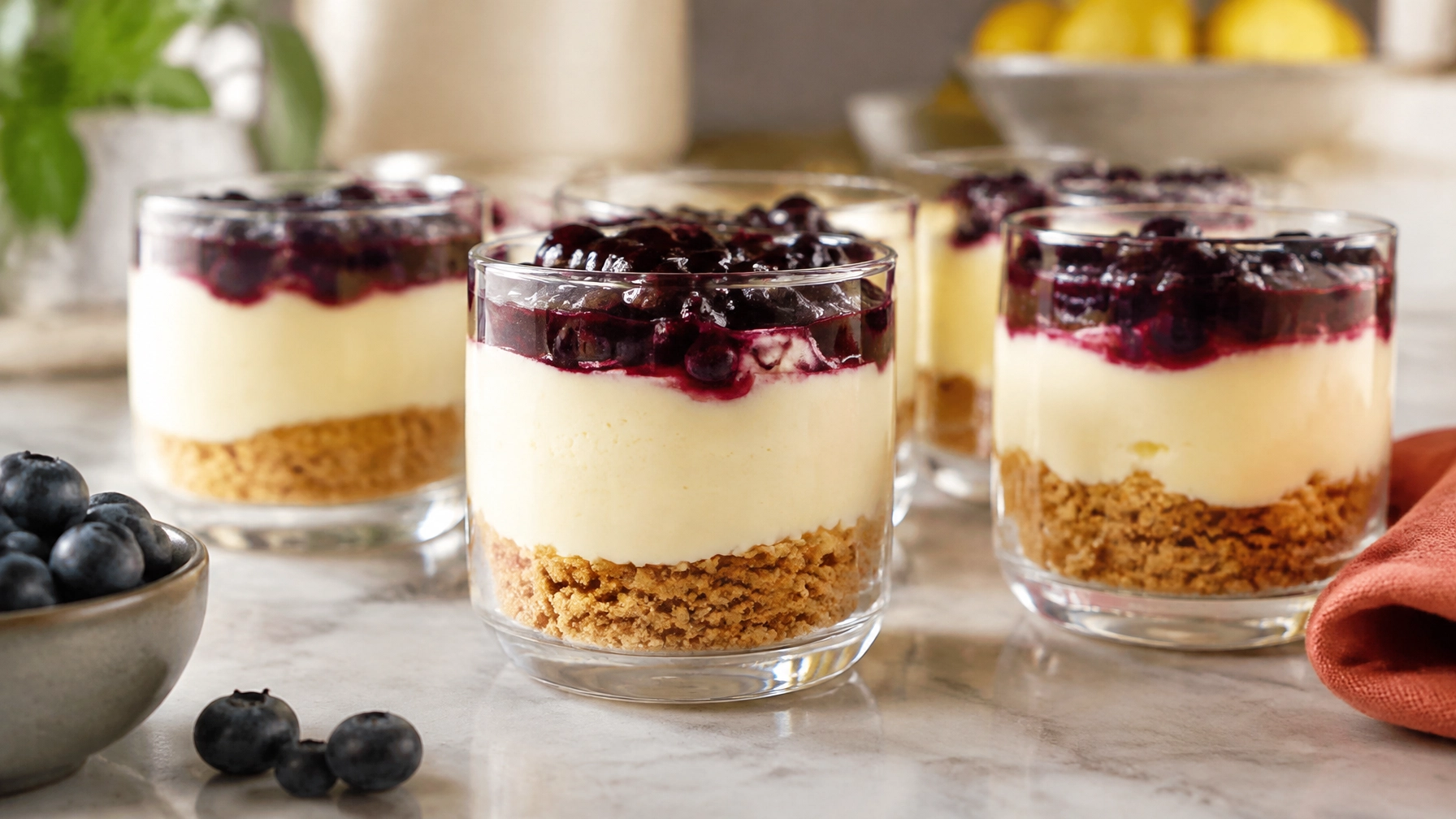
- Serve each slice with fresh berries or a spoonful of fruit compote. Add the topping just before serving so the surface stays neat.
FAQ
Why did my cheesecake crack?
Cracks can appear if the filling is overmixed, baked until completely firm or cooled too quickly. Mix only until the ingredients are combined, use the water bath and allow the cheesecake to cool gradually in the switched-off oven.
How can I tell when it is baked?
The edge should appear set, while the centre should move slightly when the tin is nudged. If the whole surface ripples like liquid, bake for a little longer and check again.
How should I store the cheesecake?
Once it has cooled, cover it and store it in the fridge. Keep it chilled between servings and return leftovers to the fridge promptly.