Recipe
Serves
4 1×
Serves 4Prep 15 minCook 35 minTotal 50 min
Ingredients
Method
- Put the saffron in the warm stock or water and leave it to infuse while you prepare the sauce.
- Heat the olive oil in a large pan over a medium heat. Add the onion and cook for 5 minutes, stirring occasionally, until softened.
- Remove the sausage from its casing. Add it to the pan and break it into small pieces with a wooden spoon. Cook for 6 to 8 minutes, stirring, until browned. Spoon off excess fat if needed.
- Stir in the tinned tomatoes and saffron-infused stock. Season with black pepper and a little salt. Bring to a gentle simmer, then cook uncovered for 20 minutes, stirring now and then.
- While the sauce simmers, bring a large pan of salted water to the boil. Add the malloreddus and cook according to the packet instructions until al dente. Before draining, reserve a mug of pasta water.
- Add the drained pasta to the sausage sauce. Toss well, adding a splash of pasta water if needed to help the sauce coat the ridges.
- Take the pan off the heat. Stir through the pecorino and basil, if using. Taste and adjust the seasoning, then serve with extra pecorino.
Malloreddus with Sausage and Saffron
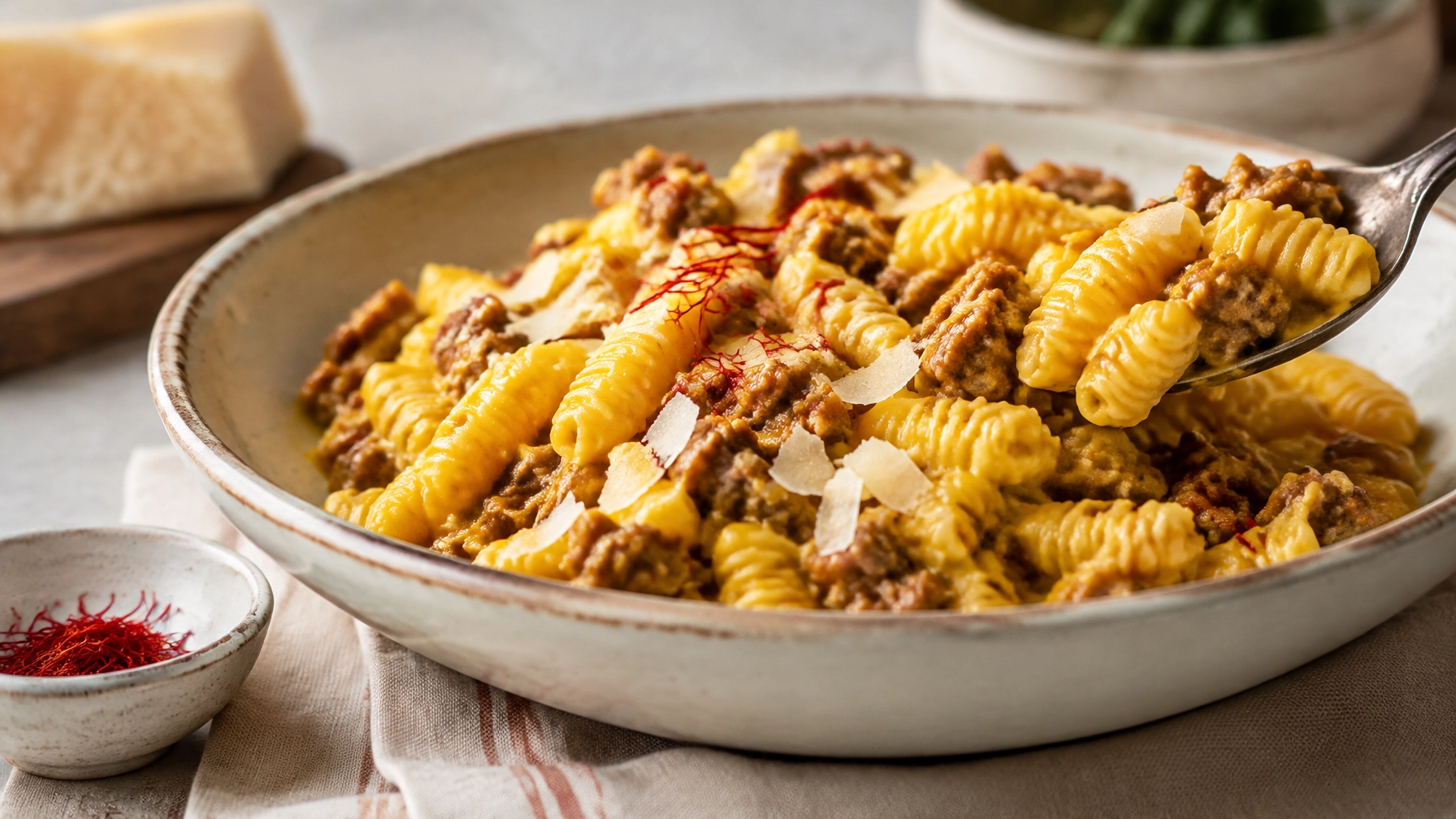
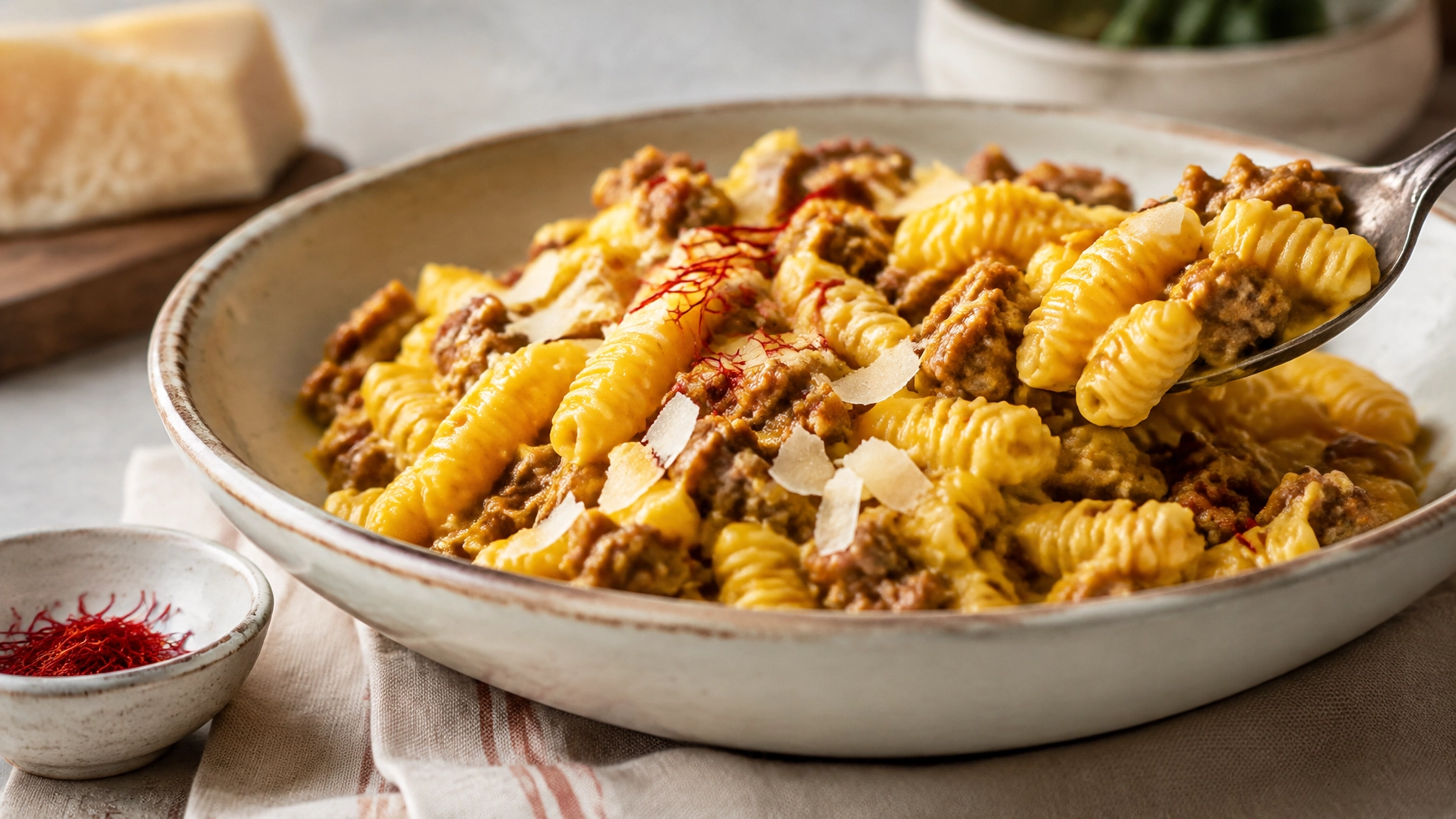
Malloreddus is a ridged Sardinian pasta that holds sauce in its grooves. Here, it is paired with browned sausage, tomato and saffron for a substantial, savoury meal. The sauce can simmer while the pasta cooks, so the dish is ready in about 50 minutes.
What to expect
Saffron brings a warm aroma and a gentle golden note to the tomato sauce. It should support the other ingredients, not overwhelm them. Blooming the saffron in warm stock before adding it to the pan helps distribute its flavour evenly.
Fresh sausage gives the sauce a coarse, meaty texture. Remove its casing and break the meat into small pieces as it browns. Choose a plain or mildly seasoned pork sausage so its flavour does not compete with the saffron.
Dried malloreddus is widely available from Italian food shops and some larger supermarkets. Its ridges catch the sauce, while its firm texture stands up well to a hearty ragù. Cooking times vary by brand, so check the packet as the pasta boils.
A few useful details
Cut the onion finely so it softens into the sauce. Brown the sausage thoroughly, breaking up any large clumps with a wooden spoon. If it releases a lot of fat, spoon some off before adding the tomatoes; leave enough behind to carry the flavour.
The sauce should simmer gently, not boil hard. This gives the onion and sausage time to mingle with the tomato while keeping the sauce from reducing too quickly. Add the saffron infusion once the tomato has begun to simmer, then taste before adding more salt. Sausage and pecorino can both be salty.
Salt the pasta water once it boils. Before draining, save a mug of the starchy water. A small splash can loosen the sauce and help it cling to the pasta. Add it gradually; the finished dish should be coated, not soupy.
Serving and storing
Serve the pasta as soon as it is mixed with the sauce, with pecorino at the table. A simple green salad makes a fresh side. If you want to prepare ahead, make the sauce first and cook the pasta just before serving.
Refrigerate leftovers promptly in a covered container. Reheat until steaming hot throughout, adding a little water if the sauce has thickened. See the Food Standards Agency's guidance on chilling, freezing and defrosting food safely. For general advice on cooking food safely, see its cooking guidance.
Recipe
Servings
4
Prep time
15 minutes
Cook time
35 minutes
Total time
50 minutes
Tips
- Add salt cautiously. Sausage, stock and pecorino can all contribute saltiness.
- Keep the saffron infusion warm rather than boiling it. This helps it blend into the sauce.
- Reserve pasta water before draining. Its starch can help bring the sauce and pasta together.
- If the sauce is ready before the pasta, turn the heat to low and stir occasionally.
Variations
- Use another pasta shape: Rigatoni or small shells will also hold the sauce, though the traditional ridged malloreddus has a particularly good texture for this dish.
- Adjust the saffron: Use fewer threads for a subtler aroma, or add a little more if you prefer its flavour to stand out.
- Add a little heat: Stir a pinch of chilli flakes into the onion as it softens.
- Change the cheese: Pecorino Romano gives a sharper finish; a milder pecorino makes the result less salty.
FAQ
Can I use fresh malloreddus?
Yes. Fresh pasta usually cooks more quickly than dried pasta. Follow the packet instructions and start checking it early.
Can I make the sauce in advance?
Yes. Cool and refrigerate it promptly in a covered container. Reheat it until steaming hot throughout, then toss with freshly cooked pasta.
What can I use instead of saffron?
Saffron is central to the dish's distinctive flavour. You can make the sauce without it, but the result will taste different. Avoid substituting a large amount of another spice, which may overpower the sausage and tomato.
How do I keep the pasta from becoming dry?
Toss it with the sauce as soon as it is drained. Add reserved pasta water a little at a time until the sauce clings to the pasta.