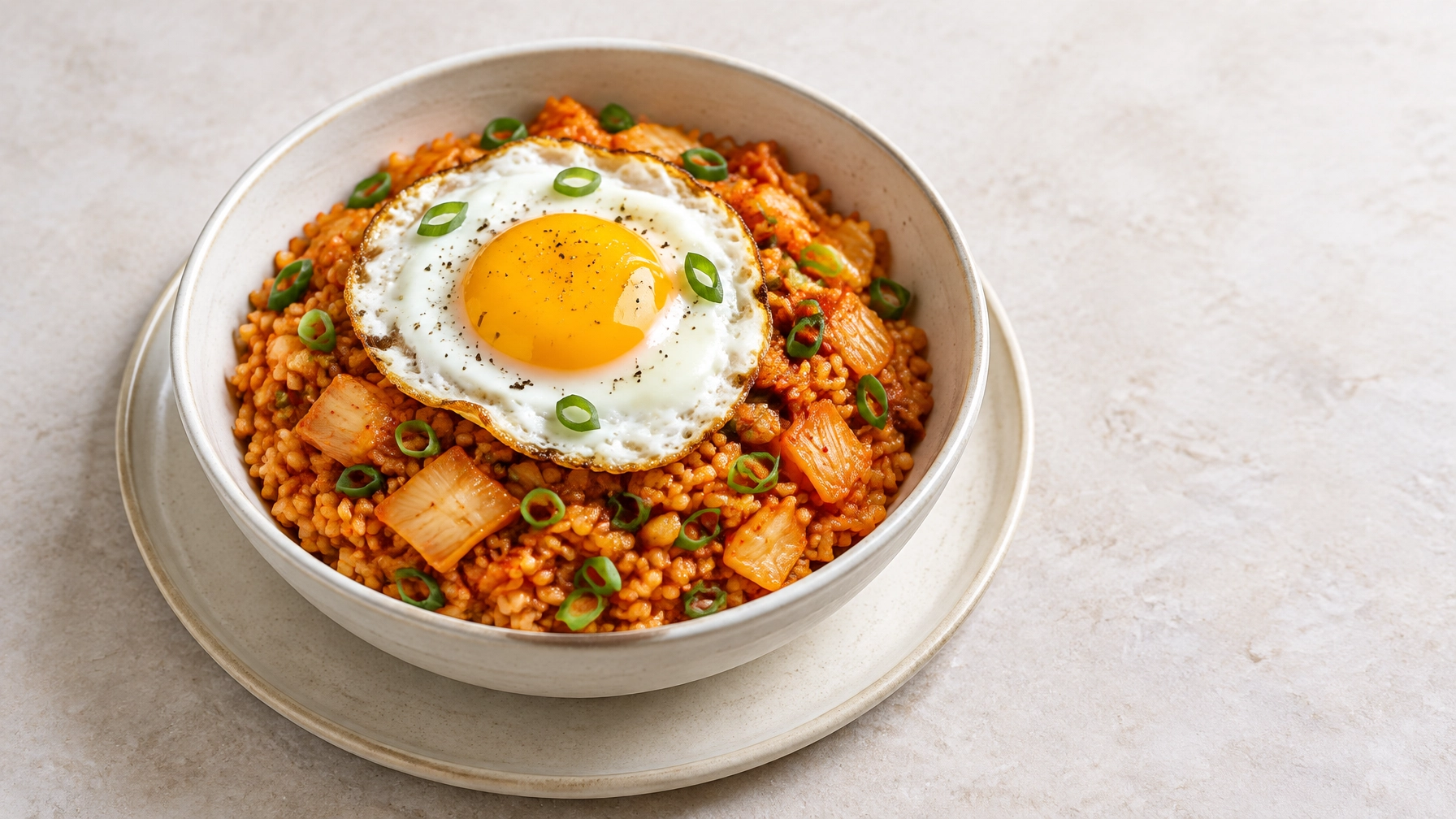
Recipe
Serves
2 1×
Serves 2Prep 8 minCook 12 minTotal 20 min
Ingredients
Method
- Break up the cold rice so the grains are separated.
- Heat one tablespoon of oil in a wok or large frying pan.
- Fry the eggs until the whites are set and the yolks are cooked to preference. Transfer them to a plate.
- Add the remaining oil, shallots, garlic and chilli. Stir-fry for 1 to 2 minutes.
- Add the shrimp paste or fish sauce and stir for 30 seconds.
- Add the cold rice and stir-fry for 3 to 4 minutes until hot and separated.
- Add the kecap manis and optional soy sauce. Toss until evenly coated.
- Add salt only if required.
- Stir through most of the spring onions and cook for 1 minute.
- Serve immediately with the fried eggs, cucumber, tomato and remaining spring onions.
Nasi Goreng (Indonesian Fried Rice, 20 Min)
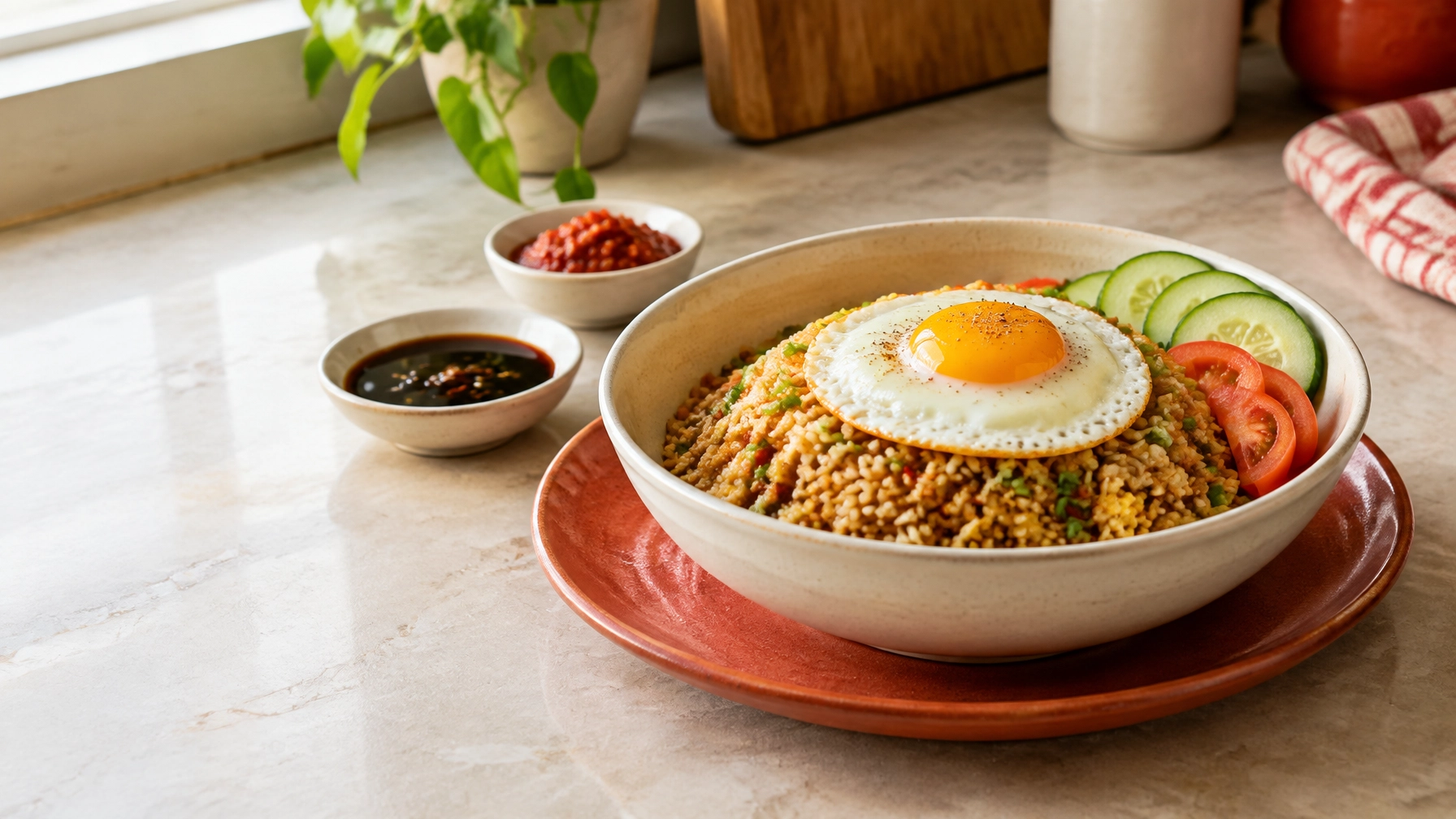
Nasi goreng is Indonesian fried rice made with cold cooked rice, kecap manis, chilli and a savoury seasoning such as shrimp paste or fish sauce. It is completed with a fried egg, which adds richness and makes this quick meal distinct from standard egg fried rice.
Overview
This recipe serves two people and takes approximately 20 minutes when cooked rice is already available.
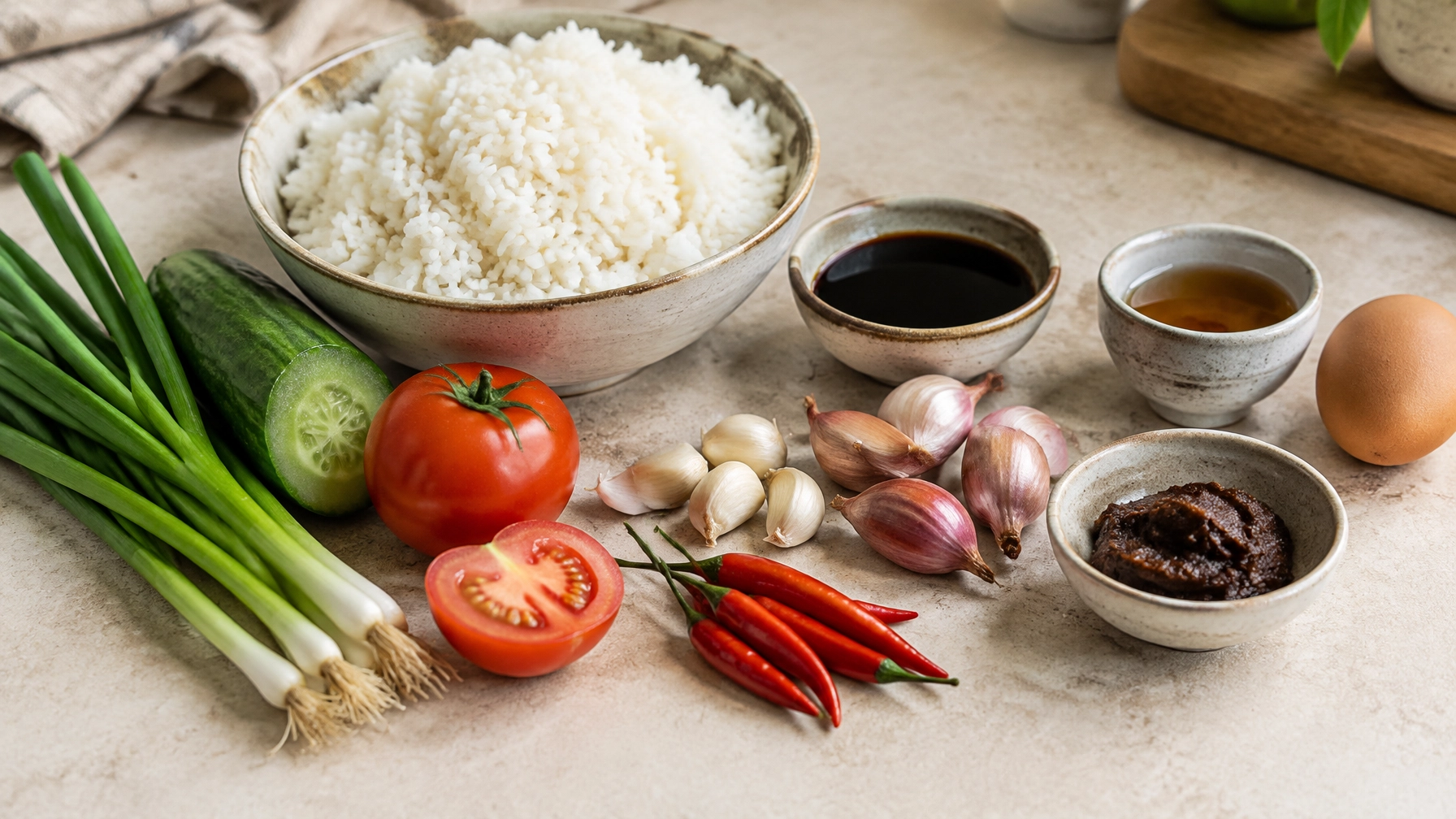
The defining flavour is kecap manis, a thick Indonesian sweet soy sauce. It gives the rice a dark colour and a sweet, savoury finish. Sambal provides chilli heat, while shrimp paste or fish sauce adds depth. Use shrimp paste for a more traditional fermented savoury note, or fish sauce for a readily available alternative.
The rice should be cold and separated before it enters the wok or frying pan. Freshly cooked rice contains too much moisture and can become soft rather than lightly fried.
Tips
Use cold rice. Refrigerated rice is firmer and less likely to clump. Spread freshly cooked rice in a shallow tray if you need to cool it quickly, then refrigerate it once steam has stopped rising.
Heat the pan properly. A hot cooking surface helps the rice fry rather than steam. Avoid overcrowding the pan. For four portions, cook in two batches.
Add the sauce at the end. Kecap manis can catch on the base of the pan if added too early. Adding it after the rice has heated allows the grains to become coated without excessive burning.
Adjust the heat carefully. Sambal varies in strength. Start with less than you think you need, then add more at the table.
Serve immediately. Nasi goreng has its best texture straight from the pan. The fried egg should be placed on top just before serving.
Variations
Chicken nasi goreng: Add 150 g of cooked shredded chicken after the aromatics have softened. Heat it thoroughly before adding the rice.
Prawn nasi goreng: Add peeled raw prawns after the aromatics. Stir-fry until fully cooked and opaque before adding the rice. Keep raw seafood separate from ready-to-eat ingredients.
Vegetable nasi goreng: Add shredded cabbage, diced carrot, peas or sliced green beans. Cook firmer vegetables before adding the rice.
Extra-hot nasi goreng: Add more sambal or use a fresh chopped chilli. Sambal can also be served separately so each person can control the heat.
Vegetarian nasi goreng: Omit the shrimp paste and fish sauce. Check that the kecap manis and sambal are suitable for a vegetarian diet, then use a vegetarian savoury seasoning if required.
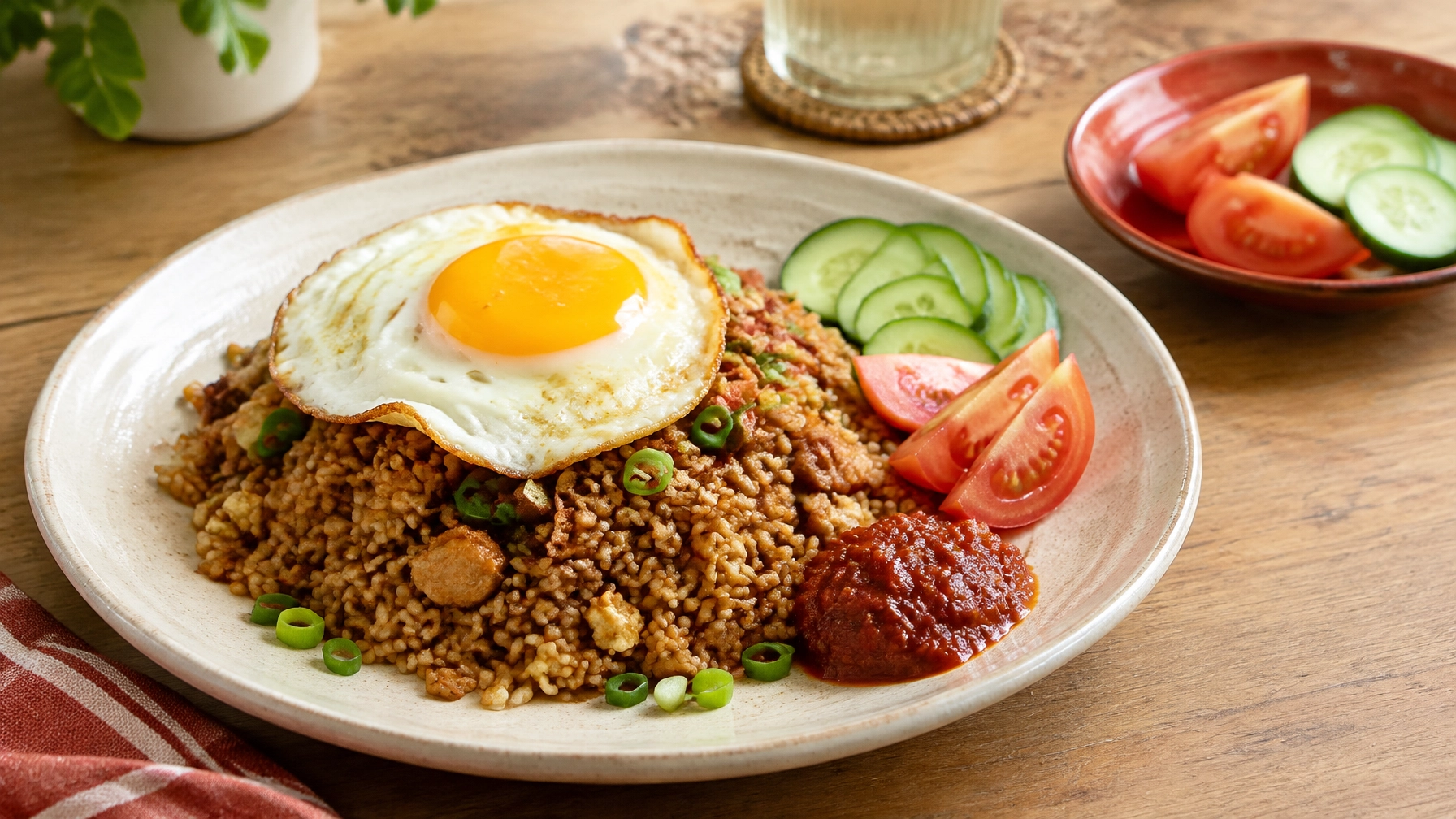
The fried egg should remain the finishing element if you want the dish to retain the classic nasi goreng presentation.
Safety
Cooked rice requires careful handling. Uncooked rice can contain spores of Bacillus cereus. These can survive cooking, and bacteria may multiply if cooked rice is held warm or left at room temperature. Some toxins are not destroyed by reheating.
For a safer process, cool cooked rice quickly, refrigerate it in a shallow container, use it within 24 hours and reheat it only once. The finished nasi goreng should be steaming hot throughout, with no cold areas. Further guidance is available from the Food Standards Agency.
Wash hands after handling raw eggs, keep utensils for raw ingredients separate from serving utensils and clean the cooking surface after preparation. If serving the egg with a runny yolk to a person who is pregnant, very young, elderly or immunocompromised, use eggs covered by current UK safety guidance or cook the yolk until fully set.
Recipe
Serves
2
Prep time
8 minutes
Cook time
12 minutes
Total time
20 minutes
Tips
Use cold rice rather than freshly cooked rice. Add kecap manis after the rice has heated. Cook in batches if the pan is crowded. Reheat the completed dish only once and serve it immediately.
Variations
Add cooked chicken, fully cooked prawns or vegetables. Increase the sambal for a hotter dish. Omit shrimp paste and fish sauce for a vegetarian version, checking the labels of the remaining sauces.
FAQ
Can I use freshly cooked rice?
Yes, but the texture will be softer. Spread it in a shallow tray to release steam, then cool it safely before frying.
Is kecap manis the same as soy sauce?
No. Kecap manis is thicker and sweeter than standard soy sauce. It is a primary flavour in nasi goreng.
Can I make nasi goreng without shrimp paste?
Yes. Use fish sauce instead, or omit both and increase the other savoury seasonings. The flavour will be less fermented and savoury.
Should the egg be mixed into the rice?
It can be, but a fried egg on top is the characteristic finish for this version.
Can I store leftovers?
Cool leftovers quickly, refrigerate them within one hour, use them within 24 hours and reheat them only once until steaming hot throughout.