Recipe
Servings
Servings 1×
Ingredients
- Lentils
- Chickpeas
- Rice
- Bread
- Potatoes
- Sweet potatoes
- Cauliflower
- Spinach
- Kale
- Onion
- Lime
- Coconut milk
- Cooking oil
- Curry spices
- Turmeric
- Chili seasoning
- Black pepper
Method
- Let’s talk about why your curry might taste "flat" versus "restaurant-quality." It all comes down to chemistry, specifically the way we treat our spices.
- Use this technique religiously: Heat your oil until it’s shimmering, then add your dry spices.
- Use it as a shovel, there’s no room for utensils when there’s sauce to be scooped.
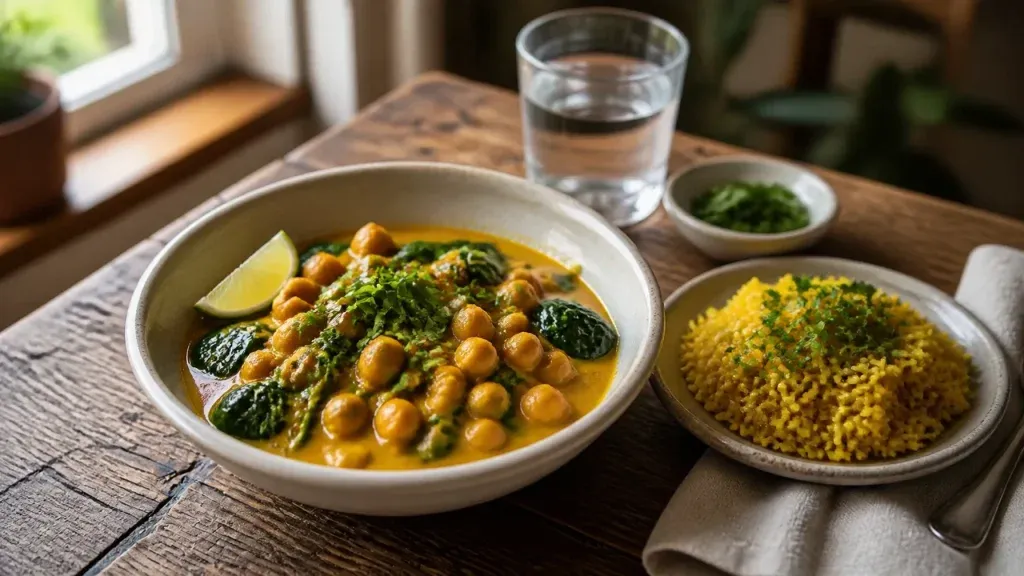
If you’re anything like me, you’ve had those nights where the idea of washing more than one pan feels like a personal affront. You want something that tastes like it’s been simmering for hours in a professional kitchen, but you only have thirty minutes and the energy of a house cat. That’s where this one-pot chickpea and sweet potato curry comes in. It’s a plant-based powerhouse that delivers massive flavor without the mountain of dishes, making it one of those essential quick family meals you’ll keep on heavy rotation.
The Science of the "Bloom": Why Your Oil Temperature Matters
Let’s talk about why your curry might taste "flat" versus "restaurant-quality." It all comes down to chemistry, specifically the way we treat our spices. Most of the heavy hitters in a curry, turmeric, cumin, and coriander, contain compounds that are fat-soluble, not water-soluble.
Take turmeric, for example. The active star of the show is curcumin. If you just dump turmeric into a boiling pot of water or coconut milk, you’re missing out on a huge portion of its potential. Curcuminoids are hydrophobic, meaning they don't like water. To truly unlock their vibrant color and earthy flavor, you have to "bloom" them in hot oil. When you toss your spices into that shimmering oil at the start of the cook, the heat breaks down the cellular structure of the spice, allowing the fat-soluble flavor compounds to dissolve into the oil. This oil then coats every single chickpea and sweet potato cube, ensuring that the flavor is integrated into the very DNA of the dish rather than just sitting on top of it.
Use this technique religiously: Heat your oil until it’s shimmering, then add your dry spices. Watch them closely, you want them to sizzle and become fragrant, usually in about 30 to 60 seconds. Avoid burning them at all costs. If they turn black, they’ll turn bitter, and you’ll have to start over. Check the scent; it should be warm and toasted, not acrid.
While we’re on the subject of science, don't forget the black pepper. Remember that curcumin we talked about? Your body isn't actually very good at absorbing it on its own. However, piperine, the compound that gives black pepper its bite, can increase curcumin absorption by up to 2,000%. This is one of those healthy dinner ideas where the seasoning isn't just about taste; it's about making the food work for your body.
Lastly, consider the Maillard reaction. Even in a wet dish like curry, browning your onions and sweet potatoes in that spice-infused oil before adding your liquid creates a foundation of deep, savory sweetness. The sugars in the sweet potato caramelize against the hot surface of the pan, adding layers of complexity that a simple "dump and simmer" method can never achieve.
Flavor Riffs: Customizing Your Pot
Once you master the base technique, you can start treating this recipe like a blank canvas. The beauty of a one-pot meal is its adaptability. If you’re craving more greens, stir in a few handfuls of baby spinach or chopped kale at the very end. The residual heat from the curry will wilt the greens in seconds, preserving their bright color and nutritional integrity without turning them into mush.
For those who like a bit of heat, play with the type of chili you use. A spoonful of red curry paste added during the blooming phase provides a complex, spicy backbone, while fresh Thai bird’s eye chilies added with the aromatics offer a sharper, more immediate kick. If you find yourself wanting more protein but want to keep it plant-based, red lentils are a fantastic addition. They’ll break down as they cook, thickening the sauce into a rich, stew-like consistency.
If you’re looking for a different texture, you can actually utilize other kitchen tools. While this is a one-pot stovetop hero, some people prefer their sweet potatoes with a bit of a roasted "crust." You could look into your favorite air fryer recipes dinner techniques to crisp up the potatoes separately before folding them into the curry at the end. It adds an extra step, but the texture contrast is undeniable.
The Perfect Sidekick: Balancing the Bowl
A great curry is all about balance. Because the sweet potato and coconut milk provide a lot of richness and natural sugar, you need something to cut through that weight. Acidity is your best friend here. Always serve this with fresh lime wedges. A squeeze of lime juice right before you eat provides a hit of citric acid that brightens the earthy spices and wakes up your taste buds.
In terms of starch, basmati rice is the classic choice for a reason. Its long, fluffy grains are perfect for soaking up the golden sauce. If you want something more substantial, warm naan bread is non-negotiable. Use it as a shovel, there’s no room for utensils when there’s sauce to be scooped. For a lighter, low-carb version, cauliflower rice works surprisingly well, especially if you sauté it briefly with a pinch of cumin seeds first.
If you've already tried our Air Fryer Sausage Pepper & Onion Medley, you know we love a good one-basket or one-pot solution. This curry follows that same philosophy: maximum flavor with minimum fuss.
FAQ: Troubleshooting Your Curry
Why is my curry sauce too thin?
This usually happens if you add too much broth or if your coconut milk was lower in fat. To fix this without diluting the flavor, take a potato masher and gently crush a few of the sweet potatoes and chickpeas directly in the pot. The released starches will naturally thicken the sauce into a creamy consistency.
Can I use ground spices instead of whole seeds?
Absolutely. While whole seeds like cumin provide nice pops of texture, ground spices are perfect for quick family meals. Just be aware that ground spices burn faster than whole seeds, so reduce your blooming time to about 20 seconds.
Why are my sweet potatoes falling apart?
You likely overcooked them or cut them into pieces that were too small. Aim for one-inch cubes. If you find they are getting soft too quickly, turn off the heat and let the carry-over cooking finish the job. Remember, the starch in the potato continues to soften even after the flame is out.
Is this recipe freezer-friendly?
Yes, but with a caveat. Sweet potatoes can sometimes change texture after being frozen and thawed, becoming a bit grainy. If you plan to freeze this, undercook the potatoes slightly so they don't turn to mush when you reheat the dish.
Can I make this in a slow cooker?
You can, but you shouldn't skip the stovetop "bloom." Sauté your onions and bloom your spices in a skillet first, then transfer everything to the slow cooker. If you just throw raw spices and cold liquid into a slow cooker, the flavors will remain raw and muted.
What if I don't have coconut milk?
You can substitute with heavy cream for a richer, more dairy-forward taste, or even a thick cashew cream if you want to keep it vegan. Avoid using thin milks like almond or skim milk, as they will break and curdle under the heat, leaving you with a watery mess.
This one-pot chickpea and sweet potato curry is proof that healthy dinner ideas don't have to be complicated. Use these scientific principles of fat-solubility and flavor layering, and you’ll never settle for a bland bowl of veggies again. Trust the process, bloom those spices, and enjoy the easiest gourmet meal of your week.