Recipe
Servings
Servings 1×
Ingredients
- Chicken
- Mushrooms
- Garlic
- Cream
- Hard cheese
- Salt
Method
- Use this as your weeknight comfort meal when you want something cozy but still manageable.
- Start with a properly heated skillet and give the chicken room to cook.
- Keep the chicken still for the first few minutes.
- Use medium-high heat and avoid stirring constantly.
- Cook the garlic after the mushrooms have browned rather than at the very beginning.
- Give it only enough heat to become fragrant.
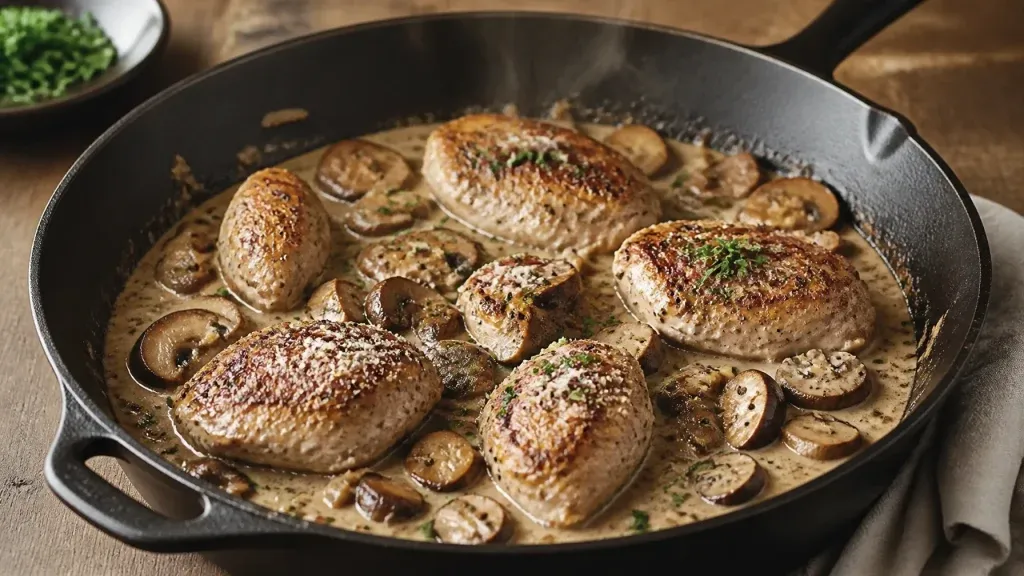
Some dinners earn their place in the regular rotation after one bite. This creamy garlic Parmesan chicken and mushroom skillet is one of them. It brings together golden chicken, deeply browned mushrooms, mellow garlic, and a silky cheese sauce without creating a sink full of dishes.
Use this as your weeknight comfort meal when you want something cozy but still manageable. It belongs right alongside Cookpedia’s collection of one-pot meals and is especially useful when you need quick family meals that taste like you made a much bigger effort.
Tips & Technique: Build Flavor in the Right Order
Brown the chicken before adding sauce
Start with a properly heated skillet and give the chicken room to cook. The goal is not to cook it completely at this stage. The goal is to create a browned surface.
That golden crust comes from the Maillard reaction, the chemical process that happens when proteins and sugars meet enough heat. It creates hundreds of flavor compounds, which is why browned chicken tastes savory and complex while gently simmered chicken can taste flat.
Keep the chicken still for the first few minutes. Moving it too soon can tear the surface and prevent proper browning. Avoid crowding the pan, too. When pieces overlap, their moisture becomes trapped, and the chicken steams instead of sears. If your skillet is small, work in batches. One extra minute of cooking is a better trade than pale, watery chicken.
Choose pieces of similar thickness so they cook evenly. If using chicken breasts, gently flatten thick sections before cooking. Uniformity is not glamorous, but it is one of the easiest ways to avoid dry edges and a raw center.
Let the mushrooms release their water
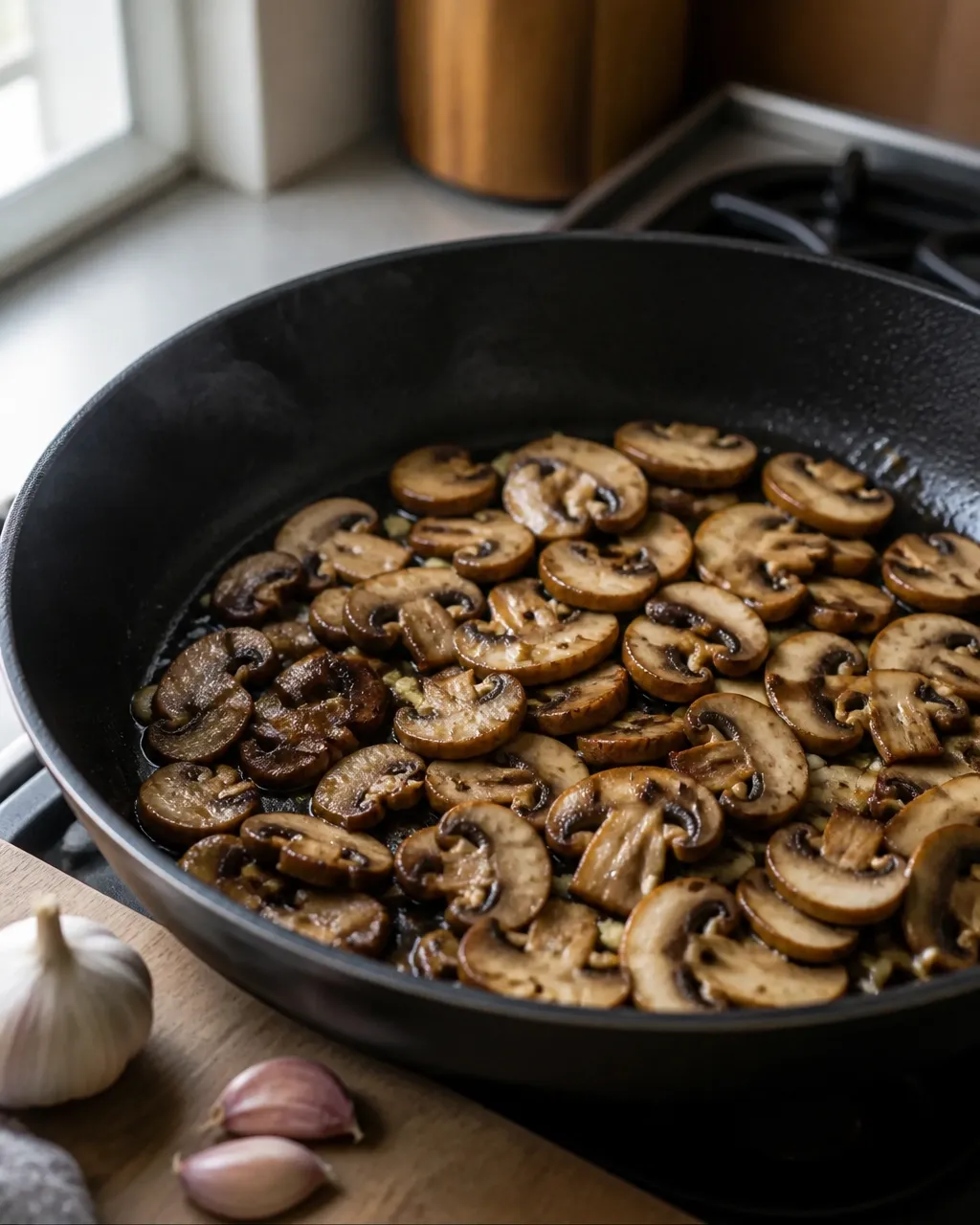
Mushrooms contain a surprising amount of water. When they hit the pan, they may look as though they are frying, but they often spend the first part of cooking releasing moisture. Be patient and let that liquid evaporate.
This is non-negotiable. If you add cream while the mushrooms are still watery, the final sauce can taste diluted and look thin. Continue cooking until the mushrooms shrink, their edges turn golden, and the pan begins to look relatively dry again.
Use medium-high heat and avoid stirring constantly. Occasional turning lets more surface area touch the pan, encouraging browning and concentrating the mushrooms’ natural umami. A few unevenly browned edges are welcome. Perfect mushroom geometry is not required for dinner.
Cook the garlic after the mushrooms have browned rather than at the very beginning. Garlic burns quickly, and bitter garlic is remarkably good at hijacking an otherwise lovely sauce. Give it only enough heat to become fragrant.
Deglaze the fond, then reduce
After the chicken and mushrooms cook, the skillet should have browned bits on the bottom. Chefs call these bits fond, and they are concentrated flavor waiting for a little liquid.
Deglaze the pan and scrape firmly with a wooden spoon. As the liquid loosens the fond, those browned particles dissolve into the sauce. This is how a short ingredient list develops a deep, slow-cooked taste.
Do not rush straight to the cream. Let the deglazing liquid reduce first. Reduction removes excess water and concentrates the savory notes left behind by the chicken and mushrooms. It also gives the sauce a head start on thickening.
Think of the process as building a foundation. Browning creates flavor, deglazing gathers it, and reduction concentrates it. Cream and Parmesan come later to round everything out.
Keep the cream at a gentle simmer
Cream sauces prefer calm cooking. Once the dairy goes into the skillet, lower the heat and aim for a gentle simmer rather than a rolling boil.
High heat can cause the fat and water in the sauce to separate. The result may look greasy, curdled, or slightly grainy. A gentle simmer gives the sauce time to thicken while keeping the emulsion stable.
Stir occasionally, especially around the edges of the pan. Scrape up anything that begins to stick, but do not whisk so aggressively that the chicken breaks apart. You are making a skillet dinner, not conducting an orchestra.
Heavy cream is naturally more stable because its higher fat content helps resist curdling. If you use a lighter dairy option, be even more careful with the heat. Add it gradually and never let it boil hard.
Add Parmesan with the heat under control
Parmesan brings salt, nuttiness, and body, but it needs considerate treatment. Grate it finely and add it when the sauce is hot but no longer aggressively bubbling.
Cheese melts more smoothly when it has time to soften into the sauce. Dumping it into a boiling pan can make the proteins seize, leaving you with a gritty texture instead of a silky finish. Remove the skillet from the strongest heat, stir in the Parmesan, and return it briefly to low heat only if the sauce needs more warming.
Taste before adding extra salt. Parmesan is already salty, and reduction intensifies every flavor in the pan.
Finish the chicken safely
Return the chicken to the sauce only when the base is ready. Let it finish gently so it absorbs the garlic, mushroom, and Parmesan flavors without becoming tough.
Check the thickest piece with an instant-read thermometer. Chicken should reach 165°F internally. Color is not a reliable safety test, especially when chicken is coated in a pale sauce.
Let the skillet rest for a few minutes before serving. The sauce will thicken slightly as it cools, and the chicken will retain more of its juices. If the sauce looks a touch loose in the pan, do not panic. A brief rest often fixes what appears to be a kitchen emergency.
Variations for Different Cravings
Use chicken thighs for a richer, more forgiving version. They contain more fat than breast meat and stay tender through the gentle simmering stage. Follow the same browning principles, but allow for their slightly longer cooking time.
Add greens at the end for color and freshness. Baby spinach wilts quickly, while chopped kale needs more time and a splash of stock or water to soften. Keep the amount moderate so the greens complement the sauce instead of turning it into a vegetable stew.
Bring heat with red pepper flakes, cracked black pepper, or a pinch of smoked paprika. Add a small amount early enough for the fat in the pan to carry the spice through the sauce.
For a brighter finish, stir in a little lemon juice just before serving. Acid cuts through cream and Parmesan, making the dish taste lighter without removing its comforting character.
Prefer a meat-free dinner? Replace the chicken with thick slices of cauliflower, browned tofu, or extra mushrooms. Use vegetable stock and a vegetarian Parmesan-style cheese if needed. The important technique remains the same: brown first, reduce carefully, and protect the sauce from excessive heat.
For more adaptable weeknight inspiration, browse Cookpedia’s chicken recipes and healthy recipe collection.
Side Dish Pairings: Add Contrast, Not More Richness
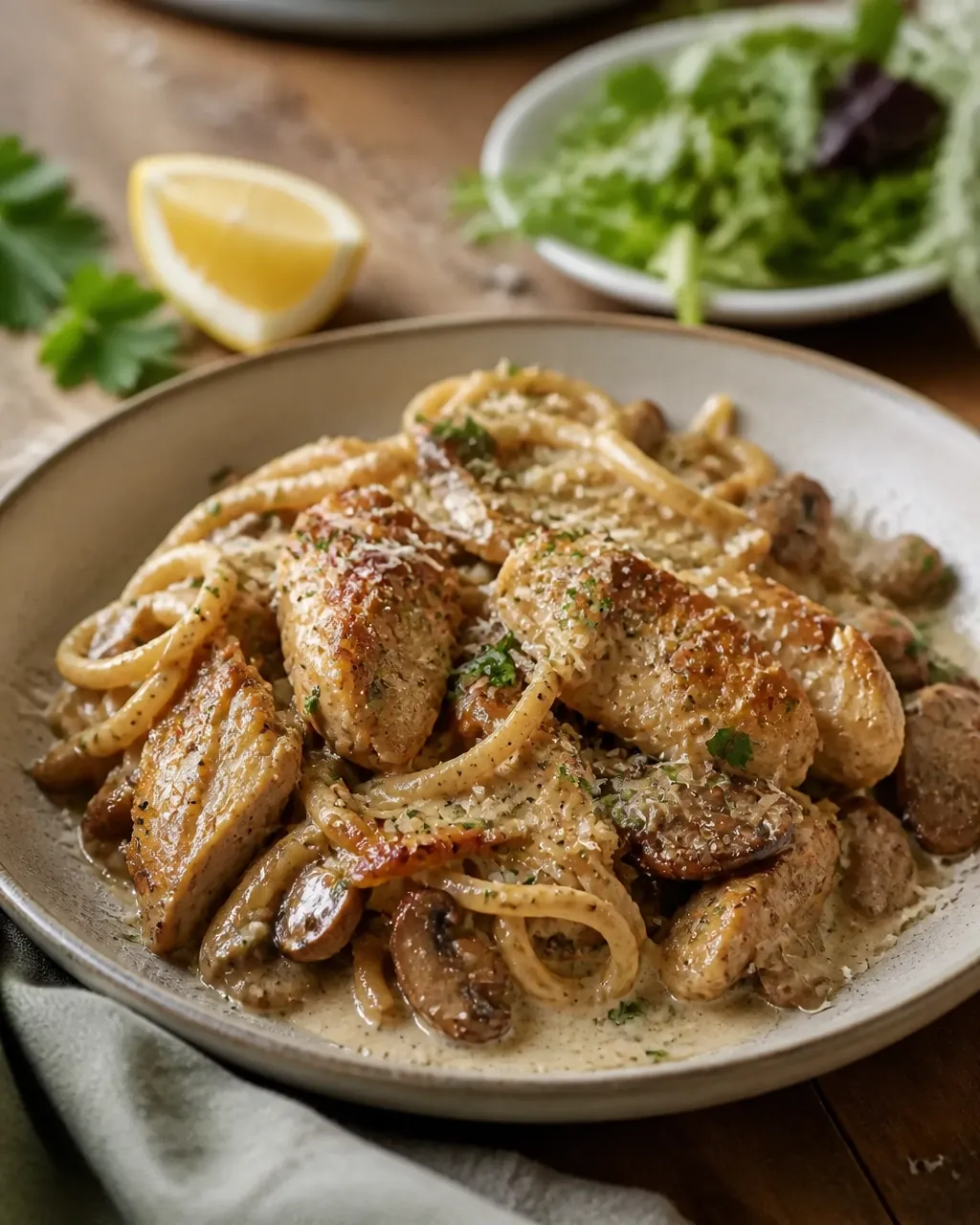
Pair this skillet with something fresh, crisp, or acidic. A simple arugula salad with lemon dressing is an excellent choice because peppery greens and bright acid balance the cream sauce. The salad should taste sharp enough to refresh your palate between bites.
Steamed broccoli, green beans, or asparagus also work well. Keep the vegetables lightly seasoned and let their natural bitterness provide contrast. For more texture, roast them until the tips turn crisp.
Serve the chicken over rice, mashed potatoes, or pasta if you want a heartier plate. Choose a plain base so it can absorb the sauce without competing with it. Crusty bread is another practical option, and yes, mopping up the last spoonful is part of the plan.
For a crisp, hands-off vegetable side, try Cookpedia’s air fryer recipes dinner idea. The roasted edges create a useful contrast to the soft chicken and silky sauce.
Frequently Asked Questions
Why is my mushroom sauce watery?
The mushrooms may not have cooked long enough to release and evaporate their moisture. They should look browned and concentrated before you add the dairy. Too much stock or cream can also cause a thin sauce, especially if you skip the reduction stage.
Fix it by simmering the sauce uncovered over moderate heat. Stir occasionally and give it time to reduce. Avoid turning the heat to maximum, because dairy can split before the excess liquid disappears. Let the finished skillet rest for a few minutes as well; sauces naturally thicken slightly as they cool.
Why did my cream sauce separate?
The most common cause is excessive heat. Boiling can force the fat and water components apart, particularly when using lower-fat dairy. Parmesan added to a fiercely bubbling sauce can also become grainy.
Lower the heat as soon as the dairy is added. Stir in finely grated cheese off the heat or over very low heat. If the sauce looks slightly broken, remove the skillet from the burner and whisk in a small knob of cold butter. It may help bring the emulsion back together.
Can I use milk instead of cream?
You can, but the sauce will be lighter and less stable. Milk contains more water and less fat, so it will need more careful heat control. Do not boil it, and expect a thinner consistency.
For better body, use a small amount of flour or cornstarch according to the recipe card, or combine milk with a little half-and-half. Add Parmesan gradually and allow the sauce to reduce gently. The result will not be as rich as the cream version, but it can still be flavorful.
How do I stop the chicken from becoming dry?
Avoid cooking small chicken pieces at high heat for too long. Sear them only until browned, then finish them gently in the sauce. Use evenly thick pieces and check the internal temperature rather than guessing by cooking time.
Chicken breast dries more quickly than thighs, so remove it from the skillet as soon as it reaches 165°F. Resting also matters: slicing immediately allows more juices to escape.
Can I make this ahead for meal prep?
Yes, but cream sauces need gentle reheating. Store leftovers in shallow containers within two hours of cooking and refrigerate them for up to three to four days. Reheat over low to medium-low heat until the chicken reaches 165°F in the center.
Add a small splash of broth, milk, or water while reheating to loosen the sauce. Stir slowly and avoid boiling. The sauce may not look exactly as silky as it did on the first night, but careful reheating keeps it pleasant rather than oily or split.
What if I do not have Parmesan?
Use Pecorino Romano for a saltier, sharper finish. Grana Padano is a milder alternative. A small amount of aged white cheddar can work in an emergency, although it will change the flavor and may melt differently.
Whatever cheese you choose, grate it finely and add it gradually. Avoid relying on shelf-stable powdered cheese if you want a smooth sauce. Freshly grated cheese melts more evenly and gives the skillet its signature savory finish.
Make this once, and you will understand why one-pot cooking belongs in every busy home kitchen. Brown with purpose, reduce patiently, simmer gently, and let the skillet do the cleanup work for you. These are the rules behind comforting, reliable healthy dinner ideas; and they make weeknight cooking much less dramatic.
{“@type”:”BlogPosting”,”image”:[“https://cdn.marblism.com/5COXx6x9KSx.webp”,”https://cdn.marblism.com/1PSLY5jinst.webp”,”https://cdn.marblism.com/U53iai8C8MK.webp”,”https://cdn.marblism.com/3mYxPfoOoll.webp”],”author”:{“name”:”Penny”,”@type”:”Person”,”jobTitle”:”AI Blog Writer”,”affiliation”:{“url”:”https://cookpedia.com”,”name”:”Cookpedia”,”@type”:”Organization”}},”@context”:”https://schema.org”,”headline”:”One-Pot Meals: Creamy Garlic Parmesan Chicken and Mushroom Skillet”,”publisher”:{“url”:”https://cookpedia.com”,”name”:”Cookpedia”,”@type”:”Organization”},”inLanguage”:”en”,”mainEntity”:{“@type”:”FAQPage”,”mainEntity”:[{“name”:”Why is my mushroom sauce watery?”,”@type”:”Question”,”acceptedAnswer”:{“text”:”The mushrooms may not have released and evaporated enough moisture, or the sauce may contain too much liquid. Brown the mushrooms fully, reduce the sauce uncovered, and let it rest briefly before serving.”,”@type”:”Answer”}},{“name”:”Why did my cream sauce separate?”,”@type”:”Question”,”acceptedAnswer”:{“text”:”Excessive heat can separate the fat and water in a cream sauce. Keep the sauce at a gentle simmer, add Parmesan off the heat or over very low heat, and whisk in a little cold butter if needed.”,”@type”:”Answer”}},{“name”:”Can I use milk instead of cream?”,”@type”:”Question”,”acceptedAnswer”:{“text”:”Yes, but milk creates a lighter and less stable sauce. Avoid boiling it, reduce it gently, and use an appropriate thickener if you want more body.”,”@type”:”Answer”}},{“name”:”How do I stop the chicken from becoming dry?”,”@type”:”Question”,”acceptedAnswer”:{“text”:”Sear the chicken only until browned, finish it gently in the sauce, use evenly thick pieces, and check that the thickest part reaches 165°F.”,”@type”:”Answer”}},{“name”:”Can I make this ahead for meal prep?”,”@type”:”Question”,”acceptedAnswer”:{“text”:”Yes. Refrigerate leftovers within two hours for up to three to four days. Reheat gently with a splash of liquid until the chicken reaches 165°F in the center.”,”@type”:”Answer”}},{“name”:”What if I do not have Parmesan?”,”@type”:”Question”,”acceptedAnswer”:{“text”:”Use Pecorino Romano or Grana Padano, or try a small amount of aged white cheddar. Grate the cheese finely and add it gradually for the smoothest result.”,”@type”:”Answer”}}]},”description”:”Learn the cooking science behind a creamy garlic Parmesan chicken and mushroom skillet, including browning, mushroom moisture control, sauce reduction, cheese emulsification, variations, pairings, and food safety.”,”datePublished”:”2026-08-18T15:00:00.000Z”,”articleSection”:”One-Pot Meals”}