Recipe
Servings
4 1×
Serves 4Prep 15 minCook 30 minTotal 45 min
Ingredients
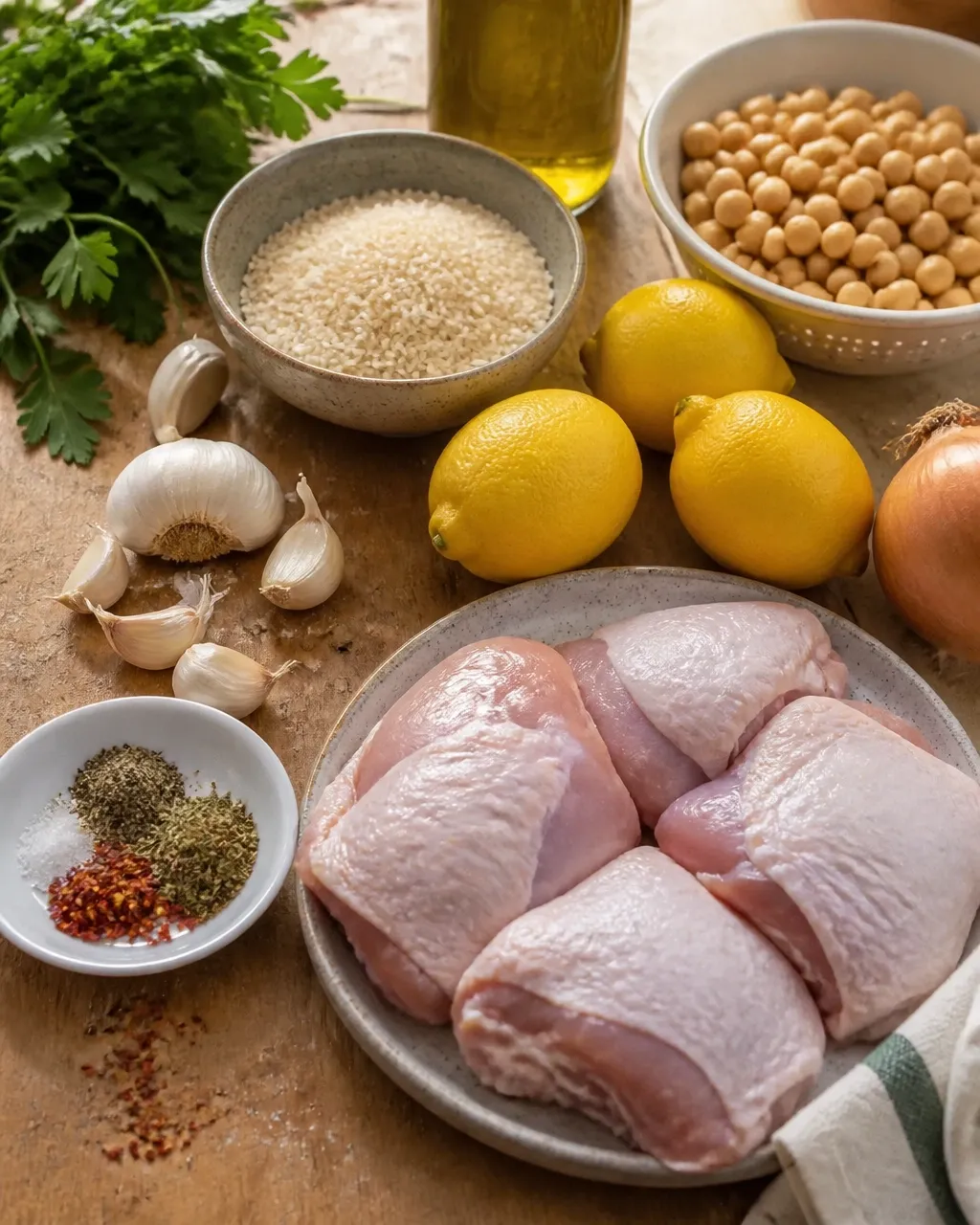
- 1 pound boneless, skinless chicken thighs, cut into even pieces
- 1 tablespoon olive oil
- 1 small yellow onion, finely chopped
- 4 garlic cloves, minced
- 1 cup long-grain white rice, rinsed and drained
- 1 can chickpeas, drained and rinsed
- 2 cups low-sodium chicken broth
- Zest and juice of 1 lemon
- 1 teaspoon dried oregano
- ½ teaspoon ground cumin
- ½ teaspoon paprika
- Salt and black pepper
- ¼ cup chopped fresh parsley
Method
- Season the chicken with salt, pepper, paprika, oregano, and cumin. Heat the oil in a large lidded skillet over medium-high heat. Brown the chicken on both sides, then transfer it to a plate.
- Lower the heat to medium. Cook the onion until softened, then add the garlic and stir briefly. Add the rice and toast for 1–2 minutes.
- Pour in the broth and lemon juice, scraping up the browned bits from the bottom. Stir in the chickpeas and lemon zest.
- Return the chicken and any accumulated juices to the skillet. Bring the liquid to a gentle simmer, cover, and cook over low heat until the rice is tender and the chicken reaches at least 165°F (74°C).
- Turn off the heat and rest the covered skillet for 5 minutes. Fluff the rice, scatter over the parsley, and taste for salt and lemon.
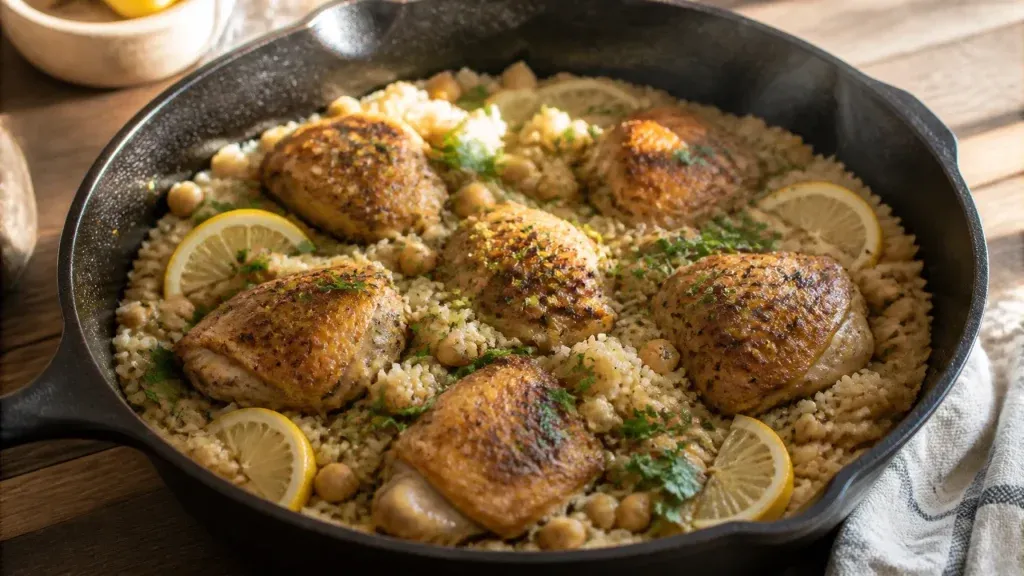
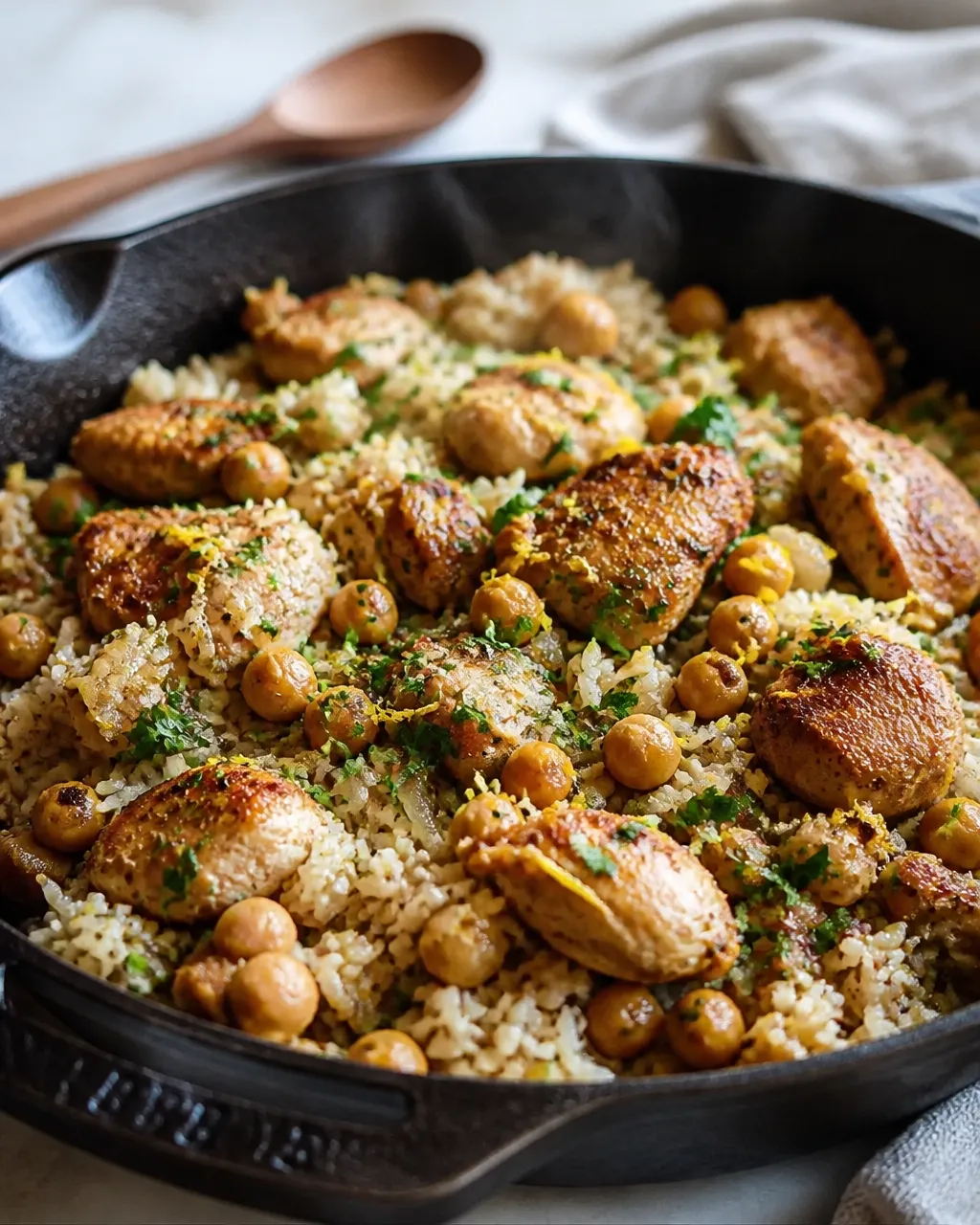
Some dinners ask for three pans, a colander, and your full emotional support system. This lemon garlic chicken and chickpea rice skillet asks for one pan and a little attention at the right moments. You’ll get tender chicken, fluffy rice, creamy chickpeas, and bright lemon flavor without turning the kitchen into a washing-up conference. It’s one of my favorite quick family meals because it feels generous, balanced, and far more complicated than it actually is.
Tips & Technique: Build Flavor in the Right Order
Brown the chicken before you simmer
Start with a properly hot skillet and dry chicken. Moisture is the enemy of browning because the pan must first evaporate that water before the surface can become hot enough for the Maillard reaction, the delicious chemical transformation that creates golden color and savory flavor.
Patting the chicken dry is not fussy behavior. It is a non-negotiable. Season it, place it in a single layer, and leave it alone long enough to develop a browned crust. If you shuffle the pieces every few seconds, they will steam instead of sear. Give them time to release naturally from the pan.
The chicken does not need to be fully cooked at this stage. The goal is color and fond: those caramelized bits that cling to the bottom of the skillet. They will dissolve into the broth later and season the rice from underneath.
Use boneless chicken thighs if you want the most forgiving result. Their higher fat content keeps them juicy through the covered cooking stage. Chicken breast works too, but cut it into even pieces and check it early, since lean meat has less room for overcooking.
Toast the rice for better texture
Once the chicken is browned, use the same pan for the aromatics and rice. This is where the skillet starts doing the heavy lifting.
Cooking the rice briefly in the seasoned oil coats the grains and gives them a lightly nutty flavor. It also helps the grains stay more distinct instead of collapsing into a soft, sticky mass. You are not trying to toast the rice dark brown; just warm it until it smells faintly nutty and every grain looks lightly slicked.
Rinse long-grain rice first if you prefer a fluffier result. Rinsing removes some surface starch, which is responsible for extra stickiness. Drain it well before it reaches the skillet, though. Waterlogged rice will cool the pan and interfere with toasting.
Let lemon play two different roles
Lemon is doing more than making the dish taste “lemony.” Add some zest early so its fragrant oils perfume the rice, then use juice toward the end or in the cooking liquid for brightness.
Acidity balances the richness of chicken and olive oil, but too much lemon juice added too early can make the flavor sharp and flatten the other seasonings. Keep the balance in mind. The finished dish should taste savory first, lemony second, with the citrus acting like a clean spotlight rather than a foghorn.
Finish with a small squeeze of fresh lemon after cooking if the skillet tastes heavy. That last hit of acidity wakes everything up.
Control the liquid instead of guessing
Rice needs enough liquid to hydrate its center, but excess liquid leaves you with soup and under-seasoned grains. For long-grain white rice, a useful starting point is about two parts total liquid to one part rice. Count broth and lemon juice together, and remember that chicken and aromatics release a little moisture as they cook.
Use a wide, heavy skillet with a lid that fits well. A loose lid lets steam escape, which changes the cooking time and can leave the rice firm while the bottom dries out. Once the broth reaches a simmer, lower the heat and keep the lid closed. Every peek releases steam, the very steam cooking your rice, so resist the urge to perform a mid-dinner inspection tour.
Chickpeas are already cooked, so they only need to warm through and absorb the garlic-lemon broth. Drain and rinse canned chickpeas before adding them. This removes excess canning liquid and keeps the sauce from tasting muddy.
Give the rice a rest
When the liquid is absorbed, turn off the heat and leave the skillet covered for several minutes. Resting allows trapped steam to finish hydrating the rice and gives the starches time to settle. It also makes the grains easier to fluff without breaking them.
Fluff gently with a fork rather than stirring aggressively. A wooden spoon can compact the rice and turn the bottom layer into a paste. If a few grains stick to the skillet, consider that the cook’s portion. A little browned rice is not a crisis; it is dinner’s crunchy bonus.
Check the chicken, not just the clock
Cooking time varies with the size of the chicken pieces, the skillet, and the strength of your burner. Use an instant-read thermometer in the thickest piece, avoiding bone if you use bone-in chicken. Chicken should reach at least 165°F (74°C). Thighs are often even more tender around 170–175°F.
Do not rely on the rice looking finished as proof that the chicken is safe. Check both. If the rice is tender but the chicken needs more time, cover the pan and continue cooking gently. If the rice looks dry before the chicken is ready, add a small splash of broth, replace the lid, and keep going.
For more one-pan inspiration, browse Cookpedia’s chicken recipes and dinner collection.
Variations: Keep the Structure, Change the Personality
Turn this into a Mediterranean-style skillet by adding oregano, chopped parsley, roasted red peppers, and a pinch of chili flakes. Stir crumbled feta through the rice just before serving. The salty cheese brings richness, so add extra lemon to keep the dish balanced.
For a greener version, fold in baby spinach during the resting stage. The residual heat will wilt it without turning it gray. You can also add chopped kale earlier, since its sturdier leaves need more time to soften.
Use boneless chicken breast when you want a leaner result, but keep the pieces generous and avoid cooking them beyond the safe temperature. For a vegetarian variation, replace the chicken with sliced mushrooms or extra chickpeas and use vegetable broth. Brown the mushrooms well so the dish still has a savory foundation.
Brown rice can work, but it needs significantly more liquid and cooking time. Do not substitute it one-for-one and expect the same skillet to cooperate. Use a tested brown-rice ratio or choose white rice for the fastest version.
Serve leftovers in a lunch bowl with cucumber, herbs, and yogurt. It is also a useful base for healthy dinner ideas when you want one cook once, eat twice situation.
Side Dish Pairings: Add Freshness, Not More Heaviness
Pair the skillet with something crisp and acidic. A cucumber, tomato, and parsley salad dressed with lemon gives the meal a cool contrast and cuts through the richness of the chicken.
Steamed green beans, broccoli, or tender asparagus work well too. Keep them simply seasoned with olive oil, salt, and a little lemon. The skillet already has garlic and warm spices, so the side dish should refresh rather than compete.
For a creamy contrast, serve a spoonful of plain Greek yogurt or a quick garlic yogurt sauce on the side. Add lemon zest instead of lots of extra garlic. Too much garlic in both the pan and the sauce can turn a pleasant dinner into a vampire-repellent experiment.
If you are feeding a larger table, add warm flatbread for scooping and a simple leafy salad. Skip a second starchy side; the chickpea rice is already doing that job.
FAQ: Troubleshooting Your One-Pan Dinner
What if the rice is still firm but the skillet is dry?
Add a few tablespoons of hot broth or water, cover the skillet, and continue cooking over low heat. Firm rice usually means the steam escaped too quickly or the heat was too high. Do not pour in a large amount of liquid all at once; you may fix the rice but create a puddle underneath it.
What if the rice is mushy?
Too much liquid, excessive stirring, or an uncovered pan can all affect texture. Once rice begins simmering, keep the lid on and avoid stirring. If the rice is already soft, remove the lid and let excess moisture evaporate gently. The grains will not become fluffy again, but a handful of fresh herbs and a squeeze of lemon can improve the finished texture.
Can I use pre-cooked chicken?
Yes. Reduce the cooking time by adding chopped cooked chicken near the end, just long enough to heat it through. Do not sear it for the full initial stage, or it may become dry. Because pre-cooked chicken contributes fewer juices to the pan, the rice may need the full amount of broth.
Why did my chicken stick to the skillet?
The pan may not have been hot enough, the chicken may have been damp, or you may have tried to turn it too soon. Let the surface brown until the chicken releases naturally. A properly seasoned cast-iron skillet helps, but even a stainless-steel pan can brown chicken well when you use enough heat and patience.
Can I make this with canned chickpeas straight from the tin?
Drain and rinse them first. Canned chickpeas are already cooked, so they only need reheating. Rinsing removes the salty packing liquid and excess starch, giving the broth a cleaner flavor. Add them with the rice so they warm gradually and absorb the lemon-garlic seasoning.
What if I only have chicken breast?
Use it, but cut it into evenly sized pieces and monitor the temperature closely. Chicken breast is leaner and can dry out if it sits in the hot skillet too long. Brown it quickly, remove it, and return it only for the covered finishing stage. The safe minimum remains 165°F (74°C).
Can I make this dairy-free or gluten-free?
It is naturally dairy-free and gluten-free when you use certified gluten-free broth and check your spice labels. No flour or cream is needed to thicken the skillet. The rice starch and chickpeas provide enough body on their own.
How should I store and reheat leftovers?
Cool leftovers promptly and refrigerate them in a shallow airtight container. Reheat until steaming hot throughout, adding a splash of broth or water to loosen the rice. Rice should not sit warm on the counter for hours. Make the safe choice, even when the skillet is too good to waste.
Can I freeze the leftovers?
Yes, although the rice may soften slightly after thawing. Freeze portions in airtight containers, thaw them in the refrigerator, and reheat thoroughly. Add fresh parsley and lemon after reheating to restore the bright flavor.
For another starch-focused technique, see Cookpedia’s guide to pasta water and starch, then explore more quick meals for busy weeknights.