Recipe
Serves
4 1×
Serves 4Prep 10 minCook 15 minTotal 25 min
Ingredients
Method
- Prepare the ingredients. Cut the guanciale into evenly sized pieces. Finely grate the Pecorino Romano until it has a powder-like texture. Grind the black pepper immediately before cooking.
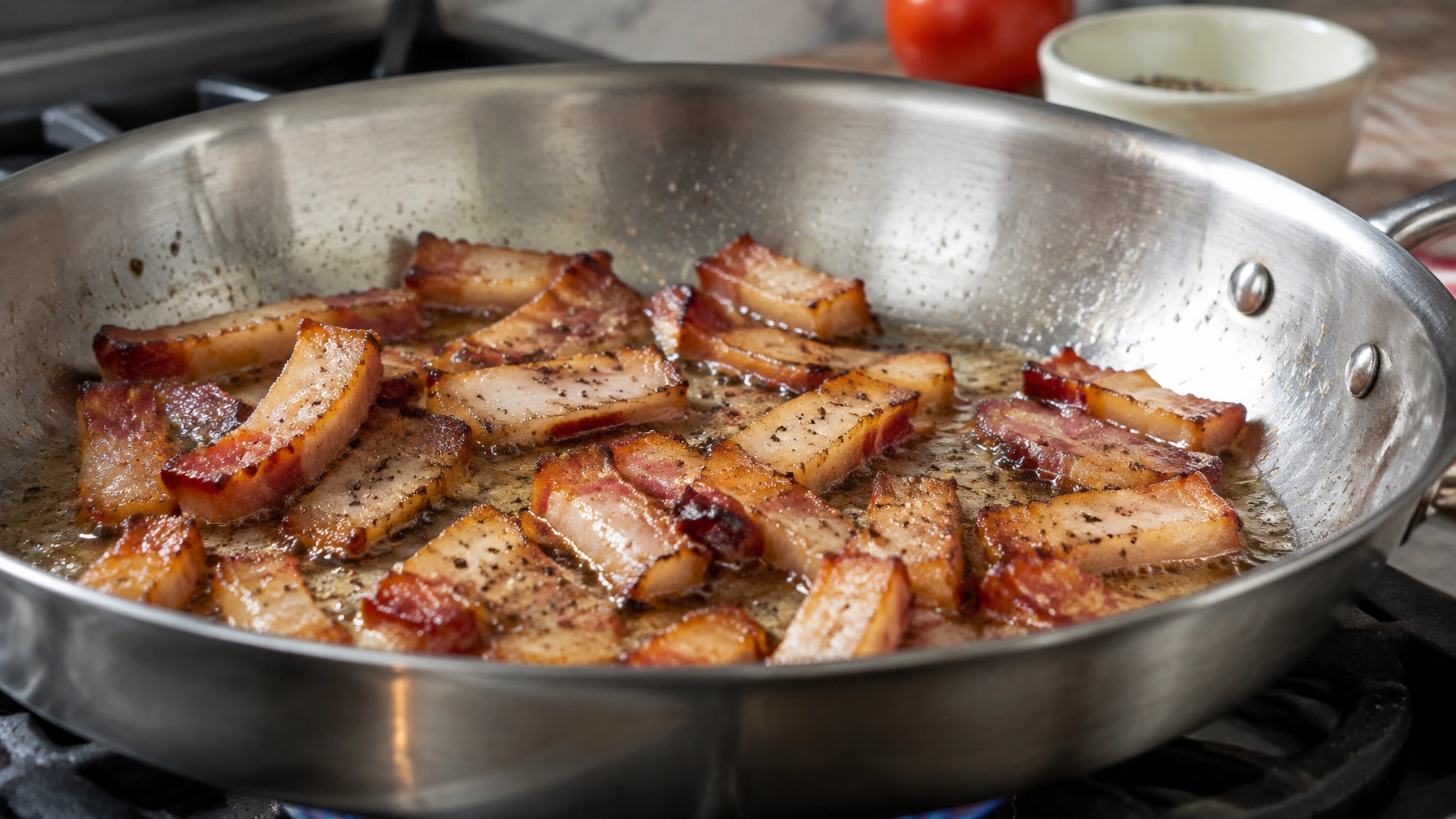
- Start the guanciale in a cold pan. Place the guanciale in a wide skillet without added oil. Set the pan over medium-low heat and cook for 8 to 12 minutes, stirring occasionally, until the fat has rendered and the pieces are golden and crisp.
- Cook the pasta. While the guanciale cooks, bring a large pot of water to a boil. Salt the water moderately. The guanciale and Pecorino are already salty, so excessive seasoning is not required. Cook the pasta until just al dente according to the packet instructions.
- Bloom the pepper. When the guanciale is crisp, lower the heat. Add the black pepper to the rendered fat and stir for approximately 30 seconds. The heat will release the pepper’s aroma.
- Reserve the pasta water. Before draining the pasta, reserve at least 350 ml of the cooking water. Drain the pasta without rinsing it.
- Build the sauce. Add approximately 150 ml of pasta water to the skillet containing the guanciale fat and pepper. Stir to combine. If preferred, transfer the guanciale to a plate first so it remains crisp, leaving the fat in the skillet.
- Finish the pasta in the pan. Add the drained pasta to the skillet. Toss continuously over medium heat for 1 to 2 minutes. Add additional pasta water in small amounts until the liquid becomes glossy and lightly coats the pasta.
- Add the cheese off the heat. Remove the skillet from the burner. Add the Pecorino Romano in two or three additions, tossing thoroughly after each addition. Add a small splash of pasta water if the sauce becomes too thick.
- Return the guanciale. If the crisp pieces were removed, add them back to the pan. Toss once more so they are distributed evenly.
- Serve immediately. Divide the pasta between four bowls. Finish with additional Pecorino Romano and black pepper. Serve while the sauce is glossy and fluid.
Pasta alla Gricia (Crispy Guanciale Pasta)
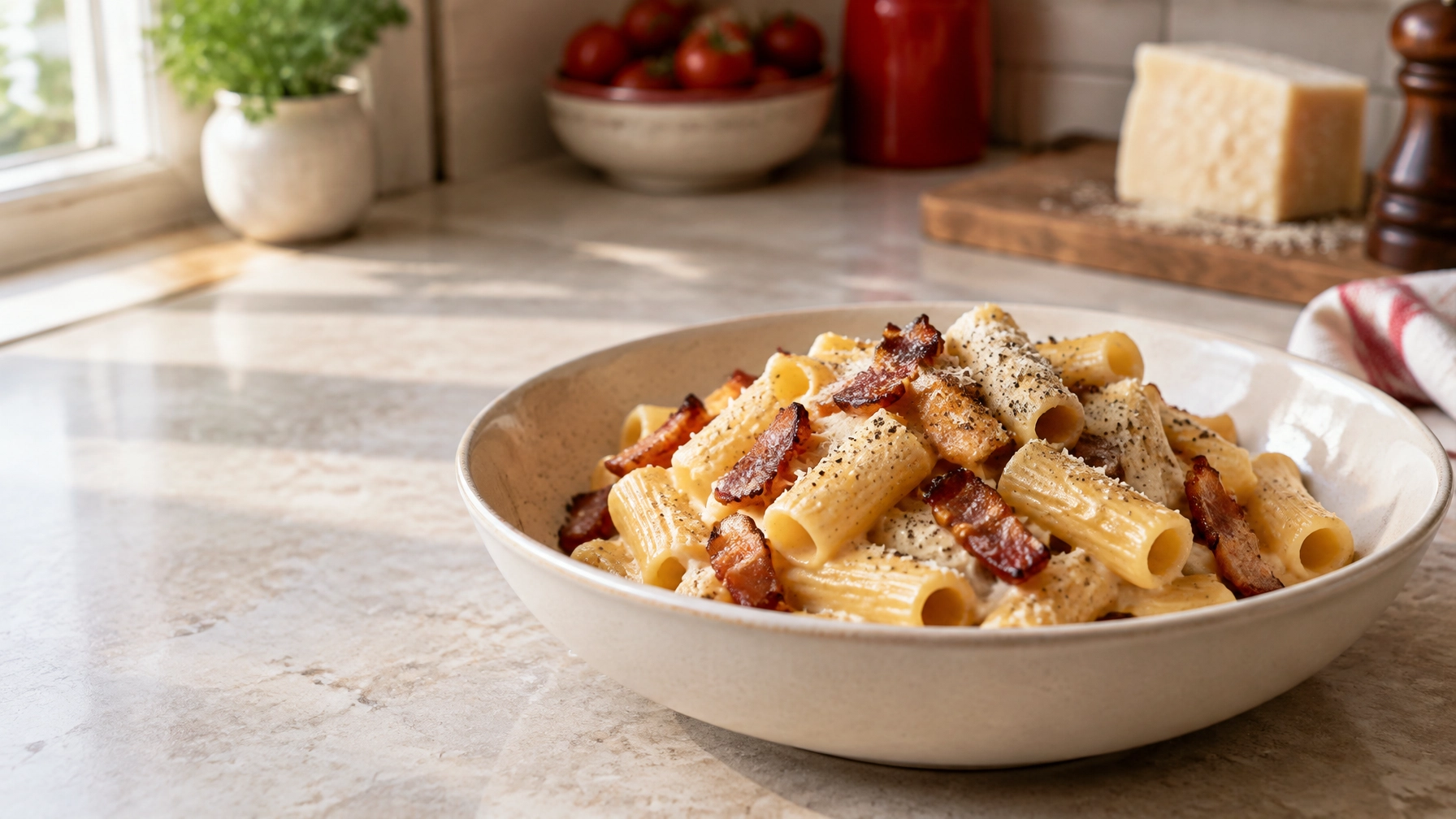
Pasta alla Gricia is a traditional Roman pasta made with four principal ingredients: pasta, guanciale, Pecorino Romano and black pepper. The sauce contains no cream. Its texture comes from rendered pork fat, starchy pasta water and finely grated cheese emulsified at the correct temperature.
GRICIA (noun): A Roman pasta preparation combining cured pork jowl, sheep’s milk cheese and black pepper with pasta.
The process is direct but requires control. Guanciale must be rendered slowly so it becomes crisp without burning. Pecorino must be added away from direct heat so it forms a smooth sauce rather than clumps. Pasta water is not an optional addition. It is the mechanism that binds the fat and cheese.
ORIGIN
Pasta alla Gricia is associated with Rome and the surrounding Lazio region. It is commonly described as a predecessor to carbonara and a close relative of amatriciana. Unlike amatriciana, it does not use tomato. Unlike carbonara, it does not use eggs.
The traditional ingredient list is intentionally limited. The quality of the guanciale and Pecorino Romano therefore has a direct effect on the finished dish. Rigatoni, mezze maniche and other ridged pasta shapes are suitable because their surfaces hold the emulsified sauce and small pieces of guanciale.
TECHNIQUE
The first stage is rendering. Place the guanciale in a cold pan and bring it gradually to medium-low heat. This allows the fat to melt while the meat develops a crisp exterior. Starting with a hot pan can brown the outside before enough fat has rendered.
The second stage is emulsification. Pasta is transferred to the pan with a measured amount of cooking water. The starch helps the rendered fat disperse through the liquid. The result should be glossy and fluid, not oily.
The final stage is the cheese addition. Pecorino Romano should be finely grated and added after the pan has been removed from direct heat. Small amounts of pasta water can be used to adjust the consistency.
Recipe
Pasta alla Gricia
Servings: 4
Prep time: 10 minutes
Cook time: 15 minutes
Total time: 25 minutes
Cuisine: Roman, Italian
Category: Main course
TIPS
- Use a wide pan. A wide cooking surface allows the pasta, rendered fat and pasta water to combine more effectively.
- Do not add olive oil automatically. Guanciale supplies its own cooking fat. Additional oil is usually unnecessary.
- Keep the heat moderate. Excessive heat can burn the guanciale and cause the Pecorino to separate.
- Grate the cheese finely. Large shavings melt unevenly and are more likely to form clumps.
- Add cheese off the heat. Direct heat is the main cause of grainy or stringy cheese sauces.
- Reserve more pasta water than expected. The sauce can thicken quickly as the pasta cools.
- Taste before adding salt. Pecorino Romano and guanciale provide substantial seasoning.
- Serve immediately. The sauce becomes thicker and less fluid if it stands for several minutes.
VARIATIONS
Spaghetti alla Gricia
Spaghetti can be used instead of rigatoni. The method remains the same, but the pasta may require more tossing to distribute the sauce evenly. A long, smooth shape produces a less textured result than ridged pasta.
Mezze maniche alla Gricia
Mezze maniche are short tubes with a large surface area. They are suitable when a higher proportion of sauce and guanciale is preferred in each bite.
Pancetta substitute
Pancetta can be used if guanciale is unavailable. It has a different fat content and flavour profile, so the result will not be identical. Avoid smoked bacon if the objective is a traditional flavour.
Mild version
Reduce the black pepper for a less assertive result. Do not remove it entirely if the dish is intended to remain recognisably alla gricia.
Cream, garlic, onion and tomato are not included in the traditional preparation. Adding them creates a different pasta dish.
FAQ
What is Pasta alla Gricia made of?
Traditional Pasta alla Gricia is made with pasta, guanciale, Pecorino Romano and black pepper. Salt is used for the pasta water, and the cooking water helps form the sauce.
Is Pasta alla Gricia made with cream?
No. A traditional gricia sauce does not contain cream. Its creamy appearance comes from the emulsion of rendered guanciale fat, Pecorino Romano and starchy pasta water.
Can I use bacon instead of guanciale?
Bacon can be used as an availability-based substitute, but it may be smoked and usually has a different texture. Pancetta is generally a closer alternative because it is unsmoked Italian cured pork.
Why did my Pecorino Romano clump?
The cheese was probably added while the pan was too hot, or the cheese was grated too coarsely. Remove the pan from direct heat, use finely grated Pecorino and add it gradually with small amounts of pasta water.
How do I make the sauce smoother?
Use finely grated cheese, keep the heat low, and toss the pasta with the rendered fat and pasta water before adding Pecorino. Add the cheese off the heat and adjust the consistency with small splashes of pasta water.
What pasta shape is best for gricia?
Rigatoni and mezze maniche are strong choices because their ridges and hollow centres hold the sauce. Spaghetti is also suitable when a long pasta shape is preferred.
Can Pasta alla Gricia be reheated?
It is best served immediately. If reheating is necessary, use a skillet over low heat and add a small amount of water. The sauce may not return fully to its original texture.
What is the difference between gricia and carbonara?
Gricia uses guanciale, Pecorino Romano, black pepper and pasta. Carbonara uses similar ingredients but also includes eggs. Gricia does not contain eggs.
SOURCES
- Serious Eats: Pasta alla Gricia
- ChefSteps: Pasta alla Gricia
- GialloZafferano: Pasta alla Gricia
- The Pasta Project: Pasta alla Gricia