Recipe
Servings
Fresh berries, Greek yogurt, nut butter or maple syrup 1×
Serves Fresh berries, Greek yogurt, nut butter or maple syrupPrep 5 minCook 10 minTotal 15 min
Ingredients
- Rolled oats: 1 cup, or approximately 90g
- Protein powder: 1 scoop, approximately 25–30g
- Eggs: 2 large
- Greek yogurt or cottage cheese: ½ cup, approximately 120g
- Milk: ½ cup, or 120ml, plus more if required
- Baking powder: 1 teaspoon
- Vanilla extract: 1 teaspoon
- Salt: ¼ teaspoon
- Oil or butter: For greasing the pan
- To serve: Fresh berries, Greek yogurt, nut butter or maple syrup
Method
- Blend the oats. Add the rolled oats to a blender. Blend for 30–45 seconds, or until the oats have the consistency of fine flour.
- Add the dry ingredients. Add the protein powder, baking powder and salt. Pulse several times to distribute the ingredients evenly.
- Add the wet ingredients. Add the eggs, Greek yogurt or cottage cheese, milk and vanilla extract. Blend briefly until the batter is smooth. Do not continue blending longer than necessary.
- Check the consistency. The batter should be thick but pourable. If it appears stiff or difficult to pour, add milk one tablespoon at a time. Protein powder and oat flour continue to absorb liquid as the batter stands.
- Heat the pan. Place a non-stick frying pan or griddle over medium to medium-low heat. Lightly grease it with oil or butter. The pan should be hot enough for the batter to begin setting, but not so hot that the outside browns before the centre cooks.
- Cook the pancakes. Pour approximately ¼ cup of batter into the pan for each pancake. Cook for 2–3 minutes, until the edges look set and bubbles appear on the surface.
- Turn carefully. Flip each pancake with a wide spatula. Cook for another 1–2 minutes, until the second side is golden brown and the centre is firm.
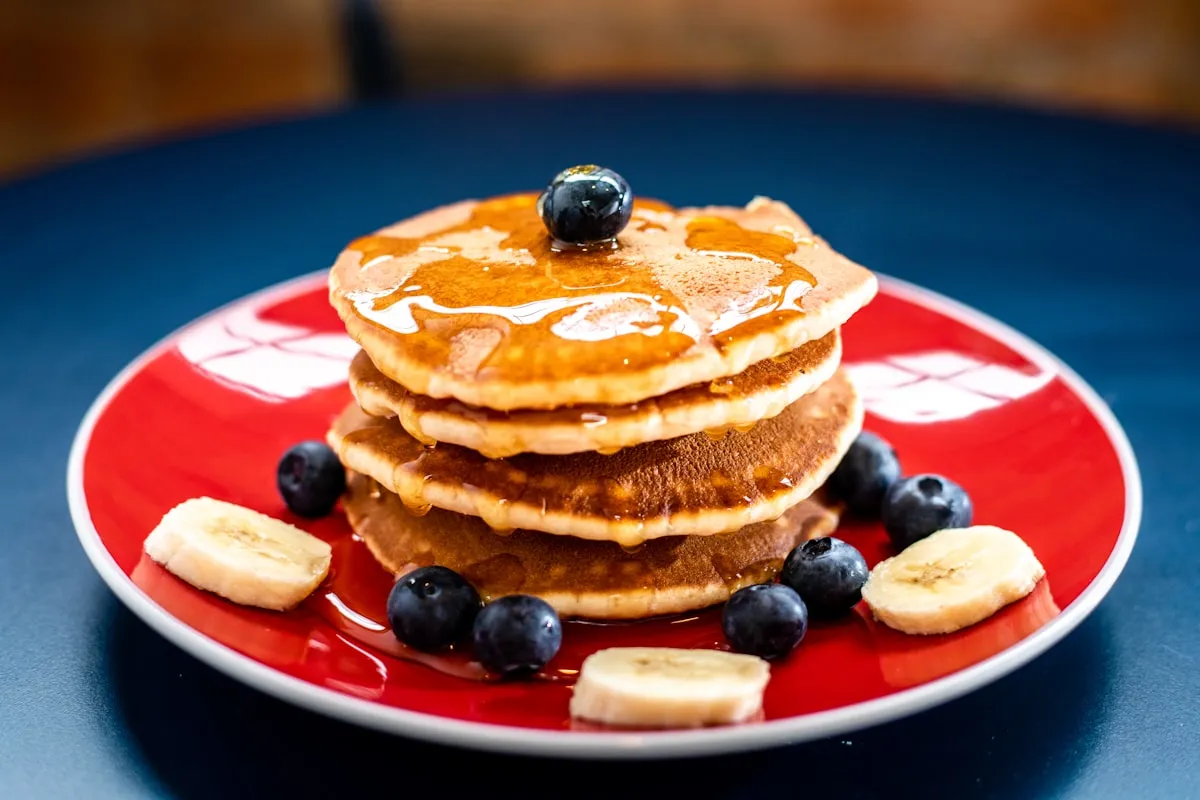
- Repeat and serve. Continue with the remaining batter, lightly greasing the pan between batches if required. Stack the pancakes and serve immediately with fruit, yogurt and syrup.
Protein Pancakes (High-Protein Breakfast)

A reliable breakfast requires a short ingredient list and a controlled cooking process. These protein pancakes use rolled oats blended into flour, protein powder, eggs and Greek yogurt or cottage cheese. The result is a soft, substantial pancake with a higher protein content than a standard flour-based version.
This recipe is not banana-based. The structure comes from oat flour, eggs and dairy, so the pancakes remain protein-forward rather than fruit-sweetened. Serve them with fresh berries and a measured amount of maple syrup, or add yogurt and nut butter for additional protein.
Depending on the protein powder and dairy product used, each serving provides approximately 22–28g of protein.
INGREDIENTS

The recipe serves two people and produces approximately eight small pancakes.
- Rolled oats: 1 cup, or approximately 90g
- Protein powder: 1 scoop, approximately 25–30g
- Eggs: 2 large
- Greek yogurt or cottage cheese: ½ cup, approximately 120g
- Milk: ½ cup, or 120ml, plus more if required
- Baking powder: 1 teaspoon
- Vanilla extract: 1 teaspoon
- Salt: ¼ teaspoon
- Oil or butter: For greasing the pan
- To serve: Fresh berries, Greek yogurt, nut butter or maple syrup
Plain or vanilla protein powder can be used. Whey and plant-based powders absorb liquid differently, so the milk quantity may require adjustment.
METHOD

Blend the oats. Add the rolled oats to a blender. Blend for 30–45 seconds, or until the oats have the consistency of fine flour.
Add the dry ingredients. Add the protein powder, baking powder and salt. Pulse several times to distribute the ingredients evenly.
Add the wet ingredients. Add the eggs, Greek yogurt or cottage cheese, milk and vanilla extract. Blend briefly until the batter is smooth. Do not continue blending longer than necessary.
Check the consistency. The batter should be thick but pourable. If it appears stiff or difficult to pour, add milk one tablespoon at a time. Protein powder and oat flour continue to absorb liquid as the batter stands.
Heat the pan. Place a non-stick frying pan or griddle over medium to medium-low heat. Lightly grease it with oil or butter. The pan should be hot enough for the batter to begin setting, but not so hot that the outside browns before the centre cooks.

Cook the pancakes. Pour approximately ¼ cup of batter into the pan for each pancake. Cook for 2–3 minutes, until the edges look set and bubbles appear on the surface.
Turn carefully. Flip each pancake with a wide spatula. Cook for another 1–2 minutes, until the second side is golden brown and the centre is firm.
Repeat and serve. Continue with the remaining batter, lightly greasing the pan between batches if required. Stack the pancakes and serve immediately with fruit, yogurt and syrup.
The centre should be cakey rather than wet or gummy. If the pancakes brown rapidly while remaining undercooked inside, reduce the heat and cook smaller pancakes.
TIPS
- Blend the oats thoroughly. A fine oat flour produces a smoother texture and reduces visible oat pieces in the finished pancakes.
- Use moderate heat. Protein powder can cause pancakes to brown quickly. Medium-low heat allows the centre to cook without burning the surface.
- Do not press the pancakes down. Pressing removes air and can make the texture dense.
- Allow the batter to stand briefly. Two or three minutes while the pan heats gives the oats and protein powder time to absorb liquid.
- Use cottage cheese for a higher-protein option. It may leave a slightly more textured batter unless blended until smooth.
- Check the centre before serving. There should be no liquid batter remaining. For an internal temperature check, egg-based dishes should reach at least 160°F (71°C).
- Store correctly. Refrigerate leftovers in a sealed container and use within 3–4 days. Reheat until hot throughout. Pancakes can also be frozen in a single layer, separated with parchment paper.
The blending method and use of oats are consistent with other established high-protein pancake approaches, including recipes from King Arthur Baking and Love & Lemons.
VARIATIONS
Berry protein pancakes: Fold a small handful of blueberries into the batter immediately before cooking. Frozen berries may release additional moisture, so use them sparingly.
Chocolate protein pancakes: Use chocolate protein powder and add 1 tablespoon of unsweetened cocoa powder. Add 1–2 tablespoons of milk if the batter becomes too thick.
Cinnamon oat pancakes: Add ½ teaspoon of ground cinnamon and serve with sliced apple, Greek yogurt and a small amount of maple syrup.
Lemon and vanilla pancakes: Add 1 teaspoon of finely grated lemon zest. Serve with berries and plain Greek yogurt.
Dairy-free pancakes: Use a dairy-free protein powder, plant-based yogurt and unsweetened plant milk. The eggs remain part of the recipe and provide structure.
Cottage cheese pancakes: Replace the Greek yogurt with cottage cheese. Blend the batter until smooth for a uniform result. This variation is particularly suitable when additional protein and a denser texture are required.
These variations retain the core formula: oats for structure, protein powder for the principal protein contribution, and eggs plus dairy for moisture and binding.
FAQ
Are protein pancakes healthy?
Protein pancakes can be part of a balanced breakfast. This recipe provides protein from the powder, eggs and Greek yogurt or cottage cheese, while oats contribute carbohydrates and fibre. The final nutritional profile depends on the protein powder, toppings and amount of syrup used.
Can I make protein pancakes without banana?
Yes. Banana is not required for this recipe. The pancakes are structured with blended oats, eggs, protein powder and dairy. This produces a neutral base that can be served with berries, yogurt, nut butter or syrup.
Why are my protein pancakes dry?
Dry pancakes usually result from excessive protein powder, insufficient milk or overcooking. Measure the protein powder rather than using a large unlevelled scoop, and add milk gradually until the batter is thick but pourable. Cook over moderate heat and remove the pancakes once the centre is set.
Can I use cottage cheese instead of Greek yogurt?
Yes. Cottage cheese can replace Greek yogurt in the same quantity. Blend it with the other wet ingredients until smooth. Cottage cheese may produce a slightly thicker batter and can require an additional tablespoon of milk.
Can I prepare the batter in advance?
For best texture, cook the pancakes shortly after blending. If necessary, cover the batter and refrigerate it for up to 24 hours. Stir before cooking and add a small amount of milk if it has thickened substantially.
How should I reheat protein pancakes?
Reheat refrigerated pancakes in a toaster, microwave or lightly greased pan until hot throughout. Frozen pancakes can be reheated directly from frozen, although a toaster or pan generally provides a firmer surface than a microwave.
RECIPE
Protein Pancakes
- Servings: 2
- Prep time: 5 minutes
- Cook time: 10 minutes
- Total time: 15 minutes
- Category: Breakfast
- Method: Blender and skillet
- Cuisine: American-style breakfast
Ingredients
- 1 cup rolled oats
- 1 scoop protein powder, approximately 25–30g
- 2 large eggs
- ½ cup Greek yogurt or cottage cheese
- ½ cup milk, plus more if needed
- 1 teaspoon baking powder
- 1 teaspoon vanilla extract
- ¼ teaspoon salt
- Oil or butter, for cooking
- Fresh fruit and maple syrup, to serve
Instructions
- Blend the oats until they become a fine flour.
- Add the protein powder, baking powder and salt. Pulse to combine.
- Add the eggs, Greek yogurt or cottage cheese, milk and vanilla. Blend until smooth.
- Adjust the consistency with additional milk if necessary.
- Heat a lightly greased non-stick pan over medium to medium-low heat.
- Pour ¼ cup of batter into the pan for each pancake.
- Cook for 2–3 minutes, until bubbles form and the edges set.
- Flip and cook for 1–2 minutes, until golden and firm in the centre.
- Repeat with the remaining batter. Serve with fruit, yogurt or syrup.