Recipe
Servings
Servings 1×
Total 15 min
Ingredients
- Chicken
- Shrimp
- Steak
- Tofu
- Noodles
- Rice
- Cauliflower
- Broccoli
- Carrots
- Peas
- Cucumber
- Avocado
- Garlic
- Fresh ginger
- Lime
- Cooking oil
- Soy sauce or tamari
- Sesame
Method
- Stir-frying isn't just "cooking in a pan"; it’s a high-velocity culinary dance where temperature and surface moisture are the lead performers.
- Pat your shrimp until they are bone-dry.
- Use a neutral oil with a high smoke point, like avocado or grapeseed oil.
- Heat your pan until a drop of water flicked onto it dances and evaporates instantly.
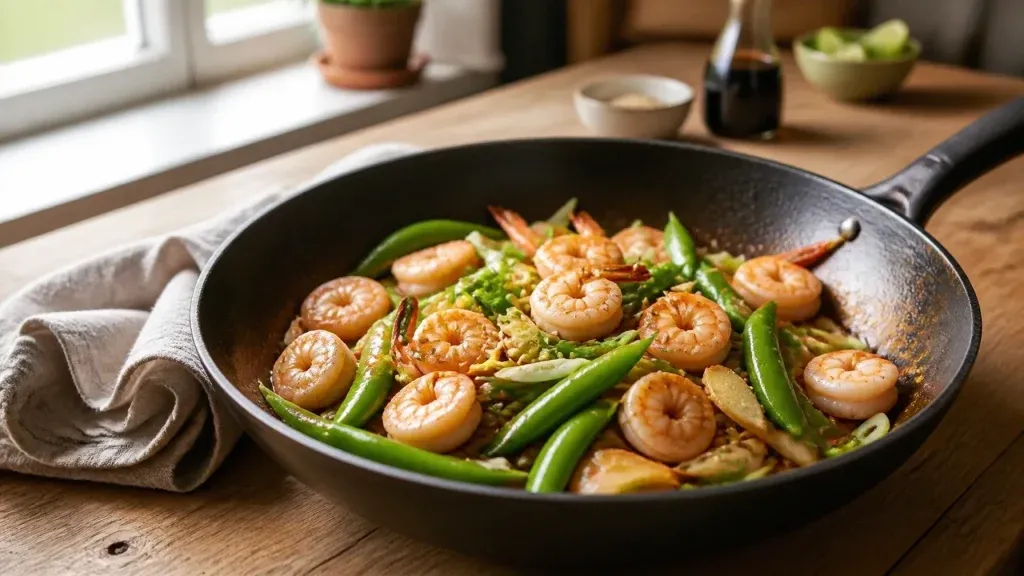
- Cook the shrimp in a single layer, sear them quickly, and pull them out.
- Use the "Hard-to-Soft" staging method: toss in your stalks and roots first, giving them a few minutes to blister.
If you have fifteen minutes, you have a gourmet dinner. We’ve all been there: staring into the fridge at 6:00 PM, battling the urge to order takeout. But let’s skip the delivery fee and make something faster and better. This shrimp and vegetable stir-fry is one of those quick family meals that delivers high-impact flavor with minimal cleanup. It’s light, crisp, and packed with nutrients, making it one of my favorite healthy dinner ideas for any day of the week.
The Science of the Sizzle: Heat and Moisture Control
Stir-frying isn't just "cooking in a pan"; it’s a high-velocity culinary dance where temperature and surface moisture are the lead performers. To get that restaurant-quality sear without the soggy aftermath, you must respect the science of the pan.
The Dryness Doctrine
Before a single shrimp touches the heat, you must embrace the paper towel. This is the most non-negotiable step in my kitchen. When shrimp are wet, the heat of the pan is immediately wasted on evaporating that surface water rather than searing the protein. This leads to steaming, which results in pale, rubbery shrimp. Pat your shrimp until they are bone-dry. If you have the time, let them sit uncovered in the fridge for ten minutes; the dry air will do the heavy lifting for you.
The Maillard Reaction and Wok Hay
To achieve complex, savory flavors, you need the Maillard reaction: a chemical reaction between amino acids and reducing sugars that gives browned food its distinctive flavor. This only happens effectively at high temperatures. Use a neutral oil with a high smoke point, like avocado or grapeseed oil. Heat your pan until a drop of water flicked onto it dances and evaporates instantly.
Avoid crowding the pan. If you dump everything in at once, the temperature of the metal will plummet, and your vegetables will release their juices, turning your stir-fry into a stir-stew. Cook the shrimp in a single layer, sear them quickly, and pull them out. You want them to reach a perfect "C" shape: the universal sign of tenderness. If they curl into a tight "O," you’ve overcooked them into rubber balls.
Staging Your Vegetables
Not all vegetables are created equal. Harder textures like broccoli and carrots require a head start. Use the "Hard-to-Soft" staging method: toss in your stalks and roots first, giving them a few minutes to blister. Only then should you add delicate friends like snap peas or bell peppers. This ensures every bite has that signature "snap" rather than a mushy texture.
Finally, treat your aromatics: garlic and ginger: with respect. If you toss them in at the beginning with the high heat, they will burn and turn bitter. Add them in the last 30 seconds of the vegetable sauté just until they become fragrant.
Flavor Variations to Keep it Fresh
The beauty of a 15-minute stir-fry is its versatility. You can pivot the flavor profile based on what is lingering in your pantry or your specific dietary goals.
- The Low-Carb Pivot: If you are focusing on keto-friendly options, skip the cornstarch in the sauce and serve the stir-fry over a bed of riced cauliflower. The vegetable juices will naturally emulsify with a bit of sesame oil for a lighter finish.
- The Thai Influence: Swap the soy sauce for fish sauce, add a squeeze of fresh lime, and top with a handful of crushed peanuts and cilantro. It’s a fast track to a flavor profile similar to our Quick Shrimp Pad Thai.
- The Heat Seeker: If you like a kick, whisk in a tablespoon of chili-garlic sauce or Sriracha into your liquid base. The spice cuts through the sweetness of the shrimp and the earthiness of the broccoli beautifully.
- The Air Fryer Alternative: Believe it or not, you can adapt this for air fryer recipes dinner. Toss the vegetables in oil and seasonings and air fry at 400°F (200°C) for 8 minutes, adding the shrimp for the final 3-4 minutes. While you lose the "wok hay" sear, it's a completely hands-off way to get dinner on the table.
Perfect Pairings for a Balanced Plate
A great stir-fry needs a companion that offers a contrast in texture or a way to soak up that glorious sauce. Balance is key: if your stir-fry is rich and savory, look for acidity or a neutral grain to ground the meal.
For a classic approach, serve this over fluffy jasmine rice or brown rice. The grains act as a sponge for the ginger-soy glaze. If you want something even faster, thin rice noodles (vermicelli) only require a quick soak in hot water, keeping your total prep and cook time well within the 15-minute window.
To add a refreshing crunch, I often serve a quick smashed cucumber salad on the side. A splash of rice vinegar and a pinch of sugar create an acidic brightness that cuts through the saltiness of the soy sauce, making it one of the most effective healthy dinner ideas for a complete meal spread.
Stir-Fry FAQ: Mastering the Quick Meal
Can I use frozen shrimp for this stir-fry?
Absolutely, but with a caveat. You must defrost them completely first. If you toss frozen shrimp into a hot pan, they will dump a massive amount of water as they thaw, dropping the pan temperature and ruining your sear. To defrost quickly, place them in a bowl of cold water for 15 minutes, then: referencing my previous rule: pat them extremely dry.
Why does my sauce always turn out clumpy?
Clumpy sauce is usually caused by starch mismanagement. If you are using cornstarch as a thickener, you must whisk it into your cold or room-temperature liquid (soy sauce, broth) before adding it to the pan. This creates a "slurry." Once that slurry hits the heat, the starch granules gelatinize and thicken the sauce evenly. Always give your sauce bowl a final whisk right before pouring it into the pan, as cornstarch settles at the bottom quickly.
What is the best pan to use if I don't own a wok?
While a wok is the gold standard for stir-frying because of its high sloping sides, a large stainless steel or cast-iron skillet is a perfectly suitable backup. The goal is surface area. You want enough room for the ingredients to touch the metal without piling on top of each other. Avoid non-stick pans for this specific technique if you can; many non-stick coatings aren't designed for the extreme high heat required for a proper stir-fry sear.
My vegetables are always either raw or mushy. What gives?
This is a timing issue. High-heat stir-frying is about "flash cooking." You want the outside of the vegetable to be blistered and hot, while the inside remains crisp. If they are raw, your heat is likely too low, causing you to cook them longer and eventually leading to a mushy texture. Crank the heat, move the food constantly, and pull the pan off the burner about 30 seconds before you think they are done: residual heat will finish the job.
Can I substitute the shrimp for another protein?
You can, but keep the cooking times in mind. Thinly sliced chicken or flank steak work well, but they take slightly longer than shrimp. If you prefer a plant-based option, air-fried sesame tofu is a fantastic substitute that provides a similar protein hit with a delightful crunch.
{“@type”:”BlogPosting”,”image”:”https://cdn.marblism.com/iS6N9zfAtgl.webp”,”author”:{“name”:”Penny”,”@type”:”Person”},”@context”:”https://schema.org”,”headline”:”Quick Healthy Meals: 15-Minute Shrimp and Vegetable Stir-Fry”,”publisher”:{“logo”:{“url”:”https://cookpedia.com/logo.png”,”@type”:”ImageObject”},”name”:”Cookpedia”,”@type”:”Organization”},”description”:”Learn the science behind the perfect 15-minute shrimp and vegetable stir-fry. Discover tips for high-heat cooking, moisture control, and quick family meal variations.”,”datePublished”:”2026-07-22″,”mainEntityOfPage”:{“@id”:”https://cookpedia.com/quick-healthy-meals-shrimp-stir-fry”,”@type”:”WebPage”}}