Recipe
Servings
2–3 1×
Serves 2–3Prep 5 minCook 10 minTotal 15 min
Ingredients
- Salmon fillet, cut into bite-sized pieces
- Butter lettuce, Little Gem, or romaine leaves
- Soy sauce or tamari
- Honey or maple syrup
- Garlic and fresh ginger
- Rice vinegar or lime juice
- Cornstarch and cold water
- Neutral cooking oil
- Scallions, carrot, cucumber, and sesame seeds for serving
Method
- Whisk the soy sauce, sweetener, garlic, ginger, vinegar, and cornstarch slurry until smooth.
- Pat the salmon dry and sear it in a hot, lightly oiled skillet until browned and cooked through.
- Pour in the sauce and let it bubble briefly until glossy and thick enough to coat the salmon.
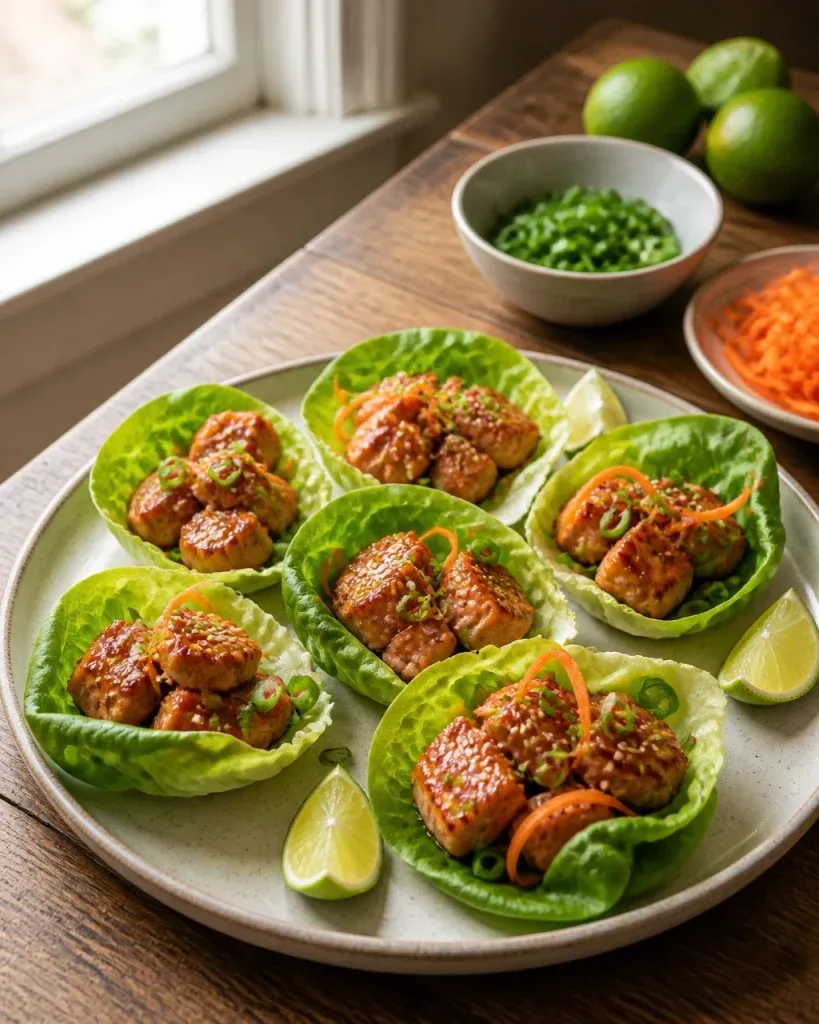
- Spoon the salmon into dry lettuce leaves.
- Finish with scallions, vegetables, sesame seeds, and lime. Serve immediately.
Intro: A Fast Dinner with Plenty of Personality
These teriyaki salmon lettuce cups are my answer to the eternal weeknight question: “Can dinner be quick without tasting like a shortcut?” Yes. Keep the salmon tender, make the teriyaki glaze clingy, and use crisp lettuce as the edible serving dish. You get savory, sweet, fresh, crunchy, and satisfying in every bite. No mountain of washing-up. No complicated plating. Just a bright little dinner that gets on the table in 15 minutes.
Tips & Technique: Make Heat, Moisture, and Balance Work for You
Dry the salmon before it meets the pan
Pat the salmon dry before cooking. This is non-negotiable if you want browned edges instead of pale, watery pieces.
Surface moisture must evaporate before browning can begin. Until that water is gone, the salmon stays close to the boiling point of water and steams rather than sears. A dry surface lets the pan temperature rise quickly, encouraging the Maillard reaction: the group of chemical reactions that creates deeper color and savory, toasted flavor.
Cutting the salmon into even bite-sized pieces also helps the recipe move quickly. Keep the pieces similar in thickness so the smaller ones do not dry out while the larger pieces catch up. You do not need ruler-perfect cubes. Aim for consistency, then trust your eyes and thermometer.
Use a hot, roomy skillet
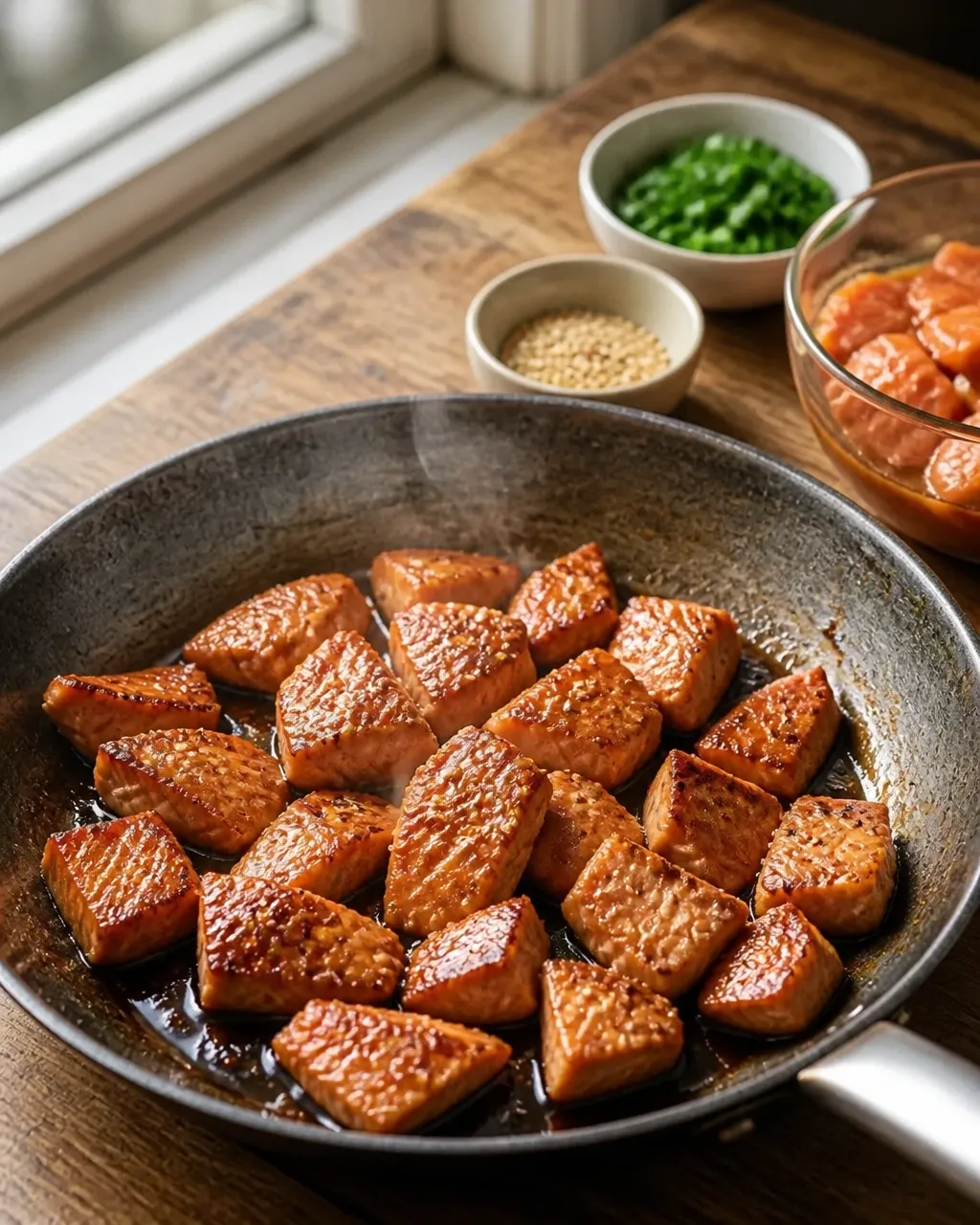
Preheat a wide skillet over medium-high heat before adding the oil and salmon. Give each piece enough space to contact the pan. Crowding traps steam, lowers the temperature, and produces soft salmon with diluted flavor.
Work in batches if necessary. Adding an extra minute is far better than turning the entire pan into a seafood sauna. Let the salmon sit long enough to develop color before turning it. Constant stirring prevents the surface from making proper contact with the hot pan.
Salmon contains delicate muscle proteins that firm as they heat. Fast, direct cooking gives the outside a chance to brown before the center loses too much moisture. Watch the pieces closely once they begin to turn opaque. Small salmon pieces can go from tender to dry with surprising enthusiasm.
Thicken the teriyaki glaze with control
A good teriyaki sauce needs to coat the salmon rather than run straight to the bottom of the plate. You can thicken it by reducing it gently or by using a small cornstarch slurry in the recipe card.
Reduction works because heat evaporates water and concentrates the soy, sweetener, and aromatics. Stop when the sauce looks syrupy and coats the back of a spoon. Do not reduce it aggressively. Soy sauce is already salty, and excessive reduction can turn a balanced glaze into a tiny salt ambush.
Cornstarch gives you a faster, more predictable result. Always mix it with cold liquid before adding it to the hot sauce. Starch granules swell when heated, absorbing liquid and creating a glossy texture. Adding dry cornstarch directly to the pan creates lumps, which is not the kind of texture contrast we are after.
Add the glaze near the end of cooking. The salmon should already be almost done before the sauce joins the skillet. This prevents the sugars from burning and keeps the glaze fresh rather than bitter.
Check salmon by temperature, not optimism
Use an instant-read thermometer in the thickest piece. Salmon should reach 145°F (63°C) for a fully cooked, food-safe result. The flesh should also appear opaque and flake easily.
If your pieces vary in size, check the largest one first. Remove smaller pieces as they finish if needed. Residual heat will continue cooking the salmon briefly, so avoid leaving it in the hot skillet while you arrange the lettuce.
For more seafood timing ideas, compare this method with Cookpedia’s 15-Minute Air Fryer Garlic Butter Salmon. The appliance changes, but the rule stays the same: check the thickest part and stop cooking promptly.
Keep the lettuce crisp
Choose sturdy leaves such as butter lettuce, Little Gem, or romaine hearts. Rinse them, dry them thoroughly, and keep them chilled until serving.
Water on the lettuce dilutes the sauce and makes the cups floppy. Dry the leaves well with a clean towel or salad spinner. Treat them like tiny bowls: flexible enough to fold, strong enough to hold saucy salmon without immediate structural collapse.
Fill the cups just before eating. Moisture slowly moves from the salmon and glaze into the lettuce, softening it over time. A little softness is natural, but serving immediately gives you the best contrast between warm salmon and cool, crisp leaves.
Balance richness with freshness
Teriyaki brings salt and sweetness, while salmon contributes rich, fatty flavor. That combination needs contrast. Use lime, cucumber, scallions, carrots, or a sharp quick pickle to keep the cups lively.
Acidity does not erase richness; it makes rich food feel cleaner and more appetizing. Crunch helps too. Shredded vegetables interrupt the soft texture of the salmon and give the meal a more satisfying bite.
Keep the toppings simple. One crisp vegetable, one fresh allium, and one acidic finish are enough. Dinner does not need a topping conference.
Variations: Keep the Formula, Change the Mood
Turn these cups into flexible quick family meals by changing the flavor accents rather than rebuilding the whole dish.
For a spicy version, add chili flakes, sriracha, or chili crisp to the teriyaki glaze. Finish with lime so the heat tastes bright rather than heavy. Increase the spice gradually; sweetness can make chili feel stronger as the sauce reduces.
For a lighter, crunchier version, add shredded cabbage, cucumber, and radish. The vegetables bring water, texture, and freshness, which balance the salmon beautifully.
Use tamari instead of soy sauce for a gluten-free variation, but check the label because brands differ. Add ginger and garlic for more aromatic depth, or use a little orange zest for a sweeter citrus profile.
If salmon is not available, try firm tofu or shrimp. Tofu needs a very dry surface and more browning time, while shrimp cook even faster and should be removed as soon as they turn opaque and gently C-shaped. For another teriyaki direction, try Cookpedia’s Teriyaki Tofu with Charred Spring Onions.
Serve the filling over rice or quinoa instead of lettuce when you want a more substantial bowl. Keep the glaze, vegetables, and acidity in place so the dish stays balanced.
Side Dish Pairings: Add Freshness, Not More Weight
These lettuce cups are satisfying on their own, but a simple side can turn them into a complete meal. Choose something crisp, acidic, or lightly seasoned.
A cucumber salad with rice vinegar is an excellent match. Its cool crunch cuts through the sweet-salty glaze and refreshes your palate. Add shredded cabbage, carrots, or radishes if you want more texture.
Steamed edamame brings extra protein and a gentle savory flavor. Keep it simply salted so it does not compete with the salmon.
Plain jasmine rice works when you want the meal to feel heartier. Serve it alongside or underneath the lettuce cups, and let the extra teriyaki sauce do useful work.
For a warmer vegetable side, try broccoli or green beans with a squeeze of lime. Cookpedia’s 15-minute meals collection has more fast combinations built around the same practical idea: one flavorful main, one simple contrast, and no unnecessary fuss.
FAQ: What If the Lettuce Cups Go Wrong?
What if my salmon is dry?
You probably cooked it too long or cut the pieces too small. Salmon proteins tighten as heat increases, and excessive tightening pushes out moisture. Check the largest piece early with a thermometer and remove the skillet from the heat as soon as the salmon reaches 145°F.
If the salmon is already dry, use extra glaze, lime juice, and crunchy vegetables to improve the texture. You cannot reverse overcooking, but you can add moisture and contrast.
What if the teriyaki sauce is too salty?
Dilute it with a little water or unsalted stock, then add acidity with lime or rice vinegar. Serve the salmon with plain rice or extra lettuce to spread the seasoning across more food.
Do not add a large amount of sweetener as your first fix. Sugar may mask salt temporarily, but it can leave you with a sauce that is both too salty and too sweet. Dilution and acidity are more reliable.
What if the glaze is too thin?
Let it bubble for another 30 to 60 seconds so excess water can evaporate. If it remains loose, add a small amount of cornstarch slurry and simmer briefly.
Avoid sprinkling dry cornstarch directly into the pan. It clumps immediately. Mix it with cold water first, then add it gradually while stirring.
What if the glaze becomes too thick?
Add warm water a teaspoon at a time and stir over low heat. Teriyaki sauce thickens further as it cools, so stop while it is slightly looser than your final target.
If it tastes overly concentrated, add a small splash of vinegar or lime juice. Brightness can make a thick glaze feel lighter without making it watery.
Can I prepare these ahead of time?
Prepare the sauce and toppings ahead, but cook the salmon close to serving. Store the lettuce, salmon, and glaze separately in the refrigerator. Assemble just before eating so the leaves stay crisp.
For leftovers, keep the salmon chilled and use it within three to four days. Reheat it gently, or serve it cold over greens. Avoid repeated reheating because salmon becomes drier each time.
Can I use an air fryer?
Yes. Air fryers cook salmon quickly because moving hot air transfers heat efficiently around the food. Cut the pieces evenly, avoid overcrowding the basket, and check them early with a thermometer.
Use the same glaze near the end of cooking rather than coating the salmon heavily from the beginning. Sugary sauces can darken quickly in fast-moving heat. This makes a useful option when you are collecting practical air fryer recipes dinner ideas.
Are these healthy dinner ideas for the whole family?
They can be. Salmon provides protein and beneficial fats, while lettuce and crunchy vegetables add freshness and volume. The main consideration is the sodium and sweetness in the glaze, so use a lighter soy sauce or reduce the amount if needed.
For children, serve the salmon, lettuce, rice, and toppings separately. Let everyone build their own cups. That little bit of choice often turns dinner into one of those rare healthy dinner ideas that people actually enjoy eating.
{“@graph”:[{“@type”:”BlogPosting”,”image”:”https://cdn.marblism.com/Vp_zZSPjM9H.webp”,”author”:{“name”:”Penny”,”@type”:”Person”,”jobTitle”:”AI Blog Writer”,”affiliation”:{“url”:”https://cookpedia.com”,”name”:”Cookpedia”,”@type”:”Organization”}},”headline”:”15-Minute Meals: Teriyaki Salmon Lettuce Cups”,”publisher”:{“url”:”https://cookpedia.com”,”name”:”Cookpedia”,”@type”:”Organization”},”mainEntity”:{“@type”:”FAQPage”,”mainEntity”:[{“name”:”What if my salmon is dry?”,”@type”:”Question”,”acceptedAnswer”:{“text”:”Salmon is usually dry because it was cooked too long or cut into pieces that were too small. Check early with a thermometer and remove it when it reaches 145°F.”,”@type”:”Answer”}},{“name”:”What if the teriyaki sauce is too salty?”,”@type”:”Question”,”acceptedAnswer”:{“text”:”Dilute the sauce with water or unsalted stock, then add lime juice or rice vinegar. Serve with plain rice or extra lettuce to balance the seasoning.”,”@type”:”Answer”}},{“name”:”What if the glaze is too thin?”,”@type”:”Question”,”acceptedAnswer”:{“text”:”Let the sauce bubble briefly so water can evaporate. If needed, add a small amount of cornstarch slurry and simmer until glossy.”,”@type”:”Answer”}},{“name”:”Can I prepare these lettuce cups ahead of time?”,”@type”:”Question”,”acceptedAnswer”:{“text”:”Prepare the sauce and toppings ahead, but cook the salmon close to serving. Store the components separately and assemble just before eating to keep the lettuce crisp.”,”@type”:”Answer”}},{“name”:”Can I use an air fryer?”,”@type”:”Question”,”acceptedAnswer”:{“text”:”Yes. Cook evenly sized salmon pieces without overcrowding the basket, check them early, and add the teriyaki glaze near the end so the sugars do not darken too quickly.”,”@type”:”Answer”}}]},”description”:”Make teriyaki salmon lettuce cups in 15 minutes with crisp lettuce, tender salmon, and a glossy homemade glaze. A fresh, easy weeknight dinner.”,”datePublished”:”2026-08-19″,”articleSection”:”15-Minute Meals”}],”@context”:”https://schema.org”}