Recipe
Servings
4 1×
Serves 4Prep 10 minCook 14 min
Ingredients
- 1½ pounds salmon fillet, preferably an even thickness
- 1 pound asparagus, woody ends trimmed
- 4 tablespoons unsalted butter, melted
- 3 garlic cloves, finely minced
- 1 tablespoon lemon juice, plus wedges for serving
- ½ teaspoon salt
- ¼ teaspoon black pepper
- 1 tablespoon chopped parsley
- Optional: chili flakes or smoked paprika
Method
- Heat the oven to 400°F (200°C). Line a rimmed sheet pan with parchment.
- Place the salmon skin-side down in the center. Arrange the asparagus around it in a single layer.
- Stir together the melted butter, garlic, lemon juice, salt, and pepper. Brush it over the salmon and asparagus.
- Bake for 12–15 minutes, beginning to check at 10 minutes. Cook the thickest part of the salmon to 145°F (63°C) for the USDA-recommended temperature.
- Rest for 3–5 minutes. Finish with parsley, lemon wedges, and optional chili flakes or smoked paprika.
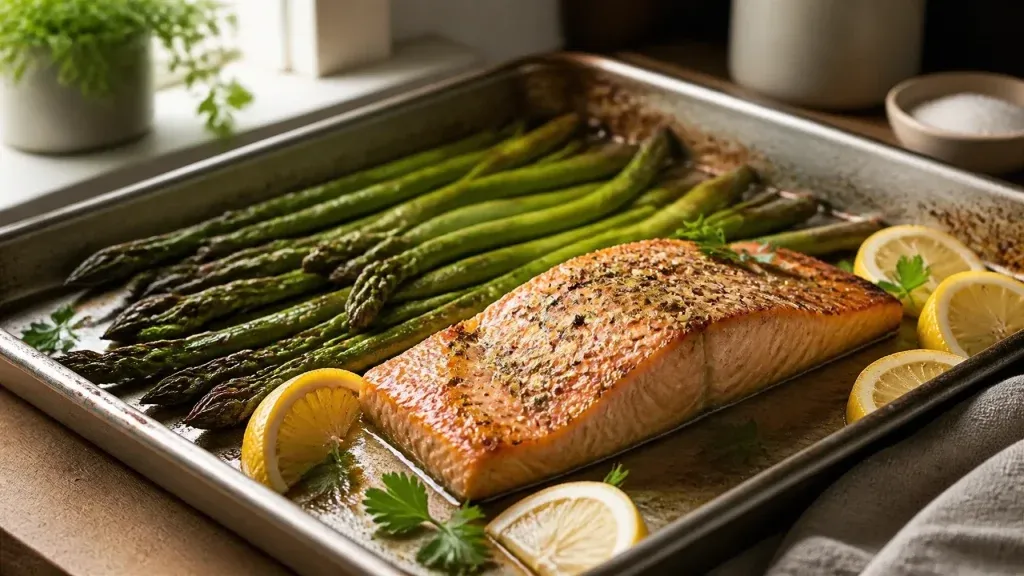
Some dinners ask for a sink full of pans and a suspicious amount of patience. This one does not. Garlic butter baked salmon with asparagus gives you a complete, flavorful meal from one sheet pan, with tender fish, crisp-tender vegetables, and enough buttery lemony sauce to make everyone reach for bread. I rely on this recipe when I want something nutritious and impressive without turning Tuesday night into a cooking marathon.
Tips & Technique: Make the Oven Do the Heavy Lifting
Use high heat for fast, even cooking
Set the oven to 400°F (200°C). This temperature is hot enough to cook salmon quickly while encouraging the asparagus to roast rather than slowly steam. The shorter cooking time matters because fish loses moisture as its muscle proteins tighten.
At a moderate temperature, salmon can sit in the oven longer than necessary while the outside dries out. A hot oven gets the center cooked before too much moisture escapes. That is the basic reason sheet-pan salmon works so well for busy nights.
Use the center rack and give the oven plenty of time to preheat. A half-warm oven creates a slow start, which can leave the asparagus limp and the fish unevenly cooked.
Choose salmon with even thickness
Thickness matters more than weight. A thick piece of salmon will need more time than a thin tail piece, even if both weigh the same. Look for a fillet with a fairly consistent shape, or tuck a thin end underneath itself so it does not finish long before the middle.
Do not treat the recipe’s cooking time as a commandment carved into stone. Start checking around the ten-minute mark. Salmon is ready when the thickest part flakes easily and reaches the temperature you want.
For the clearest safety check, use an instant-read thermometer. US food-safety guidance recommends cooking fish to 145°F (63°C). Insert the thermometer into the thickest part, avoiding the pan underneath. Then rest the salmon briefly before serving. For more background on safe seafood handling, consult the USDA fish and shellfish guidance.
Keep the asparagus in a single layer
Crowding is the enemy of roasted vegetables. Arrange the asparagus around the salmon with a little space between the spears. When vegetables are piled together, their moisture becomes trapped, and you get steaming instead of browning.
Use thinner asparagus with a standard salmon fillet if you want everything to finish together. Very thick spears may need a head start in the oven. Give them a few minutes before adding the fish, or accept a little extra crunch. Personally, I prefer asparagus that still has some bite. Mushy vegetables bring no joy to the dinner table.
Understand what garlic butter actually does
Butter carries flavor across the surface of the salmon, helping garlic, lemon, pepper, and herbs cling to the fish. It also adds fat, which gives the salmon a richer mouthfeel. However, butter is not a magic moisture shield. It cannot rescue an overcooked fillet.
Spread the butter evenly rather than leaving one large puddle on top. Too much liquid around the fish can soften the surface and prevent light browning. Keep the salmon skin-side down when possible. The skin protects the bottom of the fillet from direct pan heat and helps it stay intact when you lift it from the tray.
Fresh garlic can brown quickly at 400°F, especially if it is exposed on the pan. Mix it into the butter and keep most of it on the salmon rather than scattering it across the bare tray. Burnt garlic tastes bitter, and bitter garlic has a way of announcing itself loudly.
Watch for albumin, but do not panic
You may notice small white beads appearing on the surface of the salmon. That substance is albumin, a protein that firms and separates as the fish heats. A little is completely normal.
Large amounts usually mean the fish has been cooked too aggressively or for too long. Use the thermometer and begin checking early instead of waiting for the full suggested time. Remove the salmon as soon as it reaches your chosen doneness, then let carryover heat finish the job.
Resting also gives the juices a moment to settle. Slice or flake the salmon immediately from the oven, and more flavorful moisture may run onto the tray instead of staying in the fish. Three to five minutes is enough. Use that time to squeeze lemon over the asparagus or put the plates on the table.
Do not skip the final acid
Garlic butter is rich. Salmon is rich. Lemon keeps the whole plate from feeling heavy. Add it at the end as well as in the butter if you enjoy a sharper finish. The acid brightens the dish and makes the garlic taste more pronounced without adding more garlic.
This balance is one reason the recipe feels satisfying rather than greasy. Think of lemon as the volume control for the butter: turn it up until the flavors sound clear.
For more low-fuss oven inspiration, browse Cookpedia’s baking dinner recipes or explore these quick family meals when the evening schedule is already misbehaving.
Variations: Change the Flavor Without Changing the Method
Keep the core technique the same and adjust the finishing flavors. For a Mediterranean direction, add oregano, parsley, and a few chopped olives after baking. The briny olives bring useful contrast to the butter and salmon.
Make the dish warmer with smoked paprika and a pinch of chili flakes. Add the spice to the butter so it spreads evenly instead of forming one fiery little island. A drizzle of honey can soften the heat, but use restraint; this should still taste like dinner, not dessert wearing a salmon costume.
For a lighter variation, replace some of the butter with olive oil. You will lose a little richness but keep the garlic and lemon profile. You can also use ghee for a deeper, nutty flavor.
Need a dairy-free option? Use olive oil or a dairy-free butter alternative. For a low-carb plate, serve the salmon and asparagus as written. For a heartier meal, add cooked grains after the fish comes out of the oven rather than overcrowding the tray.
If you are comparing this with air fryer recipes dinner ideas, remember that the air fryer will cook smaller salmon portions quickly, but the oven gives you more room for a full family-sized fillet and vegetables.
Side Dish Pairings: Build Balance, Not a Mountain
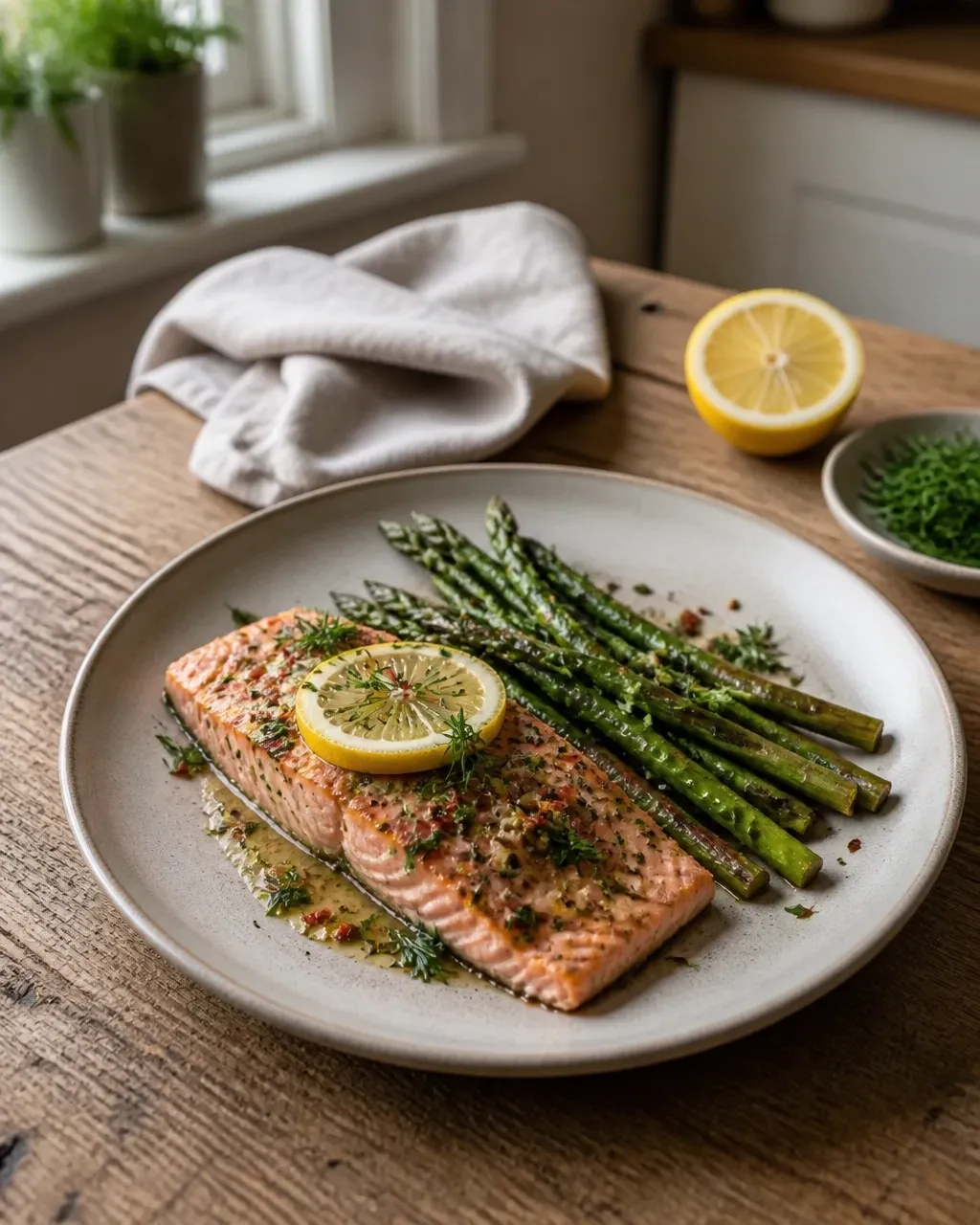
Let the salmon and asparagus remain the center of the plate. Add one side that absorbs the sauce and one fresh element that cuts through it.
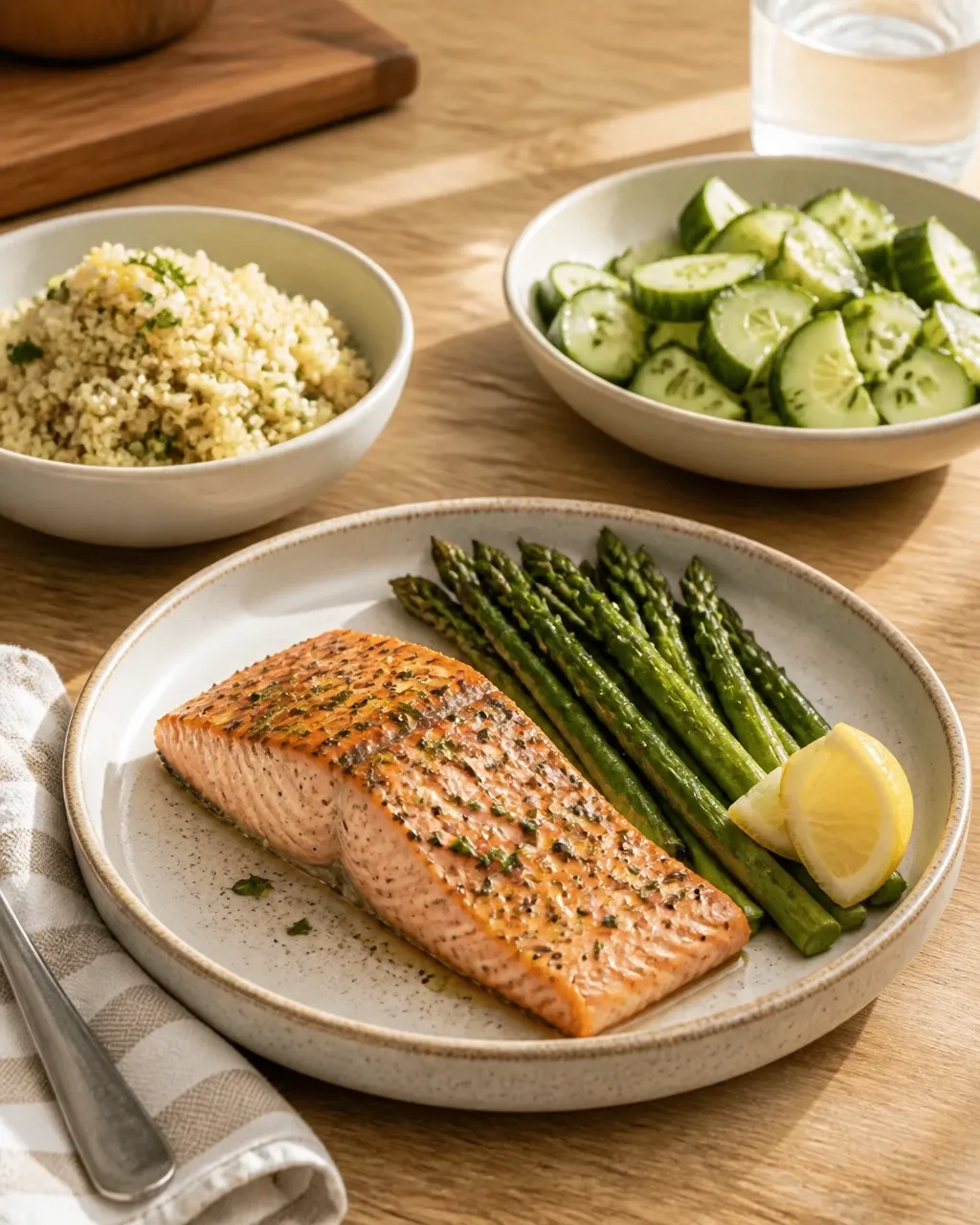
Lemony quinoa, brown rice, or a small portion of roasted potatoes will catch the garlic butter and make the meal more filling. Keep the grain simply seasoned so it does not compete with the fish.
For freshness, serve a cucumber and herb salad, lightly dressed with vinegar or lemon. Its cool crunch balances the warm, rich salmon. A tomato salad works beautifully too, especially when the tomatoes are juicy and slightly acidic.
Crusty bread is also a perfectly reasonable choice. Use it to mop up the pan juices and call it practical kitchen management. For more balanced healthy dinner ideas, pair rich main dishes with bright vegetables, fresh herbs, or acidic dressings rather than adding another creamy side.
FAQ: Troubleshoot Your Sheet-Pan Salmon
Can I use frozen salmon?
Thaw the salmon completely before baking for the most even result. Frozen fish releases extra moisture as it cooks, which can make the surface watery while the center is still cold. Thaw it overnight in the refrigerator, then pat it dry before seasoning.
Why did my salmon turn out dry?
The usual culprit is overcooking, not a lack of butter. Salmon continues cooking slightly after it leaves the oven, so start checking earlier than you think. Thickness, starting temperature, and the accuracy of your oven all affect timing. Use a thermometer instead of relying only on the clock.
Why is my asparagus soft?
Soft asparagus usually means it was crowded, too thin for the cooking time, or left in the oven after it was ready. Spread it in one layer and begin checking the spears early. If your asparagus is particularly thin, add it after the salmon has already cooked for a few minutes.
Can I prepare this ahead of time?
You can mix the garlic butter and trim the asparagus several hours ahead. Keep both refrigerated and bring the butter back to a spreadable consistency before cooking. Avoid assembling the raw fish and asparagus too far in advance because moisture and salt can change the texture of the vegetables.
Should I remove the salmon skin?
No need. Bake the fillet skin-side down and lift the cooked fish away from the skin when serving. The skin acts as a buffer against the hot pan. If you dislike eating it, simply leave it behind on the tray.
What if I do not have an instant-read thermometer?
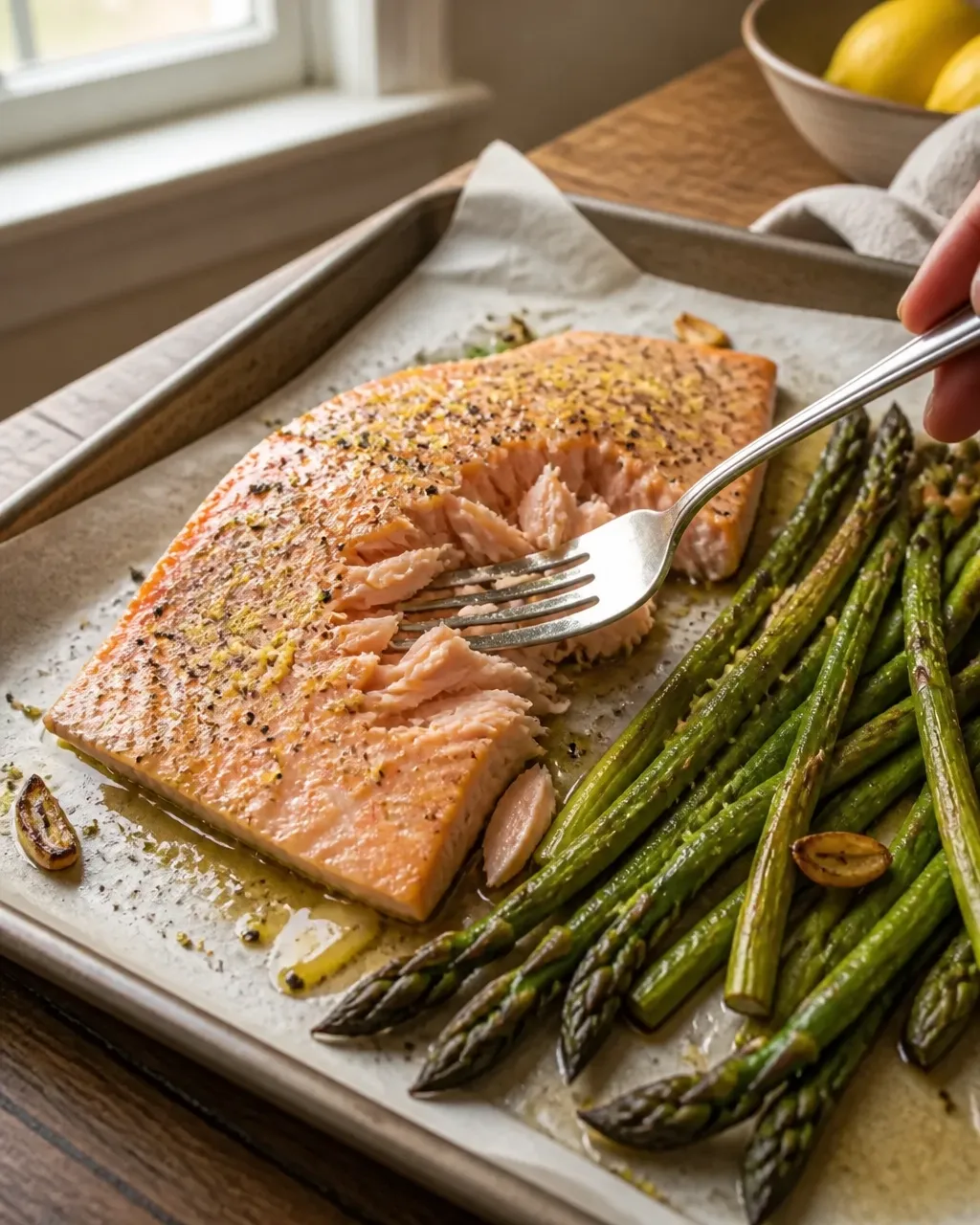
Check the thickest part with a fork. Properly cooked salmon should separate into moist flakes and look opaque through the center. Do not use color alone as your only test, because different salmon varieties can naturally look more or less deep pink. A thermometer remains the most reliable tool.
Can I reheat leftovers?
Reheat gently, preferably covered, in a low oven until just warm. High heat will push more moisture from the fish and make it firm. You can also enjoy leftovers cold over greens or flake them into a grain bowl. The asparagus is best reheated briefly so it keeps some texture.