Recipe
Serves
2 1×
Serves 2Prep 10 minCook 15 minTotal 25 min
Ingredients
Method
- Heat the oven to 200°C, or 180°C fan. Set out two large sheets of baking parchment.
- Put the sliced leek in a pan with the water. Cover and bring to a simmer. Cook for about 5 minutes, until the water has evaporated and the leek is almost tender.
- Stir the mascarpone and 1 tablespoon of chopped dill into the leeks. Season with salt and pepper.
- Divide the leek mixture between the parchment sheets. Set one salmon fillet on top of each portion.
- Add the lemon zest, a squeeze of lemon juice, the capers and the remaining dill.
- Fold the parchment over each fillet. Pleat the edges several times to seal the parcels, then place them on a baking tray.
- Bake for 12–15 minutes, depending on the thickness of the fillets. Check that the salmon is cooked through. Open the parcels carefully to avoid the hot steam and serve with lemon wedges.
Salmon and Leek Baked Parcels
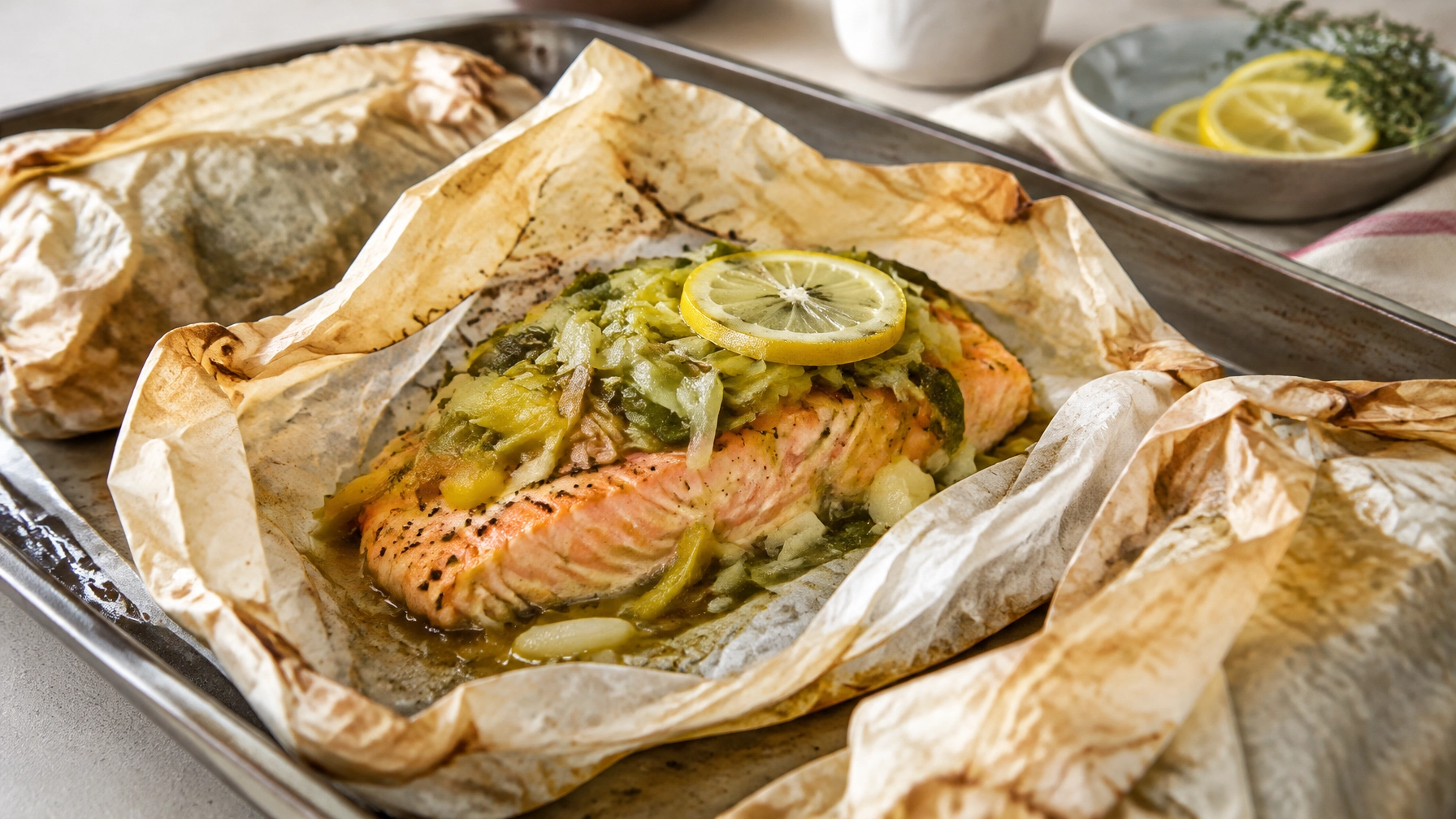
Salmon and leek baked parcels cook gently in sealed paper, keeping the fish moist while the leeks soften beneath it. This recipe pairs two salmon fillets with creamy mascarpone, fresh dill, lemon and capers. The parcels are assembled individually and baked on one tray, so serving is straightforward and washing-up is limited.
The method uses baking parchment folded tightly around each portion. As the parcels heat, steam circulates inside and cooks the fish and vegetables together. Take care when opening them: trapped steam escapes quickly. The stated cooking time is a guide; thicker fillets may need longer, so check that the salmon is cooked through before serving.
Cooking
Soften the sliced leeks before assembling the parcels. This gives them a head start and prevents them from remaining firm while the salmon cooks. A short covered simmer with water is sufficient. Once the water has evaporated and the leeks are nearly tender, stir in mascarpone and dill.
Use two large sheets of baking parchment, each wide enough to hold one salmon fillet and its leek base. Place the filling in the centre, leaving space at the edges for sealing. Fold the paper over the fish, then pleat the open edges several times. A close seal helps retain steam and keeps the filling inside.
Set the parcels on a baking tray with space between them. They should be stable and sealed before going into the oven. If the paper is difficult to fold, crease it firmly as you work around the edge. Do not overfill: a little room around the fish makes sealing easier.
The parcels can be served unopened, allowing each person to release the steam at the table, or opened carefully in the kitchen and transferred to plates. Keep your hands and face away from the escaping steam.
Serving
Serve the salmon and leeks with lemon wedges. Wilted spinach is one suitable accompaniment; boiled or steamed baby potatoes can make the meal more substantial. Add the side separately rather than placing it inside the parcels, where it could obstruct the seal or change the cooking time.
Salmon is an oily fish. The NHS provides general information about fish and nutrition, including recommendations for oily fish intake: NHS guidance on fish and shellfish.
Recipe
Servings
2
Prep time
10 minutes
Cook time
15 minutes
Total time
25 minutes
Tips
- Slice the leek thinly so that it softens evenly in the pan.
- Make the folds snug, but do not press the parchment against the top of the fish.
- Use a tray with a rim to catch any liquid if a parcel leaks.
- Cooking time varies with fillet thickness. Check the centre of the thickest portion before serving.
- Keep raw fish separate from ready-to-eat food and wash hands and utensils after handling it.
Variations
- Replace the dill with chopped parsley or chives.
- Add a few thin slices of spring onion to the leek mixture.
- Use crème fraîche in place of mascarpone for a less dense sauce.
- Omit the capers and add a little extra lemon zest for a milder finish.
- Serve with wilted spinach or baby potatoes, as available.
FAQ
Can I prepare the parcels in advance?
Soften the leeks ahead of time and refrigerate them separately. Assemble the parcels shortly before baking, keeping the raw salmon chilled until needed.
Can I use frozen salmon?
Thaw it fully in the fridge before assembling the parcels. Pat away excess moisture so the filling does not become watery.
How can I tell when the salmon is cooked?
Check the thickest part of a fillet. It should be cooked through and separate easily into flakes. If it needs more time, reseal the parcel and return it to the oven briefly.
Can I cook the parcels without parchment?
Parchment is used here to create the sealed parcels. Without it, the ingredients will not cook in the same enclosed steam environment. Use a suitable ovenproof covered dish for a different preparation, and check the fish as it cooks.
Why are the leeks softened before baking?
The short simmer makes them nearly tender before they go into the oven. This helps the leeks and salmon finish cooking within a similar time.