Recipe
Servings
Servings 1×
Ingredients
- Chicken
- Salmon
- Asparagus
- Avocado
- Apple
- Balsamic vinegar
- Honey
- Cooking oil
Method
- Prepare the ingredients described in the article and heat the cooking surface or oven as directed.
- Cook the main ingredients using the heat and timing guidance in the article.
- Finish with the seasonings and garnishes named in the article, then serve.
Welcome to my blog, where we don't just "cook", we engineer flavor through controlled chemical reactions. If you're tired of limp fish and soggy greens, you’ve come to the right place. Today, we are tackling the Skillet Honey Balsamic Glazed Salmon & Asparagus. This isn't just one of those standard healthy dinner ideas; it’s a masterclass in moisture retention and surface-level browning. We’re optimizing for the Maillard reaction while navigating the treacherous waters of sugar caramelization. Put on your apron; it’s time to geek out on some serious skillet physics.
The Maillard Paradox: Browning vs. Burning
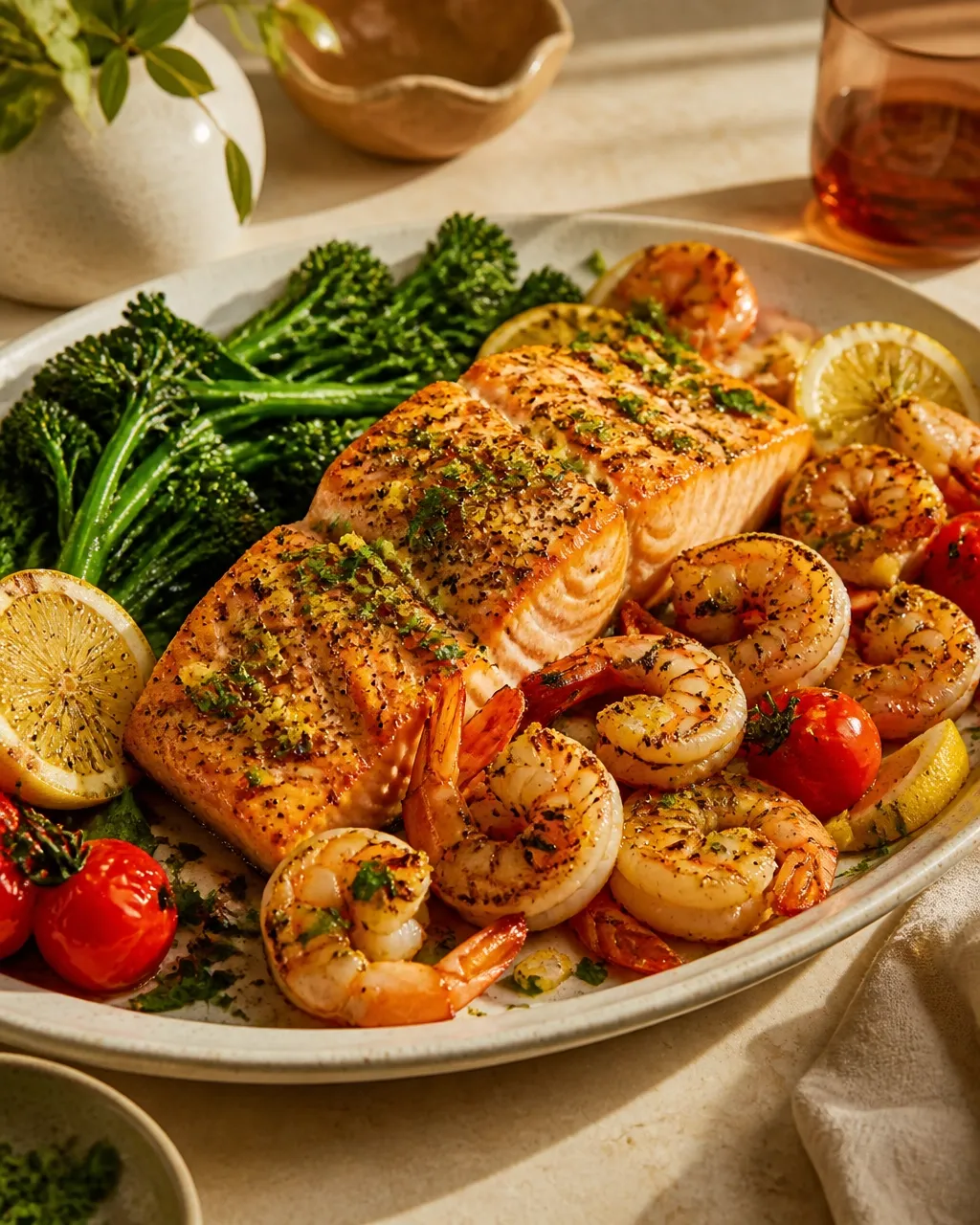
To achieve the perfect crust on your salmon, you have to understand the Maillard reaction. This is the chemical dance between amino acids and reducing sugars that occurs around 284°F (140°C). The problem? Most home cooks let surface moisture ruin the party. Water acts as a thermal buffer, pinning the surface temperature at 212°F (100°C) until it evaporates. If you don't pat that salmon bone-dry before it hits the pan, you aren't searing; you’re steaming.
Use a high-smoke-point oil (like avocado or grapeseed) to facilitate heat transfer. Avoid extra virgin olive oil for the initial sear; its low smoke point means it will undergo thermal degradation and turn bitter before the fish even browns. Once you achieve that golden-brown melanoidin-rich crust, you’re ready for the glaze phase.
This is where the tech gets tricky. Our glaze is a mixture of balsamic vinegar (concentrated acetic acid and grape sugars) and honey (fructose and glucose). Honey is a powerhouse for browning, but it’s also high in "reducing sugars," which means it burns far more easily than table sugar. If you add the glaze too early, the water boils off, the sugar temperature spikes past 320°F, and you’re left with a carbonized, acrid mess.
Check the viscosity of your reduction. You want it to coat the back of a spoon, a state known as "nappé." This indicates that you’ve concentrated the solutes enough to create a stable, glossy film. When the glaze hits the hot salmon, it undergoes "early caramelization." This process breaks down the complex sugar molecules into smaller, aromatic compounds like diacetyl (buttery) and hydroxymethylfurfural (toasty).
For the asparagus, we’re managing chlorophyll preservation. Overcooking causes the magnesium atom in the center of the chlorophyll molecule to be replaced by hydrogen, turning your vibrant green spears into a dull olive-drab (pheophytin). Keep the heat high and the contact time low. You want just enough heat to break down the hemicellulose in the cell walls for tenderness, but not so much that you lose that snappy, structural integrity. If you're looking for more ways to optimize your kitchen hardware, check out my guide on achieving the perfect glossy sauce or dive into some air fryer recipes dinner for a different kind of convective efficiency.
Molecular Modularization: Glaze Variations
The honey-balsamic framework is essentially a balance of acid and sugar. You can swap these modules out based on the chemical profile you’re chasing. If you find balsamic too aggressive, swap it for apple cider vinegar. It has a lower acetic acid concentration and brings malic acid into the mix, which provides a "rounder" tartness that pairs exceptionally well with the fatty acids in the salmon.
For a keto-friendly optimization, replace the honey with an allulose-based syrup. Allulose is a rare sugar that actually participates in the Maillard reaction, unlike erythritol or stevia, giving you that sticky, browned finish without the glycemic spike. This makes it one of the better healthy dinner ideas for those tracking macros.
If you want to lean into umami, add a teaspoon of white miso. The fermented soy proteins provide a massive boost of glutamates. Just be aware that miso is a suspension of solids; it will increase the viscosity of your glaze much faster, so you’ll need to adjust your reduction time downward to prevent the sauce from seizing in the pan.
Balancing the Palate: Acid, Fat, and Fiber
Salmon is an "oily" fish, meaning it has a high concentration of long-chain omega-3 fatty acids. While delicious, these fats can coat the tongue and mute other flavors. This is why the acidity in our balsamic glaze is non-negotiable. The acetic acid acts as a "palate cleanser," cutting through the lipid layer and allowing the subtle, nutty notes of the seared fish to shine through.
Pairing this with asparagus provides a necessary structural and bitter contrast. Asparagus contains asparagine, an amino acid that contributes a specific vegetal umami. When charred, it provides a bitter counterpoint to the sweetness of the honey. If you're looking for quick family meals that offer a complete nutritional profile, this duo hits the mark by providing high-quality protein, essential fats, and prebiotic fiber in under 20 minutes. For another high-speed, high-flavor option, you might also enjoy the kielbasa and pierogi air fryer roast for a different texture profile.
The Culinary Support Desk: FAQ
Why does my salmon keep sticking to the pan?
This is usually a failure of "thermal equilibrium." If the pan isn't hot enough when the fish enters, the proteins form a chemical bond with the metal surface. This is known as "adsorption." By preheating the pan until the oil shimmers and "beads," you create a microscopic layer of vapor and oil that prevents this bonding. Once the Maillard reaction begins, the proteins tighten and "release" from the pan naturally. Avoid the urge to flip the fish too early, if it’s sticking, the reaction isn't finished.
Can I use frozen salmon for this?
Yes, but you must account for the "latent heat of fusion." Frozen fish contains ice crystals that require a significant amount of energy to melt before the temperature of the fish can even reach 32°F. If you cook from frozen, the exterior will be overcooked and dry by the time the interior reaches a safe 145°F. Always thaw in the refrigerator to maintain the cellular integrity of the muscle fibers.
My glaze turned into hard candy in the pan. What happened?
You’ve reached the "hard crack stage" of sugar cooking. This happens when the water concentration in your honey-balsamic mix drops below ~1%. The sugars (sucrose and fructose) form a rigid crystalline structure upon cooling. To fix this, immediately whisk in a tablespoon of warm water or chicken stock to re-introduce moisture and lower the sugar concentration.
Is the white stuff coming out of my salmon normal?
That's albumin, a liquid protein that coagulates when heated. While harmless, it's often a sign that you’re cooking the salmon too fast or too hot, causing the muscle fibers to contract violently and squeeze out the protein. To minimize this, use a more gradual heat or pull the salmon off the heat when it hits 135°F; the "carry-over cooking" will bring it to the perfect 140–145°F finish without the albumin blowout.
Why does my asparagus taste "woody"?
You’ve likely failed to remove the lignified base of the spear. The bottom inch of asparagus is reinforced with lignin, a complex organic polymer that is virtually impossible for humans to digest or chew. Snap the ends off where they naturally break, or use a vegetable peeler to shave the bottom third of the spear to expose the tender parenchyma tissue underneath.