Recipe
Prep 25 minCook 9HTotal 9H25 min
Ingredients
Method
- Remove the corned beef from its packaging and pat it dry with paper towels. Discard the packaging liquid. Rinse the brisket only if the product label instructs you to do so, as rinsing can spread raw meat juices around the kitchen.
- Place the potatoes, carrots, onion, garlic, bay leaves and black peppercorns in the bottom of a 5- to 6-quart slow cooker.
- Set the brisket on top of the vegetables with the fat side facing upward. Sprinkle the included seasoning packet over the brisket.
- Pour the beef broth around the brisket. The liquid does not need to cover the meat completely.
- Cover the slow cooker and cook on LOW for 8 hours, or until the brisket is becoming tender when tested with a fork.
- Arrange the cabbage wedges around and over the brisket. Cover the slow cooker again and cook on LOW for 1 additional hour, until the cabbage is tender and the brisket is fully cooked.
- Transfer the brisket to a cutting board. Cover it loosely with foil and rest for 15 minutes.
- Remove the bay leaves. Check the vegetables for tenderness and transfer them to a serving platter.
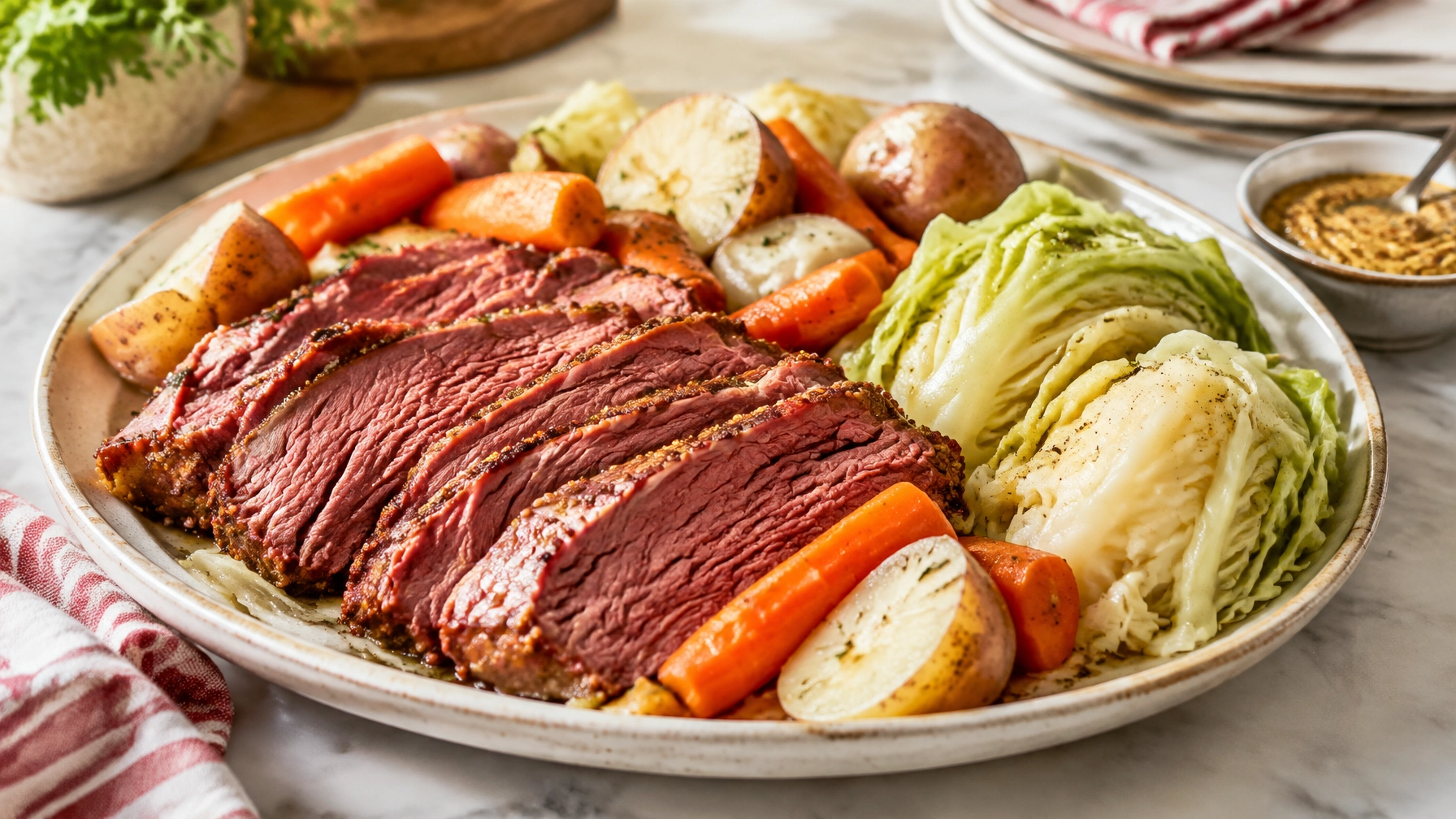
- Slice the brisket thinly against the grain. Serve with the vegetables, chopped parsley and whole-grain mustard.
Slow Cooker Corned Beef and Cabbage
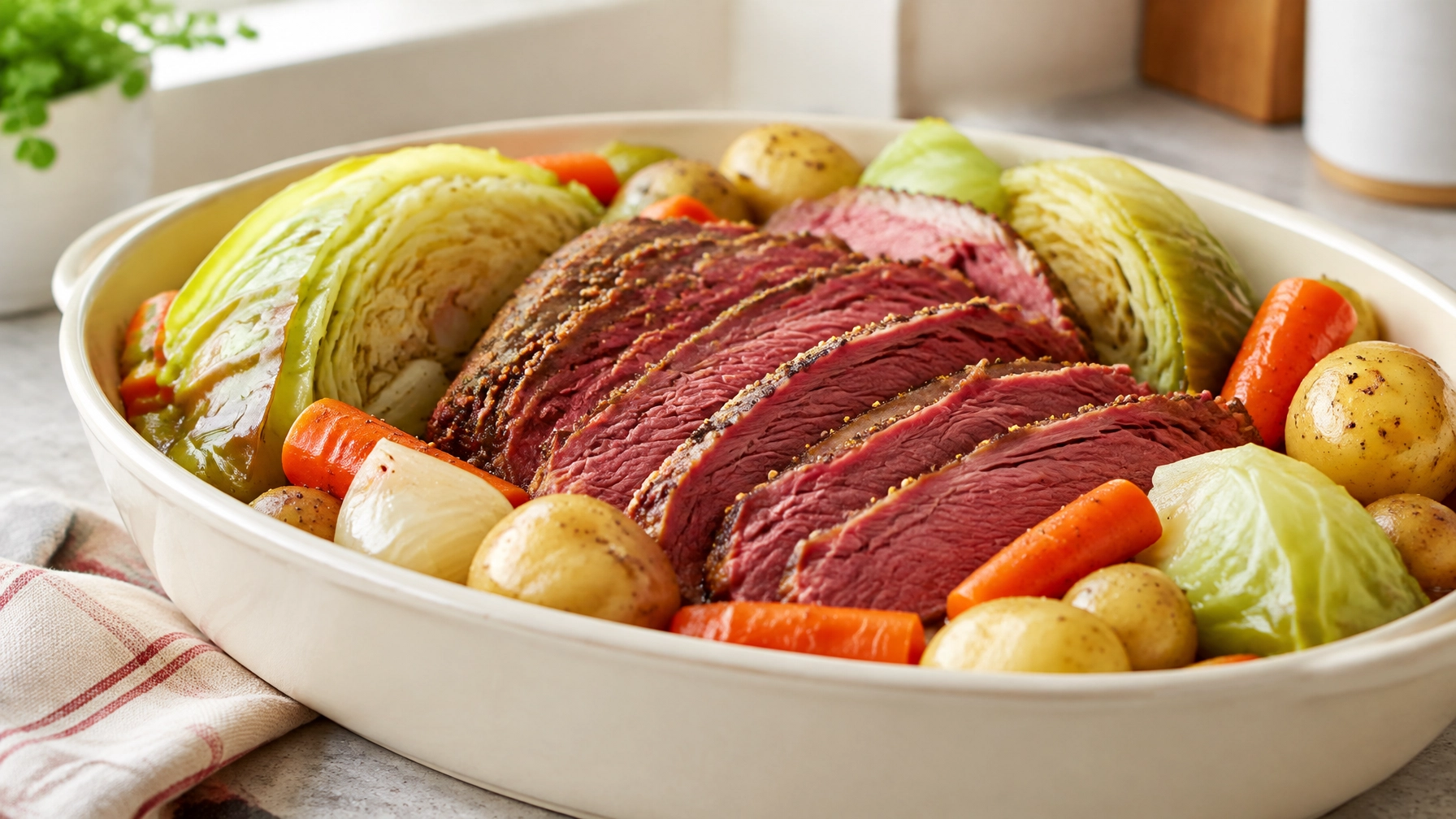
This slow cooker corned beef and cabbage recipe produces tender cured beef, soft potatoes, carrots, onion and cabbage in one cooking vessel. The brisket cooks on LOW for 8 hours before the cabbage is added for the final hour. The result is a complete meal with controlled preparation and limited active cooking time.
Start
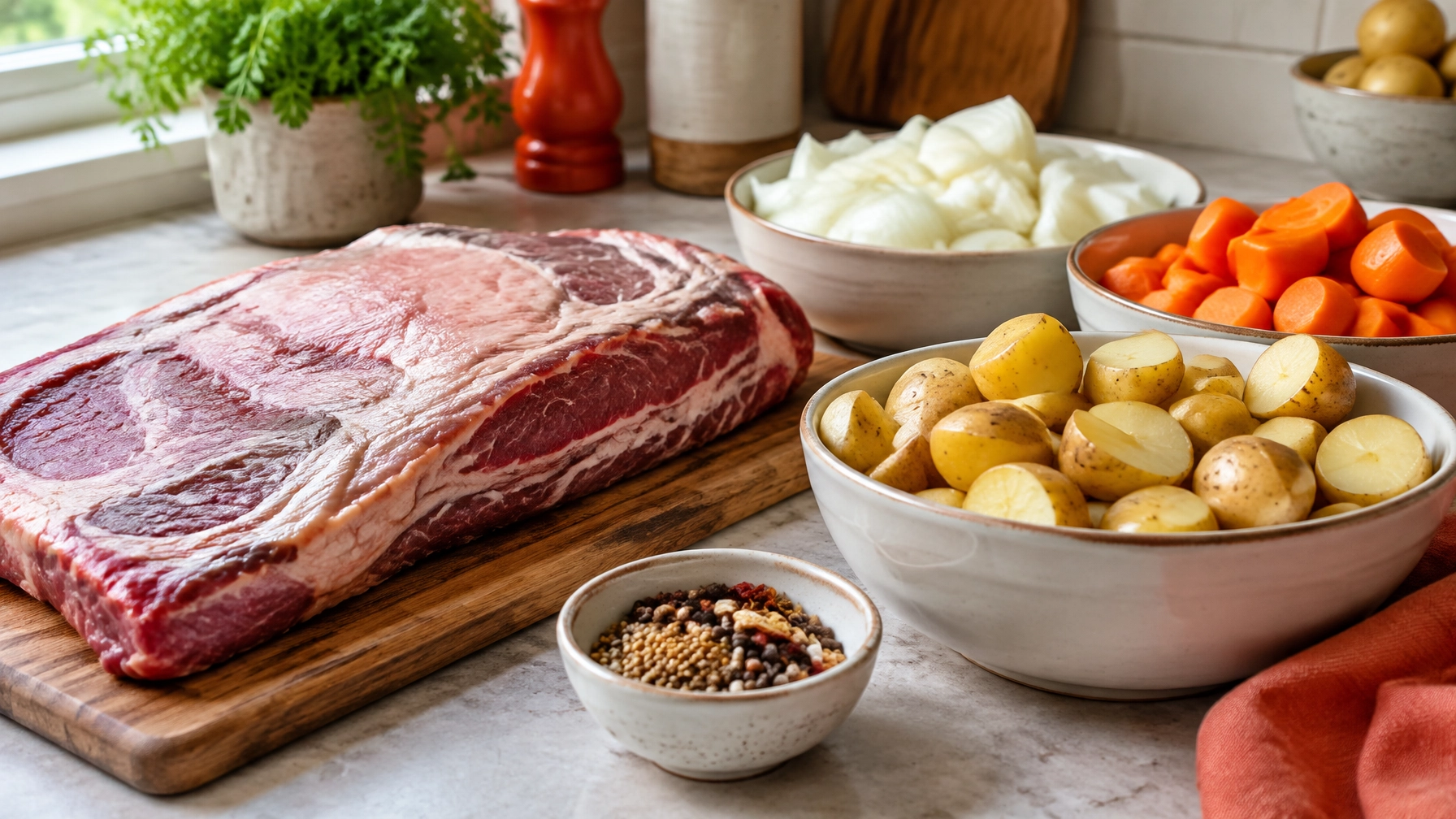
Corned beef is cured brisket. The term refers to the large grains of salt traditionally used during curing, not to corn. Most briskets are sold with a seasoning packet containing spices such as coriander, mustard seed, peppercorns and bay leaf.
A 5- to 6-quart slow cooker is suitable for a 3-pound brisket and the accompanying vegetables. Place the brisket fat side up so the rendered fat moves over the meat during cooking. Add the cabbage later rather than at the beginning. This prevents the leaves from becoming excessively soft or disintegrating into the cooking liquid.
The finished brisket should be rested before slicing. Cut it against the grain to shorten the muscle fibers and improve tenderness.
Recipe
Tips
- Check the brisket weight. A brisket weighing more than 3 pounds may require additional cooking time. Tenderness is a more useful test than the clock.
- Keep the lid closed. Removing the lid releases heat and can extend the cooking time. Open it only when adding the cabbage or checking the meat near the end.
- Use low-sodium broth. Corned beef is already cured with salt. Additional salt is generally unnecessary.
- Do not add the cabbage at the beginning. Extended cooking can make it overly soft and give the broth a strong cabbage flavor.
- Slice against the grain. Locate the visible direction of the muscle fibers and cut across them rather than parallel to them.
- Use a thermometer for verification. The brisket should reach at least 145°F internally, followed by a 3-minute rest. Long slow cooking is normally continued beyond this minimum to produce a tender texture.
- Start with thawed meat. Defrost the brisket in the refrigerator before placing it in the slow cooker. Do not use a slow cooker to thaw or cook a large frozen brisket.
Variations
Higher heat
For a shorter cooking period, cook the brisket and root vegetables on HIGH for 5 hours. Add the cabbage during the final 45 to 60 minutes. The brisket may be less tender than when cooked on LOW, so test it with a fork before serving.
Beer broth
Replace 1 cup of the beef broth with 1 cup of lager or stout. Keep the total liquid at 2 1/2 cups. The beer adds a darker flavor to the cooking liquid without changing the basic method.
Apple broth
Replace 1 cup of the beef broth with 1 cup of unsweetened apple juice. This produces a mildly sweet cooking liquid that pairs with the cured brisket and cabbage.
Crisp vegetables
For firmer potatoes and carrots, add them after the brisket has cooked for 2 hours on LOW. Continue cooking for 6 hours, then add the cabbage for the final hour. This method requires more handling and may produce less concentrated vegetable flavor.
Leftover hash
Dice chilled leftover brisket, potatoes and carrots. Cook them in a lightly oiled skillet over medium heat until browned. Add chopped cabbage during the final few minutes. Serve with mustard.
FAQ
Can corned beef be cooked on HIGH?
Yes. Cook a 3-pound brisket on HIGH for approximately 5 hours, then add the cabbage for 45 to 60 minutes. Slow cookers vary, so confirm that the brisket is tender before serving.
Should corned beef be covered with water?
No. Add enough broth to create steam and cooking liquid, but the brisket does not need to be completely submerged. Excess liquid can dilute the flavor.
When should the seasoning packet be added?
Add the seasoning packet at the beginning, sprinkling it over the brisket after it has been placed over the vegetables. If the brisket does not include a packet, use 1 tablespoon of pickling spice.
Why is the corned beef tough?
The brisket may need additional cooking time. Toughness can also result from slicing with the grain or cutting the meat immediately after cooking. Continue cooking until fork-tender, then rest for 15 minutes and slice across the grain.
Can cabbage be cooked separately?
Yes. Steam or braise the cabbage separately during the final hour. This is useful when the slow cooker is full or when different diners prefer different levels of tenderness.
Storage
Refrigerate leftover corned beef and vegetables within 2 hours of serving. Divide large portions into shallow containers so they cool more quickly. Store in a sealed container for up to 4 days.
For longer storage, freeze sliced brisket and vegetables in airtight containers for up to 2 months. Thaw in the refrigerator before reheating.
Reheat leftovers until they reach 165°F. Add a small amount of broth when reheating sliced brisket to reduce drying. Reheated cabbage may be softer than cabbage served immediately.
Sources
- Rachel Cooks: Slow Cooker Corned Beef and Cabbage
- Allrecipes: Slow Cooker Corned Beef and Cabbage
- Spend with Pennies: Slow Cooker Corned Beef and Cabbage