Recipe
Serves
6 1×
Serves 6 slicesPrep 10 minCook 20 minTotal 30 min
Ingredients
Method
- Preheat the oven to 180 C, or 160 C fan. Grease a 7-inch round metal tin and line the base with baking paper.
- Mix the softened butter, brown sugar, and granulated sugar until evenly combined.
- Add the egg yolk and vanilla extract. Mix until smooth.
- In a separate bowl, whisk together the plain flour, baking soda, baking powder, and salt.
- Add the dry ingredients to the butter mixture. Stir until a dough forms.
- Fold in the chocolate chips.
- Press the dough evenly into the prepared tin. Add extra chocolate chips to the top.
- Bake for 18 to 22 minutes, until the edge is golden and set and the centre remains soft.
- Cool in the tin for 10 minutes.
- Whisk the icing sugar, milk, vanilla extract, and salt until thick and pourable.
- Drizzle the icing over the warm cookie cake.
- Cut into six wedges and serve.
Small Batch Chocolate Chip Cookie Cake (20 Min)
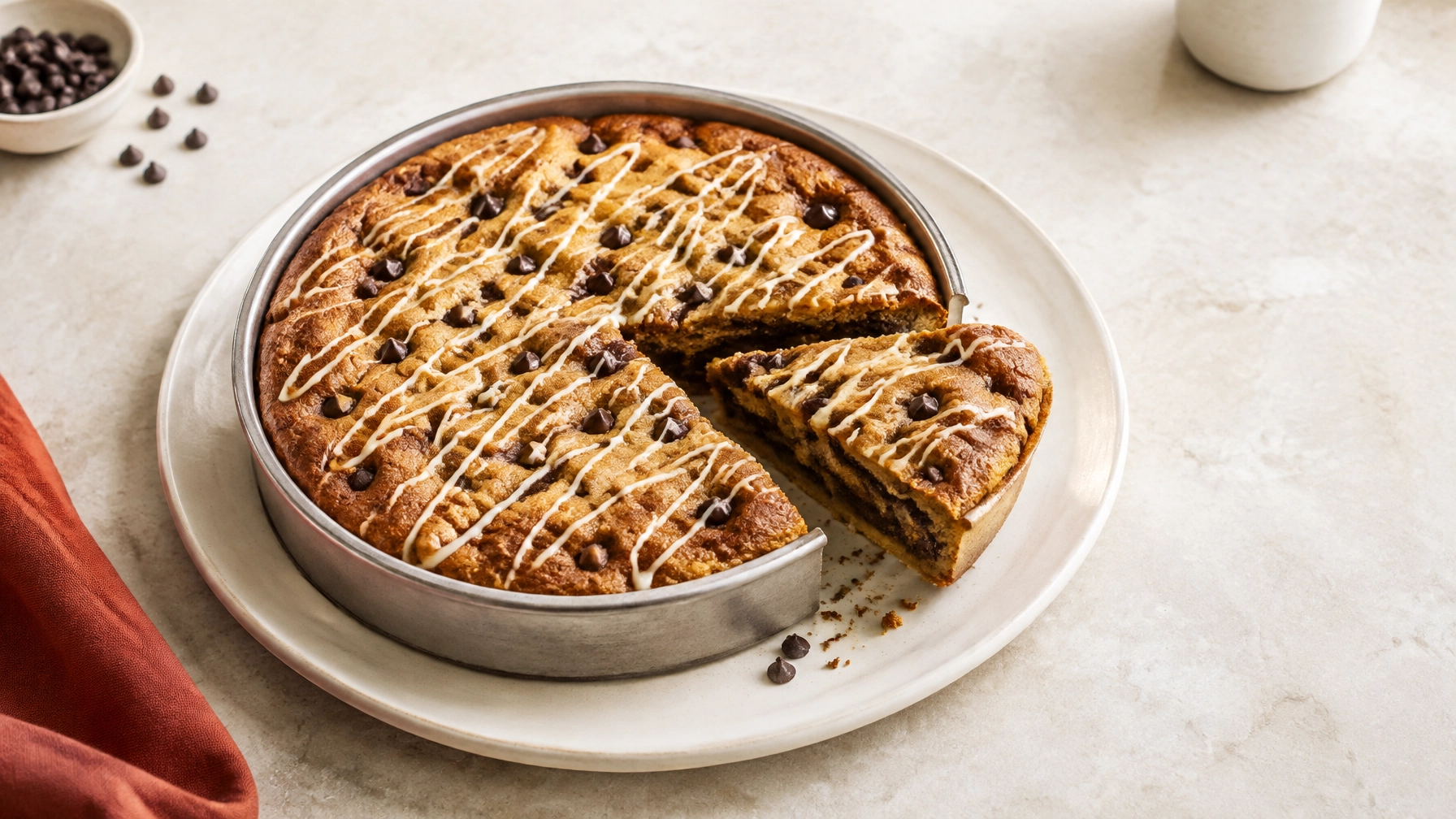
A small-batch chocolate chip cookie cake baked in a round tin, finished with a simple icing drizzle, and ready in approximately 20 minutes of oven time.
Purpose
This is a cookie cake, not a skillet cookie.
The dough is pressed into a lined round tin rather than spread in a cast-iron pan. The result is a sliceable dessert with a defined edge, a soft centre, and enough structure to serve in wedges. The quantity is deliberately scaled down for a small household or a controlled dessert portion.
The recipe produces one 7-inch cookie cake and approximately six small slices.
Preparation
Use a 7-inch round metal cake tin or pie tin. Metal transfers heat efficiently and supports a crisp outer edge. A glass dish may produce a softer edge and require a different baking time.
Preheat the oven to 180 C, or 160 C fan. Grease the tin thoroughly. Line the base with baking paper, leaving a small overhang if possible.
The dough can be mixed by hand. A hand mixer is permitted, but extended beating is not required.
Control
The centre must not be assessed with the same standard used for a conventional sponge cake. A clean skewer can indicate that the cookie cake has been baked beyond the desired texture.
Use the following indicators:
- Crisp edge: The perimeter is golden brown and no longer glossy.
- Soft centre: The middle is lightly puffed and gives slightly when pressed.
- Correct skewer result: Moist crumbs are present. Liquid dough is not.
- Firming period: The cake becomes easier to slice after 10 minutes in the tin.
- Overbaked result: The centre is fully firm, pale, and crumbly rather than soft.
If the edge is darkening while the centre remains visibly wet, reduce the oven temperature by 10 C and continue baking in two-minute increments.
Do not slice immediately after removing the cookie cake from the oven. The structure is unstable while fully hot.
Serving
Serve the cake in narrow wedges while still warm. The icing will soften slightly against the surface and form a thin glaze.
For a cleaner slice, cool the cake for 20 minutes before cutting. For a softer centre, reheat one slice in the microwave for approximately 10 seconds. The exact time depends on the appliance.
A small scoop of vanilla ice cream is permitted. It is not required for the recipe.
Variations
Dark chocolate
Replace the standard chocolate chips with dark chocolate chips or chopped dark chocolate. This reduces perceived sweetness and produces larger melted chocolate pockets.
Milk chocolate
Use milk chocolate chips for a softer, sweeter result. Reduce the icing sugar by 10 g if a less sweet finish is required.
Cinnamon
Add 1/4 teaspoon ground cinnamon to the dry ingredients. The flavour will be more pronounced at the edge than in the centre.
Plain finish
Omit the icing drizzle and add an extra 10 g of chocolate chips to the surface before baking.
Nut addition
Add 25 g finely chopped toasted pecans or walnuts with the chocolate chips. Do not exceed this quantity. Additional inclusions can prevent the centre from setting evenly.
Storage
Store the cooled cookie cake in an airtight container at room temperature for up to three days.
For longer storage, wrap individual slices and freeze for up to one month. Defrost at room temperature. Reheat briefly if a softer centre is required.
The icing may become slightly firm during storage. This is a normal change in the sugar coating and does not indicate spoilage.
FAQ
Can this be baked in a 6-inch tin?
Yes. The cake will be thicker and will require a longer bake, usually 25 to 30 minutes. Begin checking at 24 minutes. The centre should remain soft, but it must not contain liquid dough.
Can I use a whole egg?
No. A whole egg adds more liquid than this small quantity of flour can reliably absorb. The result may be cakey and may require a substantially longer bake. Use the yolk specified.
Why did the cookie cake spread?
The butter may have been too warm, the tin may have been larger than specified, or the dough may have been pressed too thinly. The butter should be soft enough to mix but not melted.
Why is the centre raw?
The centre may have been too thick, the oven may run below its stated temperature, or the cake may have been removed before the edge was set. Return it to the oven for two-minute intervals.
Can I prepare the dough in advance?
Yes. Cover the dough and refrigerate it for up to 24 hours. Allow it to stand at room temperature for 15 minutes before pressing it into the tin. A cold dough may require several additional minutes in the oven.