Recipe
Serves
2 1×
Serves 2Prep 5 minCook 15 minTotal 20 min
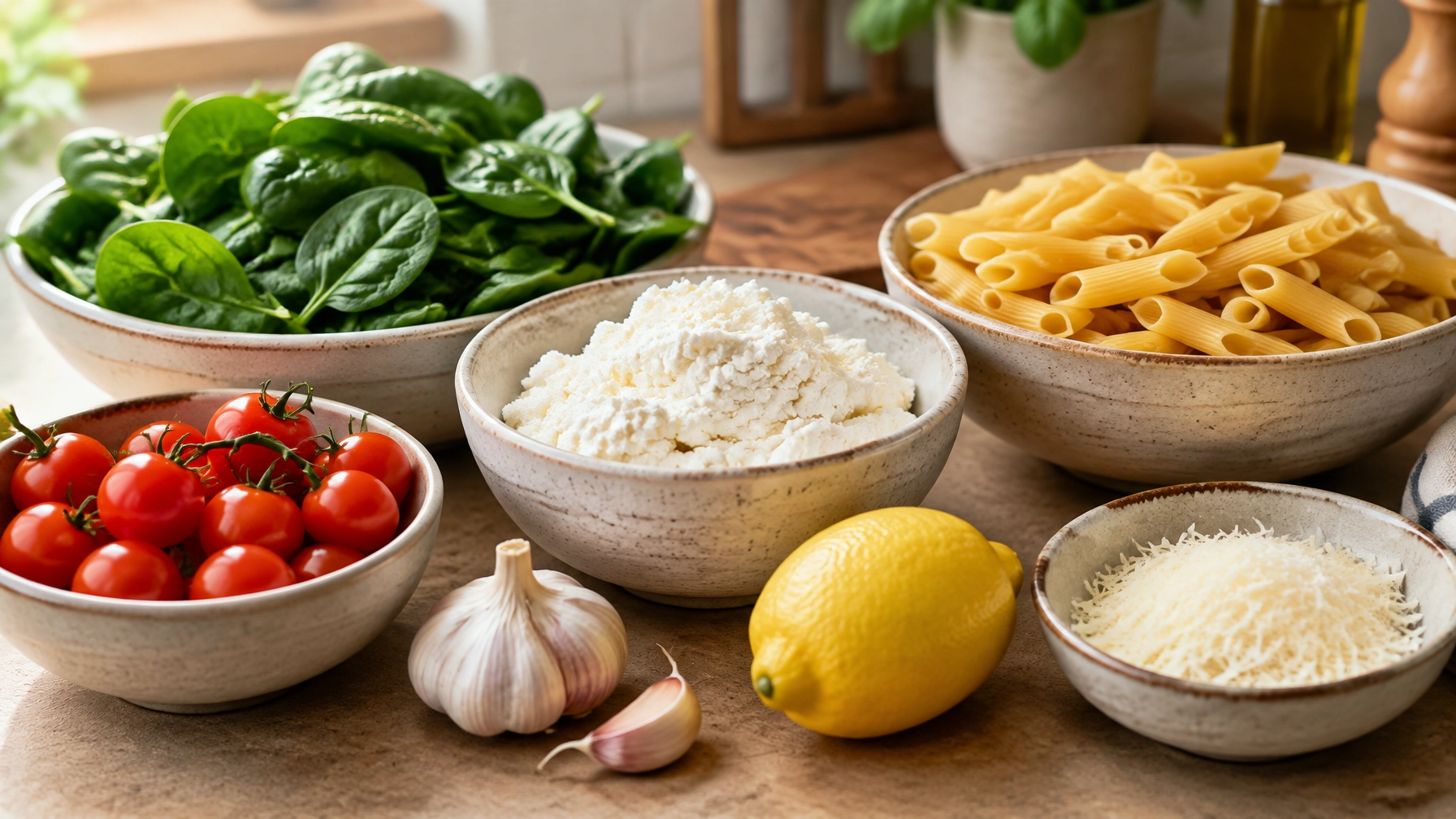
Ingredients
Method
- Bring a large saucepan of water to the boil. Salt the water generously, then add the pasta. Cook according to the packet instructions until al dente.
- Before draining, scoop out at least 100ml of the cooking water. Drain the pasta, but do not rinse it. The starch on the pasta helps the ricotta sauce cling to its surface.
- While the pasta cooks, melt the butter in a large frying pan over medium heat. Add the garlic and cook for 30 seconds, stirring continuously. The garlic should smell fragrant but should not become brown.
- Add the spinach to the frying pan. Toss it through the butter and garlic until wilted. This should take approximately 2 to 3 minutes. If the pan looks dry, add 1 tablespoon of the reserved pasta water.
- Add the drained pasta to the spinach. Pour in approximately 50ml of the reserved pasta water and toss over low heat until the pasta is coated.
- Reduce the heat to its lowest setting. Add the ricotta in small spoonfuls and stir gently. Continue tossing until the ricotta begins to form a loose sauce around the pasta.
- Add the grated Parmesan or vegetarian hard cheese, lemon zest and nutmeg. Season with black pepper and taste before adding more salt.
- Adjust the consistency with more pasta water, adding 1 tablespoon at a time. The sauce should coat the pasta without becoming watery.
- Divide the pasta between two warm bowls. Add a final grind of black pepper and a small drizzle of olive oil, if required. Serve immediately.
Spinach and Ricotta Pasta (20-Minute)
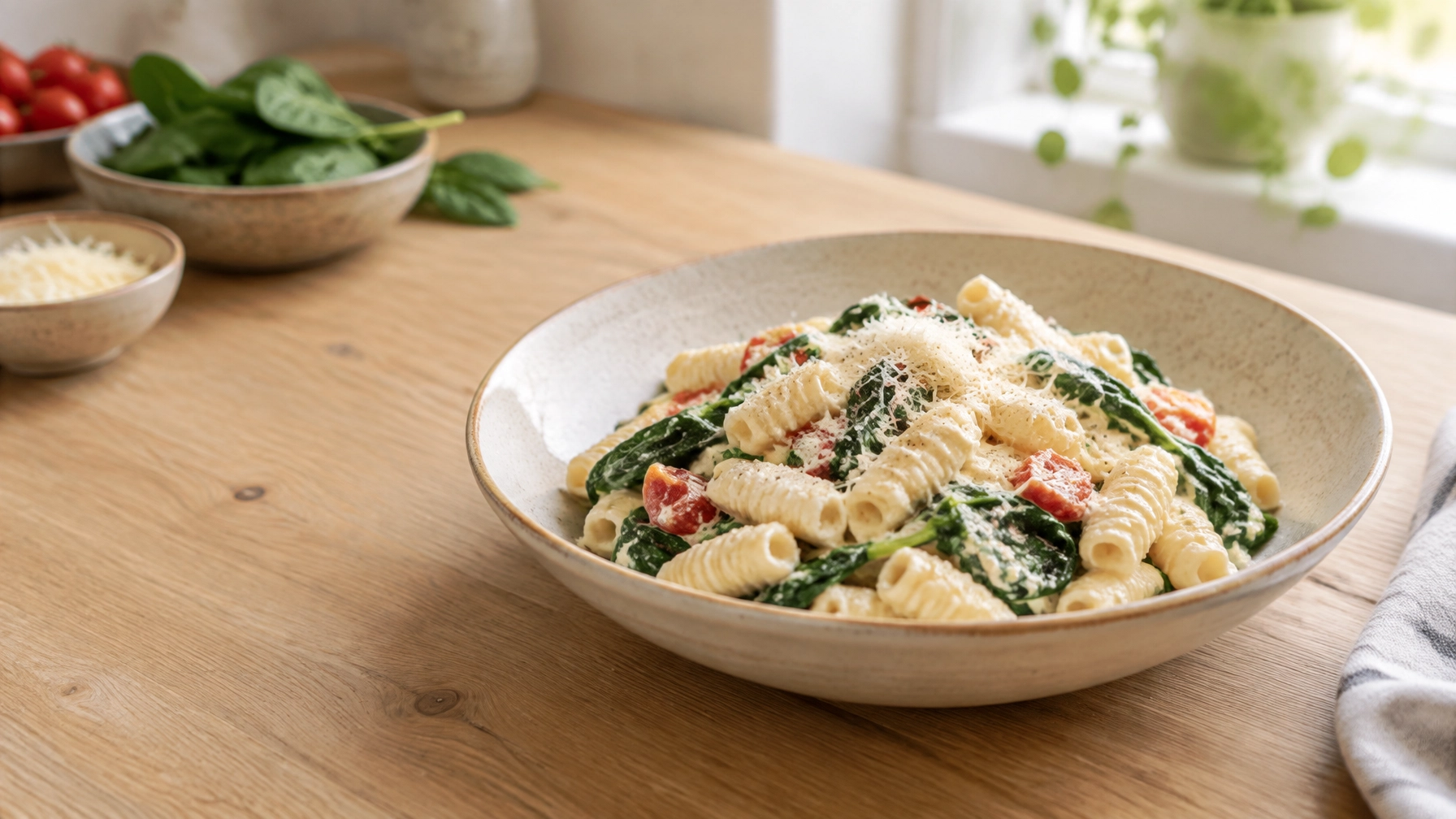
This 20-minute spinach and ricotta pasta combines wilted spinach, creamy ricotta and short pasta in one practical midweek meal.
Introduction
Spinach and ricotta pasta is a simple vegetarian dish designed for speed. The sauce requires no separate pan of cream. Instead, ricotta is loosened with starchy pasta water, then combined with wilted spinach, garlic and grated cheese.
The result is soft, creamy and savoury without being heavy. Lemon zest adds freshness, while a small pinch of nutmeg gives the ricotta a traditional savoury note. Short pasta shapes such as penne, fusilli or rigatoni work well because they hold the sauce in their ridges.
The dish is best served immediately while the sauce is smooth and warm. If it thickens before serving, add another spoonful of reserved pasta water and toss again.
Tips
Salt the water properly
The pasta water should taste noticeably seasoned before the pasta is added. This is the main opportunity to season the pasta itself. The ricotta and spinach are mild, so under-seasoned pasta can make the finished dish taste flat.
Reserve enough pasta water
Starchy cooking water is essential to the texture of the sauce. Reserve more than you expect to need. The sauce may look loose in the pan but will thicken as it cools.
Use fresh spinach
Fresh spinach wilts quickly and gives the sauce a clean, fresh flavour. If using frozen spinach, thaw it fully and squeeze out excess water before adding it to the pan. Frozen spinach may require less pasta water.
Keep the heat low
Ricotta can become grainy if it is exposed to high heat for too long. Add it after the pasta has been combined with the spinach, then use low heat while loosening the sauce.
Avoid rinsing the pasta
Rinsing removes surface starch. That starch helps the ricotta, butter and pasta water form a coating that adheres to the pasta.
Serve at once
This pasta is at its best immediately after cooking. If it stands for several minutes, the sauce will continue to thicken. Loosen it with a little warm water before serving if necessary.
Variations
Add peas
Stir 100g of frozen peas into the pasta water during the final 3 minutes of cooking. Drain the peas and pasta together, then continue with the recipe.
Use wholewheat pasta
Wholewheat penne or fusilli adds a more substantial texture. It may require a slightly longer cooking time, so follow the packet instructions.
Add chilli
For heat, add a pinch of dried chilli flakes to the butter with the garlic. Keep the quantity modest so the chilli does not overpower the ricotta.
Include roasted tomatoes
Add a small handful of halved roasted cherry tomatoes just before serving. Their acidity balances the mild sauce and adds colour to the dish.
Replace the butter
Use 1 tablespoon of olive oil instead of butter. The finished pasta will be lighter and will have a more pronounced olive oil flavour.
Add toasted breadcrumbs
Toast 2 tablespoons of breadcrumbs in a dry frying pan until golden. Scatter them over the finished pasta for contrast and a crisp finish.
Make it more lemon-forward
Add extra lemon zest or 1 teaspoon of lemon juice at the end. Add the juice gradually because too much acidity can make the ricotta taste sharp.
FAQ
Can spinach and ricotta pasta be made ahead?
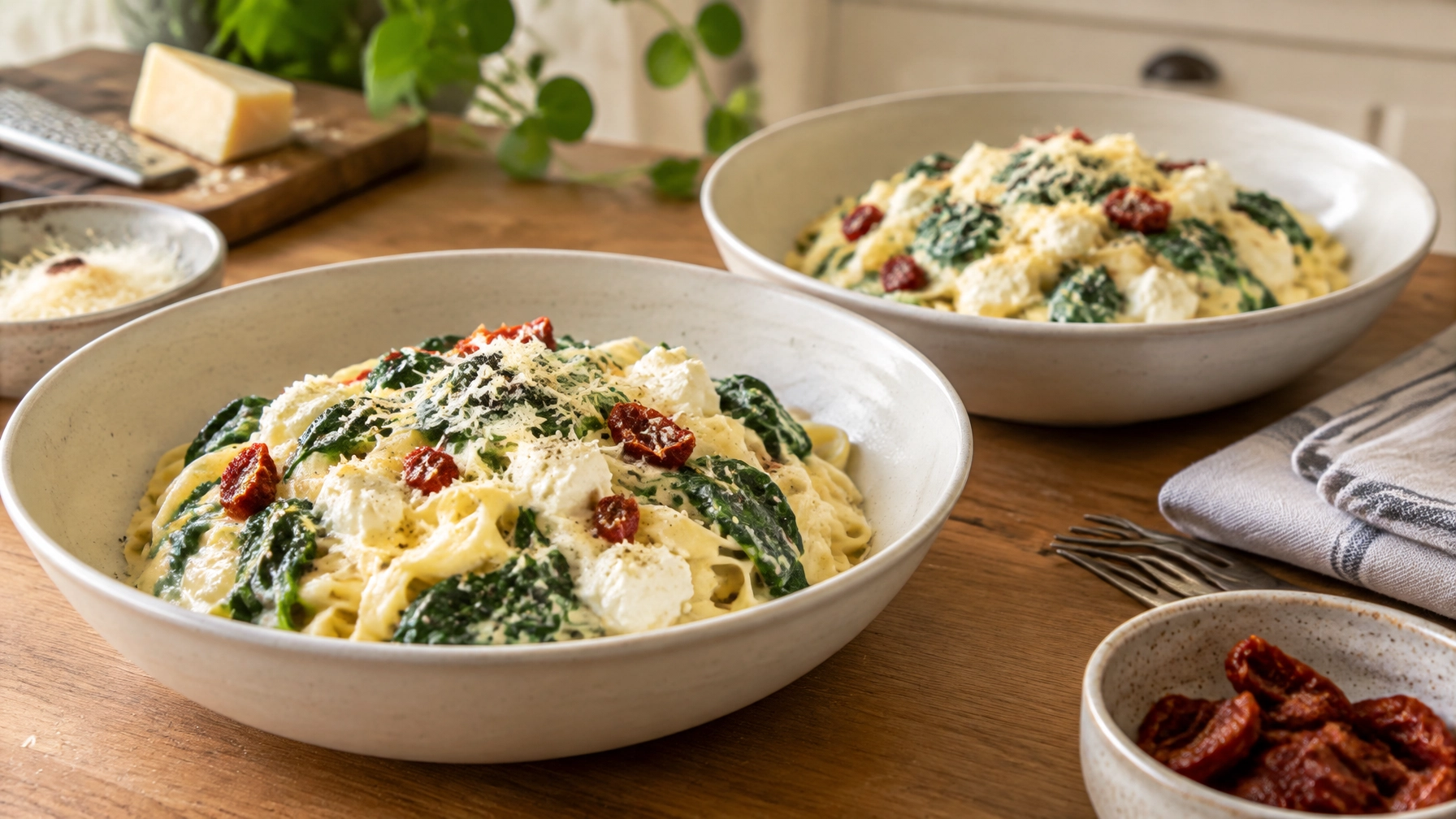
It can be prepared in advance, but the texture is best when served immediately. If reheating, place the pasta in a frying pan over low heat with a splash of water. Stir gently until hot. Avoid high heat, which can make the ricotta grainy.
Can I use low-fat ricotta?
Yes. Low-fat ricotta can be used, although the sauce may be less rich and may need additional pasta water. Add the water gradually to avoid making the sauce too thin.
What pasta shape is best?
Penne, fusilli, rigatoni and shells are suitable. Ridged or curved shapes are particularly effective because they hold the spinach and ricotta sauce.
Can I use frozen spinach?
Yes. Thaw the spinach completely and squeeze out as much water as possible. Add it to the pan after the garlic has softened. Frozen spinach may need only 1 to 2 minutes of cooking.
Is this spinach and ricotta pasta suitable for vegetarians?
It is suitable for vegetarians when made with vegetarian hard cheese. Some hard cheeses are made with animal rennet, so check the packaging if this is important.
Can I make this recipe vegan?
The recipe requires substitutions. Use a plant-based ricotta alternative, a dairy-free hard cheese alternative and olive oil instead of butter. Check that the pasta contains no egg.
Why is my ricotta sauce dry?
The pasta may have absorbed more water than expected, or not enough cooking water may have been added. Return the pan to low heat and add reserved pasta water one tablespoon at a time while tossing.
How should leftovers be stored?
Cool the pasta promptly, place it in a sealed container and refrigerate it. Use within 2 days. Reheat thoroughly in a frying pan with a small splash of water.
Can I add chicken?
Yes. Add cooked shredded chicken at the same time as the ricotta. Ensure the chicken is heated through before serving. The dish can also be served with cooked prawns, although the flavour will be less traditionally vegetarian.
What should be served with this pasta?
A simple green salad, steamed vegetables or warm bread can be served alongside it. Because the pasta already contains a creamy sauce, choose side dishes with fresh or lightly dressed flavours.