Recipe
Serves
4 1×
Serves 4Prep 15 minCook 30 minTotal 45 min
Ingredients
Method
- Bring a large pot of water to a boil. Salt it, then cook the strozzapreti according to the packet directions until al dente. Before draining, reserve at least 250 ml of the cooking water.
- While the pasta cooks, heat the olive oil in a large frying pan over medium-high heat. Remove sausage casings if necessary. Add the sausage and break it into small pieces with a spoon. Cook for 6 to 8 minutes, turning occasionally, until browned and cooked through.
- Add the sliced fennel and shallot to the pan. Season lightly with black pepper and a small pinch of salt. Cook for 5 to 7 minutes, stirring regularly, until the fennel begins to soften. If the pan looks dry, add a small splash of water rather than additional oil.
- Stir in the garlic and red pepper flakes. Cook for about 30 seconds, just until fragrant. Add the tomato paste and stir for 1 minute so it coats the sausage and vegetables.
- Pour in the white wine. Scrape the base of the pan with a wooden spoon to loosen the browned residue. Simmer for 2 to 4 minutes, until the wine has reduced by roughly half.
- Add the drained strozzapreti to the pan. Pour in about 60 ml of reserved pasta water and toss well. Add more water a little at a time until the sauce lightly coats the pasta. The exact amount depends on how much liquid remains in the pan.
- Take the pan off the heat. Stir in the Parmesan and most of the fennel fronds. Taste and adjust the salt and pepper. Serve at once with the remaining fronds and extra Parmesan.
Strozzapreti with Sausage and Fennel
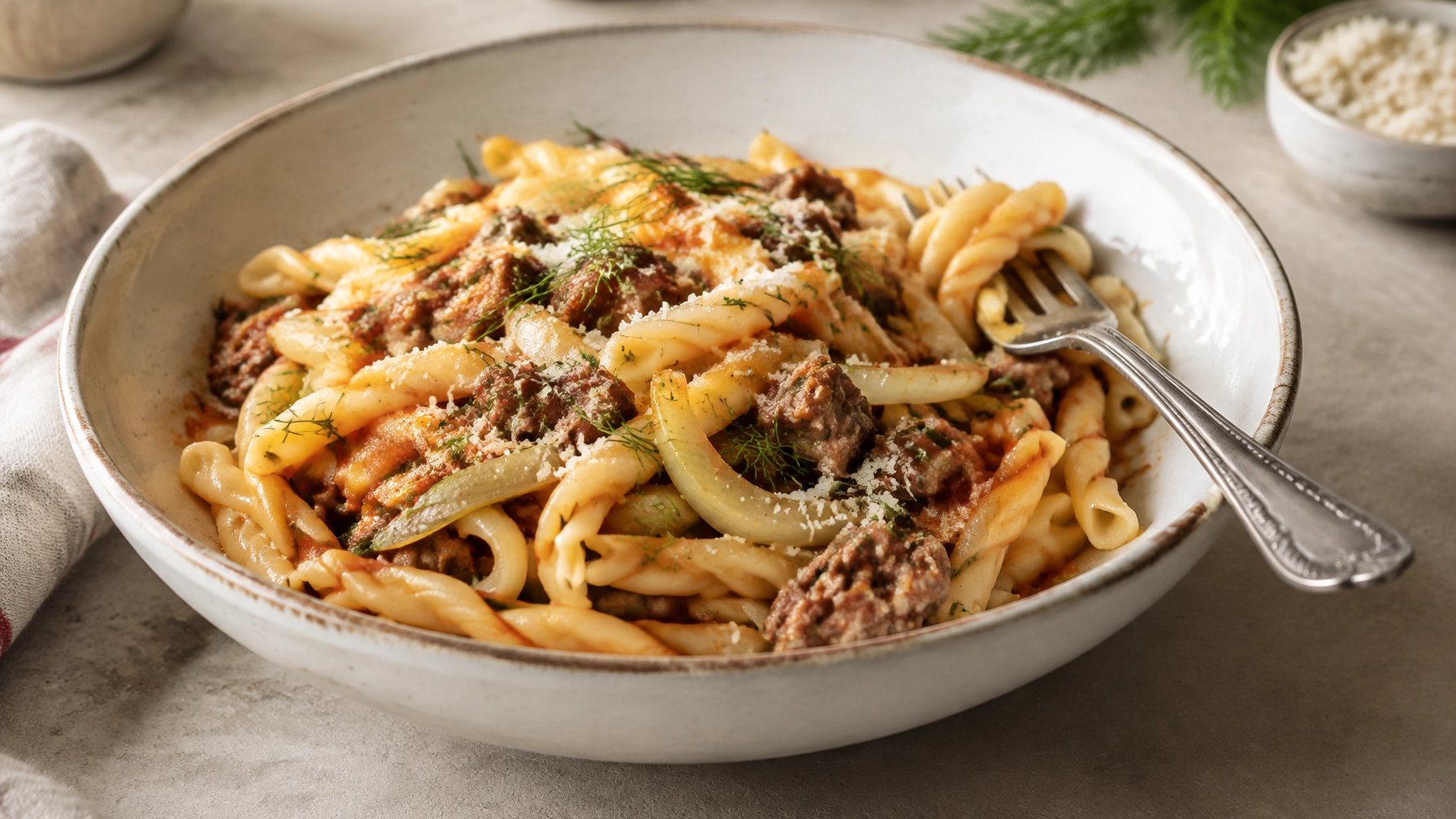
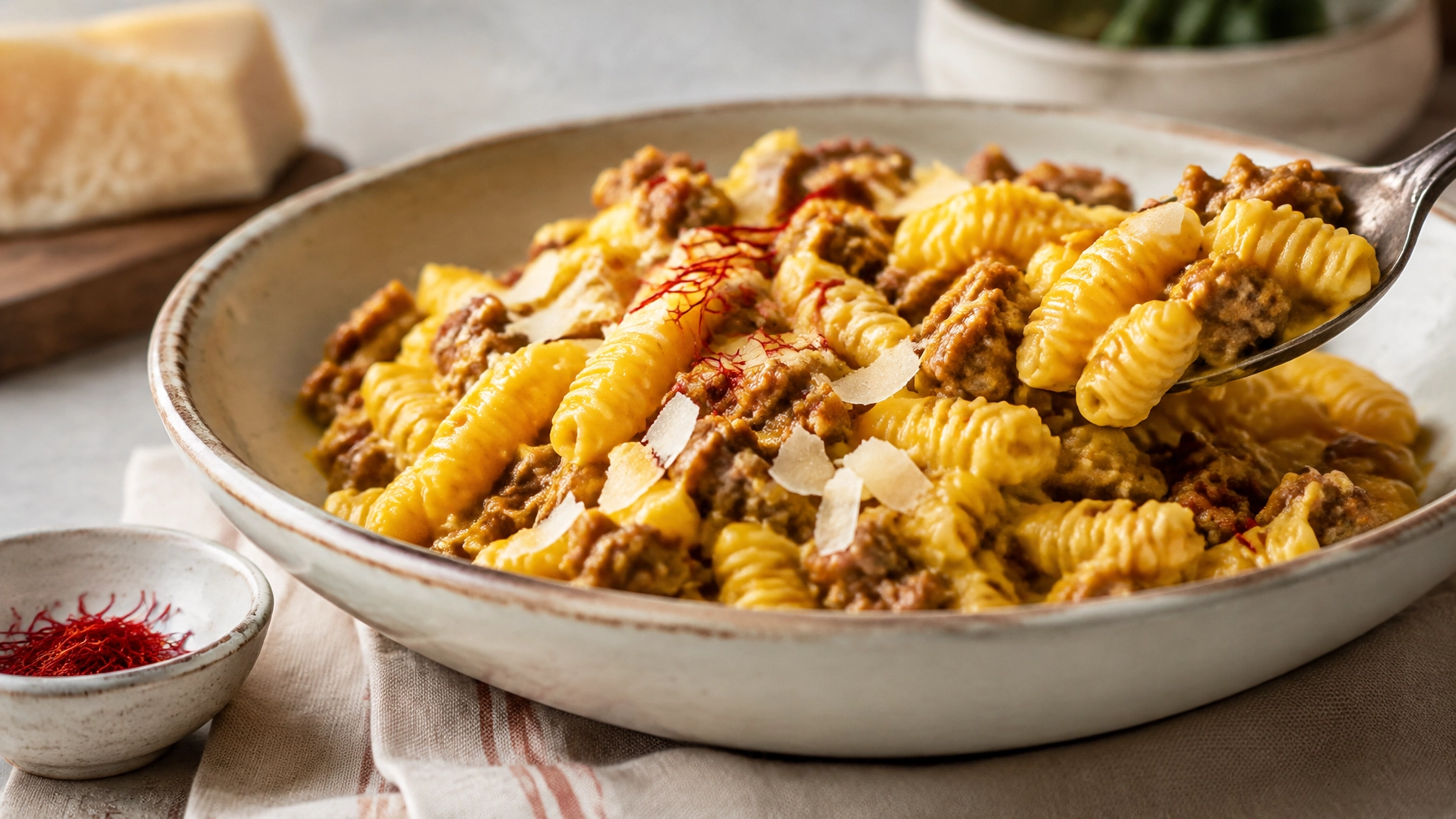
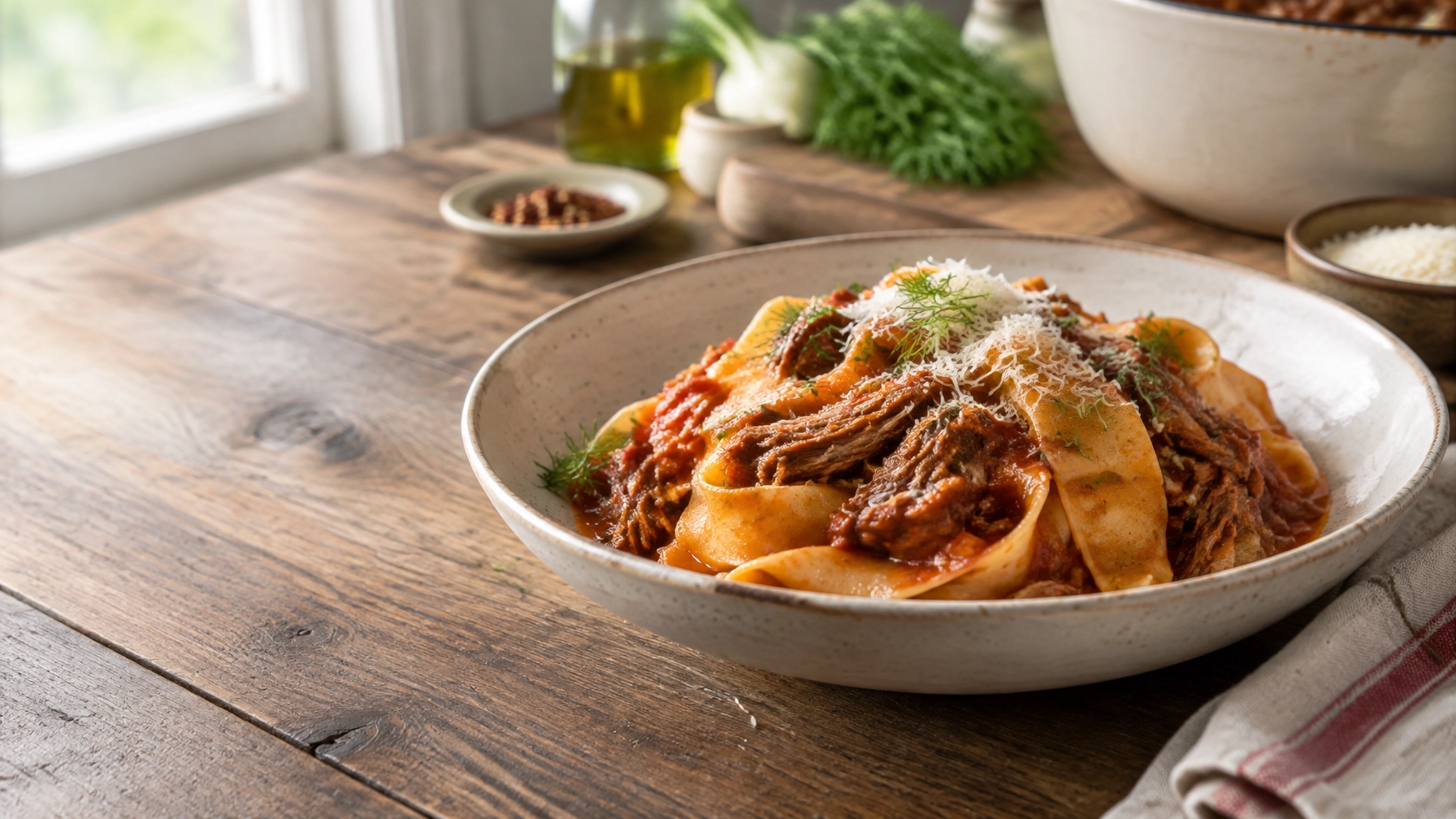
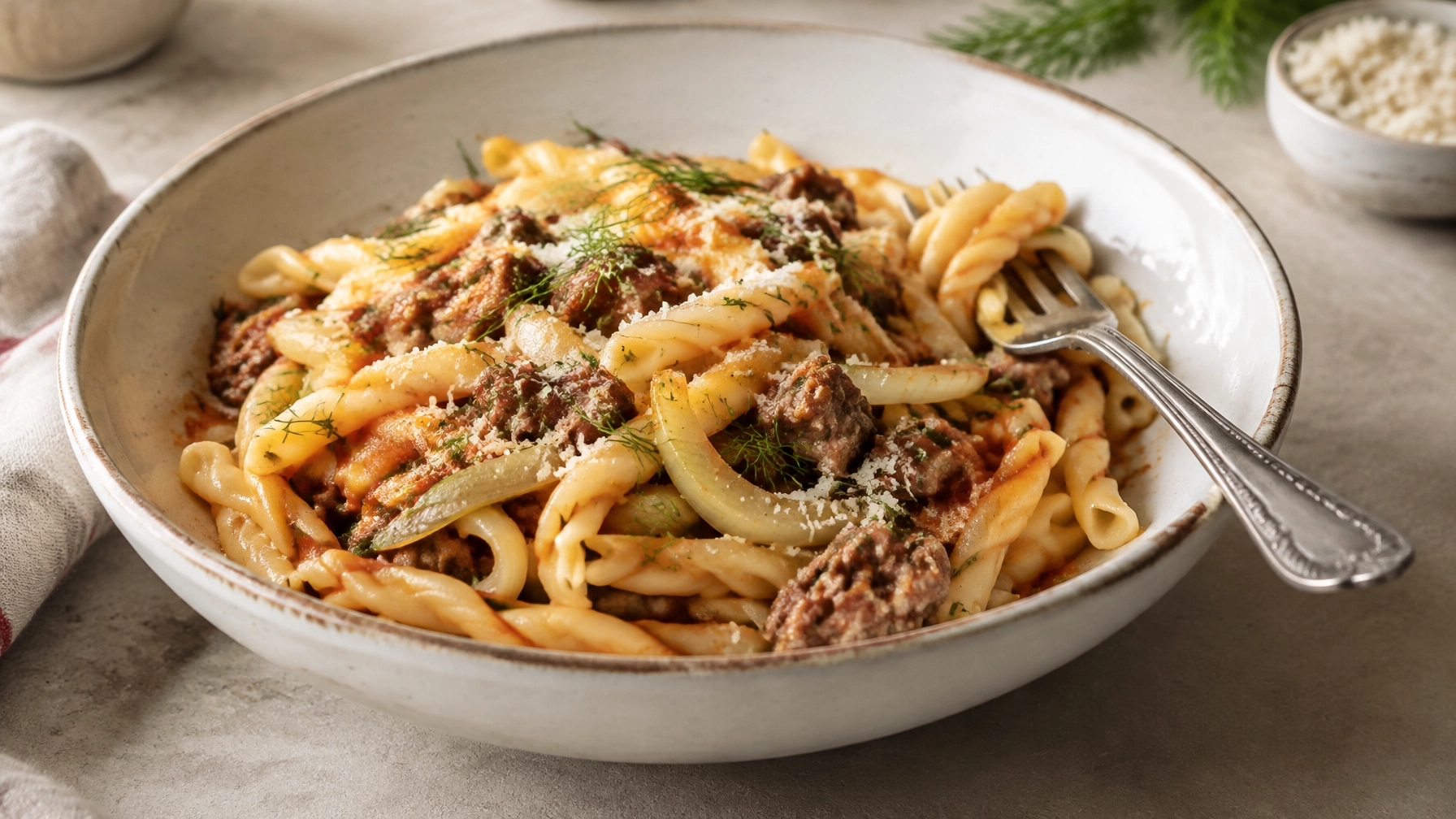
Strozzapreti with sausage and fennel is a pasta dinner for four, with browned pork sausage, softened fennel, white wine and Parmesan.
This recipe pairs short, twisted strozzapreti with a savoury skillet sauce. Fennel bulb softens as it cooks and gives the dish a gentle anise note; fennel sausage adds a more concentrated version of that flavour. White wine loosens the browned bits in the pan, while reserved pasta water helps the sauce cling to the pasta.
The method is direct: brown the sausage, cook the aromatics, reduce the wine, then toss everything together with hot pasta. No cream is needed. The finished sauce should coat the twists without pooling heavily at the bottom of the bowl.
Terms
strozzapreti (noun): A short, hand-formed pasta, commonly made as twisted or rolled pieces. Its uneven surface gives the sauce places to cling. The name is associated with several pieces of Italian folklore; the explanations are not settled.
al dente (adjective): Cooked until tender but still slightly firm at the centre. Use the pasta packet as a starting point and check the texture near the end of its stated cooking time.
Balance
This dish has three main elements: pasta, sausage and fennel. Each has a distinct role. The pasta provides a firm, irregular base. Sausage brings salt, fat and browned savoury flavour. Fennel bulb contributes sweetness as it softens and browns.
The wine reduction is a practical step, not a separate sauce. It loosens the caramelised residue left by the sausage and concentrates as it simmers. Pasta water then helps distribute that liquid across the pasta. Add it gradually; the goal is a glossy coating, not a thin broth.
Fennel sausage is suitable if available. Plain Italian sausage also works, since the fresh fennel bulb and fronds supply the dish’s characteristic flavour. If the sausage is already well seasoned, taste the sauce before adding extra salt.
Recipe
Servings: 4
Prep time: 15 minutes
Cook time: 30 minutes
Total time: 45 minutes
Tips
Check the sausage before seasoning. Sausage and Parmesan both contain salt. Keep the early seasoning restrained, then adjust the finished sauce.
Do not rush the fennel. Thin slices soften more quickly and evenly. If you prefer a more pronounced browned flavour, cook them for an extra few minutes before adding the shallot. Reduce the heat if the pieces begin to scorch.
Reserve pasta water before draining. It is difficult to recover once the pasta is in the colander. The starchy water helps bind the oil, wine reduction and cheese into a coating.
Finish off the heat. Stirring Parmesan into a pan that is still aggressively bubbling can make the cheese clump. Remove the pan from the burner first, then toss and add pasta water as needed.
Serve promptly. The sauce continues to thicken as it stands. If the pasta waits before serving, loosen it with another splash of warm water and toss again.
Variations
Use plain sausage. If fennel sausage is unavailable, use plain Italian pork sausage and add a pinch of crushed fennel seeds with the garlic.
Reduce the heat. Omit the red pepper flakes for a milder dish. Their role is to add a small amount of warmth, not to dominate the fennel.
Add greens. Stir a few handfuls of baby spinach into the sauce after the wine has reduced. Cook until just wilted before adding the pasta.
Use Pecorino. Pecorino Romano gives a sharper, saltier finish than Parmesan. Add it gradually and taste before adding more salt.
Make it without wine. Replace the wine with an equal amount of low-salt chicken stock. The flavour will differ, but the liquid still helps lift the browned residue from the pan.
FAQ
Can I use another pasta shape?
Yes. Fusilli, casarecce or rigatoni can stand in for strozzapreti. Choose a shape with curves or ridges so the sausage and fennel have surfaces to cling to. Follow the cooking time on the packet and check for an al dente centre.
Can I prepare the sauce ahead?
The sausage and fennel mixture can be cooked ahead and refrigerated in a covered container for up to three days. Reheat it in a frying pan with a small splash of water. Cook the pasta just before serving, then combine it with the hot sauce and finish with cheese and fennel fronds.
Can I freeze leftovers?
The sauce can be frozen separately for up to two months. Pasta is best cooked fresh for this dish; freezing the finished pasta may soften its texture. Thaw the sauce in the refrigerator, reheat it thoroughly in a pan, and add freshly cooked strozzapreti.
How do I know when the sauce is ready?
The sausage should be cooked through, the fennel should be tender, and the wine should no longer smell sharply alcoholic. Once the pasta is added, the sauce should look glossy and cling to the twists. If it seems dry, add reserved pasta water gradually. If it seems loose, toss it over low heat for another short interval.