Recipe
Serves
4 1×
Serves 4Prep 15 min
Ingredients
Method
- Bring a large saucepan of water to a vigorous boil and season it generously with salt.
- Add the potatoes and green beans to the same pan of boiling water that will be used for the pasta.
- Cook the vegetables until they are beginning to become tender, adjusting the timing according to whether the trofie are fresh or dried.
- Add the trofie to the pan and cook until al dente, following the packet instructions where necessary.
- Reserve at least 250 ml of the starchy cooking water.
- Drain the trofie, potatoes and green beans together.
- Return the drained ingredients to the warm saucepan or place them in a wide serving bowl.
- Add the pesto off the heat.
- Add the reserved pasta water one or two tablespoons at a time, tossing until the pesto becomes a smooth coating.
- Divide between four bowls and finish with the grated cheese and a small drizzle of olive oil if required.
Trofie with Pesto, Potatoes and Green Beans
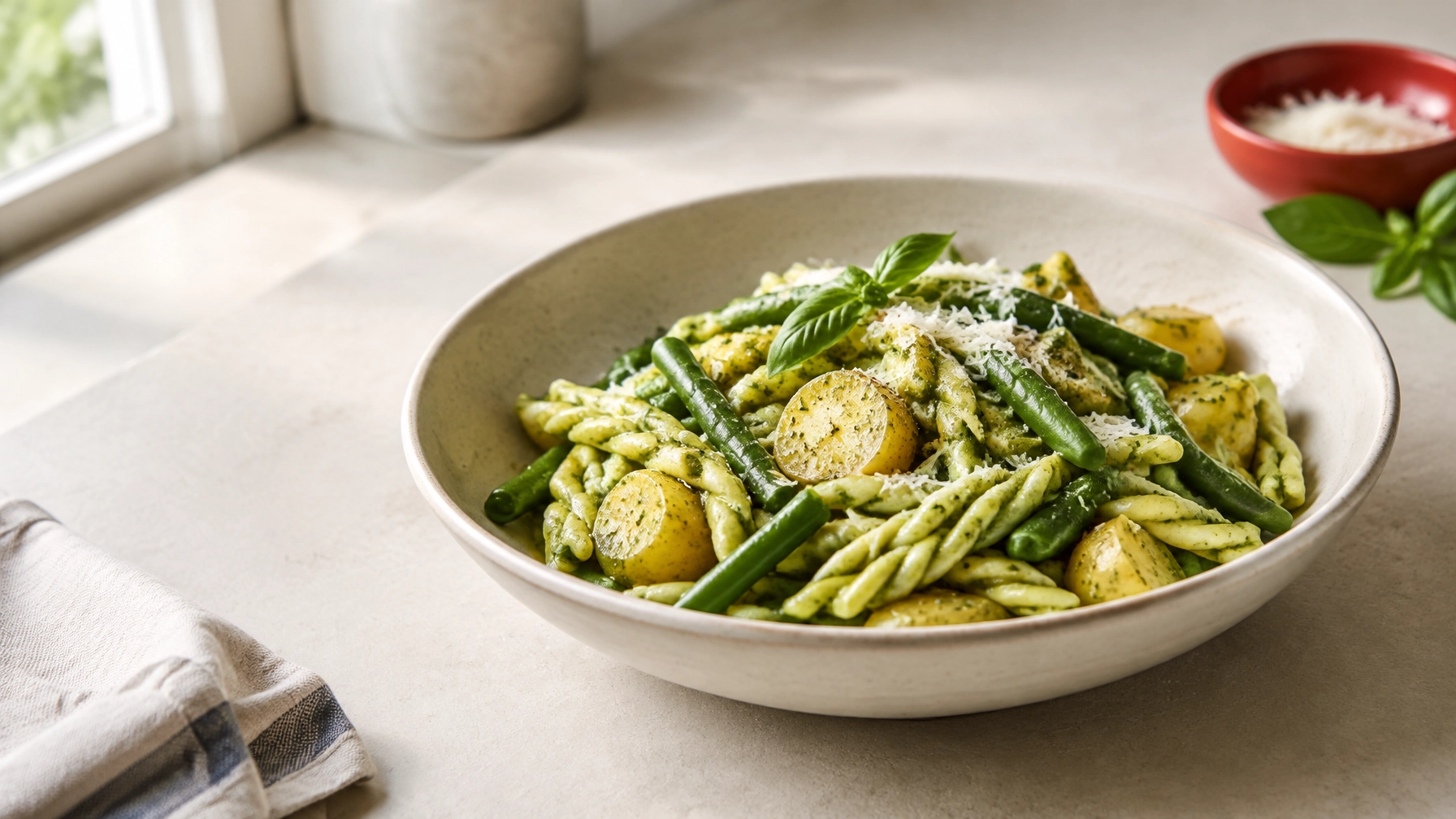
Trofie al pesto is a Ligurian pasta dish made with twisted trofie, basil pesto, waxy potatoes and green beans. The potatoes and beans are cooked in the same pan of boiling water as the pasta. The pesto is added off the heat and loosened with starchy pasta water. Cream is not used.
Definition
Trofie (noun): short, hand-shaped Ligurian pasta with a narrow, twisted form designed to hold sauce.
Pesto (noun): an uncooked sauce traditionally made from basil, garlic, pine nuts, hard cheese and olive oil.
Ligurian (adjective): relating to Liguria, the coastal region of north-west Italy associated with Genoa and basil pesto.
This combination is sometimes described as pesto avvantaggiato. The vegetables add texture and make the dish more substantial without changing its basic structure. The result is not a cream sauce and does not require a separate vegetable pan.
Preparation
Bring a large saucepan of water to a vigorous boil. Salt it generously. The water should be properly seasoned before the pasta and vegetables are added.
The cooking sequence depends on the pasta. Fresh trofie normally cook more quickly than dried trofie, so check the packet instructions. The objective is simple: the potatoes and beans must be tender, while the trofie must remain al dente.
For fresh trofie, add the green beans first. Cook them for approximately five minutes, then add the potatoes. After approximately two further minutes, add the trofie. Continue cooking until the pasta is al dente.
For dried trofie, add the potatoes and green beans according to their required cooking time, then add the pasta when its remaining cooking time matches the vegetables. The same pan is used throughout.
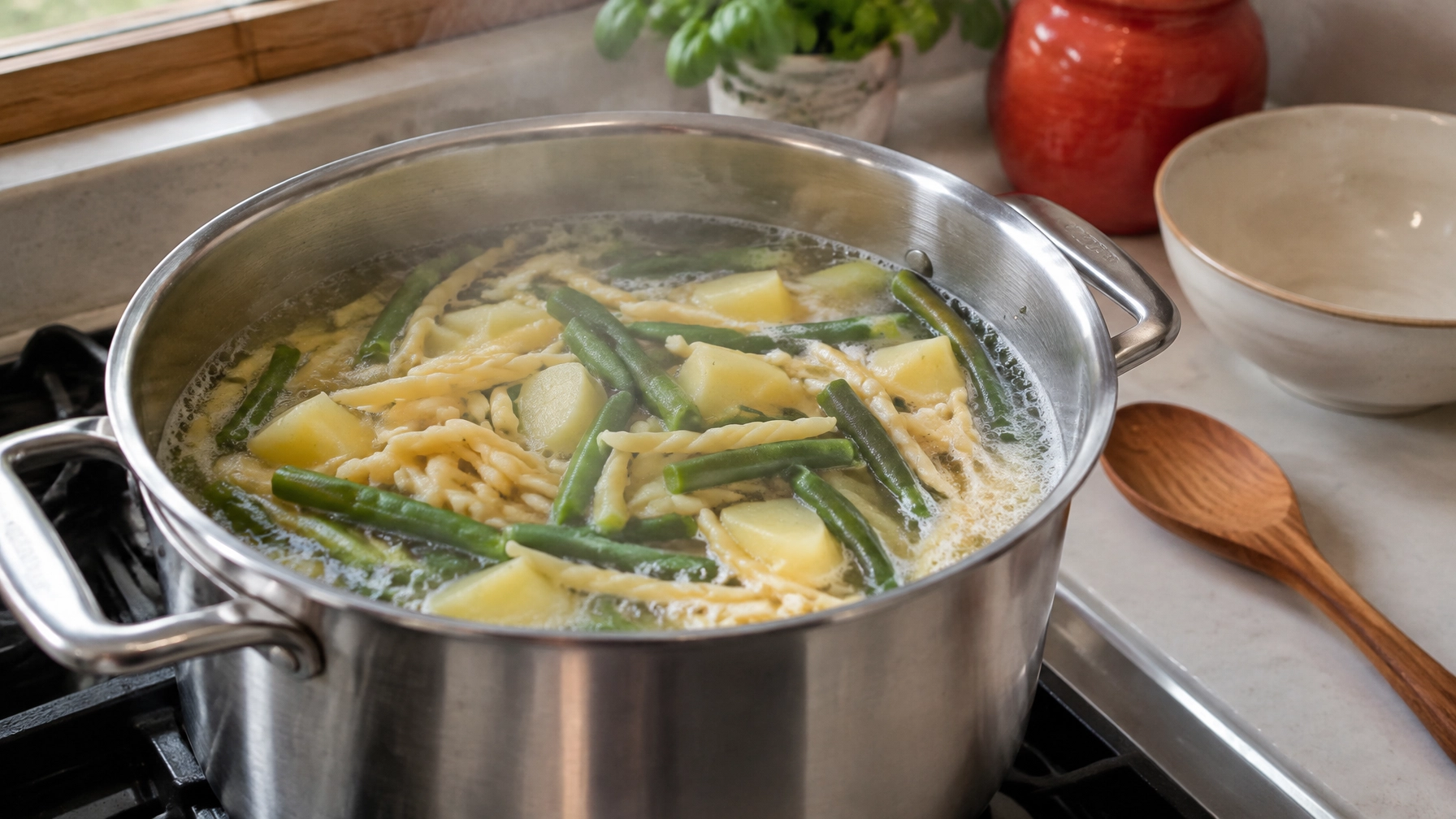
Before draining, remove at least 250 ml of the cooking water. The water contains starch released from the pasta. This starch helps the pesto form a smooth coating rather than separating into oil and solids.
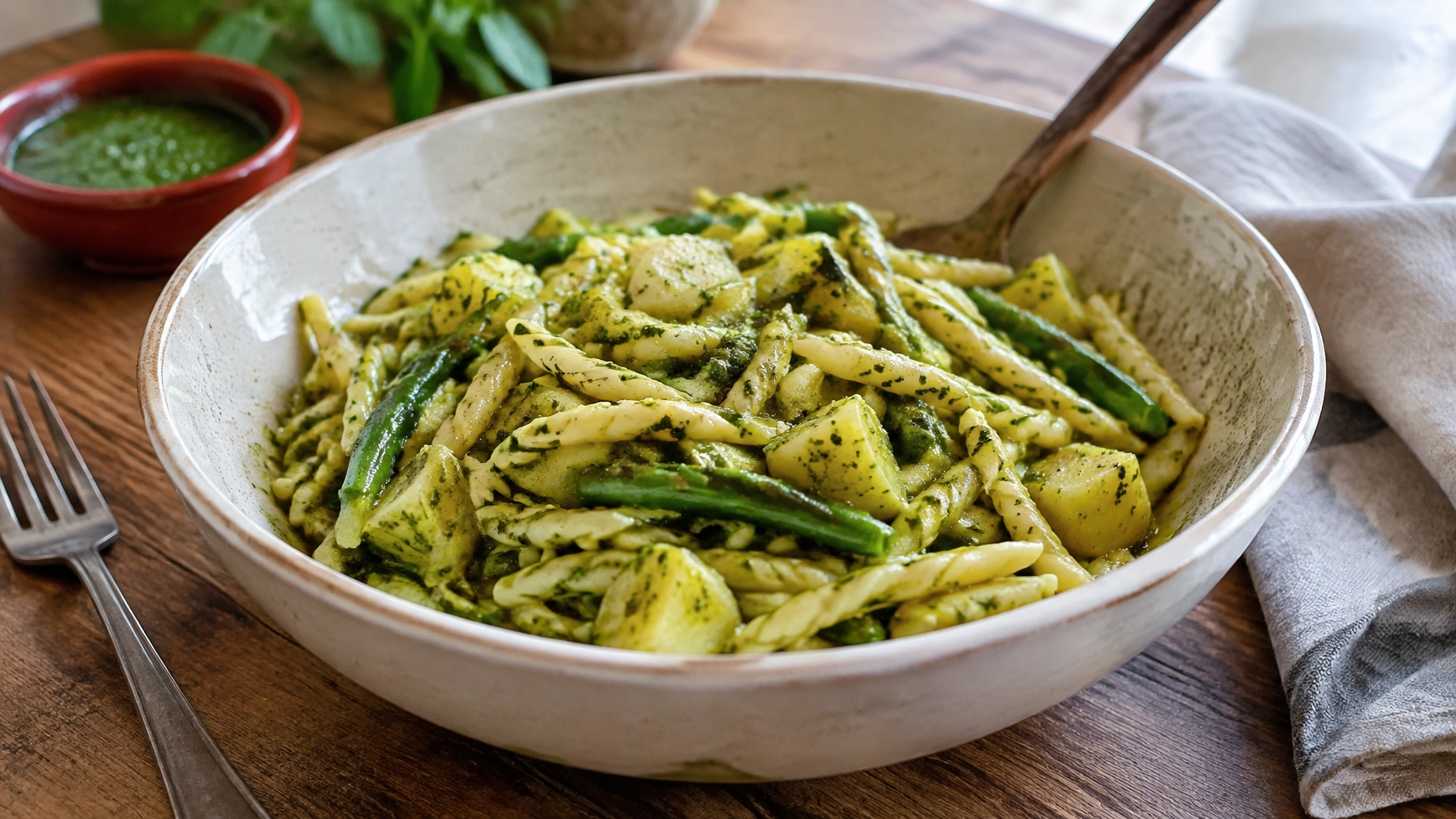
Drain the pasta and vegetables together. Return them to the warm saucepan or place them in a wide serving bowl. Add the pesto off the heat. Toss gently while adding the reserved pasta water one or two tablespoons at a time.
The correct consistency is glossy and loose enough to coat the pasta. Do not add all the water automatically. Stop when the pesto has emulsified and the trofie are evenly covered.
Recipe
Serves
4
Prep time
15 minutes
Cook time
15 to 20 minutes
Total time
30 to 35 minutes
Tips
- Do not rinse the pasta. Rinsing removes surface starch and makes the pesto less able to cling.
- Do not boil the pesto. Excessive heat dulls the basil flavour and can cause the oil to separate.
- Reserve the pasta water before draining. It cannot be recovered afterwards.
- Add pasta water gradually. A dry sauce needs more liquid, but an overly wet sauce cannot be corrected easily.
- Keep the vegetables in reasonably sized pieces. Very small pieces can break apart during the cooking process.
- Serve immediately. The pesto thickens as the dish cools.
Variations
If trofie are difficult to find, use fusilli or casarecce. Both shapes hold pesto effectively. Fusilli provide a similar spiral structure, while casarecce offer a broader surface for the sauce.
For a stronger basil profile, add a small spoonful of pesto at the table. For a sharper finish, use Pecorino instead of Parmesan. A small amount of toasted pine nuts can be added for texture, although they are not essential.
The potatoes may be left unpeeled if they are very small and have been washed thoroughly. Larger potatoes should be peeled because their skins can remain firm while the pasta cooks.
Do not replace the pasta water with cream. Cream changes the character of the dish and is unnecessary. The intended sauce is made smooth by pesto, olive oil and starchy water.
Timing
The exact timing depends on the brand, shape and condition of the pasta. Fresh trofie may cook in approximately eight minutes. Dried trofie can require longer.
Use the vegetables as the timing reference. Green beans should remain slightly firm rather than soft. Potatoes should be tender when pierced but should not disintegrate. If the pasta packet gives a long cooking time, add the vegetables earlier.
The final minute requires attention. Once the pasta is drained, residual heat continues to soften it. Drain promptly when it is al dente, then combine it with the pesto away from direct heat.
Serving
Serve the pasta in warmed bowls. Add grated hard cheese immediately before eating. A small amount of olive oil may be used if the pesto needs additional gloss.
This is a complete vegetarian main course. No separate sauce is required. The pasta provides carbohydrate, the pesto supplies a concentrated herb and cheese element, and the potatoes and green beans provide contrasting textures.
The dish is best eaten immediately. It can be stored in a covered container in a refrigerator, but the pesto will darken and the pasta will absorb the sauce. Reheating may also soften the vegetables and pasta beyond the intended texture.
FAQ
Can I cook the potatoes and green beans separately?
Yes, but it is not the traditional method for this dish. The defining practical feature is that the potatoes and green beans go into the same pan of boiling water as the pasta. This allows the cooking water to become starchy and seasons the vegetables at the same time.
Can I use dried basil pesto?
Yes. Use a good-quality basil pesto and bring it to room temperature before mixing. The pesto should not be cooked.
Why is pasta water added to pesto?
The starchy water loosens the pesto and helps its oil-based ingredients combine into a coating. It also prevents the sauce from becoming thick and clumpy.
Can I use cream instead of pasta water?
No cream is required. Use reserved pasta water. It produces the intended consistency while preserving the basil flavour and the traditional character of the dish.
What can I use instead of trofie?
Fusilli or casarecce work well. Choose a short pasta with ridges, twists or folds that can hold the pesto.
Can I prepare this dish in advance?
Prepare the vegetables and pasta immediately before serving. Pesto pasta is most effective when it is mixed and eaten without delay.