Recipe
Serves
4 1×
Serves 4Prep 25 minCook 30 minTotal 55 min
Ingredients
Method
- Soak the dried chillies in hot water for 10 minutes. Drain and remove some seeds if preferred.
- Add the chillies, lemongrass, galangal, garlic, shallots, ground coriander, ground cumin, turmeric and 2 tablespoons of water to a blender or food processor. Blend into a thick paste.
- Heat the oil in a large saucepan over medium-low heat. Add the paste and fry for 3 to 5 minutes, stirring frequently, until fragrant and slightly darker.
- Add the coconut milk, vegetable stock, miso or fermented bean paste, soy sauce and sugar. Stir until combined.
- Bring the broth to a gentle simmer. Add the mushrooms and cook for 5 minutes.
- Add the tofu puffs and pak choi or green beans. Simmer for a further 5 to 7 minutes, until the vegetables are tender and the tofu is hot.
- Prepare the rice vermicelli according to the packet instructions. Drain thoroughly and divide between four bowls.
- Turn off the heat under the laksa. Stir in the lime juice and taste. Adjust the seasoning with soy sauce, sugar or additional lime juice.
- Ladle the broth over the noodles. Add tofu puffs and vegetables to each bowl.
- Finish with bean sprouts, coriander, lime wedges and fresh chilli if using. Serve immediately.
Vegan Laksa (Coconut Curry Noodle Soup)
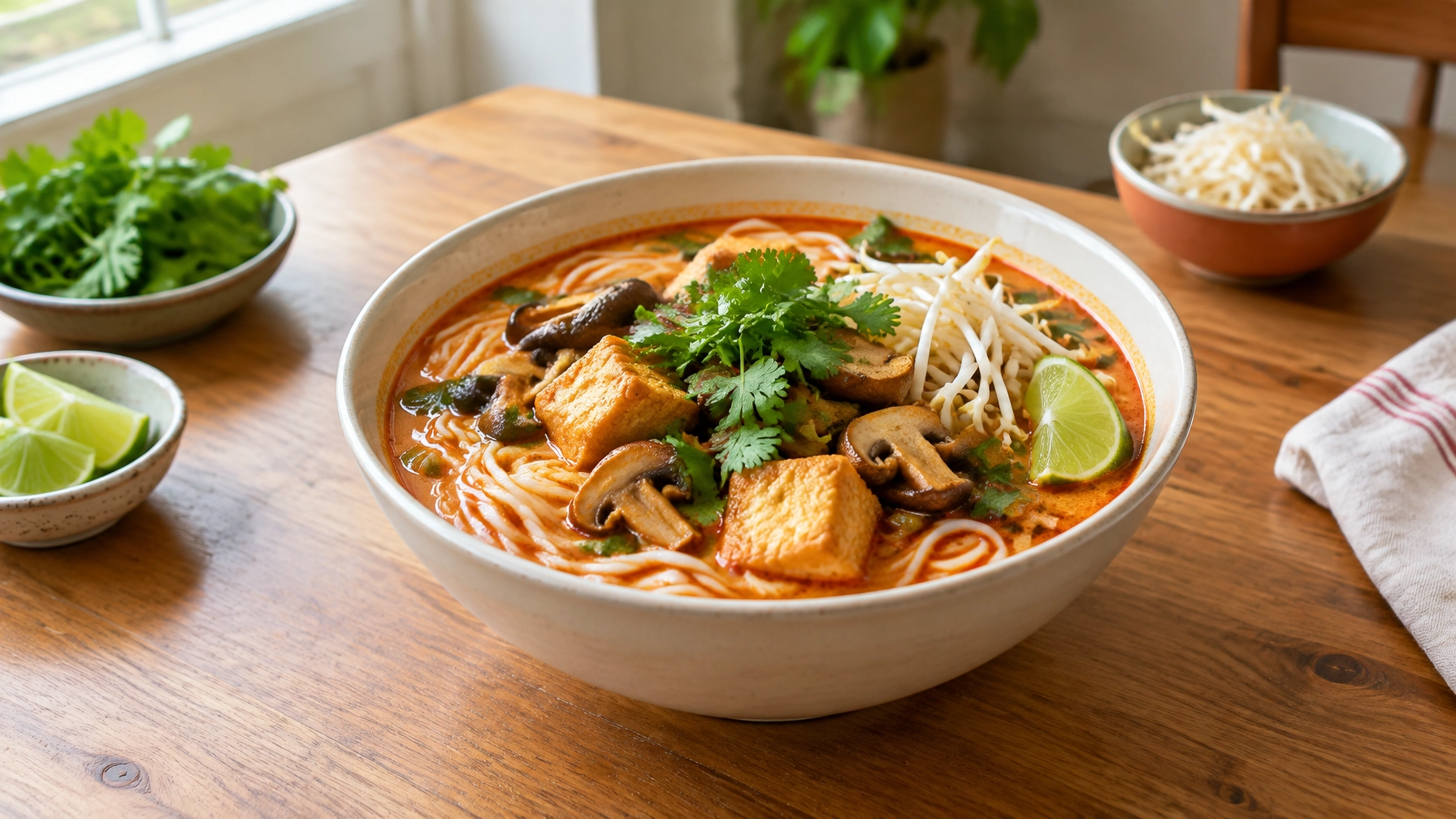
laksa (noun): A Malaysian-style noodle soup made with a strongly seasoned curry paste, coconut milk, noodles and substantial toppings.
This vegan laksa is coconut-rich, chilli-led and noodle-forward. It is based on Malaysian curry laksa rather than Thai broth. The distinction is practical: laksa uses a dense paste of lemongrass, galangal, dried chillies, shallots and spices, then combines it with coconut milk, stock and rice noodles.
The recipe contains no shrimp paste or fish sauce. A small amount of fermented soybean paste supplies the savoury, fermented depth normally associated with seafood-based versions. Tofu puffs absorb the broth and provide the required structural evidence that this is a meal, not merely a liquid served in a bowl.
Difference
Thai coconut soups such as tom kha usually centre on a clear, aromatic broth with galangal, lime and herbs. This laksa is heavier and more concentrated. The paste is fried before liquid is added. Coconut milk forms part of the main broth rather than acting as a finishing ingredient. Rice noodles and tofu puffs are not incidental additions. They are central components.
Use full-fat coconut milk for the correct texture. Reduced-fat coconut milk produces a thinner soup and can make the fried paste taste disproportionately strong.
Paste
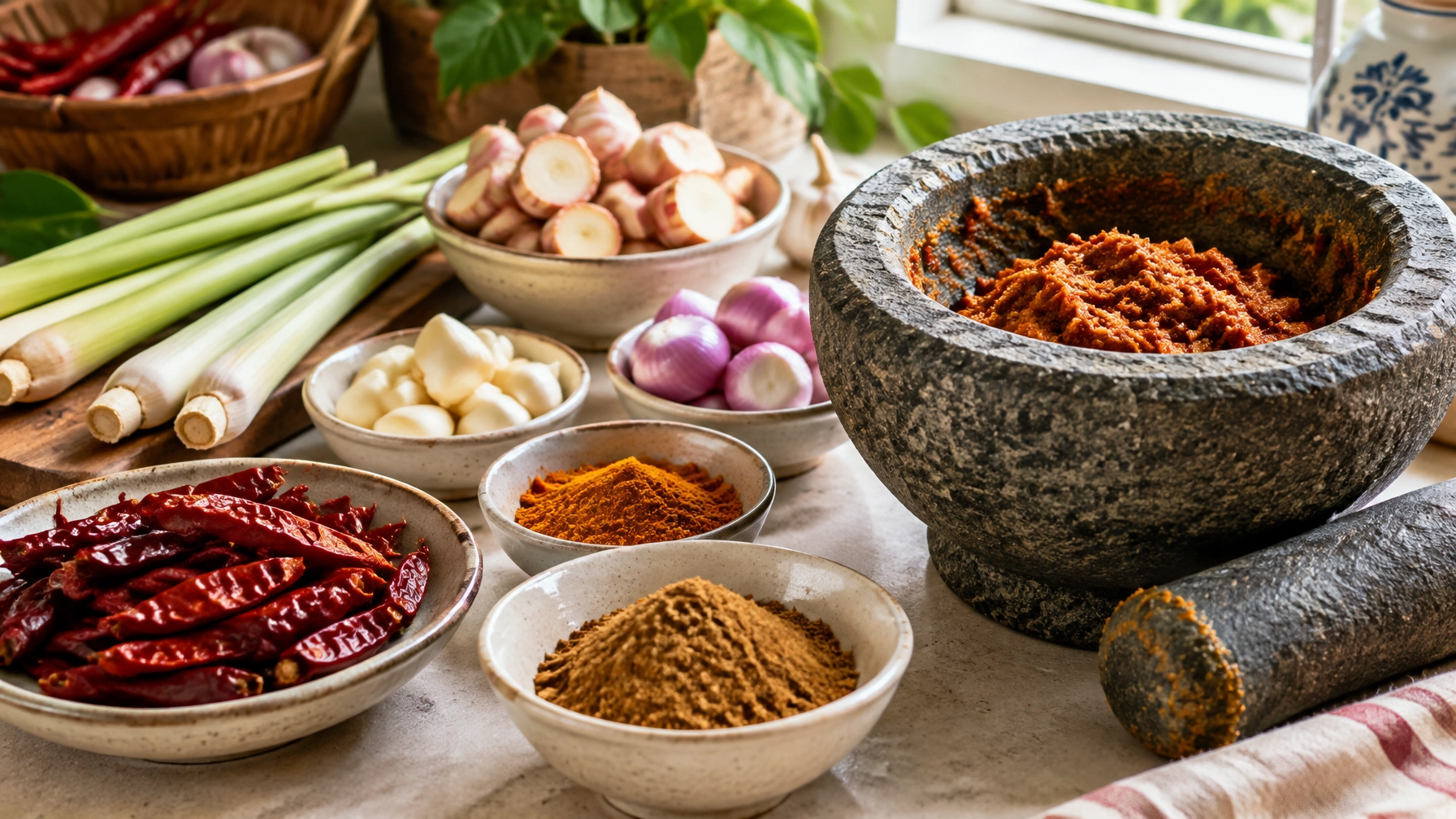
The paste determines the character of the soup. Soak the dried chillies first so they blend smoothly. Remove some seeds if a lower heat level is required. Galangal has a sharper, more medicinal flavour than ginger, so it should not be replaced completely if an authentic profile is the objective.
A food processor is suitable. A mortar and pestle is also suitable but requires more time. Blend or pound the ingredients until no large pieces of lemongrass or galangal remain. A coarse paste will still cook, but the finished broth will lack consistency.
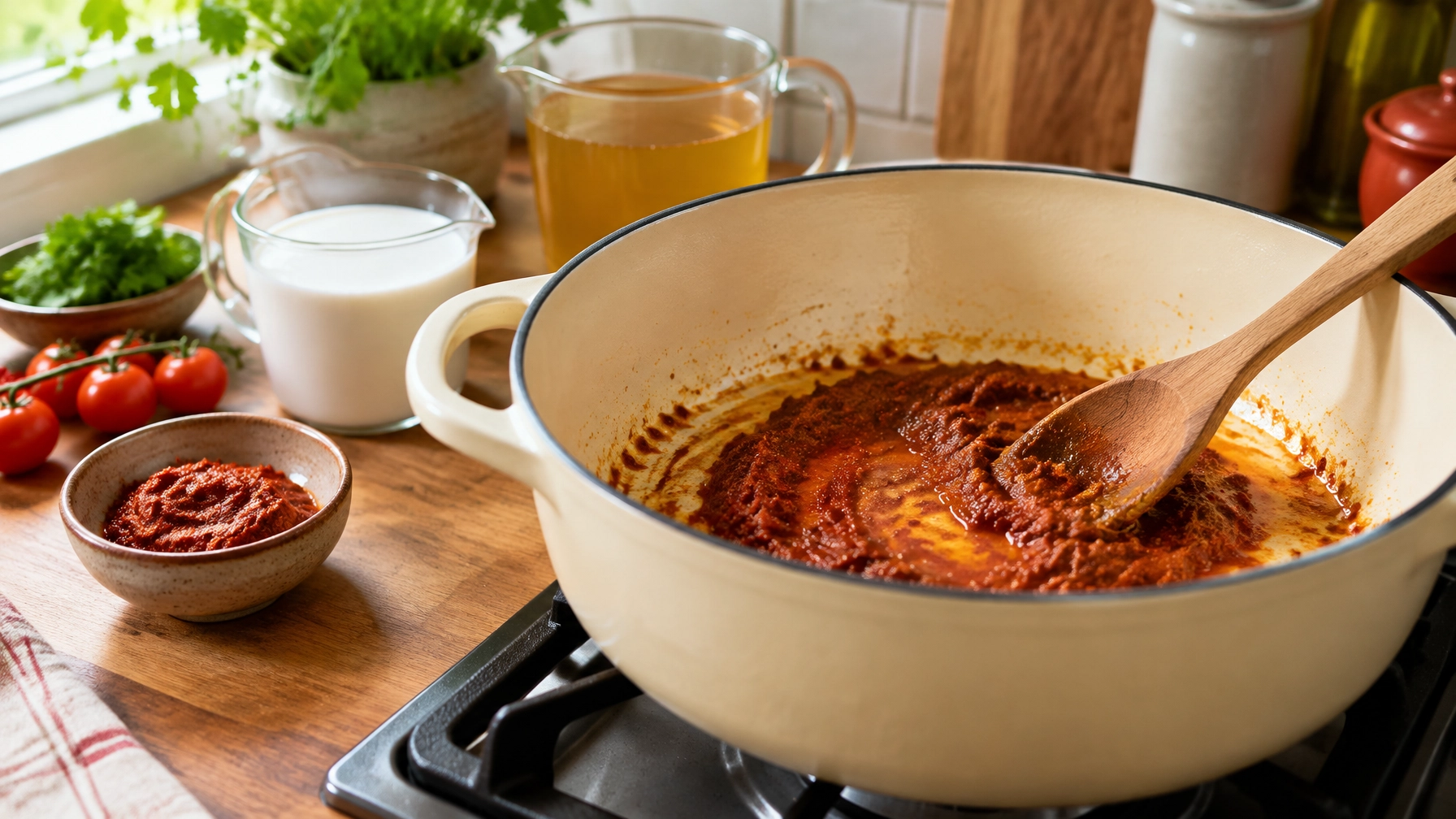
The paste must be fried in oil before the coconut milk is added. This step cooks the raw alliums, softens the dried chilli and releases the fat-soluble aromas from the spices. Cook over medium-low heat and stir frequently. The paste is ready when it smells rounded rather than raw and the oil begins to separate at the edges.
Cook
Keep the noodles separate from the broth until serving. Rice noodles continue to absorb liquid after cooking. If they are stored in the soup, the broth will become thick and the noodles may become soft.
Prepare the noodles according to the packet instructions. Some varieties require soaking in boiling water; others require brief boiling. Rinse and drain them thoroughly. Divide them between bowls before adding the broth.
The tofu puffs should simmer in the broth long enough to become hot and absorb the curry. If using firm tofu instead, press it, cut it into cubes and pan-fry it before adding it to the soup. It will not absorb as much liquid as tofu puffs, but it remains suitable.
Add lime juice after the heat is turned off. Prolonged boiling can flatten its aroma. Taste the broth before serving and adjust the balance with soy sauce, sugar or lime.
Serve
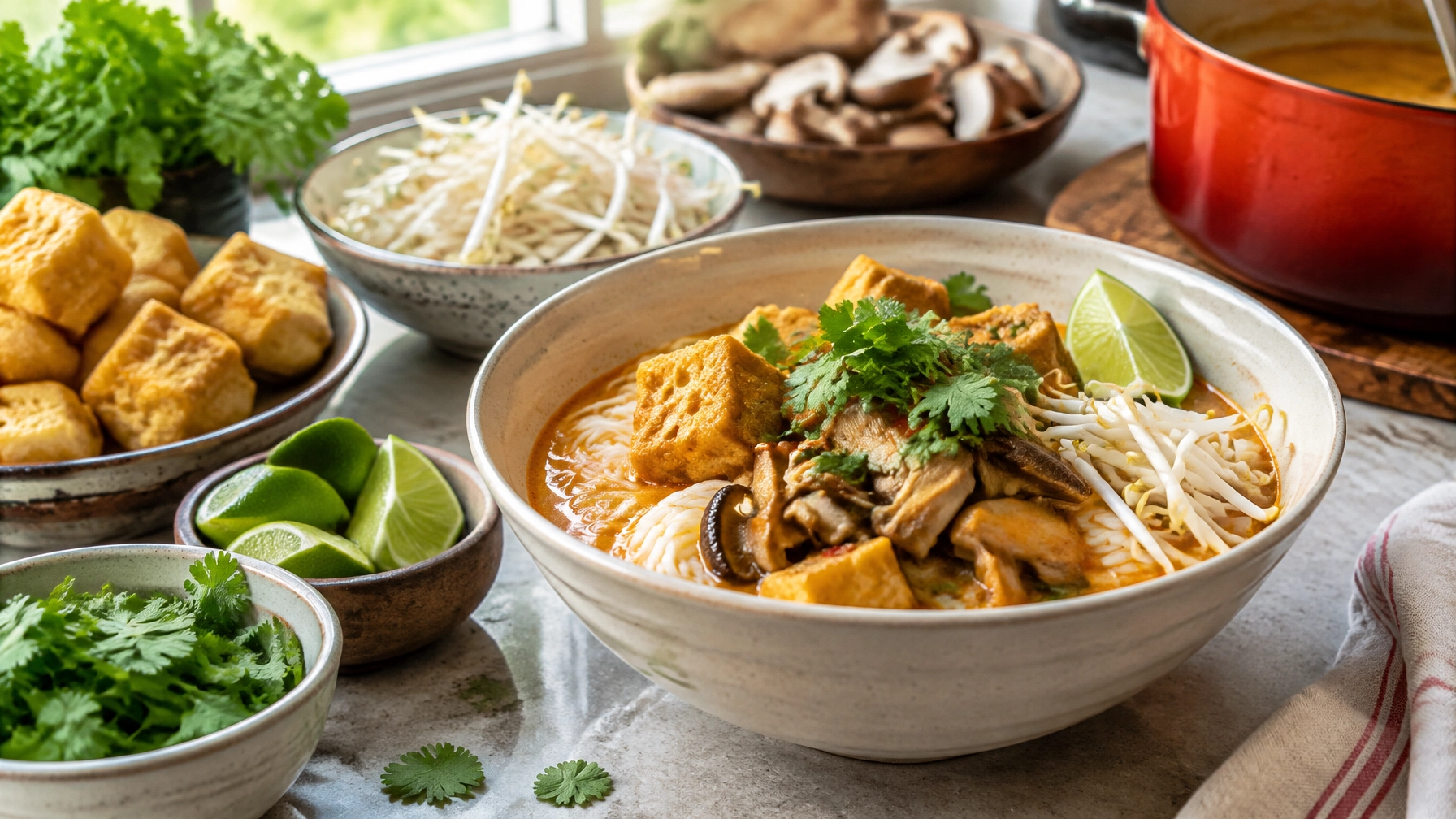
Serve the laksa immediately. Add the cooked noodles to wide bowls, ladle over the hot broth and arrange tofu puffs and vegetables on top. Finish with bean sprouts, coriander, lime wedges and sliced fresh chilli if required.
The resulting soup should be creamy but pourable. It should taste aromatic before it tastes hot. The lime should sharpen the broth without making it sour. If the soup tastes flat, add a small amount of soy sauce. If it tastes heavy, add lime juice. If it is excessively hot, add a little more coconut milk or stock.
For food safety, cool leftovers promptly and refrigerate them in covered containers. The Food Standards Agency provides guidance on cooking food safely and chilling, freezing and defrosting food. Store the broth and noodles separately where possible.
Recipe
Serves
4
Prep time
25 minutes
Cook time
30 minutes
Total time
55 minutes
Tips
- Fry the paste slowly. High heat can scorch the chillies before the lemongrass and galangal have softened.
- Use full-fat coconut milk for a richer, more stable broth.
- Keep noodles separate from the soup until serving.
- Add tofu puffs near the end so they remain intact while absorbing the broth.
- Taste after adding the lime. Acidity changes the perceived salt and heat.
- If the broth is too thick, add hot vegetable stock in small amounts.
Variations
- Replace tofu puffs with pan-fried firm tofu, tempeh or cooked edamame.
- Add sliced aubergine, spinach, sugar snap peas or shredded cabbage.
- Use rice sticks instead of rice vermicelli for a wider noodle texture.
- Increase the dried chillies for a hotter laksa, or remove the seeds for a milder version.
- Add a teaspoon of vegan mushroom sauce for a deeper savoury note, provided the label confirms that it contains no seafood.
- For a less rich broth, replace up to 200 ml of coconut milk with additional vegetable stock.
FAQ
Is laksa Thai or Malaysian?
Laksa is associated primarily with Malaysia and Singapore, with many regional variations. This recipe is a Malaysian-style curry laksa. It is coconut-rich and built around a fried spice paste, rice noodles and substantial toppings.
What makes this laksa vegan?
The recipe contains no shrimp paste, fish sauce or other animal-derived ingredients. Fermented soybean paste and soy sauce provide savoury depth instead.
Can I use ginger instead of galangal?
Yes, but the flavour will change. Galangal is sharper and more aromatic. Use ginger only when galangal is unavailable.
Can I make laksa ahead of time?
Prepare the broth and toppings ahead, but cook the noodles separately. Refrigerate the components in covered containers and reheat the broth until steaming hot throughout before serving.
Why has my broth become too thick?
The noodles have probably absorbed liquid. Add hot vegetable stock to the broth and keep cooked noodles separate next time.