Recipe
Serves
12 1×
Serves 12 cannoliPrep 1H15 minCook 15 minTotal 1H30 min
Ingredients
Method
- Set a sieve over a bowl and line it with clean muslin or a coffee filter if needed. Add the ricotta, cover and refrigerate overnight. Discard the drained liquid.
- Combine the flour, cocoa, sugar, cinnamon and salt in a bowl. Rub in the cold butter or lard until evenly dispersed. Reserve about one-third of the beaten egg for sealing the shells. Add the remaining egg, Marsala, orange zest and vinegar to the flour mixture.
- Knead until the dough is smooth and elastic. Wrap it and refrigerate for 30 minutes.
- Press the drained ricotta through a fine sieve if it is coarse. Whisk until smooth, then mix in the sugar, vanilla and orange zest. Fold in the candied peel, if using. Cover and refrigerate the filling.
- Divide the dough into four pieces. Keep the pieces covered while working. Roll each piece through a pasta machine, reducing the setting gradually, or roll with a pin until the dough is about 1 millimetre thick.
- Cut twelve rounds, each about 12 centimetres across. Wrap each round around a cannoli tube, overlapping the edges. Brush the overlap with reserved beaten egg and press to seal. Do not pull the dough tight around the tube.
- Heat the oil in a deep, heavy pan to 180°C. Fry the shells in small batches until golden and blistered, turning them as needed. Transfer to a rack or paper-lined tray. Once cool enough to handle, carefully remove the tubes and allow the shells to cool completely.
- Transfer the chilled filling to a piping bag. Pipe filling into both ends of each shell shortly before serving. Dip the exposed filling in chopped pistachios and dust with icing sugar.
Vanilla Cannoli with Ricotta (Sicilian)
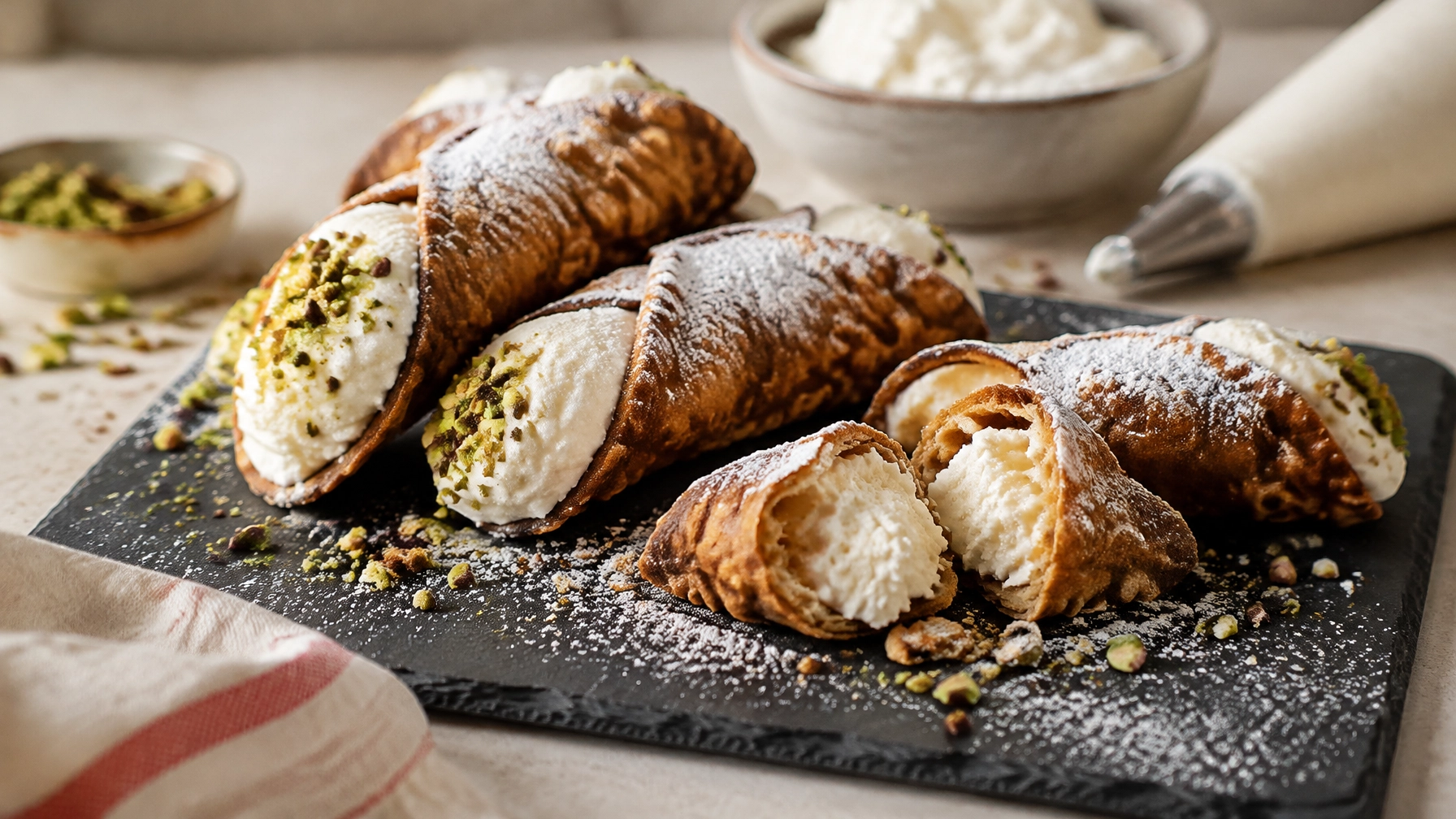
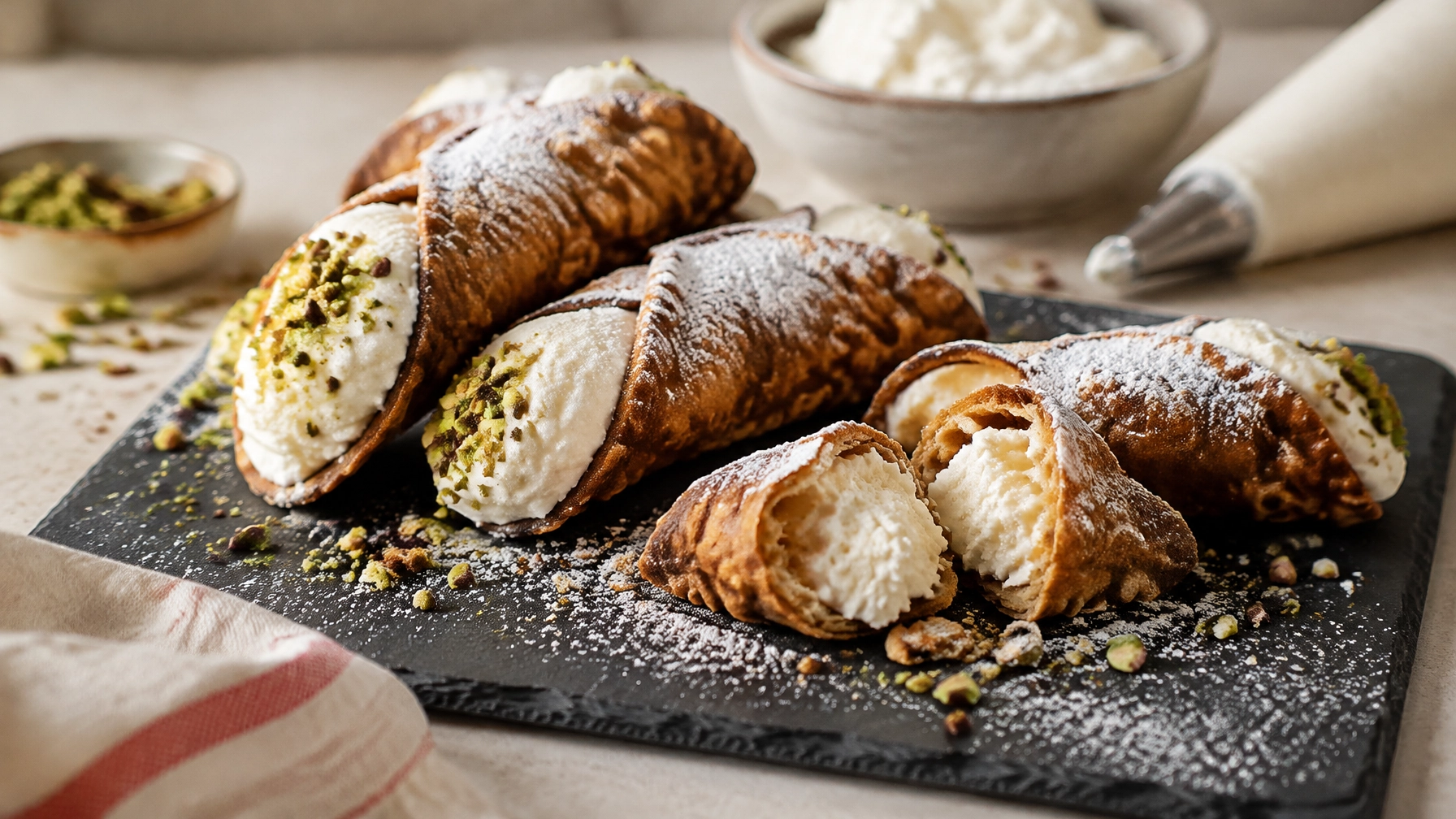
Cannoli are crisp pastry tubes filled with sweetened ricotta. This Sicilian-style version uses vanilla and orange zest in the filling, with cocoa, cinnamon and Marsala in the shells.
The filling and shells are prepared separately. Fill the shells shortly before serving to help keep them crisp.
Cannoli
Cannoli are assembled from thin pastry fried around metal tubes and a ricotta-based filling. The contrast between a crisp shell and a smooth centre depends on two practical details: roll the dough very thinly, and do not fill the shells until serving time.
Sheep’s-milk ricotta is traditional, but cow’s-milk ricotta can be used. Ricotta tends to hold moisture, so drain it in the refrigerator before preparing the filling. If it remains wet, the filling may be loose and the pastry may soften more quickly.
Equipment
Use metal cannoli tubes, a rolling pin or pasta machine, a round cutter about 12 centimetres wide, a piping bag and a thermometer suitable for hot oil. A deep, heavy pan is also needed if a deep fryer is not available.
Take care when frying. Keep the pan stable, do not fill it more than halfway with oil, and lower the shells in gently. Keep water away from hot oil.
Texture
A properly fried shell should be browned, crisp and lightly blistered. The dough should be thin enough to crisp before its surface becomes too dark. If the first shell is pale and soft, check the oil temperature before continuing. If it darkens too quickly, reduce the heat and allow the temperature to stabilise.
The filling should hold its shape when piped. Drain the ricotta thoroughly, then whisk it until smooth before adding the sugar, vanilla and zest. Do not thin the mixture with milk or cream. If using candied peel, fold it in after the ricotta has been whisked.
Storage
Store unfilled shells in an airtight container at room temperature once completely cool. Keep ricotta filling covered in the refrigerator and fill the shells shortly before serving. If filled cannoli remain, refrigerate them; the shells will soften over time.
Keep ricotta and other foods requiring refrigeration at 5°C or below. Refrigerate perishable food promptly and do not leave it at room temperature for more than two hours, or more than one hour when the temperature is above 32°C. See the Food Standards Agency guidance on chilling, freezing and defrosting food.
Recipe
Servings
12 cannoli
Prep time
1 hour 15 minutes, plus overnight ricotta draining
Cook time
15 minutes
Total time
1 hour 30 minutes, plus overnight ricotta draining