Recipe
Serves
4 1×
Serves 4Prep 20 minCook 15 minTotal 35 min
Ingredients
Method
- Mix the soy sauce, vegan sugar, sesame oil, garlic and black pepper in a small bowl until the sugar is mostly dissolved.
- Bring a large pot of water to a boil. Cook the glass noodles according to the package directions until tender and translucent. Drain, rinse under cold water and drain again. Cut the noodles to a manageable length with kitchen scissors, if desired.
- Blanch the spinach in boiling water for about 30 seconds. Transfer it to cold water, drain and squeeze out excess water. Set aside.
- Heat a little of the neutral oil in a large pan over medium heat. Cook the tofu, turning until lightly golden on several sides. Transfer to a large mixing bowl.
- Add a little more oil to the pan. Cook the onion for 2 minutes, then transfer it to the bowl. Cook the carrot for 2 to 3 minutes until just tender, then transfer it as well.
- Cook the mushrooms in the pan until softened and most of their released moisture has evaporated. Transfer them to the bowl.
- Add the drained noodles, spinach and spring onions to the bowl. Pour over the sauce and toss until everything is evenly coated.
- Taste and adjust the seasoning if needed. Sprinkle with toasted sesame seeds and serve warm or at room temperature.
Vegan Japchae (Korean Glass Noodles)
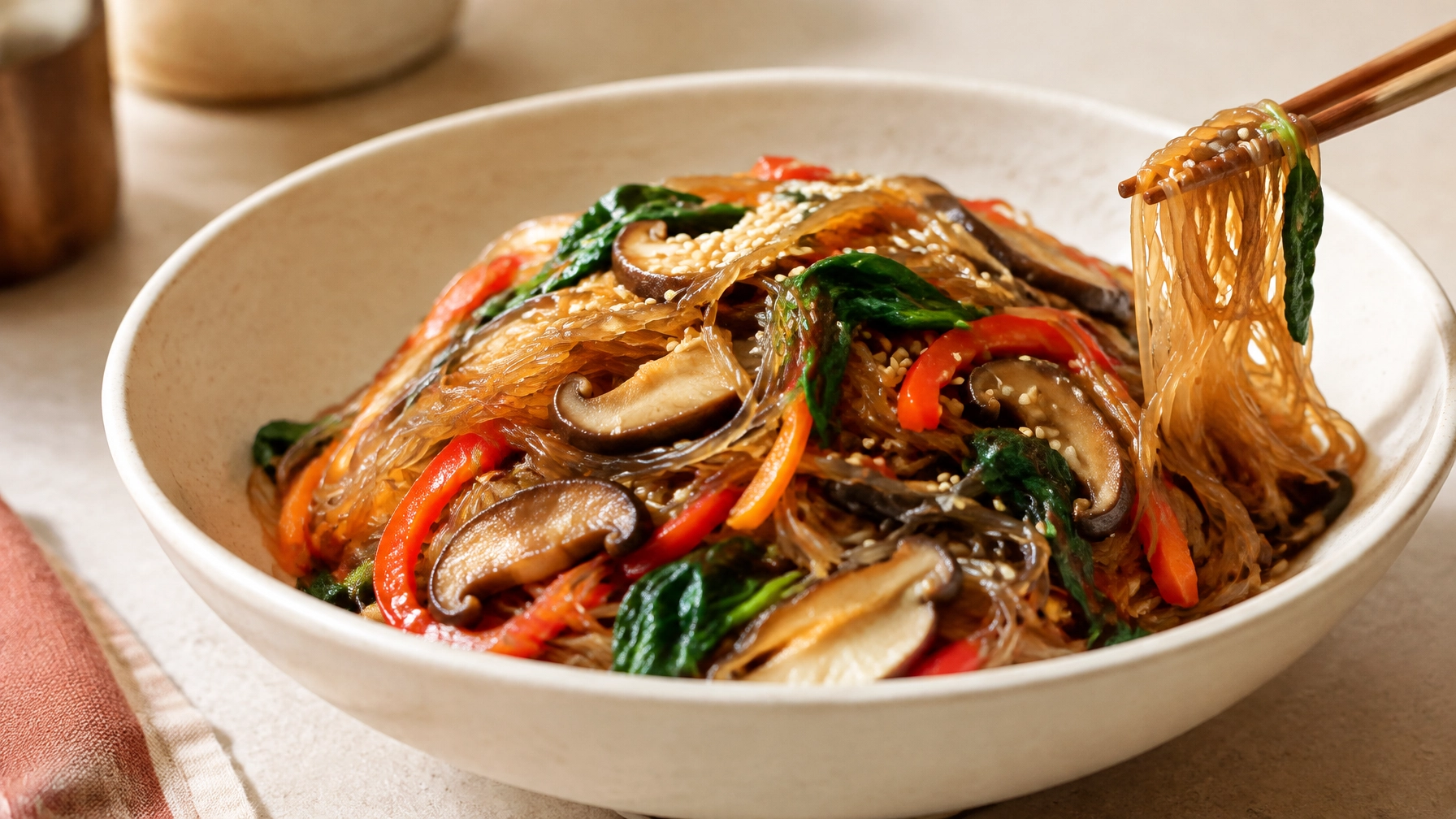
What japchae is
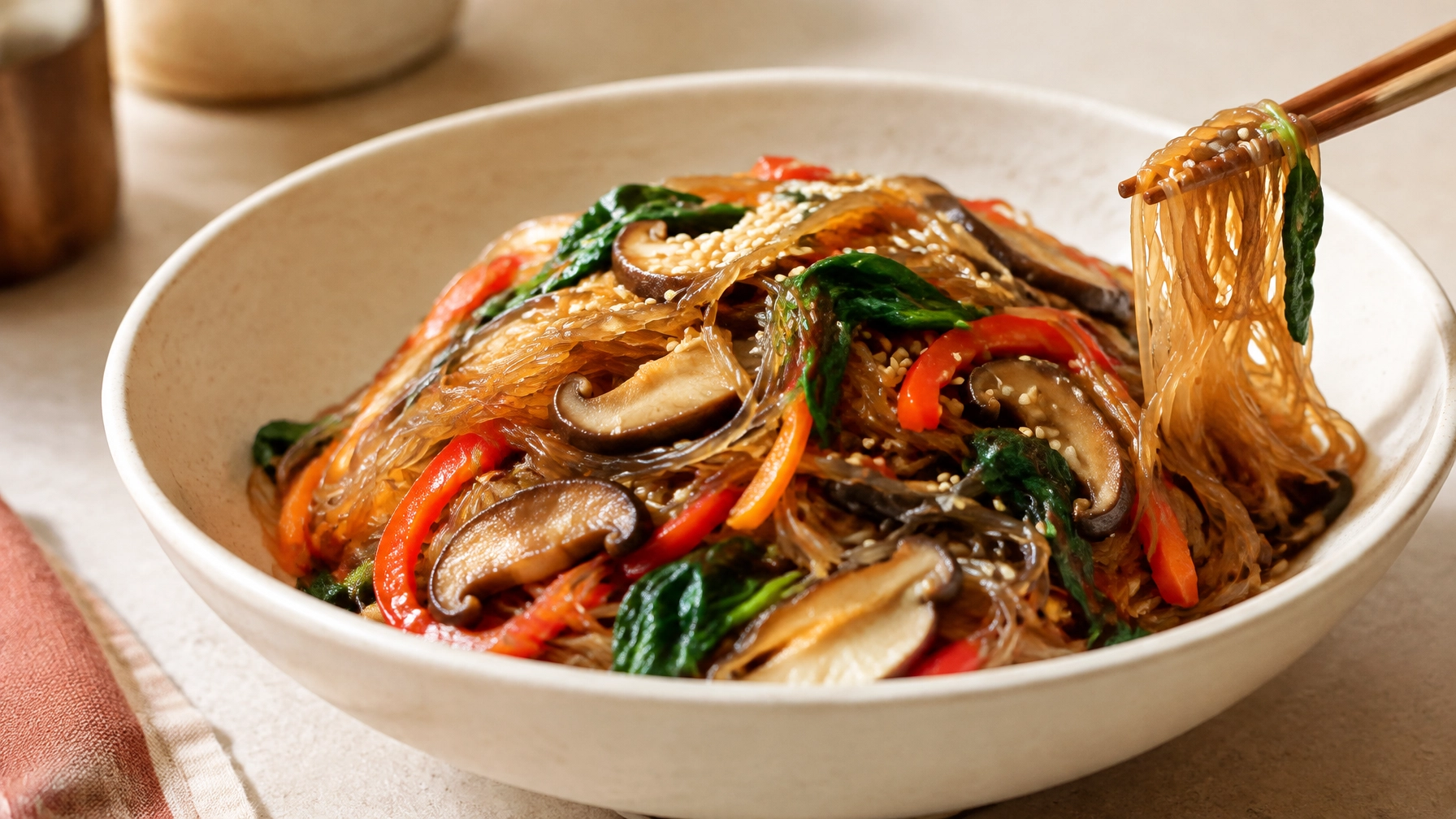
Vegan japchae is a Korean noodle dish made with chewy, translucent sweet-potato glass noodles, vegetables, mushrooms and a savoury sesame-soy dressing. The noodles are called dangmyeon. They are naturally chewy and springy, and they hold the seasoning well.
This version uses spinach, carrot, onion, shiitake mushrooms and tofu. The ingredients are cooked separately before being tossed together, helping each retain its colour and texture. The finished dish can be served warm or at room temperature.
Seasoning
The sauce is a simple mixture of soy sauce, toasted sesame oil, garlic, sugar and black pepper. It tastes savoury, gently sweet and nutty. Use regular soy sauce or tamari, checking the label if gluten avoidance is needed. Choose a vegan sugar or other suitable sweetener; honey is not vegan.
Start with the amounts in the recipe, then taste the noodles after tossing. Add a little more soy sauce for saltiness, or a small pinch of sugar if the dish needs a rounder flavour. Sesame oil is concentrated, so add it in measured amounts.
Preparation
Prepare all of the vegetables and sauce before cooking. Japchae comes together more easily when the ingredients are ready to add, as each component is cooked separately.
Blanch the spinach briefly, then cool it and squeeze out excess water. This helps prevent the finished noodles from becoming watery. Cook the carrots, onion and mushrooms until tender but not limp. Brown the tofu separately to keep its edges intact.
Cook the glass noodles according to the package instructions. Their cooking time varies by brand and thickness. They should be fully tender and translucent, with a pleasantly chewy texture. Drain and rinse them under cold water to stop the cooking, then cut them with kitchen scissors if you prefer shorter strands.
Adjustments
For a more substantial meal, increase the tofu or add more mushrooms. Thin strips of red pepper can add sweetness and colour. Keep additions moderate: too many vegetables can dilute the seasoning and make the noodles harder to toss.
For extra heat, add a little gochugaru or another chilli seasoning. This changes the flavour profile, so start with a small amount. For a milder version, leave out the pepper and let the garlic, soy and sesame provide the main seasoning.
Serving
Serve japchae as a main dish or as part of a larger Korean-style meal. It pairs well with simply prepared vegetables, soup or rice. Garnish with sliced spring onions and toasted sesame seeds just before serving.
Japchae is also suitable for a shared table because it can be served warm or at room temperature. If preparing it ahead, reserve a small amount of the sauce. Toss it through before serving if the noodles have absorbed most of the seasoning.
Storage
Refrigerate leftovers in a covered container and use within 48 hours. The noodles firm up when chilled. Reheat a portion in a pan with a splash of water, stirring until steaming hot throughout. The texture will be softer than when freshly made. Avoid reheating the same portion more than once.
For food-safety guidance on cooling and storing cooked food, see the Food Standards Agency advice on chilling, freezing and defrosting food.
Recipe
Servings
4
Prep time
20 minutes
Cook time
15 minutes
Total time
35 minutes