Recipe
Serves
4 1×
Serves 4Prep 15 minCook 25 minTotal 40 min
Ingredients
Method
- Heat the oil in a large pot over medium heat. Cook the onion for 5 to 7 minutes until softened.
- Add the garlic, ginger, and red pepper. Cook for 2 minutes.
- Stir in the cumin, coriander, curry powder, smoked paprika, and cayenne pepper. Cook for 30 to 60 seconds.
- Add the sweet potatoes, chopped tomatoes, and vegetable stock. Bring to a gentle boil.
- Whisk the peanut butter with a small amount of hot stock, then stir it into the pot.
- Partially cover and simmer for 15 to 20 minutes, until the sweet potatoes are tender.
- Stir in the chickpeas and greens. Cook for 4 to 5 minutes.
- Add the lime juice. Season with salt and black pepper, then serve.
Vegan Sweet Potato and Peanut Stew (One-Pot)
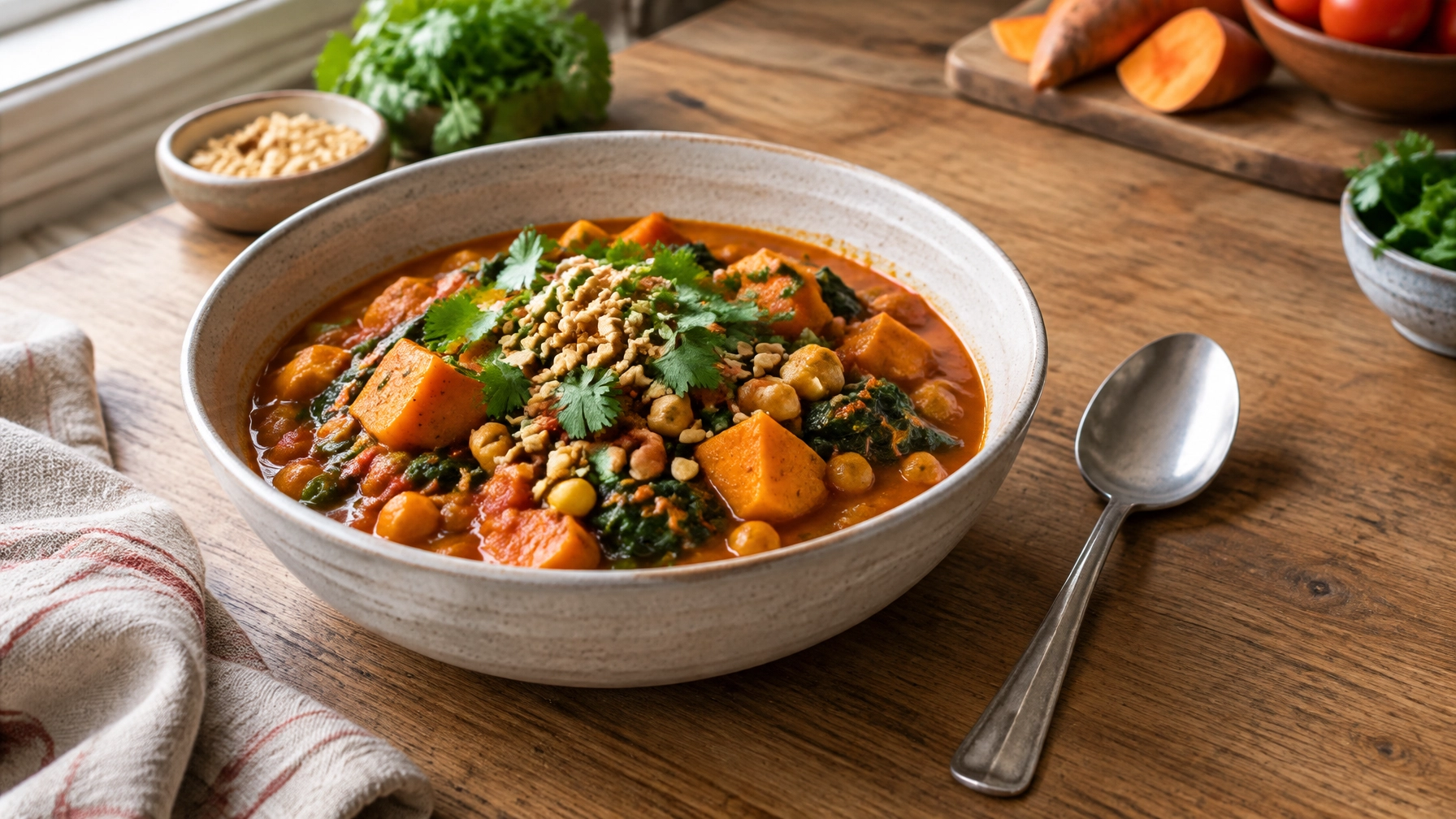
This vegan sweet potato and peanut stew is a filling one-pot meal made with sweet potatoes, chickpeas, tomatoes, peanut butter, greens, and warming spices.
Overview
This stew uses one large pot and straightforward ingredients. Sweet potatoes provide a soft, naturally sweet base. Peanut butter adds richness and helps thicken the tomato broth. Chickpeas provide texture and plant protein, while leafy greens are added near the end to retain their colour and structure.
The recipe is suitable for vegan diets. It can be served on its own, with rice, or with warm flatbread.
The cooking method follows a standard one-pot sequence: soften the aromatics, toast the spices, simmer the vegetables, then add the greens and final seasoning. Cutting the sweet potatoes into evenly sized cubes is necessary for consistent cooking.
Tips
Cut the sweet potatoes evenly. Cubes of approximately 2 cm will usually cook in the stated time. Larger pieces may remain firm while smaller pieces break down.
Use smooth peanut butter. Smooth peanut butter incorporates into the broth more easily than a coarse variety. Natural peanut butter can be used, but stir it thoroughly before measuring because the oil often separates.
Control the consistency. For a thicker stew, simmer uncovered for several minutes. For a thinner consistency, add 50 to 100 ml of extra vegetable stock.
Stir regularly. Peanut butter can settle and adhere to the base of the pot. Stirring every few minutes reduces this risk.
Balance the finish. The stew contains sweet, savoury, spicy, and rich elements. Lime juice provides acidity at the end and prevents the flavour from becoming heavy.
Check the stock. Use vegetable stock labelled vegan if strict avoidance of animal products is required.
Variations
Nut-free version: Replace the peanut butter with sunflower seed butter or pumpkin seed butter. Check the label and manufacturing information carefully if the dish is being prepared for someone with a peanut allergy.
Use red lentils: Replace the chickpeas with 150 g rinsed red lentils. Add the lentils with the stock and allow them to cook during the main simmer. The result will be softer and thicker.
Add coconut milk: Replace 250 ml of the vegetable stock with coconut milk for a creamier stew. Reduce the peanut butter slightly if a lighter flavour is preferred.
Increase the heat: Add extra cayenne, fresh chilli, or a teaspoon of chilli flakes with the dry spices.
Add more vegetables: Diced courgette, carrots, green beans, or chopped tomatoes can be added with the sweet potatoes. Adjust the stock if the pot becomes crowded.
Serve with grains: Rice is suitable, but quinoa, millet, or couscous can also be used. Cook the grain separately to prevent it absorbing too much of the stew liquid.
Storage
Allow leftovers to cool promptly, then transfer them to a sealed container. Refrigerate for up to 3 days. Reheat in a saucepan over medium-low heat, adding a small amount of stock or water if the stew has thickened.
The stew can also be frozen in individual portions for up to 3 months. Defrost in the refrigerator before reheating. Stir thoroughly because the peanut butter and stock may separate slightly after freezing.
Safety
Peanuts are a recognised food allergen. Do not serve this recipe to anyone with a peanut allergy unless every peanut-containing ingredient has been removed and a suitable substitute has been verified.
For general information about food allergy symptoms, ingredients, and emergency responses, consult the NHS food allergy guidance. Always follow an individual allergy action plan where one has been provided.
For additional ideas using this root vegetable, see the BBC Good Food sweet potato recipe collection.
FAQ
Can I make this stew without chickpeas?
Yes. Replace the chickpeas with red lentils, black beans, or cooked butter beans. If using red lentils, add them at the same time as the vegetable stock so they cook fully.
Can I use crunchy peanut butter?
Yes, although the finished texture will contain small peanut pieces. Smooth peanut butter creates a more uniform broth and is easier to whisk into the stock.
Is this stew gluten-free?
The ingredients listed are naturally gluten-free, but packaged vegetable stock, curry powder, and peanut butter should be checked for gluten-containing ingredients or cross-contamination statements.
Can I prepare it in advance?
Yes. The flavour usually becomes more developed after resting. Cool and refrigerate the stew, then reheat gently on the hob. Add stock if required.
Why is my stew too thick?
Sweet potatoes, chickpeas, and peanut butter all absorb liquid. Stir in hot vegetable stock a little at a time until the required consistency is reached.
Can I make it without oil?
Yes. Cook the onion in a splash of vegetable stock or water instead of oil. Add small amounts as needed to prevent sticking.
What should I serve with it?
Serve the stew with rice, quinoa, flatbread, or steamed greens. Lime juice and fresh coriander provide a sharp finish against the rich broth.