Recipe
Serves
12 1×
Serves 12 cakes
Ingredients
Method
- Add the flour, salt and mixed spice to a mixing bowl. Rub in the cold butter with your fingertips until the mixture resembles fine breadcrumbs. Work quickly so the butter does not become warm.
- Stir in the caster sugar, currants and lemon zest, if using.
- Add the beaten egg and mix until the dough begins to hold together. Press it gently into a single mass. If it remains dry and crumbly, add milk a teaspoon at a time, using only enough to bind it. The dough should be firm, not sticky.
- Lightly flour a work surface. Roll or press the dough to about 5 mm thick. Cut 5 cm rounds, gathering and re-rolling scraps once if needed. Avoid adding excess flour, which can make the cooked cakes dry.
- Heat a bakestone, griddle or heavy-based frying pan over medium heat. Lightly grease the cooking surface. It is ready when a small piece of dough sizzles gently without browning immediately.
- Cook the cakes in batches, leaving space between them. Cook for about 2–3 minutes on each side, turning once, until both sides are golden and the centres are cooked through. Adjust the heat if the surfaces darken too quickly.
- Transfer the cooked cakes to a plate or wire rack. Dust with caster sugar while warm. Serve warm or allow to cool before storing.
Welsh Cakes (Griddle Scones with Currants)
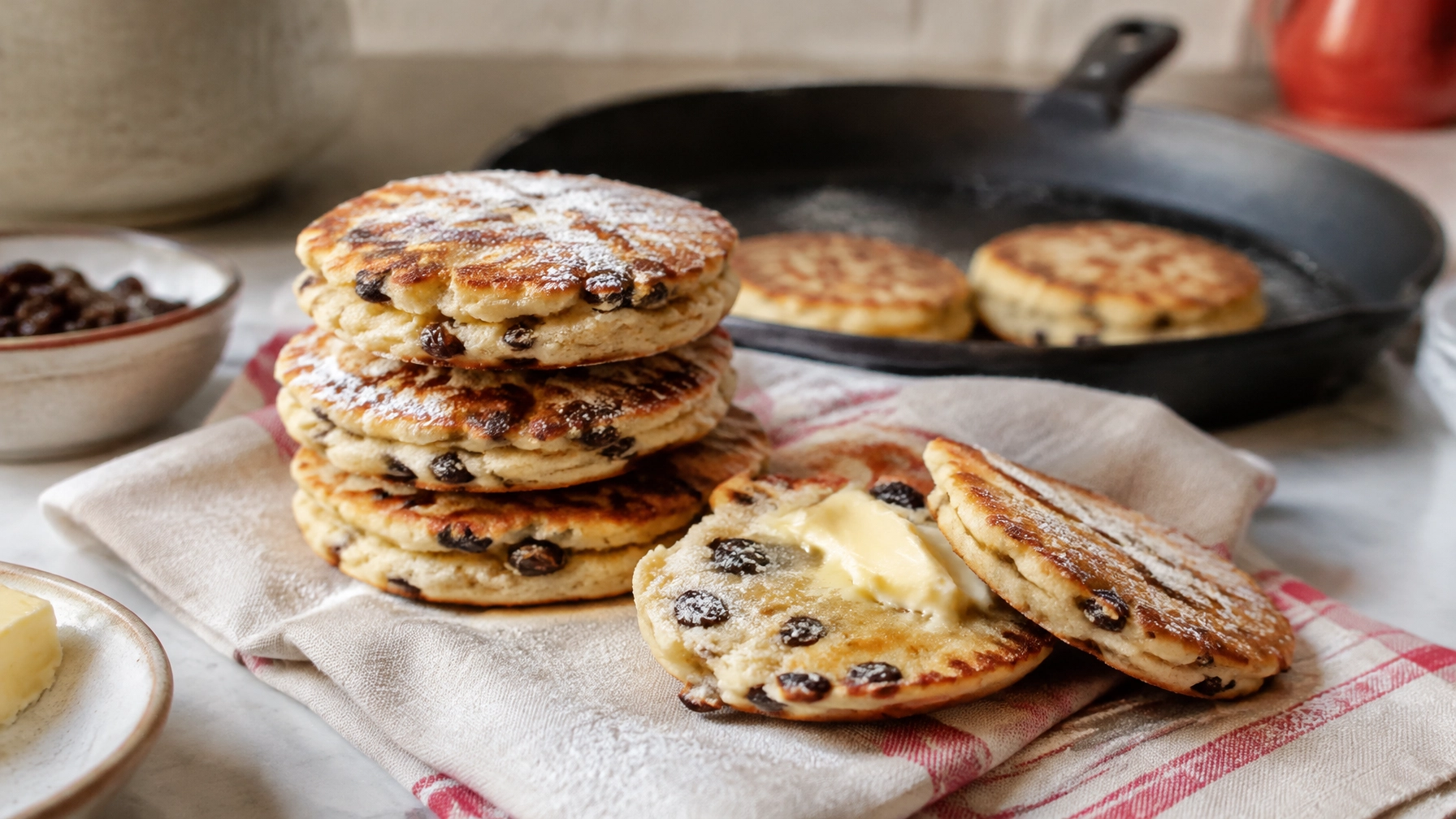
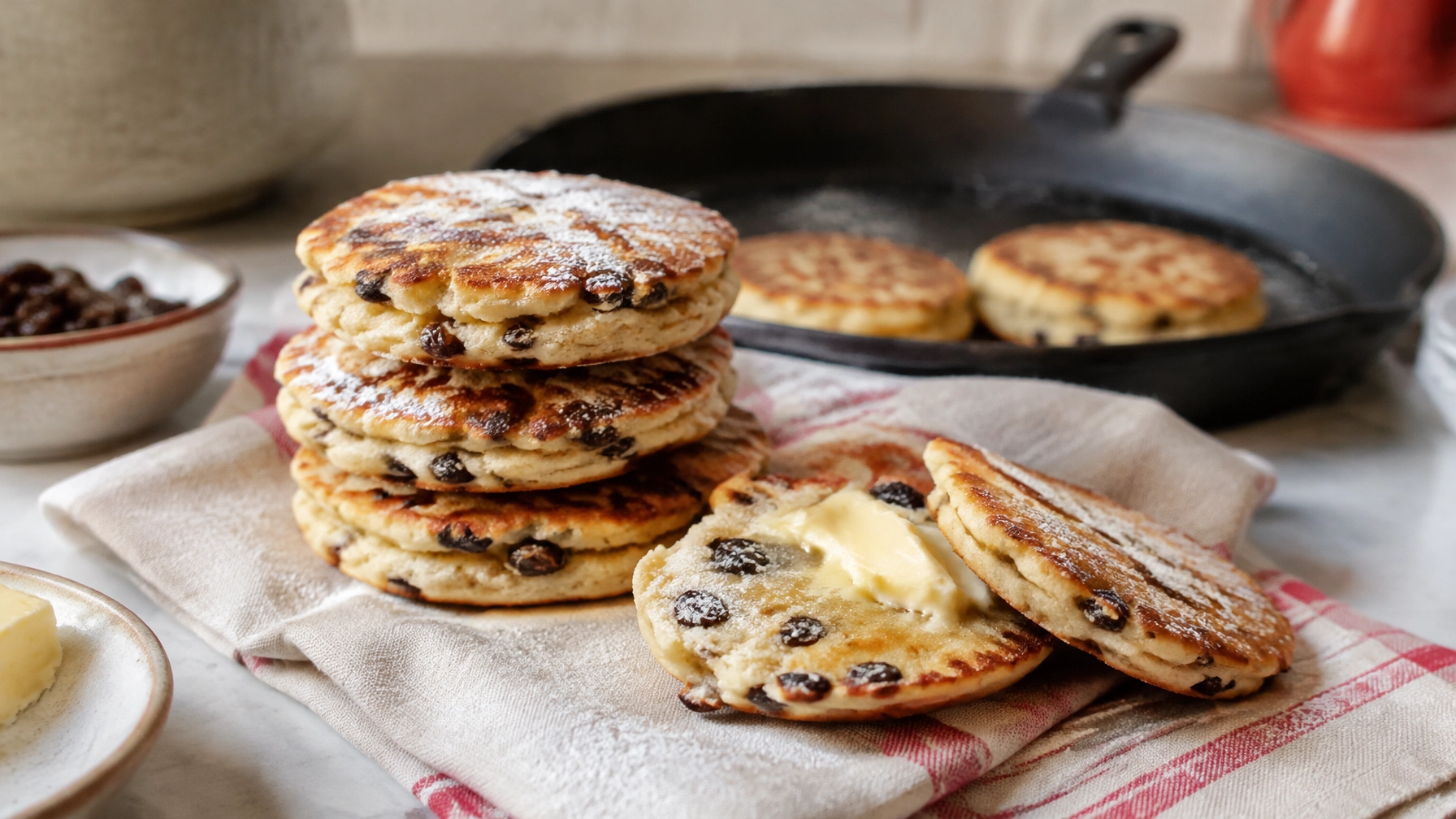
Welsh cakes are lightly sweetened, currant-studded griddle cakes that cook on the stovetop until golden on both sides.
Welsh cake (noun): a small, flat cake made with flour, fat, sugar and dried fruit, cooked on a griddle or heavy pan.
Welsh cakes are sometimes described as griddle scones, but they are cooked differently from oven-baked scones. The dough is rolled thin, cut into rounds and cooked over moderate heat. The result should be tender in the centre, with a lightly browned surface and currants throughout.
This recipe makes 12 cakes. Allow about 20 minutes for preparation and 20 minutes for cooking. Keep the pan at a steady medium heat: if it is too hot, the outside may brown before the centres are cooked.
Recipe
Yield
12 cakes
Times
Prep: 20 minutes
Cook: 20 minutes
Total: 40 minutes
Tips
- Control the heat. Medium heat is a starting point; pans vary. A cake that colours in under a minute is likely cooking too fast. Lower the heat and give the centre time to cook.
- Check the first cake. Treat it as a test for the pan temperature and cooking time. Break it open after cooking. The middle should not look raw or doughy.
- Keep the dough even. A consistent thickness helps the cakes cook at the same rate. Thicker rounds may need more time; thinner rounds can dry out quickly.
- Use a light touch. Mix only until the dough comes together. Overworking it can make the cakes firm.
- Dust while warm. A small amount of caster sugar adheres best while the surface is still warm. Add more to taste, rather than coating heavily.
- Cook in batches. Crowding the pan can lower its temperature and make the cakes cook unevenly. Wipe away any burnt flour between batches.
Variations
- Citrus: Add the zest of a whole lemon or use orange zest instead.
- Spice: Use cinnamon in place of mixed spice, or reduce the amount for a milder flavour.
- Dried fruit: Replace some or all of the currants with sultanas. Chop larger fruit so it is distributed evenly.
- Alternative fat: Traditionally, recipes may use lard or a mixture of butter and lard. Use the same total quantity of fat; the flavour and texture will differ.
- Plain finish: Omit the final sugar dusting if a less sweet surface is preferred.
Storage
Cool the cakes completely before storing. Keep them in an airtight container at room temperature and use within three days for best texture. To serve warm, reheat briefly in a dry pan over low heat. Avoid extended reheating, which can dry them out.
The uncooked dough can be wrapped and refrigerated for up to one day. Let it soften slightly before rolling. Cut rounds can also be frozen in a single layer, then transferred to a sealed container. Cook from frozen over a lower heat, allowing extra time for the centres to cook.
FAQ
Are Welsh cakes the same as scones?
No. Both use a flour-based dough, but Welsh cakes are rolled thin and cooked on a griddle or pan. Scones are usually thicker and baked in an oven. Welsh cakes are also typically studded with currants.
Can I make Welsh cakes without a bakestone?
Yes. Use a heavy-based frying pan or griddle that heats evenly. Avoid a very thin pan, which may develop hot spots and brown the cakes unevenly.
Why are my Welsh cakes burnt outside but raw inside?
The cooking surface is probably too hot, or the cakes are too thick. Lower the heat and check that the dough is rolled to about 5 mm. Cook a test cake before continuing with the batch.
Why is the dough crumbly?
The egg may not have fully bound the flour and fat, or the flour may be especially dry. Press the mixture together first. If it still will not hold, add a small amount of milk, one teaspoon at a time.
Can I prepare the dough in advance?
Yes. Wrap it and refrigerate for up to one day. Chilling firms the dough, so leave it at room temperature briefly if it is too hard to roll.
Can Welsh cakes be frozen after cooking?
Yes. Cool them completely, then freeze in a sealed container with baking paper between layers. Defrost at room temperature and warm briefly in a dry pan if desired.
When are the cakes cooked through?
Both sides should be golden, and the centre should be set rather than wet or doughy. Cooking time varies with pan temperature and thickness, so use colour and the first test cake as guides.