Recipe
Ingredients
Method
- Preheat the oven to 230°C conventional or 210°C fan . Grease a deep 20 cm round tin. Line the base and sides with baking parchment, using enough parchment to extend at least 5 cm above the rim. If necessary, use two overlapping sheets.
- Place the softened cream cheese and caster sugar in a large mixing bowl. Beat on medium speed until smooth. Scrape down the sides of the bowl to remove any unmixed cream cheese.
- Add the eggs one at a time. Beat briefly after each addition and wait until the first egg is incorporated before adding the next.
- Add the double cream, vanilla extract, and salt. Mix on low speed until the batter is uniform. Do not whip air into the mixture unnecessarily.
- Sift the plain flour over the bowl. Mix on low speed only until no dry flour remains. Scrape the base and sides of the bowl once more.
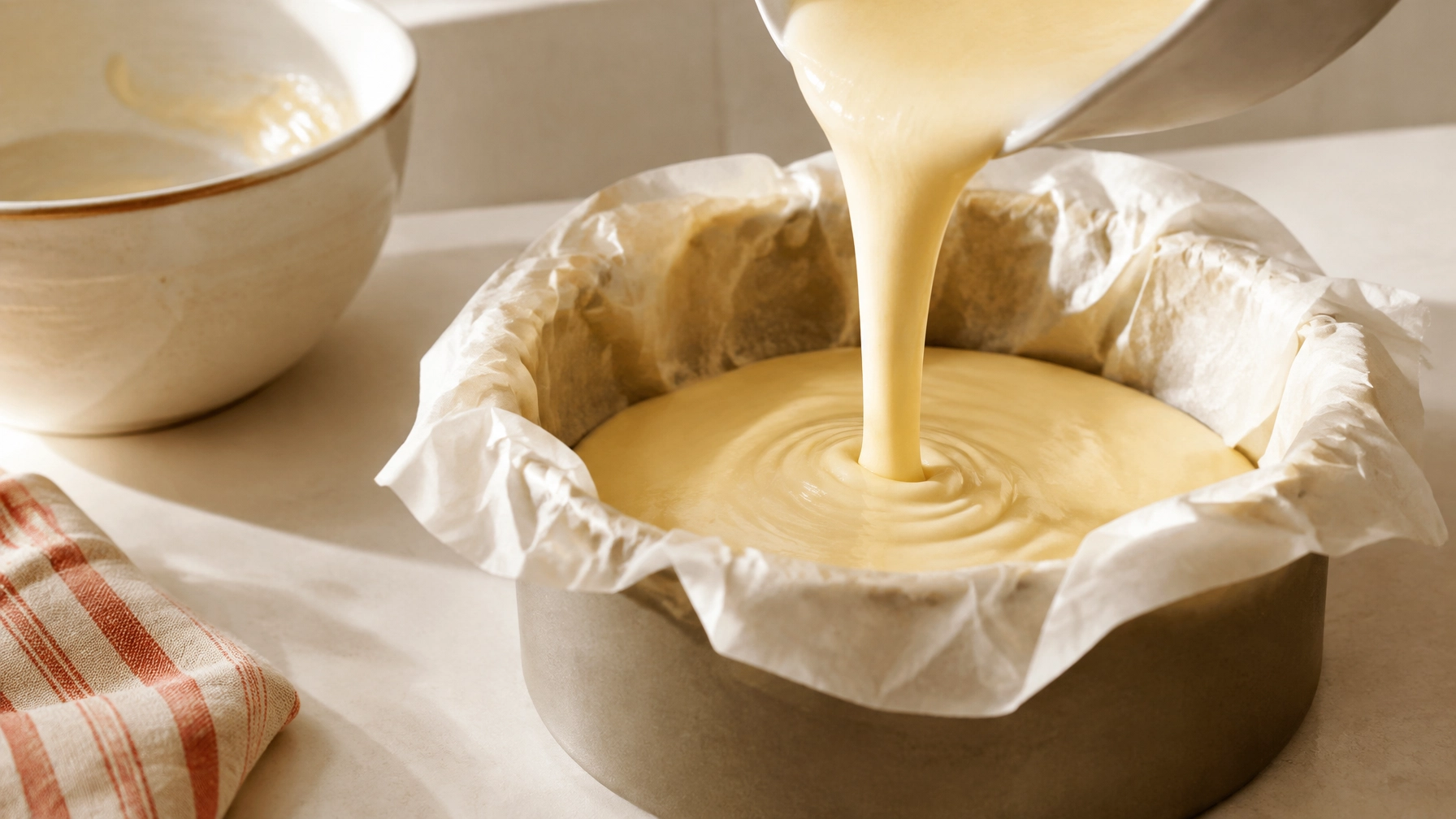
- Pour the batter into the prepared tin. Tap the tin gently on the work surface to release large air bubbles. Do not flatten the parchment or remove the overhang.
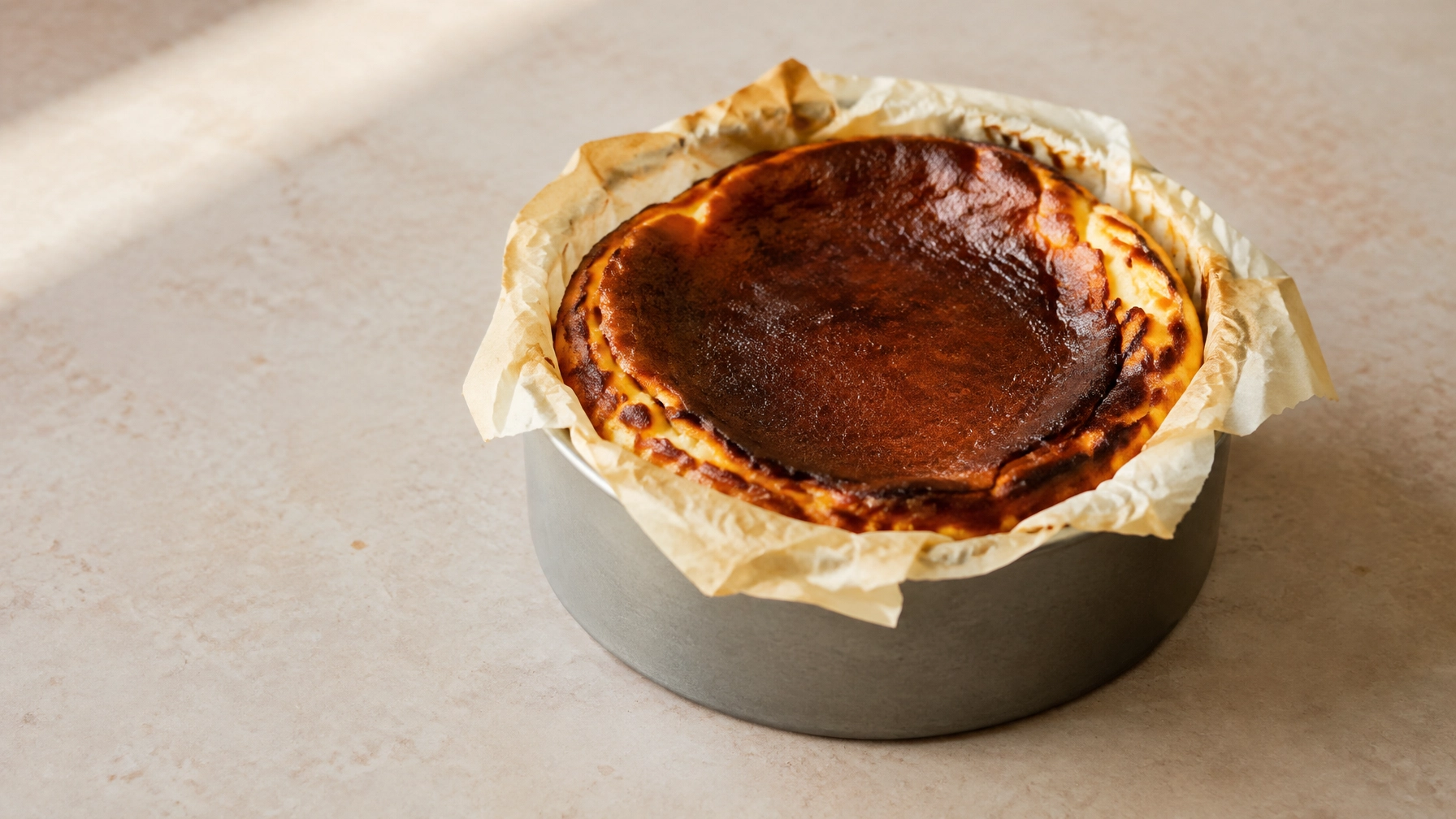
- Bake on the middle shelf for 35 to 40 minutes . The top should be dark brown and the edges should look set. The centre must retain a pronounced wobble when the tin is moved gently.
- Remove the cheesecake from the oven. Cool in the tin at room temperature for 1 hour . The cheesecake will sink as it cools.
- Cover the tin loosely and refrigerate for at least 4 hours . Do not attempt to remove the cheesecake before it has chilled.
- Lift the cheesecake from the tin using the parchment. Peel away the paper, slice with a clean sharp knife, and serve chilled or after 20 to 30 minutes at room temperature.
Basque Burnt Cheesecake (No Water Bath)
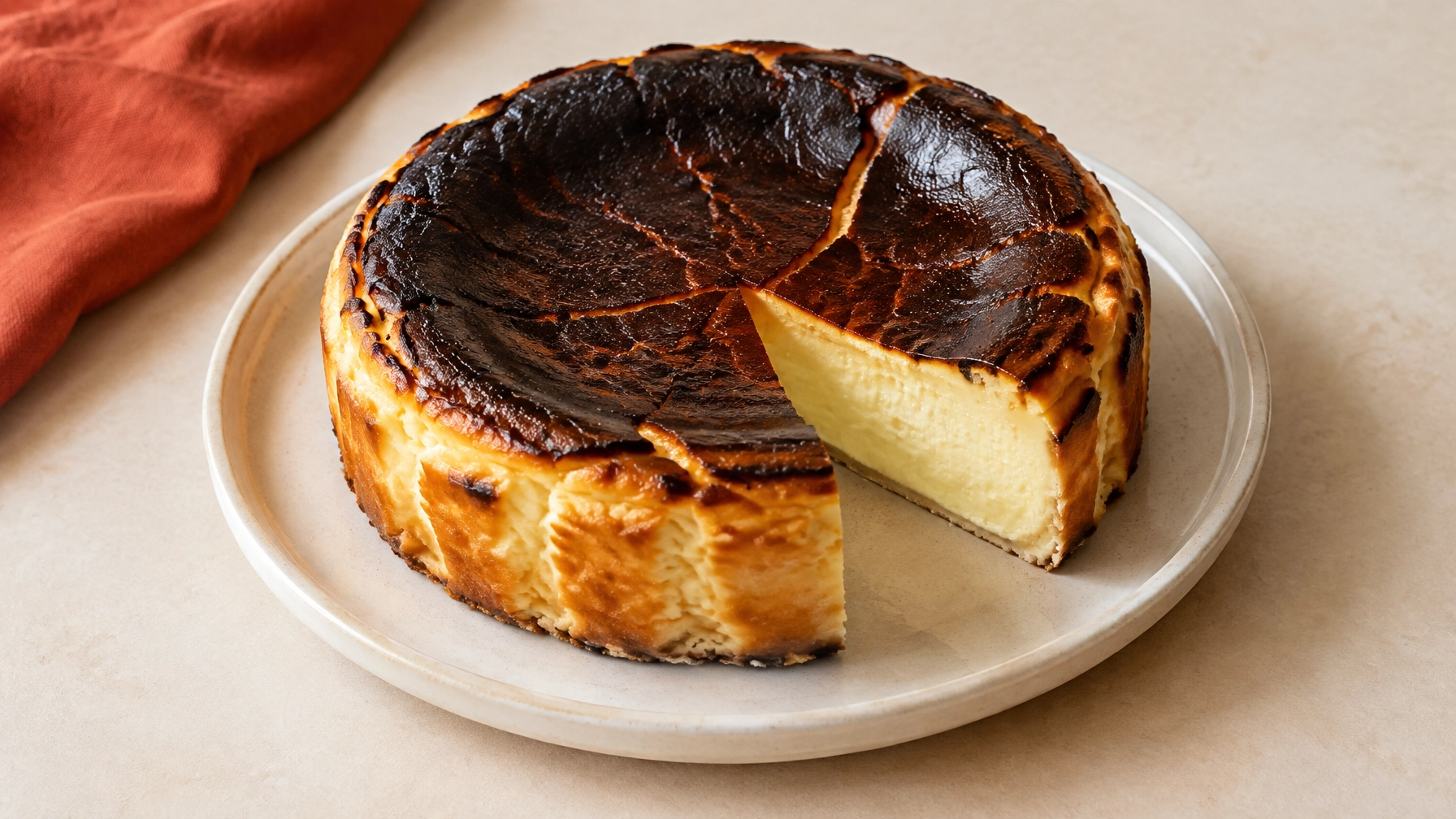
A proper Basque burnt cheesecake is baked hot, without a water bath, until the top is deeply caramelised and the centre remains soft enough to wobble.
Definition
Basque burnt cheesecake (noun): a crustless baked cheesecake with a dark, caramelised surface and a soft, creamy centre.
The method is deliberately direct. There is no biscuit base, no water bath, and no requirement for a perfectly smooth surface. Cracks, folds, uneven browning, and a pronounced collapse as the cake cools are normal outcomes.
The surface should become dark brown, approaching black in places. This is not evidence of failure. It is the defining result of the recipe.
Result
This cheesecake has three distinct characteristics:
- A dark, bitter-sweet top formed by high heat.
- Firm edges that support each slice.
- A dense but creamy centre that sets further during chilling.
The batter is made with full-fat cream cheese, double cream, eggs, caster sugar, and a small quantity of plain flour. The flour provides enough structure for clean slicing without removing the soft texture associated with Basque cheesecake.
A deep 20 cm round tin is recommended. The cheesecake rises significantly during baking and then settles as it cools. The parchment must extend above the rim to contain the mixture and provide a lifting point later.
Control
The oven temperature is the main control point. Use a fully preheated oven at 230°C conventional or 210°C fan. The high temperature browns the surface quickly while the centre remains under-set.
A water bath is not used. Water surrounds a cheesecake with gentle, humid heat. That method is useful for pale, evenly set cheesecakes, but it is not appropriate here. Basque cheesecake requires direct oven heat to create its dark top.
The cake is ready when:
- The top is deeply browned.
- The edges are visibly set.
- The centre still moves when the tin is gently shaken.
- The surface has risen and may have cracked.
Do not wait for the centre to become firm in the oven. A fully firm centre at this stage will usually produce a dry or heavy cheesecake after chilling.
Ovens vary. Begin checking after 35 minutes. If the surface is still pale, continue baking in short intervals. If the top is already dark but the centre is moving substantially, remove the cheesecake and allow residual heat to complete the setting process.
Cooling
The cooling period is part of the recipe rather than an optional waiting stage.
Leave the cheesecake in its tin at room temperature for 1 hour after baking. It will deflate during this period. Do not press the surface down and do not remove the parchment while the cake is hot.
Transfer the cooled cheesecake to the refrigerator for at least 4 hours. This produces a firm, sliceable texture while retaining a creamy centre. An overnight chill is acceptable if the cheesecake is being prepared in advance.
The full stated timing includes preparation, baking, room-temperature cooling, and refrigeration.
Service
Remove the cheesecake from the refrigerator and lift it from the tin using the parchment overhang. Peel the parchment away carefully.
For neat slices, use a sharp knife. Wipe the blade between cuts. The cheesecake may be served directly from the refrigerator for a dense texture, or left at room temperature for 20 to 30 minutes for a softer centre.
Plain service is sufficient. The caramelised top provides the principal flavour contrast. Additional sauces, fruit, or cream are not required.
FAQ
Why is there no biscuit base?
A traditional Basque burnt cheesecake is crustless. The dark surface and creamy interior are the primary structural and textural elements.
Why did the cheesecake crack?
Cracking is expected. The cake rises rapidly in the hot oven, then contracts as it cools. The parchment and uneven surface are part of the normal appearance.
Can the top become too dark?
The top may become very dark without the interior being burnt. If it starts to blacken substantially before the centre has set, cover the top loosely with foil for the final few minutes. Do not seal the foil tightly against the surface.
Why is the centre still liquid after chilling?
A slight custardy softness is expected, but the centre should not flow when sliced. If it remains liquid after 4 hours, return the cheesecake to the tin and bake it again at 180°C for 10 to 15 minutes. Cool and chill it again.
How long does it keep?
Keep the cheesecake covered in the refrigerator and consume it within 3 to 4 days. Do not leave it at room temperature for extended periods.
Can it be frozen?
Yes. Freeze individual slices on a lined tray until firm, then transfer them to an airtight container. Defrost in the refrigerator before serving. The texture may be slightly denser after freezing.
Timing
- Prep time: 20 minutes
- Cook time: 40 minutes
- Cooling time: 1 hour
- Chill time: 4 hours
- Total time: 6 hours
- Servings: 10 slices