Recipe
Servings
Servings 1×
Ingredients
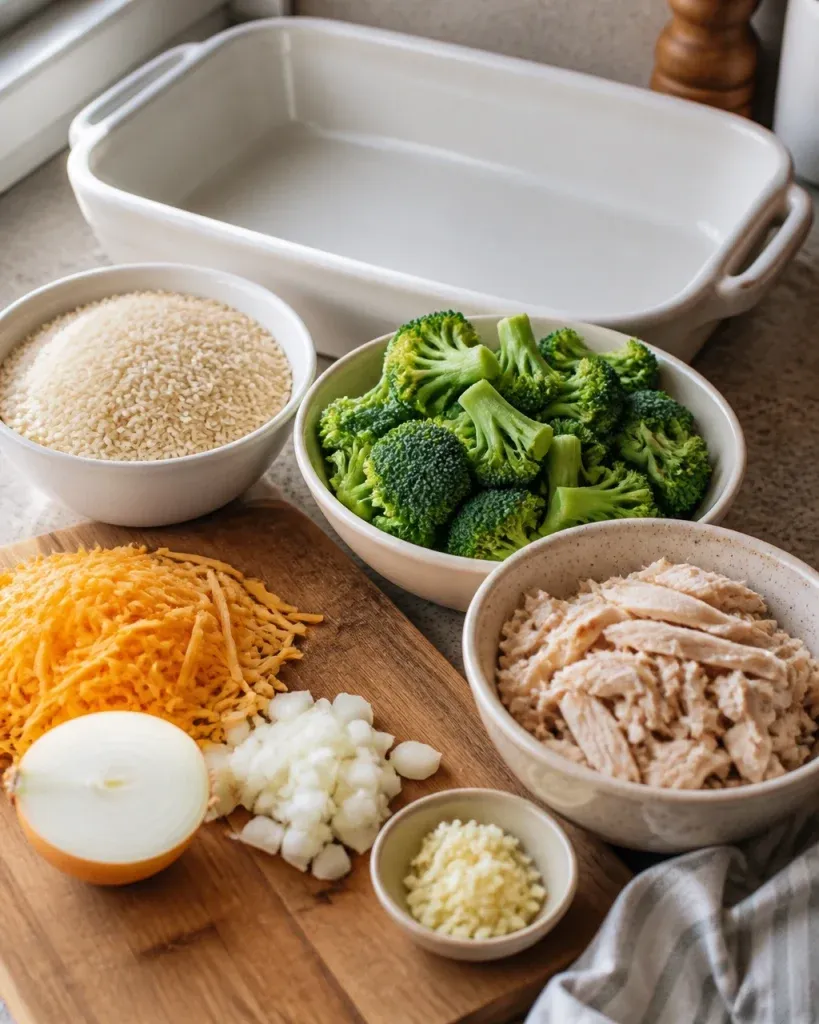
- Chicken
- Lentils
- White beans
- Beans
- Rice
- Greek yogurt
- Bread
- Broccoli
- Peas
- Garlic
- Mustard
- Cream
- Cheddar
- Salt
- Black pepper
Method
- Use cooked, cooled rice when you want the most reliable result.
- Spread it evenly through the dish rather than leaving dense clumps, and the sauce will coat every grain instead of collecting in puddles.
- Use moderate heat and avoid baking the casserole far beyond the point when it is hot throughout.
- Keep the bake time controlled, and add a little extra starch from the rice rather than compensating with a long, hot bake.
- Cut broccoli into fairly small, bite-sized pieces so it distributes evenly.
- Use chopped or shredded chicken rather than large pieces.
Some dinners earn their place in the weekly rotation by being spectacular. This one earns it by being dependable, filling, affordable, and very good at turning leftovers into something everyone wants seconds of. This cheesy broccoli and chicken rice casserole brings together pantry staples, a creamy sauce, tender vegetables, and a browned cheese topping in one comforting dish. It is exactly the kind of practical cooking I want on a busy night: simple, satisfying, and not precious.
Why This Casserole Works: The Science of Comfort Food
Let rice provide the body
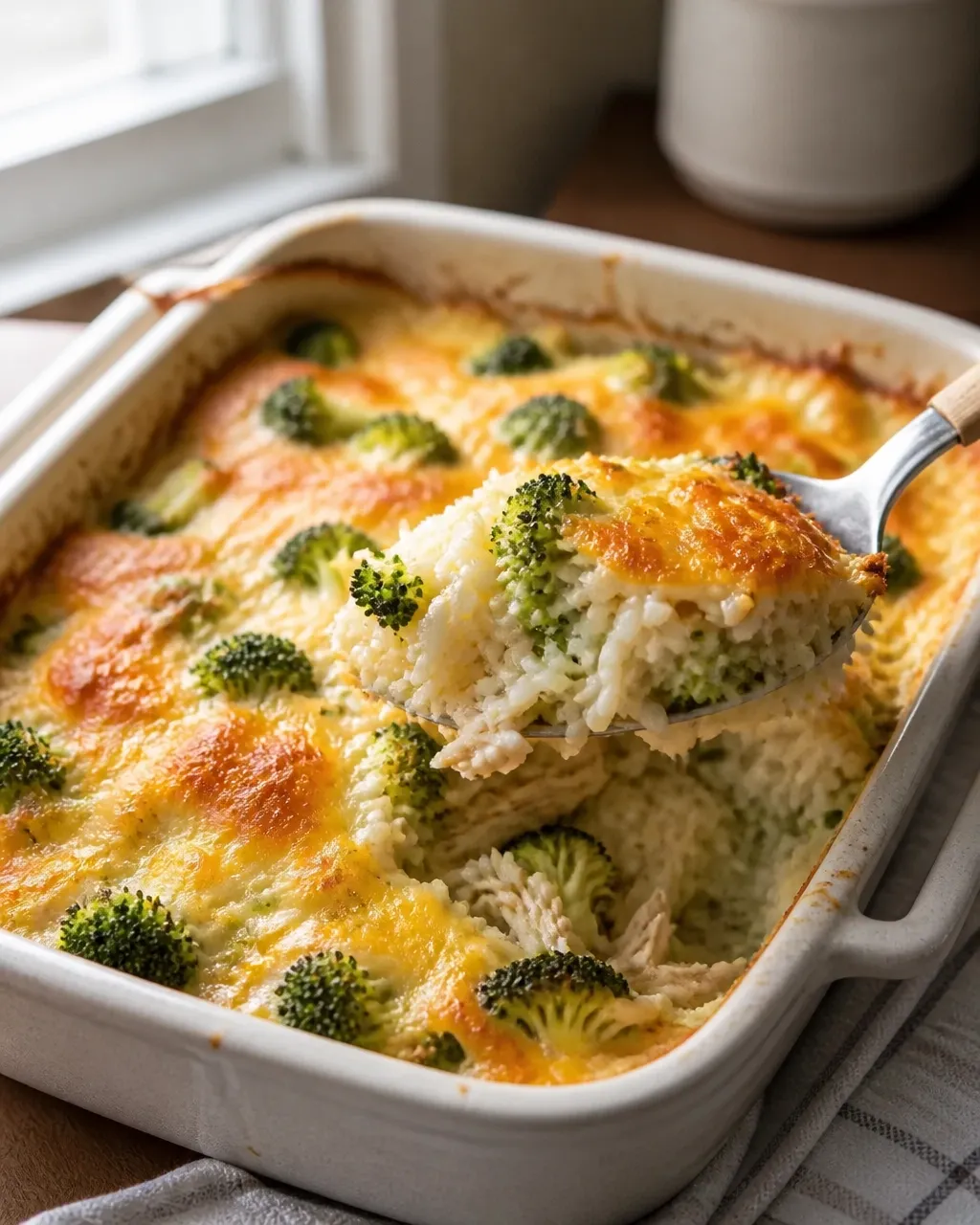
Rice is more than a cheap way to make dinner filling. It is the structure that holds the casserole together.
As rice heats in moisture, its starch granules absorb water, swell, and gelatinize. That process softens the grains and thickens the surrounding sauce. With cooked rice, most of this work has already happened, so the oven mainly needs to warm the mixture and bring the flavors together. With uncooked rice, the liquid balance becomes much less forgiving because the grains need enough moisture to hydrate properly.
Use cooked, cooled rice when you want the most reliable result. Leftover rice is especially useful because it saves both money and cooking time. Spread it evenly through the dish rather than leaving dense clumps, and the sauce will coat every grain instead of collecting in puddles.
Do not treat the rice-to-sauce balance as a suggestion. Too much rice creates a dry, crumbly bake. Too much liquid gives you casserole soup. The recipe card handles the exact proportions; your job is to keep the rice loose and evenly distributed.
Build a stable creamy sauce
Creamy casseroles work because fat and water are persuaded to stay together. Dairy, condensed soup, sour cream, and similar ingredients contain proteins or emulsifiers that help create a smoother mixture. These ingredients surround tiny droplets of fat and keep them dispersed through the watery portion of the sauce.
That stability matters because cheese naturally wants to separate when it gets very hot. Its fat can leak out while the milk proteins tighten into rubbery clumps. A creamy base gives the cheese somewhere to mingle, reducing the chance of a greasy layer on top and a grainy sauce underneath.
Use moderate heat and avoid baking the casserole far beyond the point when it is hot throughout. You are not trying to punish it into submission. Once the edges bubble and the cheese has melted, it is ready.
Low-fat dairy can work, but expect a slightly less silky texture. With less fat, the sauce may separate more easily. Keep the bake time controlled, and add a little extra starch from the rice rather than compensating with a long, hot bake.
Treat cheese as a flavor tool, not just a topping
Cheese performs three jobs here: it adds salt and savory flavor, gives the sauce richness, and creates the browned top everyone quietly fights over.
Put some cheese into the casserole so it melts through the rice and chicken. Save some for the surface so it forms a golden, flavorful crust. Using only a topping gives you a cheese lid but not much cheesy flavor in the middle. Using all the cheese in the sauce gives you a creamy dish without that satisfying browned finish.
Sharp cheddar brings plenty of flavor, so you can combine it with a milder store-brand cheese to keep the cost down. A small amount of stronger cheese often does more work than a large amount of bland cheese.
Watch the final minutes closely. Browning comes from heat-driven reactions involving proteins and sugars, which create deeper toasted flavors. A little color is delicious. A dark, dried crust is merely cheese wearing a tiny burnt hat.
Keep broccoli bright and pleasantly firm
Broccoli adds color, freshness, and a useful contrast to the creamy rice. It also needs a little protection from overcooking.
Frozen broccoli is a smart budget choice because it is usually blanched before freezing. That means it has already been partially softened and only needs to heat through. Fresh broccoli may need a brief pre-cook, especially if the florets are large.
Cut broccoli into fairly small, bite-sized pieces so it distributes evenly. Large chunks can remain cold in the center while the casserole edges become overly hot. Very small pieces disappear into the sauce and lose their texture.
Do not worry if the broccoli is not perfectly bright green after baking. This is dinner, not a vegetable pageant. Aim for tender florets with enough bite to stop the casserole from feeling completely soft.
Protect the chicken from drying out
Chicken is already cooked before it enters many casserole versions, which means it only needs reheating. That is convenient, but it also creates the main danger: dry, stringy meat.
Use chopped or shredded chicken rather than large pieces. Smaller pieces distribute more evenly and get coated with sauce. Leftover roasted chicken works beautifully, as does canned chicken when you are building a genuinely low-cost meal. Drain canned chicken well so extra water does not thin the sauce.
Fold the chicken through the creamy mixture instead of leaving it exposed on top. The sauce acts as a moisture barrier, while the rice helps hold onto some of that moisture during baking.
Give the casserole a short rest
Do not serve the casserole the instant it leaves the oven. Let it rest briefly.
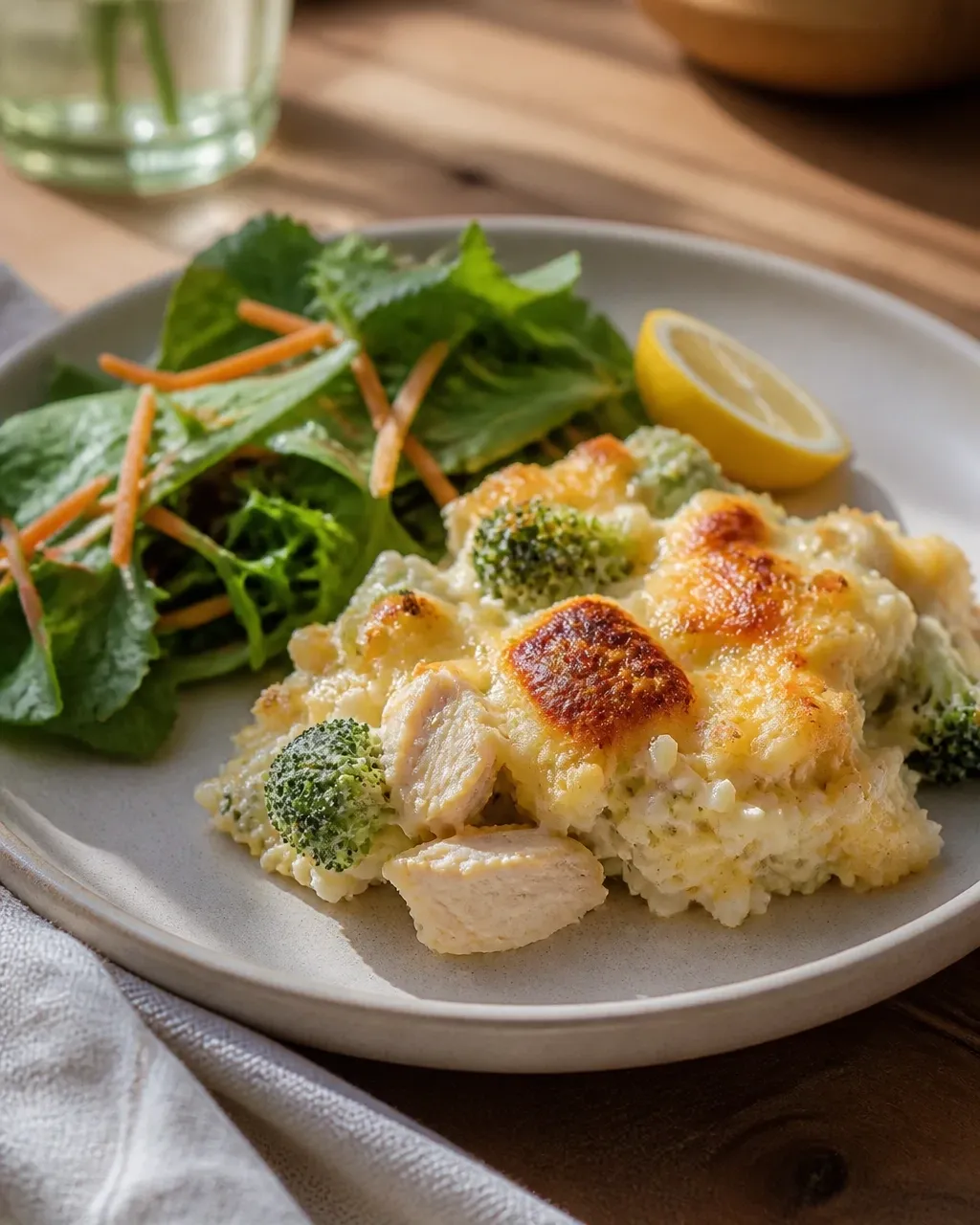
During the rest, the starches continue absorbing loose moisture and the melted cheese begins to set. This makes the portions easier to scoop and gives the sauce a chance to settle into the rice. The difference is small but noticeable: rested casserole looks cohesive, while rushed casserole tends to spread across the plate.
Use that few minutes to wash the mixing bowl, toss a salad, or simply locate the serving spoon that has mysteriously vanished again.
For another pantry-friendly Cookpedia idea, compare the starch-and-sauce logic in our Budget-Friendly Red Lentil Dahl. If you are planning more oven dinners, browse the dinner baking collection.
Affordable Variations That Still Taste Complete
Keep the core balance, starch, protein, vegetable, creamy sauce, and acidity, and change only one or two elements at a time.
Make it extra economical
Stretch the chicken with more broccoli, rice, or a modest amount of beans. White beans add protein and a soft, creamy texture without competing with the cheese. Use leftover chicken, canned chicken, or the meat picked from a roast chicken carcass. Every option works; just chop it small and drain excess liquid.
Use frozen broccoli when fresh is expensive or looking tired. Store-brand condensed soup and cheese are also perfectly acceptable here. The sauce is doing enough culinary heavy lifting that it does not need a luxury label.
Make it lighter
Replace part of the creamy base with plain yogurt, but stir it in carefully and avoid prolonged high heat. Yogurt can curdle when overheated because its proteins tighten and squeeze out moisture. Keep the oven moderate and use enough cheese to maintain a smooth, savory finish.
Add extra broccoli or another quick-cooking vegetable such as peas. This is an easy way to turn the dish into one of your dependable healthy dinner ideas without making it feel like a punishment.
Change the flavor direction
Add garlic, black pepper, smoked paprika, or a little mustard to sharpen the cheese. Stir in leftover roasted peppers for sweetness, or use a peppery cheese if you have a small piece in the fridge.
For a crunchy topping, use crushed crackers, stale bread crumbs, or even a few crushed cornflakes. Mix the topping with a small amount of fat so it browns instead of drying out. Keep it light; a thick layer can block steam and make the surface seem dry.
Side Dish Pairings: Add Contrast, Not More Heaviness
Pair this casserole with something crisp, fresh, or acidic. A simple green salad dressed with lemon juice or vinegar cuts through the creamy cheese and refreshes the palate. Add sliced cucumber, shredded carrot, or tomatoes for crunch and color.
Steamed green beans work well too, especially with a squeeze of lemon. Their firmer texture gives the soft casserole a useful counterpoint. For a colder evening, serve a sharp cabbage slaw with vinegar dressing; its crunch keeps the meal from becoming one long spoonful of softness.
Skip rich garlic bread, creamy potatoes, or another cheese-heavy side. The casserole already contains starch and richness in abundance. If you want bread, choose a small piece of crusty whole-grain bread for texture rather than extra butter.
For more quick family meals, build the plate around one comforting main and one bright side. That is usually enough.
Frequently Asked Questions
What if my casserole turns out watery?
Check the rice first. Wet or freshly cooked rice can carry more surface moisture into the dish, while thawed frozen broccoli can release water as it heats. Drain broccoli well and let hot rice steam briefly before mixing.
Also avoid adding extra liquid simply because the mixture looks thick before baking. The sauce loosens as it warms, and the broccoli releases moisture. If the finished casserole is only slightly loose, let it rest longer. The starch will continue absorbing liquid.
What if the rice is dry?
You likely have too much rice for the amount of sauce, or the casserole baked too long. Dry rice cannot be repaired perfectly after baking, but a spoonful of warm broth or milk stirred into each serving can help.
Next time, measure the cooked rice rather than guessing by container size. Keep the casserole covered for part of the bake if your oven runs hot, then uncover it near the end to brown the cheese.
Can I use uncooked rice?
Yes, but do not swap it into a cooked-rice version without changing the liquid and cooking time. Uncooked rice needs enough moisture and heat to gelatinize its starch. It also expands as it cooks, so the dish needs room and a carefully tested ratio.
For the most dependable weeknight result, use cooked rice and reserve uncooked rice for a version written specifically around it. Mixing the two methods is how casseroles develop mysterious crunchy patches.
What if my cheese becomes oily?
Natural cheese can separate when it is exposed to excessive heat, especially if the casserole is baked too long. Use part of the cheese inside the sauce, keep the oven temperature moderate, and stop baking as soon as the center is hot and the top is melted.
A blend of cheddar and a smooth-melting cheese can improve texture. Grate cheese yourself if convenient, but do not panic if you use pre-shredded cheese; the casserole will still be dinner.
Can I prepare it ahead of time?
Yes. Assemble it, cover it tightly, and refrigerate it until you are ready to bake. Allow extra time if it goes straight from the refrigerator to the oven, and check that the center is hot before serving.
Keep the crunchy topping separate until baking so it does not absorb moisture and become soft. Add the topping just before the dish goes into the oven.
Can I freeze leftovers?
Freeze cooled portions in airtight containers. Thaw them in the refrigerator for the best texture, then reheat gently. Rice can become slightly firmer after freezing, while broccoli may soften, but the creamy sauce helps protect the overall dish.
Reheat only what you plan to eat. Repeated heating dries the chicken and encourages the cheese sauce to separate.
Is this suitable for meal prep?
Absolutely. Portion it with a fresh salad or steamed vegetables and refrigerate promptly. The flavors often improve after a day because the sauce settles into the rice.
Use this as one of your reliable healthy dinner ideas when you want filling food without buying several separate proteins and side dishes. And if you usually search for “air fryer recipes dinner,” save this oven-friendly casserole for the nights when you want one baking dish, a bubbling cheese top, and leftovers that actually look appealing tomorrow.