Recipe
Servings
Servings 1×
Ingredients
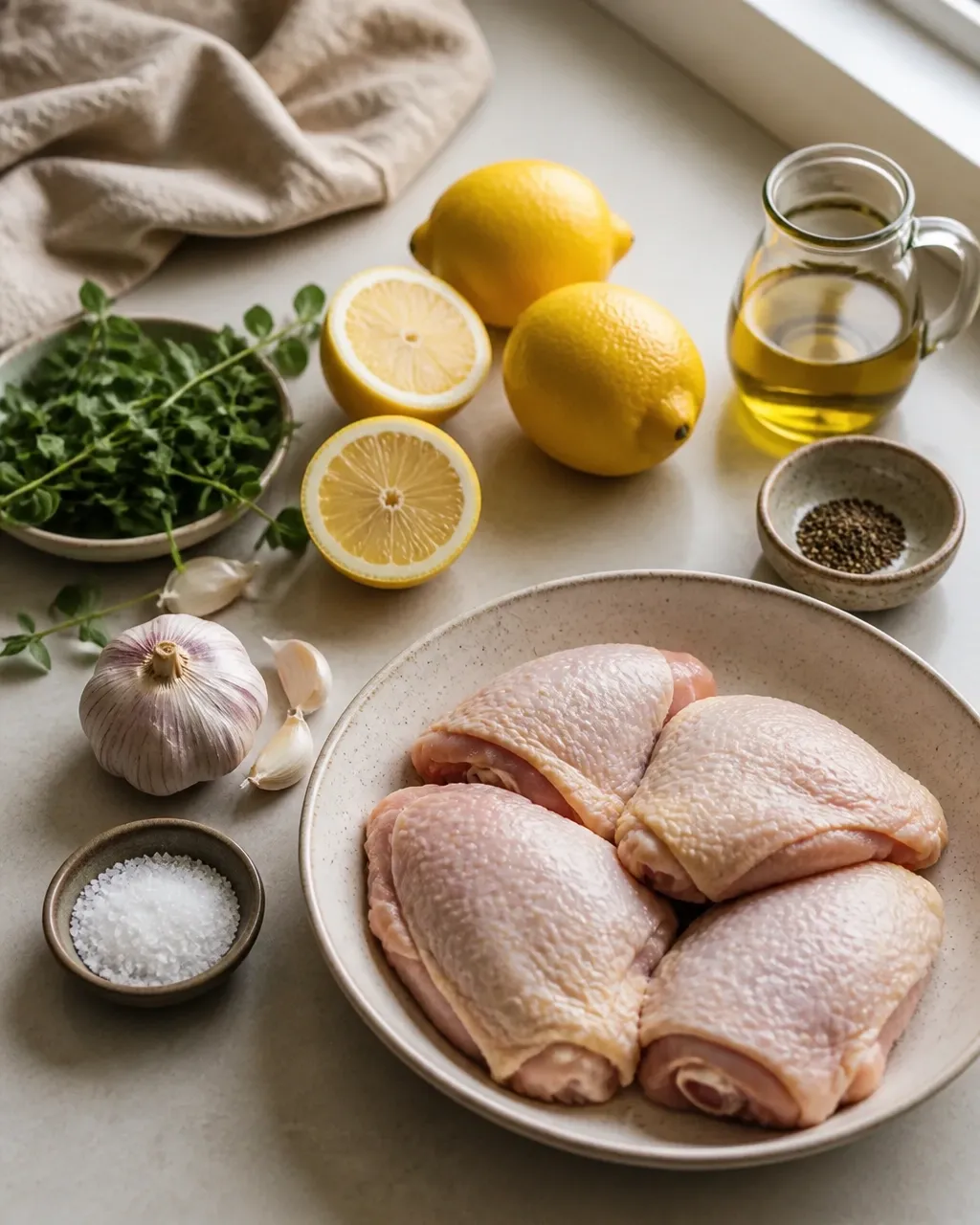
- Chicken
- Garlic
- Lemon
- Cooking oil
Method
- Pat the chicken dry before it goes into the oven.
- Use a clean paper towel to remove surface moisture, especially if the thighs have been sitting in a lemony marinade.
- Keep the skin exposed to the heat, and avoid pouring a puddle of liquid over it.
- Roast at about 400–425°F for a practical weeknight result.
- Use too little and the chicken tastes dull; use too much and the surface can become sharp or slightly mushy after a long marinade.
- Keep acidic marinating time moderate.
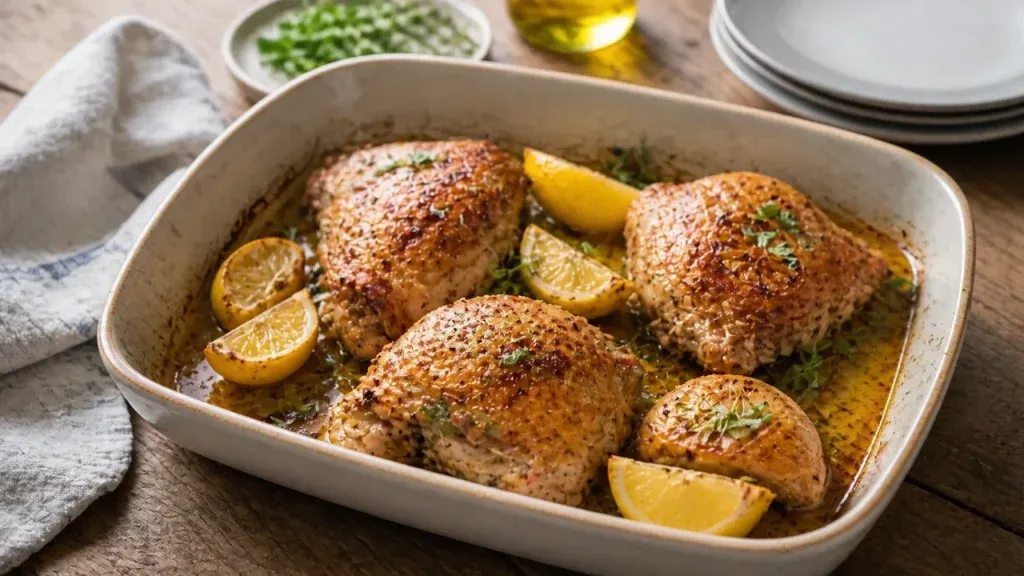
When dinner needs to be healthy, satisfying, and reasonably painless, baked chicken thighs deserve a standing ovation. They bring plenty of flavor without demanding much attention, and lemon and oregano make them taste bright rather than heavy. This is one of my favorite healthy dinner ideas for a busy night because the oven does most of the work while you handle the rest of life, or at least locate the missing lunchbox.
Why Lemon and Oregano Make Chicken Taste Better
Chicken thighs have more fat and connective tissue than chicken breast, which gives them a forgiving texture and deeper flavor. That makes them particularly useful for quick family meals: they can handle a little extra oven time without turning dry and cottony.
Lemon supplies acidity, which wakes up savory flavors and keeps the dish from tasting flat. Oregano brings a peppery, earthy note that stands up to roasted meat. Together, they create balance. The lemon cuts through richness, while the oregano gives the chicken a Mediterranean character without requiring a cupboard full of spices.
Do not treat lemon juice as a substitute for proper cooking, though. Acid can flavor the surface of the chicken, but it does not make undercooked poultry safe. Always cook chicken to at least 165°F (74°C) in the thickest part, measured away from the bone. For thighs, I usually prefer a higher final temperature, roughly 175–185°F, because the connective tissue softens and the meat becomes more tender.
Tips & Technique: The Science of Juicy, Golden Chicken
Dry the surface for better browning
Pat the chicken dry before it goes into the oven. This is not fussy restaurant behavior; it is basic browning science.
A wet surface must first lose its moisture before it can become hot enough to brown. While that water evaporates, the chicken steams. Steaming can cook the meat, but it will not give you the golden exterior that makes baked chicken so appealing.
Use a clean paper towel to remove surface moisture, especially if the thighs have been sitting in a lemony marinade. Keep the skin exposed to the heat, and avoid pouring a puddle of liquid over it. Save the brightest lemon flavor for the pan juices or the finishing squeeze.
Use a hot oven, not a lukewarm one
A properly heated oven gives the chicken enough energy to cook efficiently and brown around the edges. Roast at about 400–425°F for a practical weeknight result. The exact cooking time will depend on the size of the thighs, whether they are bone-in, and how crowded the pan is.
Crowding matters more than many people realize. When pieces are packed tightly, they release moisture into the pan and create a steamy environment. Leave a little breathing room between the thighs so hot air can circulate. If you are doubling the recipe, use two pans rather than forcing everything into one.
Check the temperature with an instant-read thermometer rather than relying only on the clock. The thermometer is your more reliable dinner companion.
Give the lemon enough restraint
Lemon is powerful. Use too little and the chicken tastes dull; use too much and the surface can become sharp or slightly mushy after a long marinade.
Keep acidic marinating time moderate. Around 30–90 minutes is generally enough to add flavor to the outer layers. Lemon does not travel deeply into meat, so leaving the chicken submerged overnight does not create a magical lemon core. It can instead make the exterior soft while the center remains largely unchanged.
For the cleanest flavor, combine lemon zest with a modest amount of juice before baking, then finish the cooked chicken with fresh lemon. Zest contributes fragrant citrus oils without adding as much moisture. A final squeeze tastes brighter because it has not spent the entire cooking time in the oven.
Let oregano bloom in fat
Oregano becomes more aromatic when it is distributed through oil. The fat carries its flavor across the chicken and helps the seasoning cling to the surface.
Rub the oregano into the oil and seasoning rather than scattering it dry over the top and hoping for the best. Fresh oregano gives a greener, more delicate flavor; dried oregano is stronger and more concentrated. Use either, but adjust the amount accordingly.
Add garlic carefully. Minced garlic on an exposed surface can burn before the chicken finishes cooking, especially at a high temperature. Tuck larger pieces into the pan juices or mix the garlic into the oil so it has some protection from direct heat.
Cook thighs for texture, not just safety
The minimum safe temperature for chicken is 165°F, but thighs often improve after that point. Their collagen needs time and heat to convert into gelatin, which is what gives dark meat its tender, almost silky bite.
Aim for 175–185°F if you want a juicy thigh with a pleasantly tender texture. Going higher can work too, particularly for bone-in pieces, but watch the surface so it does not become overly dark. If the meat reaches your target temperature before the skin browns, use the broiler briefly and stay close. Broilers are enthusiastic little beasts.
Rest the chicken for five to ten minutes after baking. Resting does not “seal in” every drop of juice, but it allows the meat to settle and makes it less likely that all the flavorful liquid will run onto the cutting board at once.
Variations for Different Weeknights
Keep the core method the same, then change the flavor direction.
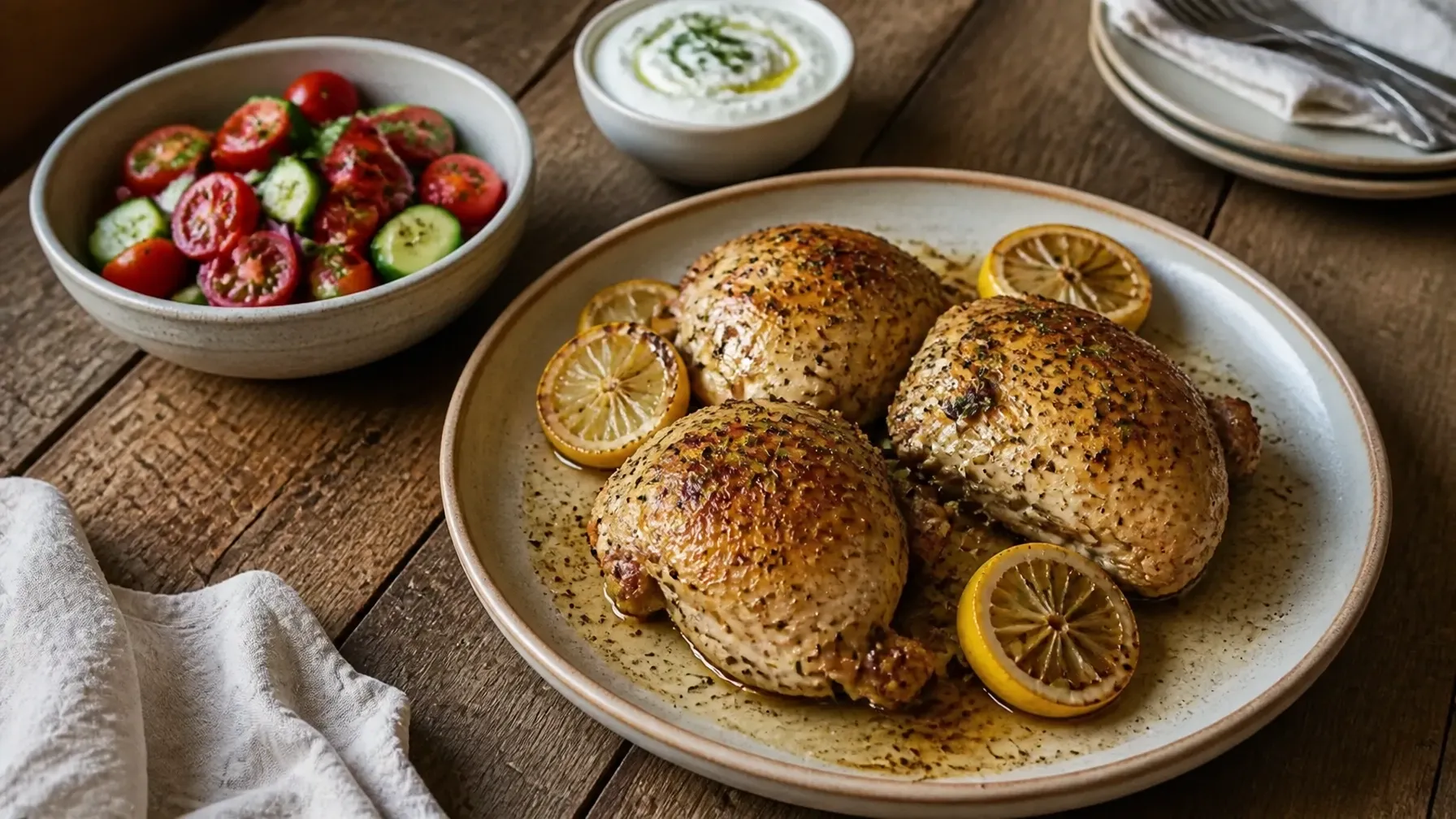
For a creamy finish, spoon plain Greek yogurt seasoned with lemon zest and oregano beside the chicken. Add the yogurt after cooking rather than baking it in the pan, since high heat can cause it to split.
Turn the dish into a tray bake by adding vegetables that can tolerate roasting, such as zucchini, red onion, bell peppers, or small potatoes. Choose vegetables with similar cooking times, or give slower-cooking pieces a head start. The goal is caramelized edges, not a pan of soft, watery vegetables.
Use smoked paprika with the oregano when you want a warmer, slightly earthier flavor. Add chili flakes for heat, or swap oregano for thyme if that is what your spice drawer offers. Rosemary also works, but use it sparingly because its piney flavor can overpower the lemon.
For a lighter boneless version, reduce the cooking time and begin checking the temperature earlier. Boneless thighs cook faster and have less protection from the bone, so do not assume the same timing applies.
If you are collecting air fryer recipes dinner ideas, adapt the seasoning easily, but cook in a single layer and check the thickest piece early. The air fryer browns quickly, and small thighs can move from perfectly cooked to overdone with surprising confidence.
Side Dish Pairings That Keep the Plate Balanced
Pair the chicken with something fresh, crisp, or lightly bitter to balance its savory richness. A cucumber and tomato salad with a little lemon or vinegar is an excellent choice because its acidity echoes the chicken while its cool texture provides contrast.
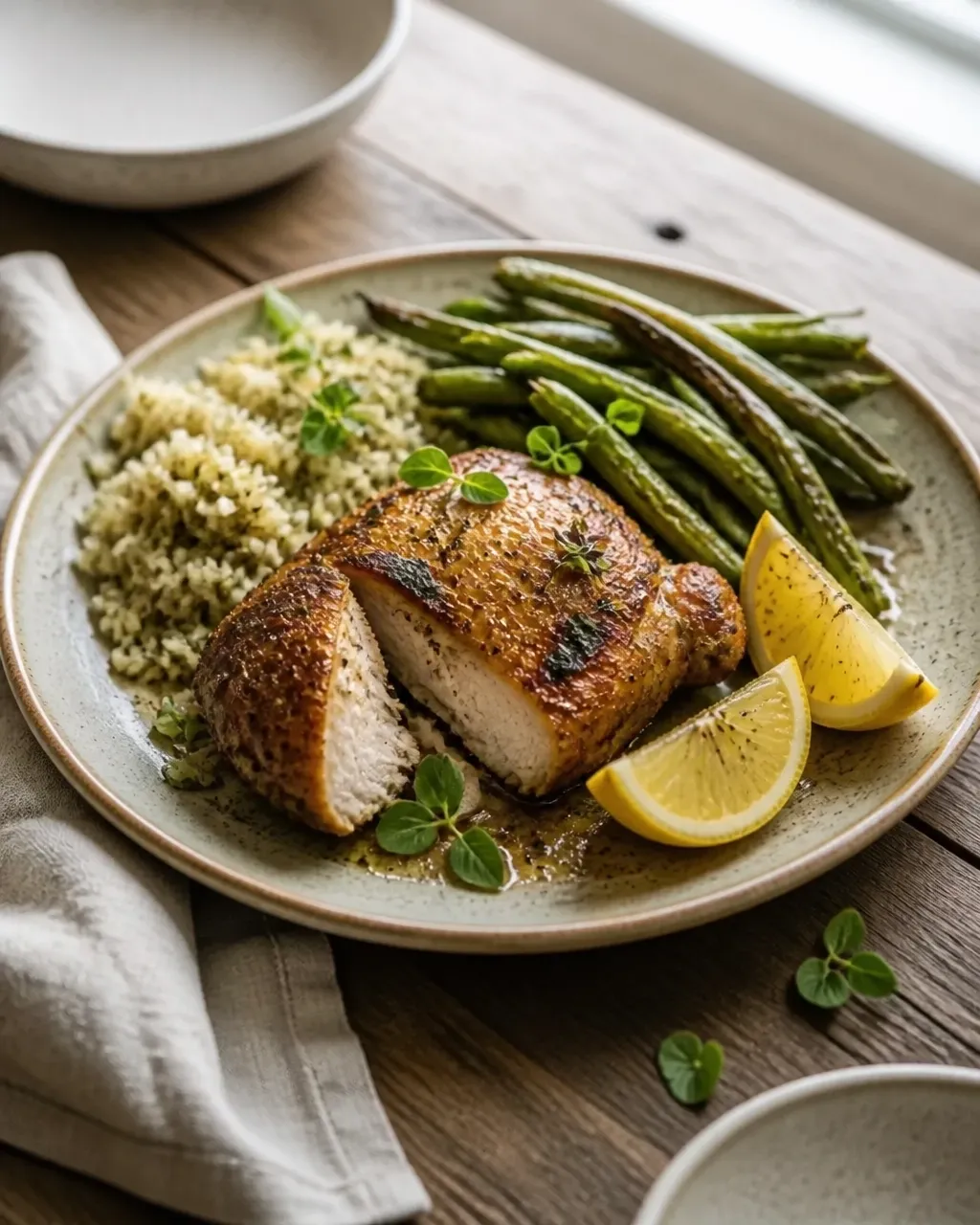
Roasted green beans, broccoli, or zucchini add fiber and color without making the meal feel heavy. Keep their seasoning simple so the lemon-oregano juices remain the star.
Serve the chicken with brown rice, quinoa, or a modest portion of roasted potatoes when you need a more substantial dinner. Spoon a little pan juice over the grain, then add fresh herbs or lemon at the table.
A leafy salad also works beautifully. For more Cookpedia inspiration, browse our chicken recipes, explore vegetarian dinner recipes for vegetable sides, or keep the whole meal speedy with ideas from our quick meals collection.
Frequently Asked Questions
Can I use chicken breasts instead of thighs?
Yes, but adjust your expectations and cooking time. Chicken breasts contain less fat and can dry out more quickly, especially if they are small or unevenly shaped. Pound very thick sections to an even thickness, or begin checking the temperature early. Stop cooking once the thickest part reaches 165°F. Do not continue roasting to the higher thigh temperature unless you enjoy poultry with the personality of an old shoe.
What if my chicken is not browning?
First, check whether the surface is wet. Pat it dry, and avoid covering the skin with excess lemon juice or pan liquid. Next, make sure the oven was fully preheated and the pan is not overcrowded. If the chicken is cooked but pale, move it under the broiler for one to three minutes. Watch continuously because the difference between golden and scorched can be one distracted glance.
What if the lemon flavor tastes bitter?
Bitterness often comes from too much lemon zest, pith, or burnt garlic rather than from the juice itself. Zest only the colorful outer skin and stop before reaching the white layer underneath. Use fresh lemon juice at the end for brightness, and protect garlic from direct, prolonged heat. If the finished sauce is too sharp, balance it with a little olive oil, unsalted stock, or a spoonful of yogurt.
Can I marinate the chicken overnight?
You can, but a strongly acidic marinade is better kept to a shorter period. Lemon juice affects the outer surface first and may make it soft or mealy if it sits too long. For overnight preparation, emphasize oil, herbs, garlic, salt, and lemon zest, then add most of the lemon juice closer to cooking time or after baking.
Why is the chicken safe at 165°F but sometimes better at 180°F?
Safety and texture are separate questions. Reaching 165°F addresses the minimum internal temperature for safe poultry. Chicken thighs contain connective tissue that becomes more tender with additional cooking. That is why a thigh at 175–185°F can taste softer and juicier than one removed immediately at 165°F. Use a thermometer, consider the texture you want, and remember that dark meat is more forgiving than breast meat.
What if I do not have an instant-read thermometer?
Use the thermometer as soon as you can; it is the most reliable tool for poultry. In the meantime, check that the juices run mostly clear and that the meat is opaque at the thickest point, but treat those signs as rough guidance rather than proof. Size, bone placement, oven accuracy, and pan material all affect cooking time. A thermometer removes the guesswork and makes weeknight cooking much less dramatic.
How should I store leftovers?
Refrigerate cooked chicken within two hours in a shallow, covered container. Use leftovers within three to four days, and reheat them until hot throughout. Add a splash of stock or water before reheating to protect the meat from drying out. Slice leftover thighs into salads, grain bowls, wraps, or one of those emergency dinners assembled from whatever is still behaving in the refrigerator.