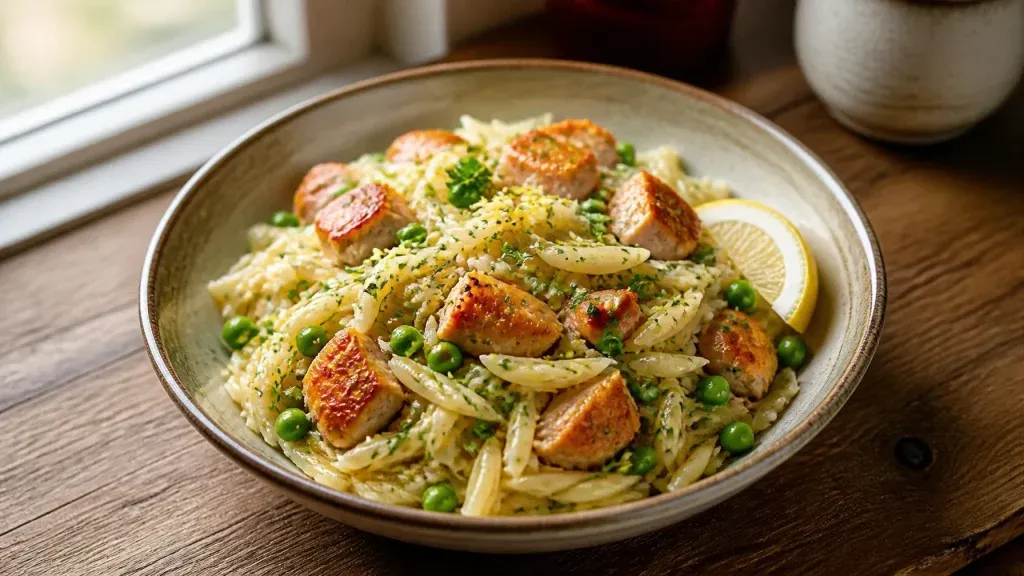
Recipe
Servings
Servings 1×
Ingredients
- Chicken
- Orzo
- Pasta
- Rice
- Bread
- Spinach
- Peas
- Lemon
- Salt
Method
- Start with dry chicken and a properly heated pan.
- Sear the chicken until it develops a good brown crust, then move it aside while you build the rest of the dish.
- Keep the heat moderate and stir as the grains warm through.
- Use roughly two parts liquid to one part dry orzo as a starting point.
- Keep some extra hot broth or water nearby because pan size, heat level, and the brand of orzo can all change how quickly the liquid disappears.
- Simmer gently rather than boiling aggressively.
When dinner needs to be comforting, filling, and kind to your washing-up pile, make lemon herb orzo with chicken and peas. This one-pot meal gives you tender chicken, silky pasta, bright vegetables, and plenty of fresh flavor without turning the kitchen into a laboratory. I love it for busy evenings because the orzo cooks right in the same pan, absorbing all those savory juices along the way. One pot, one spoon, one very happy table.
Tips & Technique: Make the Orzo Silky, Not Soggy
Build flavor before adding liquid
Start with dry chicken and a properly heated pan. Patting the chicken dry matters because surface moisture creates steam, while a dry surface encourages browning. That golden color is not decoration; it comes from the Maillard reaction, a chain of reactions between proteins and sugars that creates deeper savory flavor.
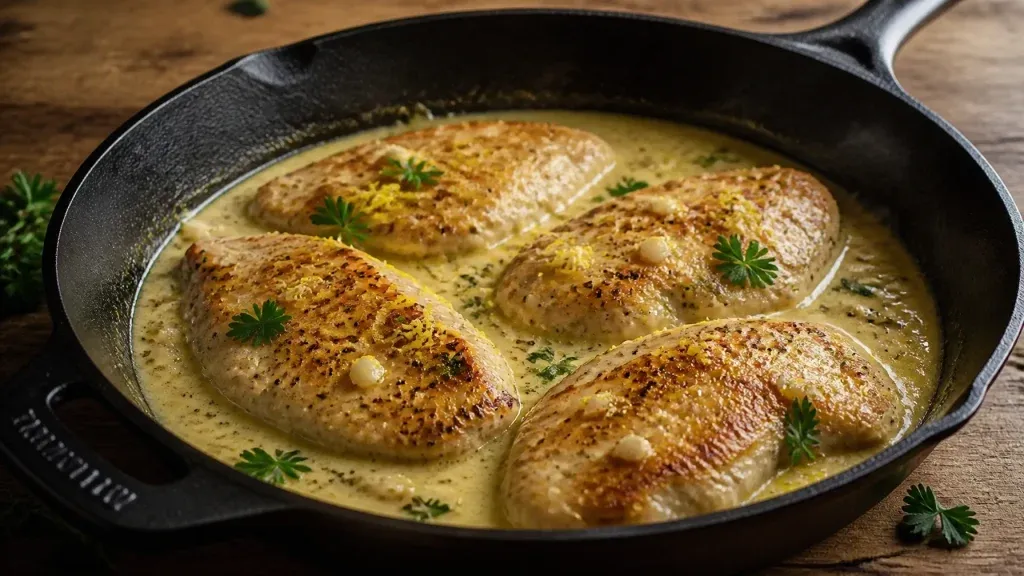
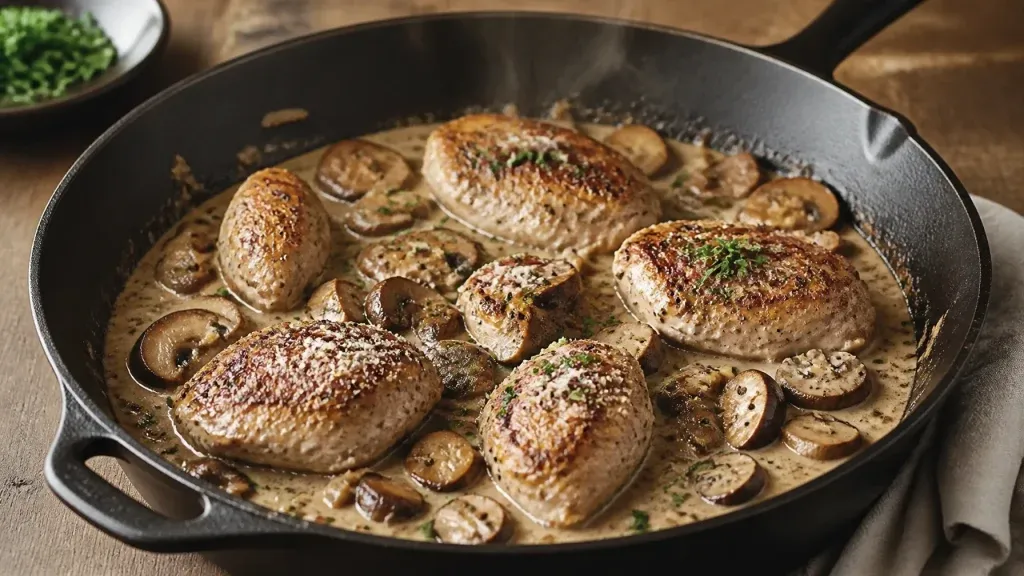
Sear the chicken until it develops a good brown crust, then move it aside while you build the rest of the dish. Do not worry if the chicken is not fully cooked at this point. It will finish gently in the broth later. What you do want is a flavorful layer of browned bits on the bottom of the pan.
Scrape those bits up when you add your cooking liquid. This is called deglazing, although “rescuing the best flavor from the pan” is more honest. Those browned pieces dissolve into the broth and season the orzo from the inside out.
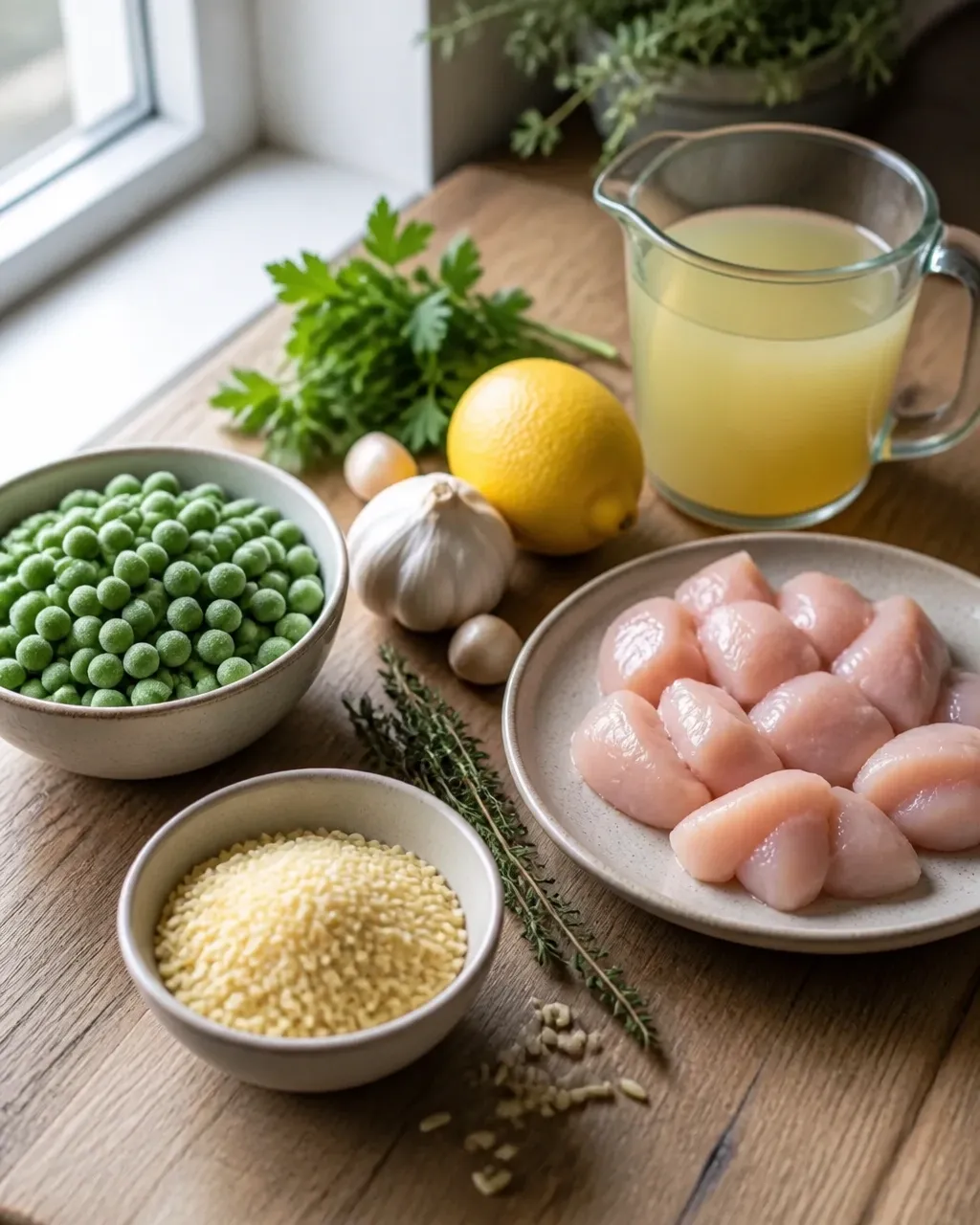
Toast the orzo for better texture
Treat orzo like small pasta, not rice, even though it looks like rice and occasionally causes identity confusion. Toasting it briefly in the pan before adding broth gives the pasta a light nutty flavor and helps it hold its shape.
Keep the heat moderate and stir as the grains warm through. You are looking for a faint golden color, not deep toastiness. If the orzo darkens too quickly, lower the heat. Burnt pasta will not become sophisticated just because it is cooked with lemon.
Control the liquid ratio
Orzo releases starch as it cooks. In a large pot of water, that starch gets diluted and drained away. In a one-pot dish, it stays in the pan and thickens the cooking liquid. That is the secret behind the naturally creamy texture.
Use roughly two parts liquid to one part dry orzo as a starting point. Keep some extra hot broth or water nearby because pan size, heat level, and the brand of orzo can all change how quickly the liquid disappears.
Simmer gently rather than boiling aggressively. A hard boil can make the outside of the pasta soften before the center is tender, while also causing the liquid to evaporate too quickly. Stir occasionally, especially around the bottom and edges of the pan. This encourages starch release and stops the orzo from forming a sticky little pasta raft.
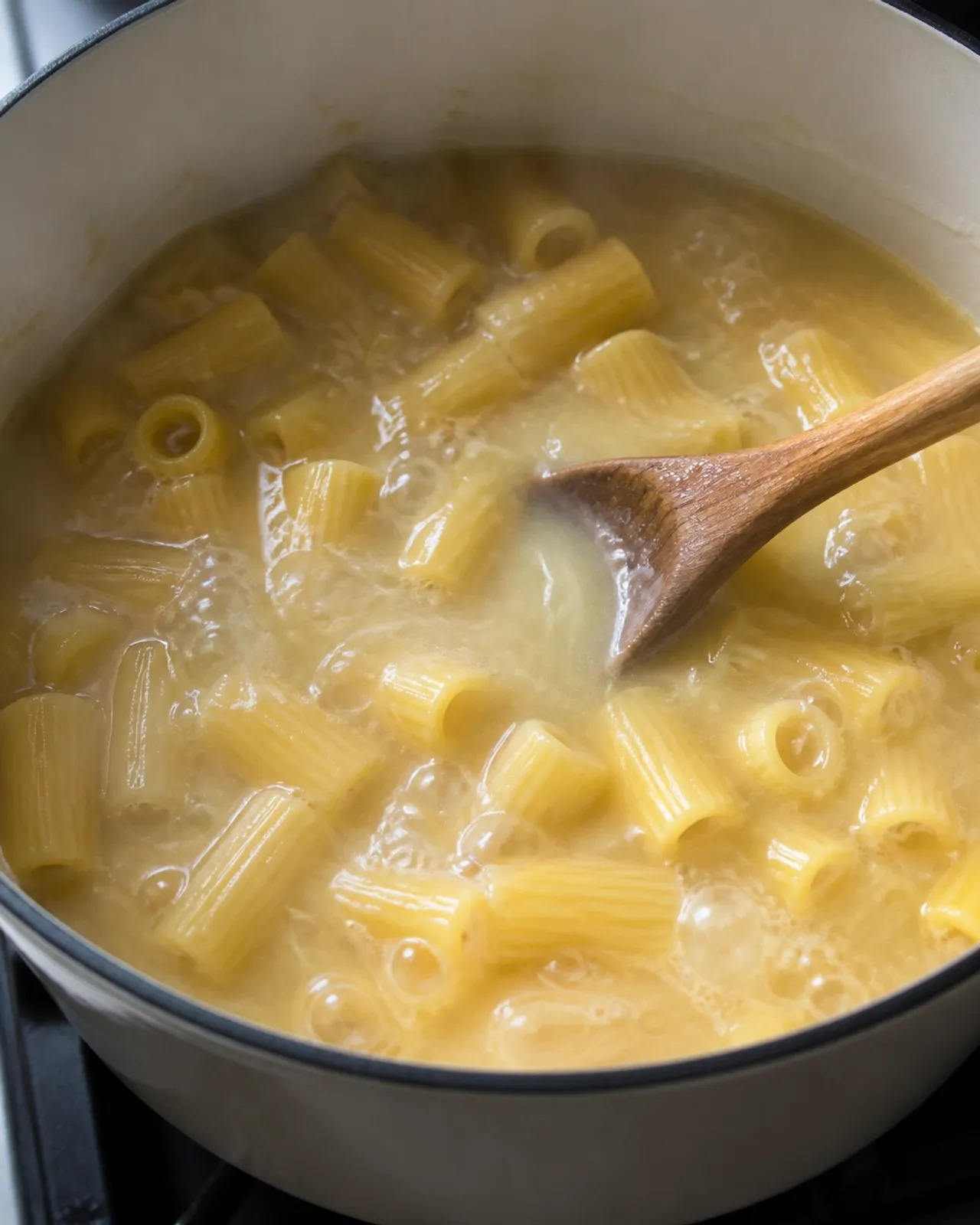
Return the chicken at the right time
Nestle the seared chicken back into the pan once the orzo begins simmering. The broth keeps the meat moist while the gentle heat brings it to a safe temperature. Boneless chicken thighs are especially forgiving because their extra connective tissue and fat help them stay juicy. Chicken breast works too, but watch it more closely because lean meat dries out faster.
Use a thermometer rather than guessing from color. The USDA Food Safety and Inspection Service recommends cooking poultry to 165°F (74°C) in the thickest part. Check the chicken directly, avoiding bone if you are using bone-in pieces.
Add peas late
Peas need very little cooking. Add frozen peas near the end so they warm through without turning dull and mushy. Fresh peas may need a little longer, but they still do not belong in the pan from the beginning.
Late addition also protects color. Bright green peas create a useful visual and textural contrast against the creamy orzo. Let them stay peas, not green confetti.
Finish with acid and fresh herbs
Add lemon juice, lemon zest, and soft herbs when the pan is off the heat or nearly there. Long boiling dulls fresh citrus flavor and can make herbs taste flat. Stirring them in at the end preserves their lively aroma.
Taste before serving. Lemon should brighten the dish, not make it sharply sour. If the orzo tastes heavy, add a little more citrus. If it tastes flat, check the salt first. Acid cannot fix under-seasoning by itself, though it will bravely try.
Let the finished orzo rest for a couple of minutes before serving. The pasta will absorb some of the remaining liquid and the sauce will thicken naturally. Aim for loose and creamy, not stiff enough to stand up in a spoon.
For more ideas in the same spirit, browse Cookpedia’s one-pot meals collection or try our one-pot chicken and spinach pasta.
Variations: Keep the Method, Change the Mood
Use chicken thighs when you want the most forgiving result. Choose chicken breast for a leaner dish, but cut it into even pieces so it cooks at the same pace. Avoid wildly different chunk sizes unless you enjoy playing “which piece is done?” at the dinner table.
Make it Mediterranean by adding chopped roasted peppers, a little oregano, and crumbled feta at the finish. The salty cheese and sweet peppers work beautifully with lemon.
Add spinach during the final minute for extra greens. Follow the same principle as the peas: delicate vegetables need gentle, late cooking. For another meat-free direction, replace the chicken with drained chickpeas and use vegetable broth. The chickpeas will not need much cooking; simply warm them through while the orzo finishes.
Want heat? Add red pepper flakes with the aromatics so their flavor infuses into the cooking fat. For a smoky version, use a small amount of smoked paprika. Keep the seasoning restrained at first. Lemon herb orzo works because its flavors are clear and balanced, not because every spice in the cupboard joined the meeting.
These variations fit neatly beside other quick meals, especially when you need reliable quick family meals without a complicated shopping list.
Side Dish Pairings: Add Contrast, Not More Weight
This orzo already brings starch, protein, and vegetables, so choose sides that add freshness or crunch. A peppery arugula salad with lemon vinaigrette is an excellent match. Its bitterness and acidity cut through the soft, savory texture of the orzo.
Serve roasted broccoli or asparagus when you want a warm vegetable side. High heat gives the vegetables crisp edges, creating contrast with the creamy pasta. An acidic cucumber salad also works well, especially on a warm evening.
If you want bread, choose a small piece of crusty sourdough for scooping up the lemony pan juices. Keep the rest of the plate bright. The goal is balance, not a second carbohydrate wearing a different outfit.
For more balanced healthy dinner ideas, explore Cookpedia’s dinner recipes and pair richer mains with sharp salads, roasted vegetables, or fresh herbs.
Frequently Asked Questions
Why did my orzo turn out watery?
Use less liquid next time or simmer the pan uncovered for a few extra minutes. Orzo continues absorbing broth as it rests, so do not panic the instant you turn off the heat. Give it two or three minutes, then reassess. If it is still loose, return it to low heat briefly. Avoid adding more pasta unless you want a second dinner by accident.
Why is my orzo sticky?
Sticky orzo usually means it was left unstirred, cooked too aggressively, or allowed to sit too long before serving. Stir occasionally during cooking to distribute starch and prevent the grains from clumping on the bottom. Serve soon after resting. If leftovers become firm, loosen them with a splash of broth or water while reheating.
Can I use chicken breast instead of thighs?
Yes. Cut the breast into even pieces and avoid overcooking it. Sear it for flavor, then let it finish gently in the simmering broth. Check the thickest piece with a thermometer and remove the pan from the heat once the chicken reaches 165°F (74°C). Breast meat has less fat and connective tissue, so it has less room for overcooking.
What if I only have frozen peas?
Use them directly from frozen. Add them during the final few minutes and stir them into the hot orzo. Thawing is not necessary, and adding them too early can make them soft and faded. Frozen peas are often picked and frozen quickly, so they are a perfectly sensible weeknight choice.
Can I make this ahead?
You can, but expect the orzo to absorb more liquid as it cools. Store leftovers promptly and reheat them gently with a splash of broth or water. Stir often so the sauce loosens evenly. Add fresh lemon or herbs after reheating to bring back the brightness. For the best texture, make the dish just before serving.
What if I do not have fresh herbs?
Use dried herbs earlier in the cooking process so they have time to soften and release flavor. Add fresh lemon at the end to compensate for the missing herbal lift. You can also finish with sliced green onions, baby spinach, or a small handful of chopped parsley if available.
Why does the lemon taste bitter?
You may have included too much white pith, or the lemon juice may have boiled for too long. Zest only the yellow outer skin and add the juice near the end. Taste gradually. Lemon should sharpen the savory flavors, not dominate them.
How do I keep the chicken moist?
Do not skip the initial sear, but do not cook the chicken to completion before adding the broth. Let it finish gently in the liquid and check it with a thermometer. Rest the completed dish briefly before serving so the juices settle. These small details make the difference between tender chicken and dinner that requires aggressive chewing.
Can I freeze the leftovers?
Freezing is possible, but the orzo may soften when thawed and reheated. Refrigerated leftovers usually have a better texture. If you do freeze them, thaw them in the refrigerator and reheat slowly with extra broth. Finish with lemon juice and herbs after warming to refresh the flavor.
Serve this lemon herb orzo straight from the pot, add a sharp green salad, and call it dinner. That is the beauty of one-pot cooking: simple technique, real flavor, and no sink full of evidence.