Recipe
Servings
Servings 1×
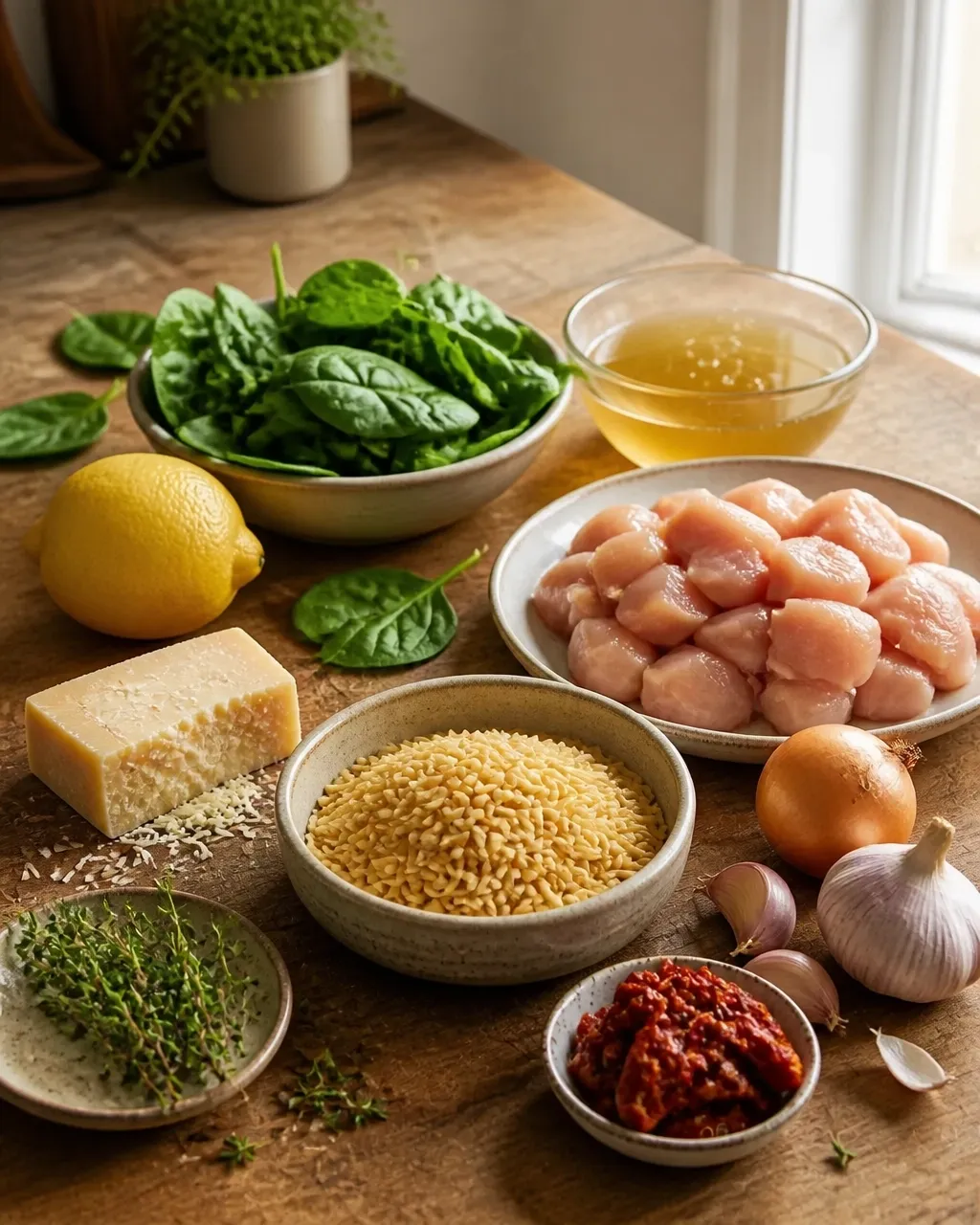
Ingredients
- Chicken
- Orzo
- Pasta
- Rice
- Bread
- Tomatoes
- Lemon
- Cream
- Hard cheese
- Cooking oil
Method
- Keep the technique below in mind, and let the recipe card handle the exact quantities and timings.
- Start with the chicken because browning creates more than a nice color.
- Use a wide, heavy pan if possible.
- Give the chicken room rather than crowding every piece together.
- Let the surface make proper contact with the pan, then remove the chicken while you build the sauce.
- Keep those browned bits where they are.
Creamy chicken orzo is the kind of dinner that makes a busy evening feel remarkably organized. Everything cooks in one pan, the orzo turns silky without a separate pot of pasta water, and sun-dried tomatoes bring bold flavor without a long ingredient list. I love this recipe because it feels comforting but not heavy, colorful but not fussy, and practical enough for a Tuesday night. Keep the technique below in mind, and let the recipe card handle the exact quantities and timings.
Tips & Technique: Make the Orzo Creamy, Not Gluey
Build flavor in the same pan
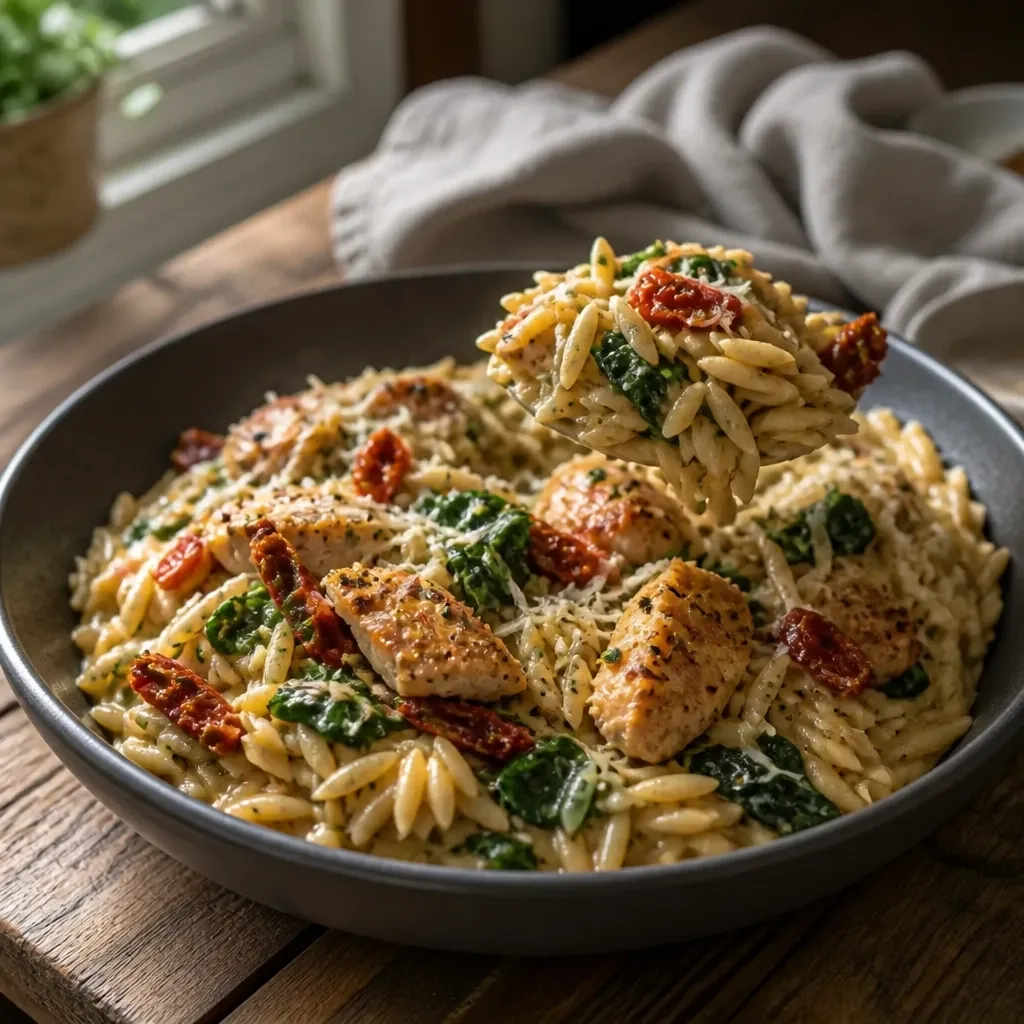
Start with the chicken because browning creates more than a nice color. As the chicken sears, proteins and natural sugars react on the hot surface, creating flavorful browned bits. Cooks call this fond, and it is one of the easiest ways to make a simple dinner taste like you worked much harder than you did.
Use a wide, heavy pan if possible. Give the chicken room rather than crowding every piece together. Crowding traps steam, and steam is excellent for cooking but terrible for browning. Let the surface make proper contact with the pan, then remove the chicken while you build the sauce.
Keep those browned bits where they are. When the cooking liquid hits the pan, scrape gently to loosen them. That quick deglazing step folds all that savory flavor into the orzo instead of leaving it stuck to the cookware.
Toast the orzo before adding liquid
Treat orzo like a tiny pasta with risotto ambitions. Briefly toasting it in the seasoned pan adds a nutty note and coats the grains with fat. That coating does not stop starch release, but it helps the grains separate and develop more flavor as they cook.
Do not rinse the orzo first. In this one-pot method, its surface starch is useful. As the pasta simmers, starch moves into the stock and thickens the liquid naturally. That is what gives the dish its creamy body without requiring a flour-based sauce.
Think of the goal as loose and silky, not stiff. The orzo will continue absorbing liquid after you remove it from the heat, so finish with a little extra movement in the pan. If it looks perfect while still bubbling, it may be too thick by the time it reaches the table.
Control the simmer
Use a gentle simmer rather than a furious boil. High heat makes the liquid disappear before the orzo has time to cook evenly. It can also leave you with a thick bottom layer and undercooked pasta above it. Stir occasionally, especially around the edges and base of the pan, where starch tends to settle.
A moderate simmer also gives the chicken time to finish cooking without becoming tough. The browned exterior contributes flavor, while the gentle braise cooks the center in the savory liquid.
Check the texture as you go. Orzo should be tender with just a little resistance, much like properly cooked rice-shaped pasta. If the pan becomes dry before the orzo is ready, add hot stock or water in small splashes. Add too much at once and you risk turning a creamy sauce into soup.
Add dairy at the right moment
Cream and cheese are finishing ingredients here, not ingredients to boil aggressively from the beginning. Add the cream when the orzo is nearly tender, then lower the heat. Gentle warmth allows the dairy to blend with the starchy liquid rather than splitting into greasy patches.
Avoid a hard boil once the cream is in the pan. Vigorous heat can destabilize the emulsion, particularly when cheese joins the party. Remove the pan from direct heat before stirring in Parmesan, and add it gradually while the orzo is still hot. The residual heat will melt it smoothly.
If the sauce becomes too thick, loosen it with a splash of warm stock. If it looks thin, wait a minute before adding more cheese or liquid. Starch thickens as it cools, and patience is often the missing ingredient.
Use acidity to balance richness
Sun-dried tomatoes contribute concentrated sweetness, savory depth, and a pleasant tang. Their oil is also useful: a spoonful can carry tomato and herb flavor into the pan. Still, a creamy dish needs contrast. A small squeeze of lemon at the end brightens the sauce and keeps each bite from feeling flat.
Add the lemon after the dairy has been incorporated. Acid introduced too early and exposed to prolonged high heat can make dairy more likely to separate. Added at the finish, it acts like a spotlight, sharpening the tomato flavor and making the sauce taste lighter.
For more dependable weeknight inspiration, browse Cookpedia’s one-pot meals, chicken recipes, and pasta recipes.
Variations: Keep the Creamy Balance
Make it greener
Stir in spinach near the end so it wilts into the sauce without turning dull and overcooked. Kale works too, but remove the tough stems and give it a little more time to soften. Broccoli can be added earlier, allowing the florets to steam while the orzo cooks.
Keep the vegetables in balance. Too many watery vegetables can dilute the sauce, while too many dense additions can absorb the cooking liquid meant for the orzo. Add modest amounts and adjust with hot stock if needed.
Change the protein
Use boneless chicken thighs for a juicier result and a little extra richness. Chicken breast works well when you avoid overcooking it; cut larger pieces evenly so they finish at roughly the same time.
For a meat-free version, replace the chicken with white beans, chickpeas, or sautéed mushrooms. Beans add creaminess and protein, while mushrooms bring a savory, meaty quality. Explore Cookpedia’s vegetarian dinner recipes when you want more plant-forward options.
Adjust the dairy
Heavy cream gives the fullest texture, but half-and-half or whole milk can work if you prefer a lighter sauce. Lower-fat milk contains less fat to stabilize the sauce, so keep the heat especially gentle and rely on the orzo’s starch for body.
For a sharper finish, use a little extra Parmesan. For a softer, tangier result, stir in a spoonful of plain Greek yogurt off the heat. Do not boil yogurt; it can curdle when overheated.
Add heat or herbs
Red pepper flakes bring gentle heat without changing the cooking method. Smoked paprika adds depth, while basil, parsley, oregano, or thyme can steer the dish in different directions. Add dried herbs earlier so they have time to release flavor, and save delicate fresh herbs for the end.
These small changes make the dish useful for quick family meals without making it feel like the same dinner every week.
Side Dish Pairings: Add Freshness and Crunch
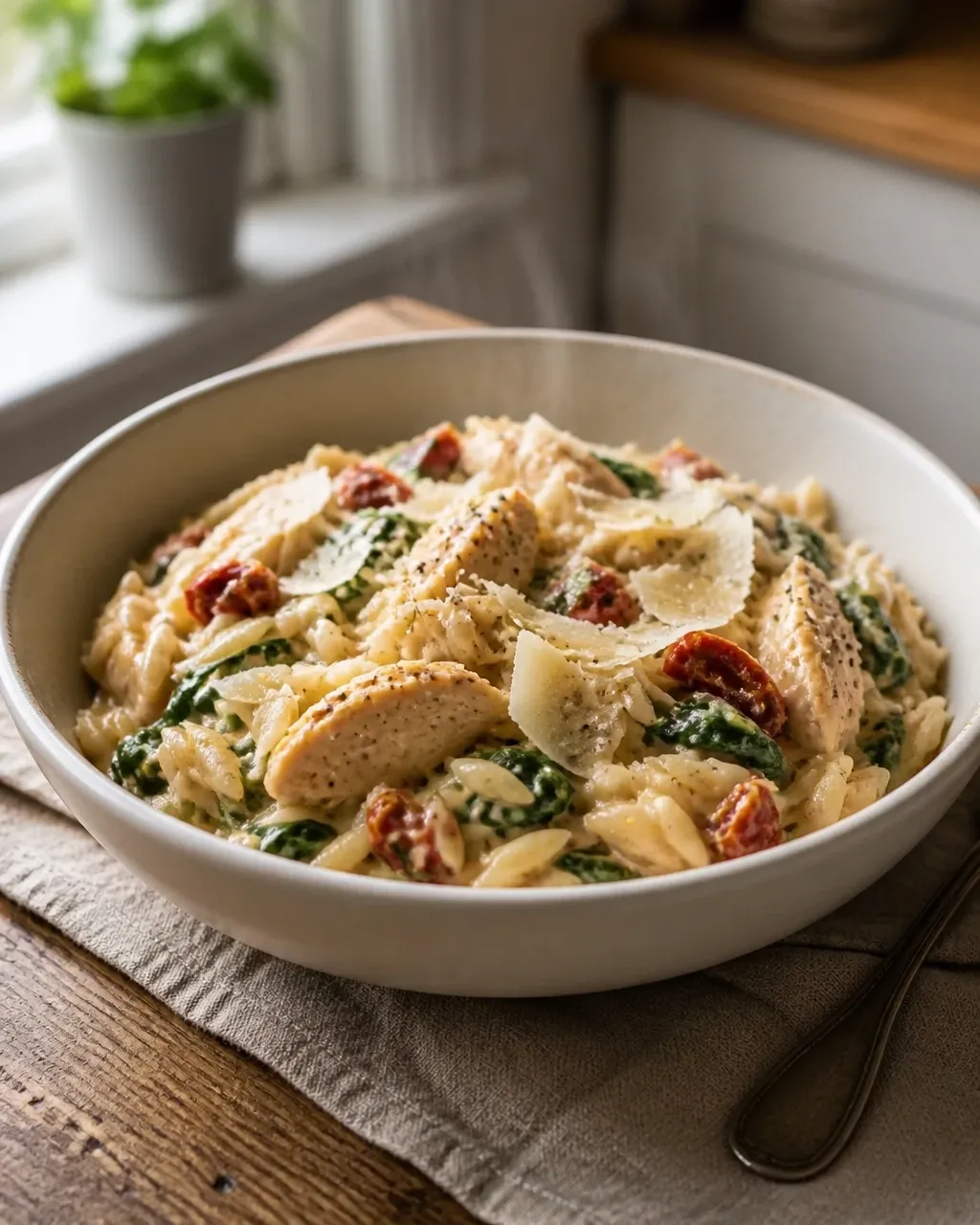
Pair this orzo with something crisp, green, or acidic. A simple arugula salad works especially well because its peppery leaves cut through the creamy sauce. Add lemony dressing rather than a sweet one; the extra acidity keeps the meal balanced. Cookpedia’s arugula salad inspiration can help you build a quick side from what you already have.
Roasted green beans, asparagus, or broccoli add texture and color without competing with the tomato flavor. Keep the seasoning simple so the side dish supports the main pan.
For a heartier table, serve a small piece of toasted bread. Use it for the last spoonful of sauce, naturally. A crisp cucumber salad is another smart choice, especially in warmer weather, because its cool crunch contrasts with the soft, rich orzo.
Skip an overly creamy side. Doubling down on richness can make the meal feel heavy, while one bright vegetable is usually enough to restore balance.
FAQ: Troubleshooting Creamy Chicken Orzo
Why did my orzo turn gummy?
Usually, the pan was too hot, the orzo was stirred too aggressively, or the dish sat too long before serving. Starch thickens the sauce, which is helpful, but excessive stirring releases more starch and can make the texture sticky.
Use a gentle simmer and stir only when the pasta needs help cooking evenly. Serve soon after finishing. If leftovers become very thick, loosen them with warm stock, water, or milk while reheating.
What if the orzo is still firm but the pan is dry?
Add hot liquid gradually rather than pouring in a large amount. The orzo may need several more minutes to hydrate, and small additions let you control the final consistency.
Keep the heat moderate and stir occasionally. If the chicken is already cooked through, remove it temporarily while the orzo finishes so it does not dry out. Return it to the pan just before serving.
How do I stop the cream from curdling?
Lower the heat before adding cream, and do not let the finished sauce boil hard. Add the dairy when the orzo is nearly cooked, then warm everything gently.
Stir Parmesan in off the heat or over very low heat. Add lemon only after the cream and cheese have blended. These three details: low heat, late dairy, and late acidity: protect the sauce’s smooth texture.
Can I use chicken breast instead of thighs?
Yes. Chicken breast is leaner and cooks quickly, but it has less room for error. Cut it into evenly sized pieces and avoid leaving it in the pan longer than necessary.
Use a thermometer to check the thickest piece. Chicken should reach 165°F (74°C) for safety. Browning it first and finishing it gently in the orzo helps preserve moisture, but a thermometer is more reliable than guessing from appearance.
Can I prepare this as one of my healthy dinner ideas?
You can make the dish more balanced by using plenty of spinach or another vegetable, choosing a moderate amount of cream and Parmesan, and serving it with a crisp salad instead of rich sides. Portion size still matters because orzo is a pasta, even though it looks like rice.
For lighter results, use half-and-half or whole milk and add extra stock as needed. Do not remove all the fat from the recipe, though. A little fat carries flavor and helps the sauce feel satisfying.
How should I store and reheat leftovers?
Transfer leftovers to shallow containers and refrigerate them promptly. Avoid leaving the finished dish at room temperature for more than two hours. Store it in the refrigerator for about three to four days, then reheat until steaming hot.
Expect the orzo to absorb more sauce as it cools. Add a splash of stock, water, or milk before reheating and stir gently. Reheat only the portion you plan to eat so the texture and quality hold up better.
Can I make this for quick family meals ahead of time?
You can prepare the components in advance, but the best texture comes from finishing the orzo close to serving. Brown the chicken and chop the flavor base earlier if that helps your schedule, then cook the orzo when you are ready to eat.
If you make the entire dish ahead, keep extra stock nearby for reheating. The sauce will tighten in the refrigerator, but a little warm liquid can bring it back to creamy, spoonable shape.
For more fast dinner inspiration, visit Cookpedia’s 30-minute meals and quick meals.