Recipe
Servings
6 servings 1×
Serves 6Prep 10 minCook 20 minTotal 30 min
Ingredients
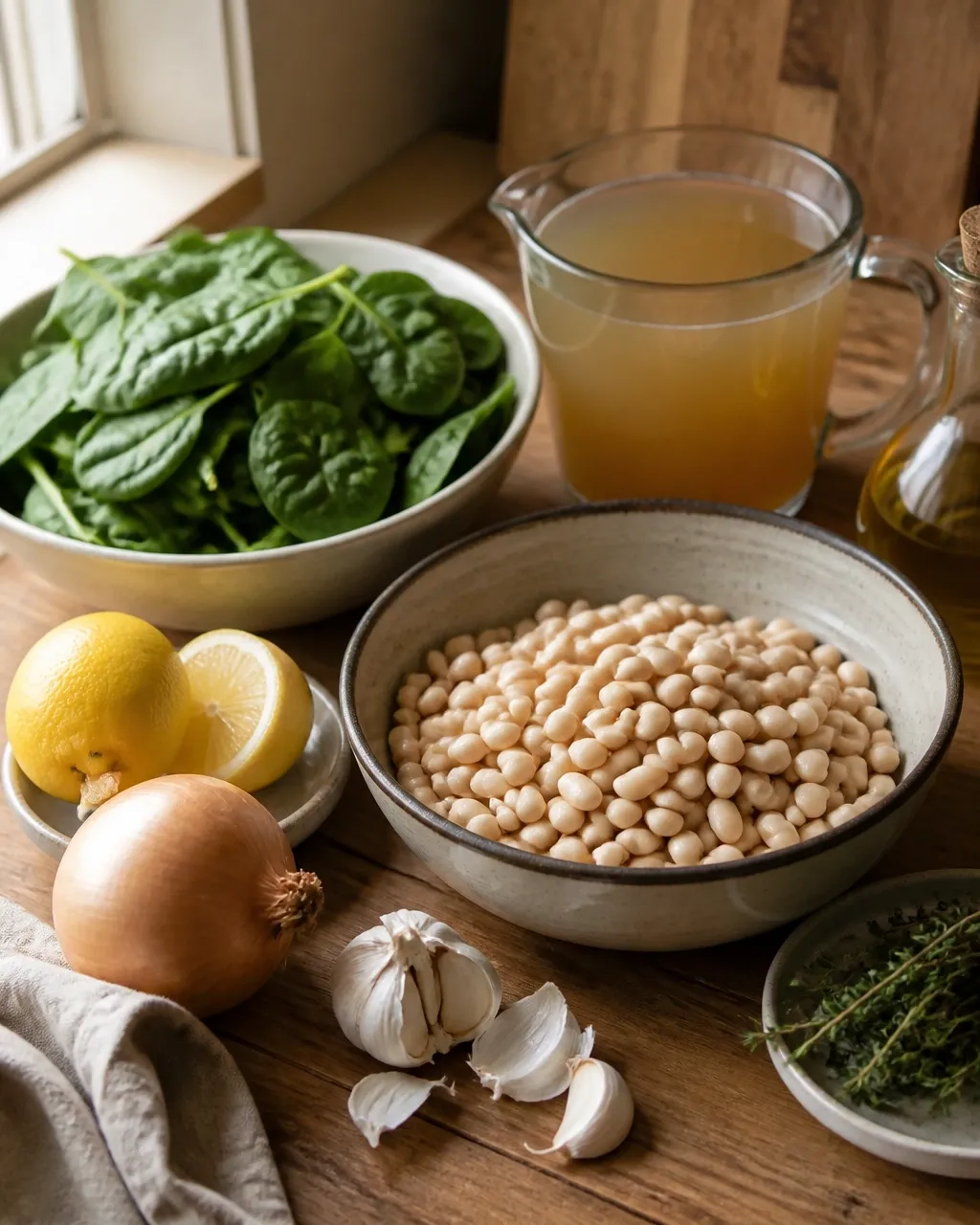
- 1 tablespoon olive oil
- 1 medium yellow onion, diced
- 3 garlic cloves, minced
- 1 teaspoon dried oregano or rosemary
- 3 cans (15 ounces each) white beans, drained and rinsed
- 5 cups low-sodium vegetable broth
- 4 cups baby spinach
- 1 tablespoon lemon juice or vinegar
- Salt and black pepper, to taste
Method
- Warm the olive oil in a large pot over medium heat. Cook the onion until soft and translucent, then add the garlic and dried herbs and cook until fragrant.
- Add the beans and broth. Bring the pot to a gentle simmer and cook for 10 minutes so the beans soften and the broth takes on their flavor.
- Blend about one-third of the soup with an immersion blender, or carefully blend a portion in a countertop blender. Keep the remaining beans whole.
- Return the blended soup to the pot if needed. Stir in the spinach and simmer just until wilted, about 2 minutes.
- Remove from the heat, add the lemon juice, and season gradually with salt and pepper. Serve with a drizzle of olive oil if desired.
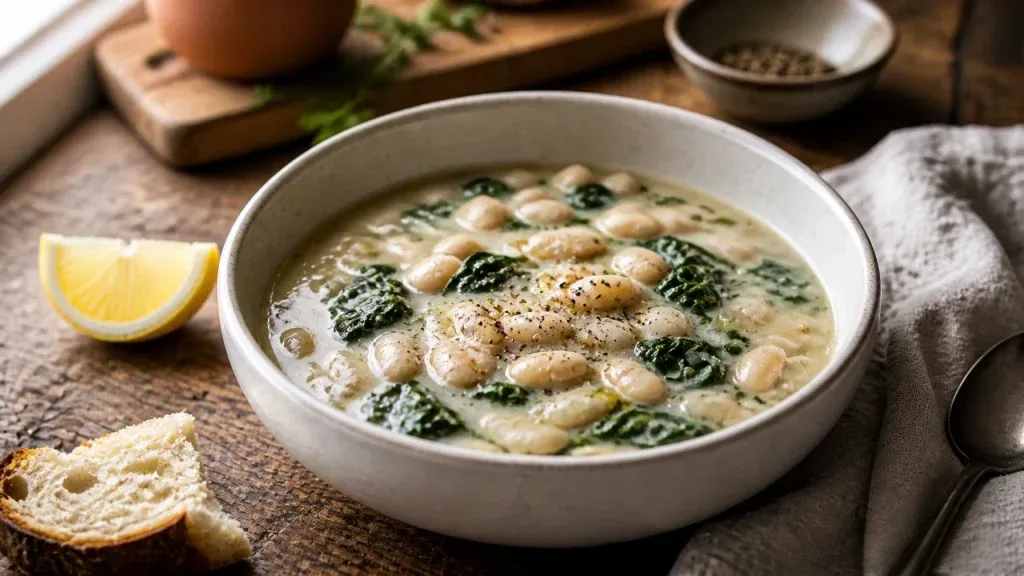
There is a lot to love about a soup that turns humble pantry staples into dinner with actual personality. This creamy white bean and spinach soup is thick without cream, filling without feeling heavy, and friendly to a tight grocery budget. I make it when I want something cozy, nourishing, and uncomplicated. Use this as one of your reliable healthy dinner ideas for busy nights when the fridge looks a little too honest.
Why Blended Beans Make Soup Creamy
The main trick is simple: blend part of the cooked beans and broth, then stir that mixture back into the pot.
White beans contain starch and soluble fiber. As they cook, their structure softens and those starches move into the surrounding liquid. Blending breaks the beans down even further, releasing more of that natural thickening power. The result is a smooth, velvety body without relying on heavy cream, flour, or a costly dairy substitute.
Blend only part of the soup. Keep some beans whole so every spoonful has contrast. A completely smooth soup can be lovely, but a little bite makes this one feel more like dinner and less like a warm bowl of beige wallpaper paste.
Use an immersion blender if you have one. It lets you blend directly in the pot and saves washing up. If you use a countertop blender, cool the soup slightly and work in small batches. Hot liquid expands, and an overfilled blender can launch soup onto your ceiling. Your ceiling has enough going on already.
Build Flavor Before Adding Liquid
Do not rush the onion and garlic. A short sauté in oil softens the onion, drives off its raw sharpness, and develops sweeter, rounder flavors. The oil also helps carry aromatic compounds from the garlic and herbs through the soup.
Cook the onion until it becomes soft and translucent, with just a little golden color if your pan allows it. Add the garlic later and keep it moving. Garlic contains sulfur compounds that create its familiar savory aroma, but those compounds can turn harsh when the garlic burns.
Add dried herbs while the broth simmers so they have time to release flavor. Finish with fresh herbs, lemon, or a drizzle of olive oil instead of throwing every flavor into the pot at once. Layering works better than shouting.
For another affordable pulse-based dinner, try Cookpedia’s Budget-Friendly Red Lentil Dahl. It uses a different technique, but the same principle applies: inexpensive legumes can create serious comfort when you treat them properly.
Control the Texture With Heat and Timing
Keep the soup at a gentle simmer rather than a hard boil. A rolling boil can make the liquid evaporate too quickly and may cause the beans to break down unevenly. Gentle heat gives the starch time to thicken the broth while keeping the flavor clean.
Add the spinach near the end. Fresh spinach wilts quickly, so it does not need a long simmer. Short cooking keeps its color brighter and helps protect some heat-sensitive nutrients. Frozen spinach works too; squeeze out excess water first so it does not thin the soup.
Taste after the spinach goes in. Greens can slightly dilute the seasoning, while beans absorb salt as they sit. Adjust gradually instead of adding a large amount all at once. Remember that broth may already contain plenty of sodium, especially if you are using a regular rather than low-sodium version.
Finish with acidity. Lemon juice or a small splash of vinegar cuts through the soup’s starchy richness and makes the beans taste more flavorful. Acidity does not make the soup sour when used carefully; it sharpens the other flavors, much like turning up the focus on a blurry photograph.
Make the Budget Work Harder
Choose canned beans for speed and dried beans for the lowest cost. If you cook dried beans in a large batch, freeze them in meal-sized portions. That small bit of planning turns future quick family meals into a much less dramatic event.
Stretch the soup with stale bread, cooked rice, or a small amount of pasta. These additions change the texture and make the meal more substantial without requiring an expensive protein. Use whatever is already in your kitchen rather than shopping for a special garnish.
Do not discard a slightly tired bag of spinach. Remove any slimy leaves, then use the rest in the soup. Wilting greens are often perfect for cooked dishes. The same goes for leftover herbs, half an onion, or a lonely carrot waiting in the vegetable drawer.
Variations That Keep the Soup Interesting
Turn this into a lemony Mediterranean-style soup by adding oregano, rosemary, lemon zest, and a little olive oil at the end. Keep the seasoning fresh and bright to balance the beans’ earthy flavor.
Add smoked paprika and a pinch of chili flakes for a warmer, gently smoky version. The heat adds energy, while the paprika gives the soup depth without requiring meat. Stir in chopped roasted red peppers if you have them.
Make it extra hearty with diced potato or a spoonful of cooked grains. Potato adds starch and body; rice or barley adds chew. If you use pasta, cook it separately or watch the pot closely because pasta absorbs broth quickly.
For a dairy-free bowl, use olive oil and skip cheese. For a richer finish, add a small spoonful of plain yogurt or grated Parmesan at serving time. Add dairy off the heat to reduce the chance of curdling.
Use kale instead of spinach when you want a sturdier green. Strip away the tough stems and give kale more simmering time. It will not wilt instantly, but it brings a pleasant chew and holds up well for leftovers.
For more plant-forward inspiration, browse Cookpedia’s vegetarian dinner recipes and healthy recipe collection.
Side Dish Pairings: Add Contrast, Not Competition
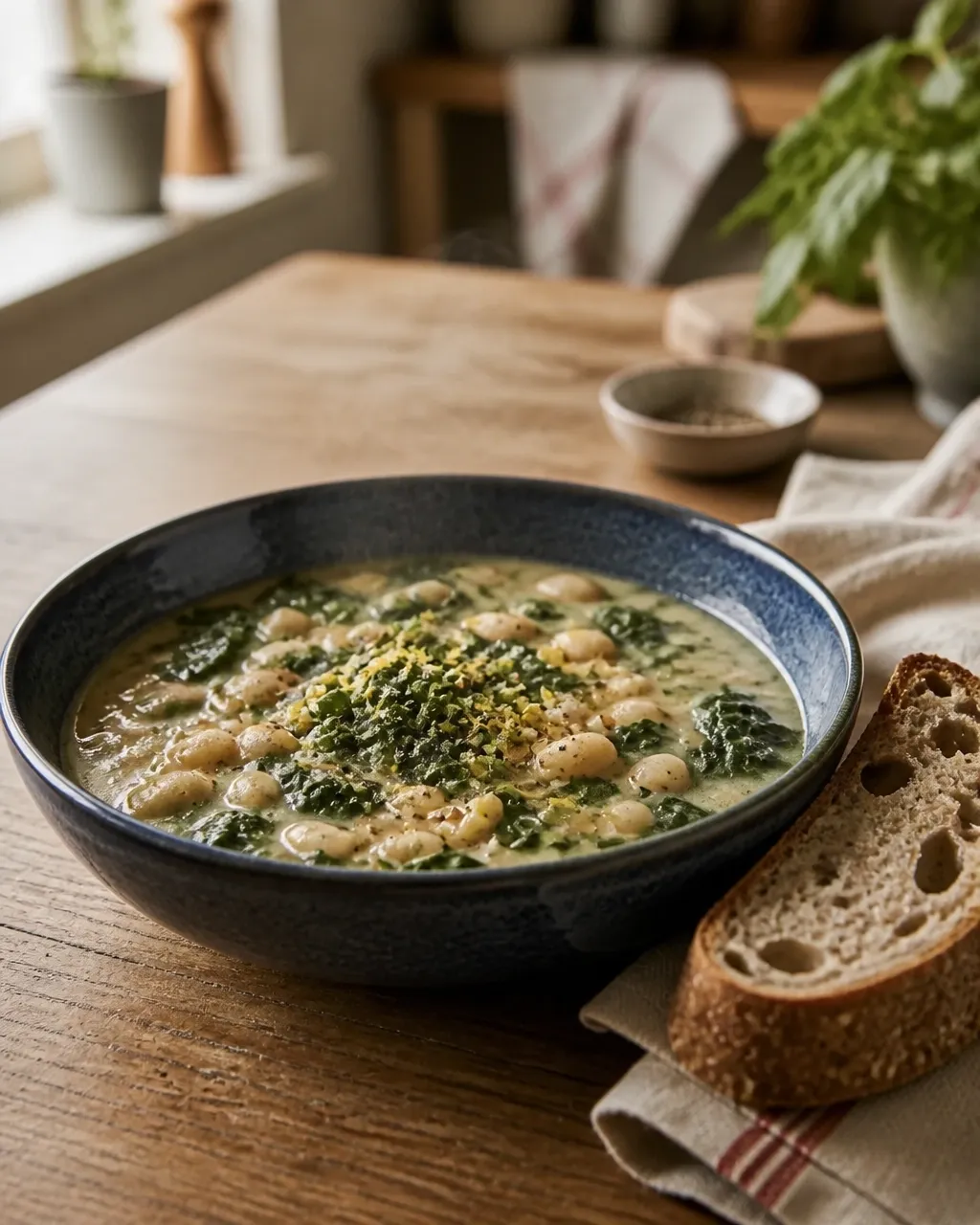
Serve the soup with crusty bread for dipping. Choose a loaf with a firm crust and a slightly chewy center so it can handle the thick broth without collapsing immediately. That is not a criticism of soft bread; it simply has a shorter soup career.
Pair the bowl with a sharp green salad dressed with lemon or vinegar. The acidity and crunch balance the soup’s creamy texture. Add sliced apple, radish, or cabbage for extra freshness.
Roasted vegetables also work well, especially carrots, broccoli, or cauliflower. Their browned edges echo the savory flavors from the soup while adding a different texture.
If you need a larger meal, serve the soup over a small portion of rice or alongside a simple grain salad. Keep the side lightly seasoned. The soup already brings salt, starch, and plenty of flavor, so the pairing should refresh rather than compete.
These combinations are useful for quick family meals because they rely on flexible sides and pantry staples, not a second complicated recipe.
Frequently Asked Questions
Can I make this soup with dried beans?
Yes. Cook the dried beans until completely tender before adding them to the soup. The blending technique depends on soft beans; undercooked beans will stay grainy and can make the soup feel rough. Dried beans are usually the most economical choice, especially when cooked in bulk.
Why is my soup not creamy enough?
Blend a little more of the beans and broth, then return the mixture to the pot. You can also simmer the soup uncovered for a few minutes to reduce excess liquid. Avoid adding flour immediately. The beans already provide a natural thickener, and a longer blend or gentle reduction usually solves the problem more elegantly.
What if the soup becomes too thick?
Stir in warm broth or water a little at a time. Thickening continues as the soup cools because the bean starches firm up. For leftovers, always expect to loosen the soup before reheating. Do not judge the final texture straight from the refrigerator; cold soup is a very poor communicator.
Can I use frozen spinach?
Absolutely. Thaw it and press out excess water before adding it. Frozen spinach is softer than fresh spinach, so add it near the end and heat it just until hot. It may create a darker green color, but the flavor will still work well.
How can I stop the spinach from turning dull?
Add it late and avoid prolonged boiling after it wilts. Bright green color comes from chlorophyll, which can fade with extended heat and acidic conditions. Add lemon at the end rather than early in the cooking process. A little color change is normal, but long simmering will produce a less vibrant bowl.
Can I freeze creamy white bean and spinach soup?
Yes, although the texture may change slightly after thawing. Beans generally freeze well, but the spinach can become softer and the soup may separate a little. Cool it quickly, store it in airtight containers, and leave room for expansion. Reheat gently while stirring. Add a splash of broth to restore the texture.
Is this soup high in protein?
It provides plant protein from the beans, along with fiber and complex carbohydrates. The exact amount depends on the bean variety and serving size. Add whole-grain bread, rice, or another grain for a more substantial meal. If you need significantly more protein, serve it with tofu, a boiled egg, or a small amount of shredded chicken.
What if beans usually upset my stomach?
Start with a smaller portion and rinse canned beans thoroughly. Rinsing removes some of the liquid that can contribute to digestive discomfort. Increase bean servings gradually and drink enough water. If beans consistently cause pain or other symptoms, speak with a healthcare professional rather than forcing your way through the problem.
Can I cook this in a slow cooker?
You can, but sautéing the aromatics first will give you better flavor. Add the cooked or canned beans during the later part of cooking so they do not become completely mushy. Stir in spinach at the end. Blend a portion only after the beans are tender, using safe equipment and caution with hot liquid.
Can I include this in an air fryer recipes dinner plan?
Use the air fryer for a side rather than the soup itself. Crisp a few slices of bread, roast chickpeas, or cook a tray of vegetables while the soup simmers on the stove. Keep the soup in a pot, where you can control its moisture and blend the beans safely. It makes a practical addition to a broader weeknight rotation.
Store the finished soup in the refrigerator for several days and reheat it gently. Make it once, enjoy it twice, and let those inexpensive beans earn their keep.