Recipe
Serves
8 to 10 1×
Serves 8 to 10 slicesPrep 25 minTotal 53 min
Ingredients
Method
- Heat the oven to 180C conventional or 160C fan. Grease two deep 20cm round sandwich tins and line the bases with baking paper.
- Put the instant coffee for the sponge into a small bowl. Add the boiling water, stir until dissolved and leave it to cool completely.
- Add the softened butter, caster sugar, eggs, self-raising flour, baking powder and cooled coffee mixture to a large mixing bowl. Beat for 2 to 3 minutes until smooth and evenly combined.
- Fold in the chopped walnuts. Do not continue mixing once the walnuts are distributed.
- Divide the batter between the prepared tins. For evenly sized layers, weigh the batter and divide it equally. Level the surfaces with the back of a spoon.
- Bake for 25 to 28 minutes. The cakes are ready when risen, lightly golden and firm in the centre. A skewer inserted into the middle should come out clean.
- Leave the cakes in their tins for 5 minutes. Turn them out onto a wire rack, remove the baking paper and leave them to cool completely.
- While the cakes cool, dissolve the instant coffee for the buttercream in the boiling water. Set it aside until completely cold.
- Beat the softened butter for 2 to 3 minutes until pale and smooth. Add the sifted icing sugar gradually, beating after each addition.
- Add the cooled coffee mixture and beat until the buttercream is smooth and spreadable.
- Place the less attractive sponge upside down on a serving plate. Spread with half of the buttercream.
- Place the second sponge on top. Spread the remaining buttercream over the top of the cake and arrange the walnut halves around the surface.
Coffee and Walnut Cake (British Classic)
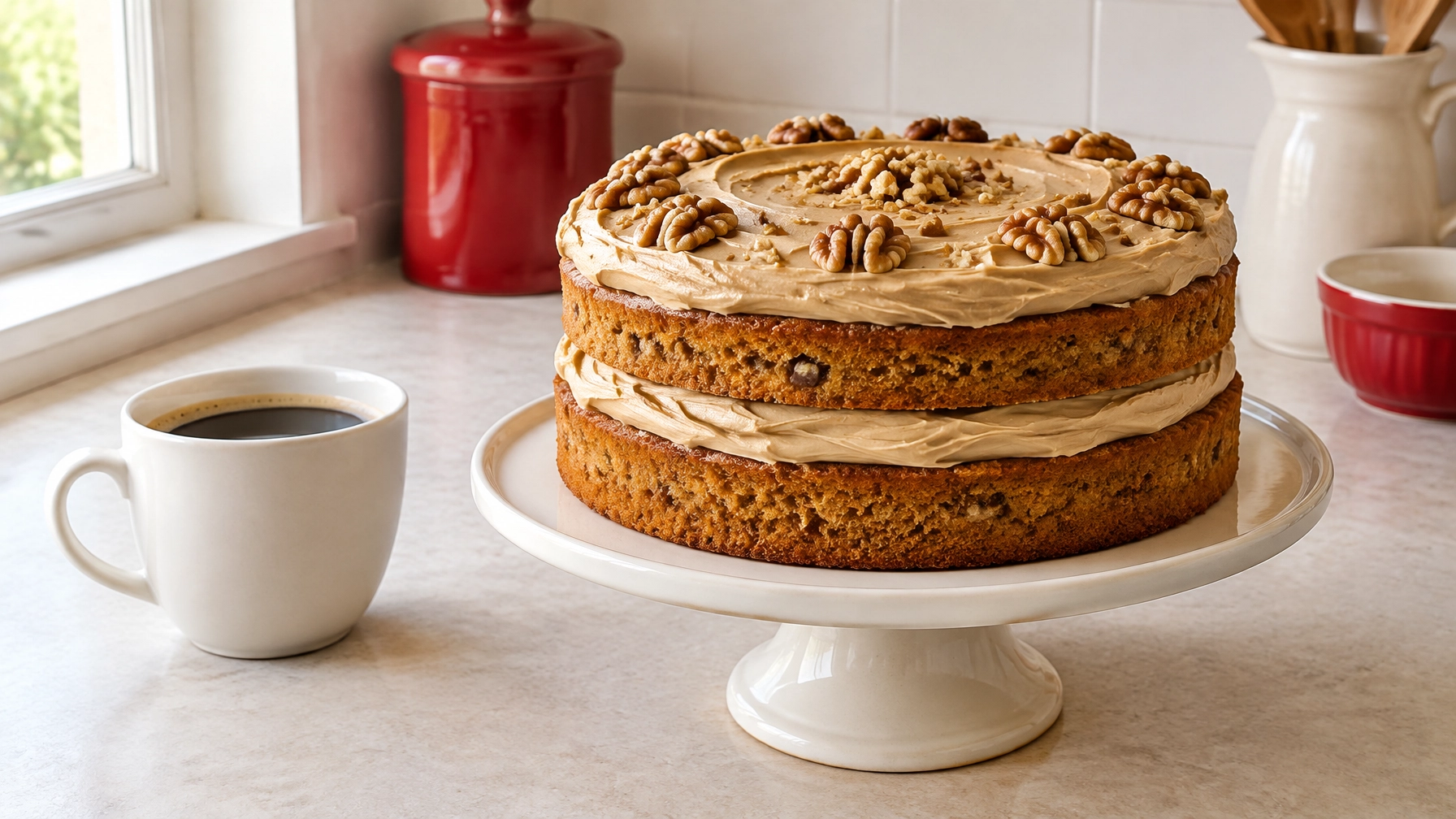
Coffee and walnut cake is a traditional British sandwich cake made with light coffee sponge, chopped walnuts and smooth coffee buttercream. This version makes two even layers with a clear coffee flavour, a tender crumb and a simple walnut finish.
Overview
The recipe uses an all-in-one sponge method. The softened butter, sugar, eggs, flour, baking powder and coffee are mixed together before the walnuts are folded through. This keeps preparation straightforward and produces a dependable cake for afternoon tea, birthdays or a formal dessert table.
Use instant coffee dissolved in boiling water rather than adding dry granules directly to the mixture. The coffee should be completely cool before it is added to the buttercream. Warm liquid can soften the butter and make the icing loose.
For the best texture, use room-temperature butter and eggs. Cold ingredients do not combine as evenly, which can produce a dense or uneven sponge.
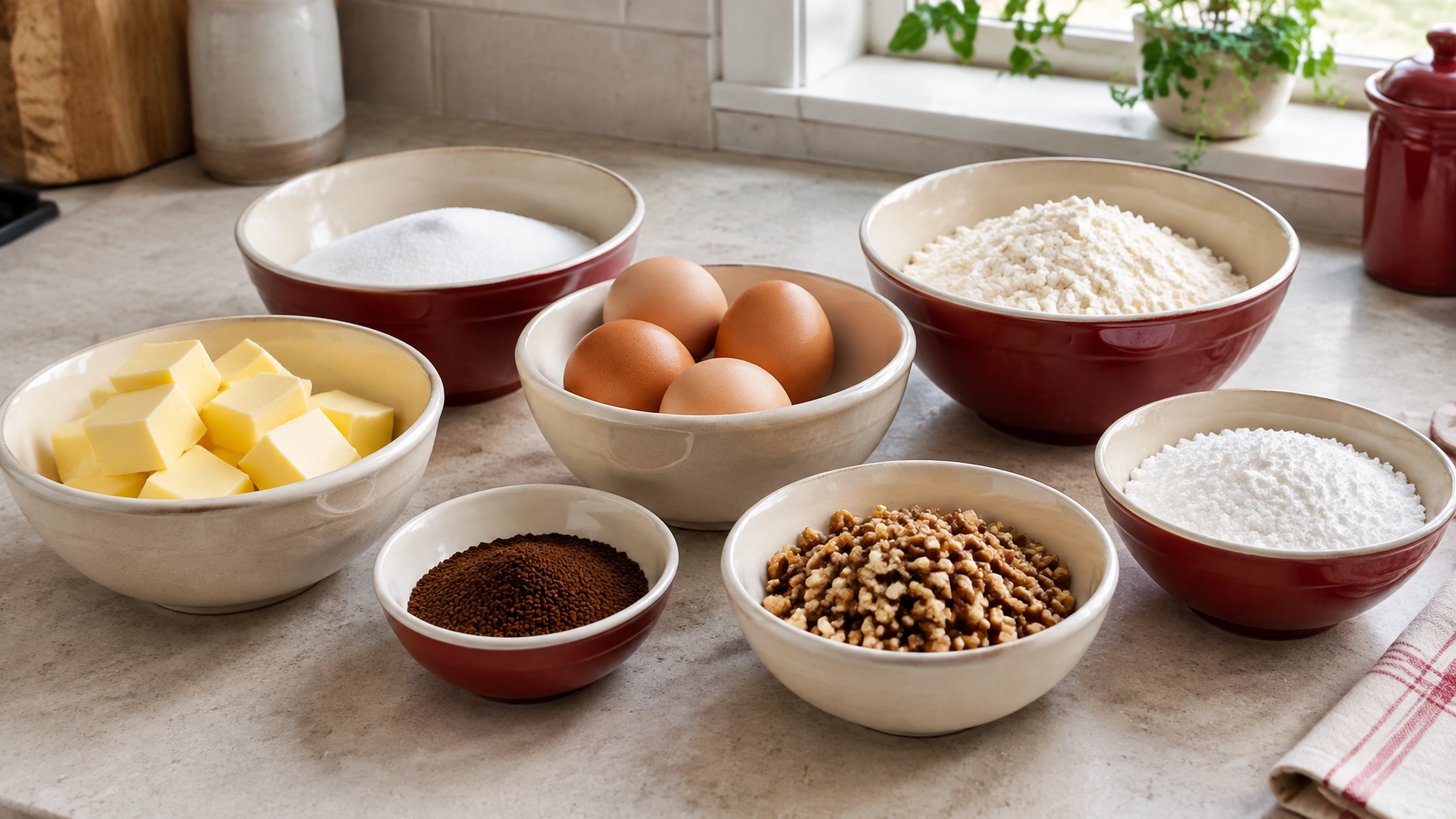
Recipe
Servings: 8 to 10 slices
Prep time: 25 minutes
Cook time: 25 to 28 minutes
Total time: 53 minutes
Tips
- Cool the coffee: Coffee added while hot can soften the buttercream and affect the structure of the sponge.
- Use softened butter: The butter should yield when pressed but should not be oily or melted.
- Avoid overmixing: Beat the main batter only until the ingredients are combined. Excessive mixing can make the cake heavy.
- Measure accurately: Weigh the ingredients for consistent layers and predictable baking time.
- Check both tins: Oven heat can vary. If one cake is browning faster, rotate the tins carefully during the final few minutes.
- Toast the walnuts: Toast the walnuts in a dry frying pan for 3 to 5 minutes, then cool them fully before chopping. This gives a deeper nut flavour.
- Cool before icing: Buttercream will soften and slide if it is spread onto warm sponge.
- Sift the icing sugar: This reduces lumps and creates a smoother buttercream.
Variations
Espresso cake
Replace the instant coffee with 1 tablespoon of cooled, concentrated espresso in the sponge and another tablespoon in the buttercream. Use a small quantity so the mixture does not become wet.
Walnut decoration
For a more pronounced walnut flavour, press finely chopped toasted walnuts around the sides of the iced cake. Keep the top simple with walnut halves.
Loaf cake
Bake the mixture in a lined 900g loaf tin at 170C conventional or 150C fan for approximately 45 to 55 minutes. Test the centre with a skewer before removing it from the oven.
Lighter finish
Use a thinner layer of buttercream between the sponges and spread the remainder in a very thin layer over the top. This keeps the coffee flavour while reducing the amount of icing per slice.
Coffee and walnut cupcakes
Divide the batter between 12 cupcake cases and bake at 180C conventional or 160C fan for 18 to 22 minutes. Cool fully before topping with coffee buttercream.
Serving
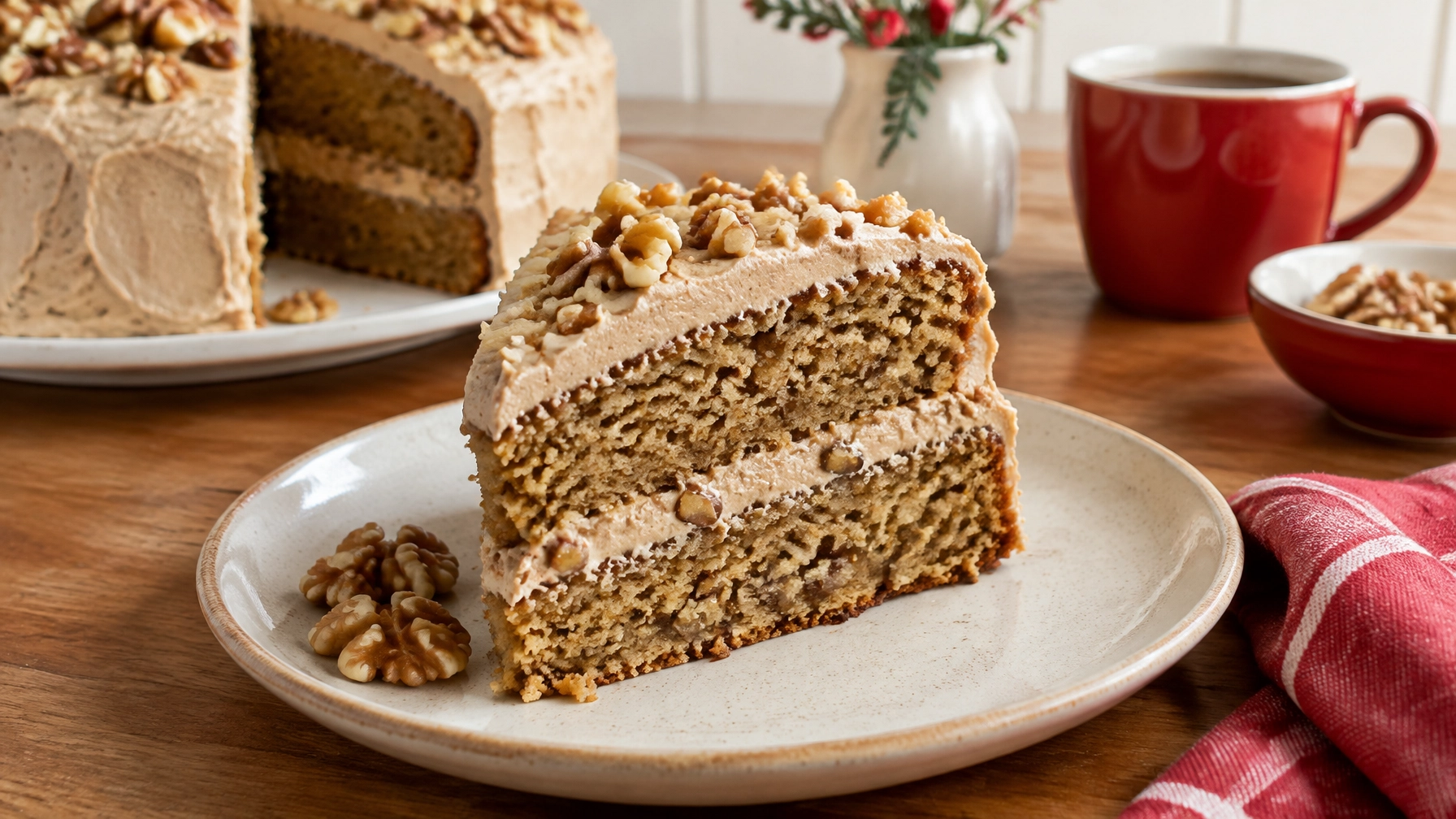
Serve the cake at room temperature. This allows the sponge to soften and brings out the coffee flavour in the buttercream. Cut with a sharp serrated knife, wiping the blade between slices for a clean finish.
The cake is suitable for preparation one day in advance. Keep it covered in an airtight container in a cool place. It is best eaten within 2 to 3 days.
For general guidance on storing chilled or perishable foods, consult the Food Standards Agency food safety guidance.
Questions
Can I use brewed coffee instead of instant coffee?
Yes. Use a small quantity of strong, cooled coffee. Instant coffee is more concentrated and gives a stronger flavour without adding much liquid, so brewed coffee should be reduced before use if it is weak.
Why is my coffee flavour too mild?
The flavour may be too mild if the coffee is weak or if too little is used in the buttercream. Dissolve the granules fully and use a strong instant coffee. The buttercream is the main source of coffee flavour, so taste it before spreading and add a small amount of extra dissolved coffee if needed.
Why did the cake sink in the middle?
A sunken centre can result from opening the oven door too early, underbaking or adding too much liquid. Keep the oven closed until the cake has set and check the centre with a skewer before removing it.
Can I make the sponge ahead?
Yes. Bake the layers up to one day ahead, cool them completely and wrap them tightly. Store them at room temperature until ready to fill and decorate.
Can I freeze coffee and walnut cake?
Freeze the uniced sponge layers individually, wrapped tightly, for up to 3 months. Defrost them at room temperature before adding the buttercream. The finished iced cake can also be frozen, although the buttercream may lose some of its original texture.
Can I use plain flour?
Yes, but add raising agents. For this recipe, replace the self-raising flour with 225g plain flour and add 2 level teaspoons of baking powder in total. The texture may be slightly different from the self-raising flour version.