Recipe
Serves
4 1×
Serves 4Prep 8 minCook 12 minTotal 20 min
Ingredients
Method
- Whisk the cornstarch and water in a bowl. Add the orange juice, orange zest, soy sauce, rice vinegar, honey, ginger, garlic, and red pepper flakes. Mix until combined.
- Pat the chicken dry and season lightly with black pepper.
- Heat the oil in a large skillet over medium-high heat. Add the chicken in one layer and cook for 3 to 4 minutes, turning until browned.
- Reduce the heat to medium. Stir the sauce and pour it into the skillet.
- Simmer for 3 to 5 minutes, stirring, until the sauce thickens and the chicken reaches 165°F or 74°C in the thickest piece.
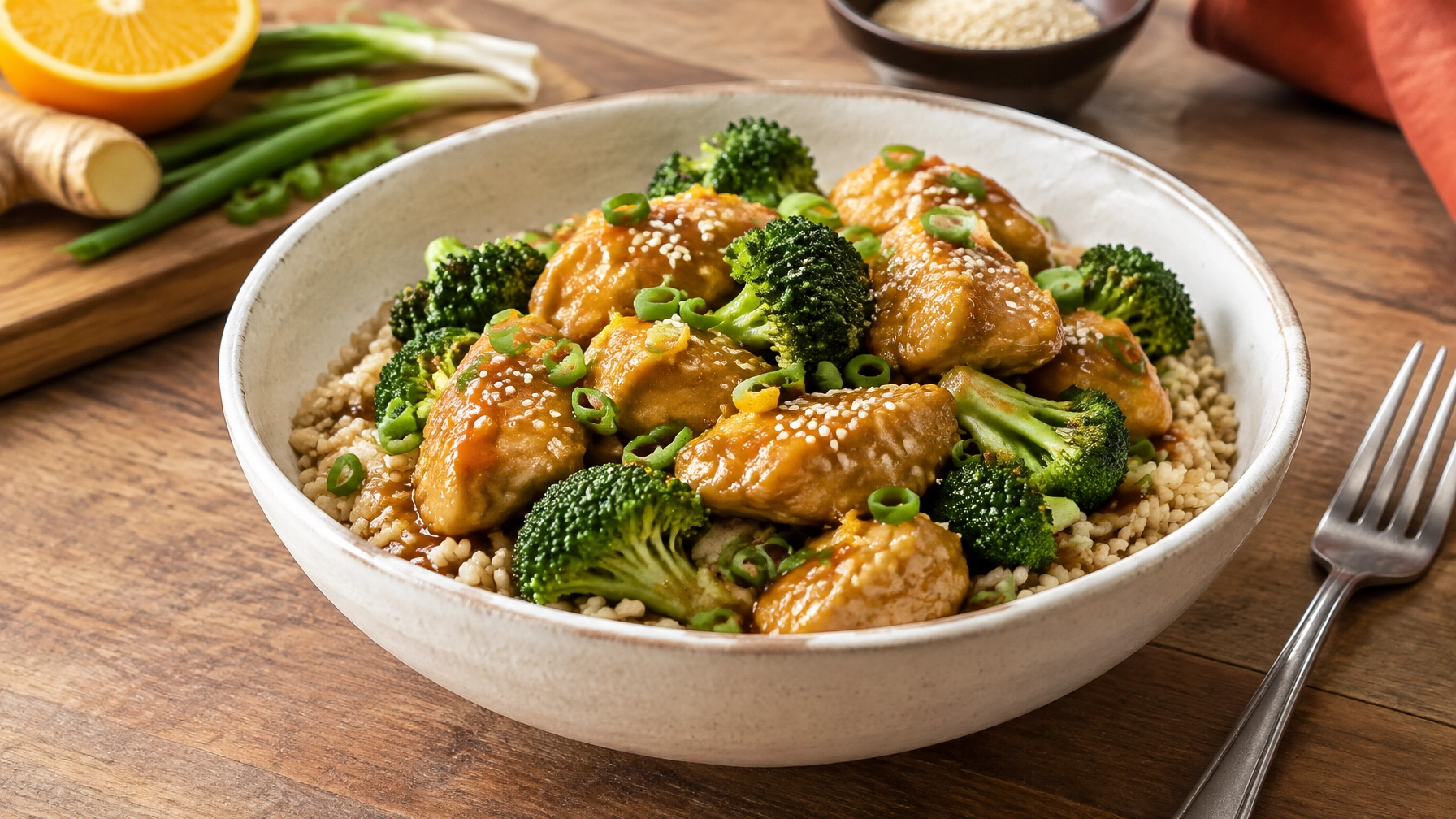
- Garnish with scallions or sesame seeds. Serve with broccoli and brown rice.
Healthy Orange Chicken (20-Minute Dinner)
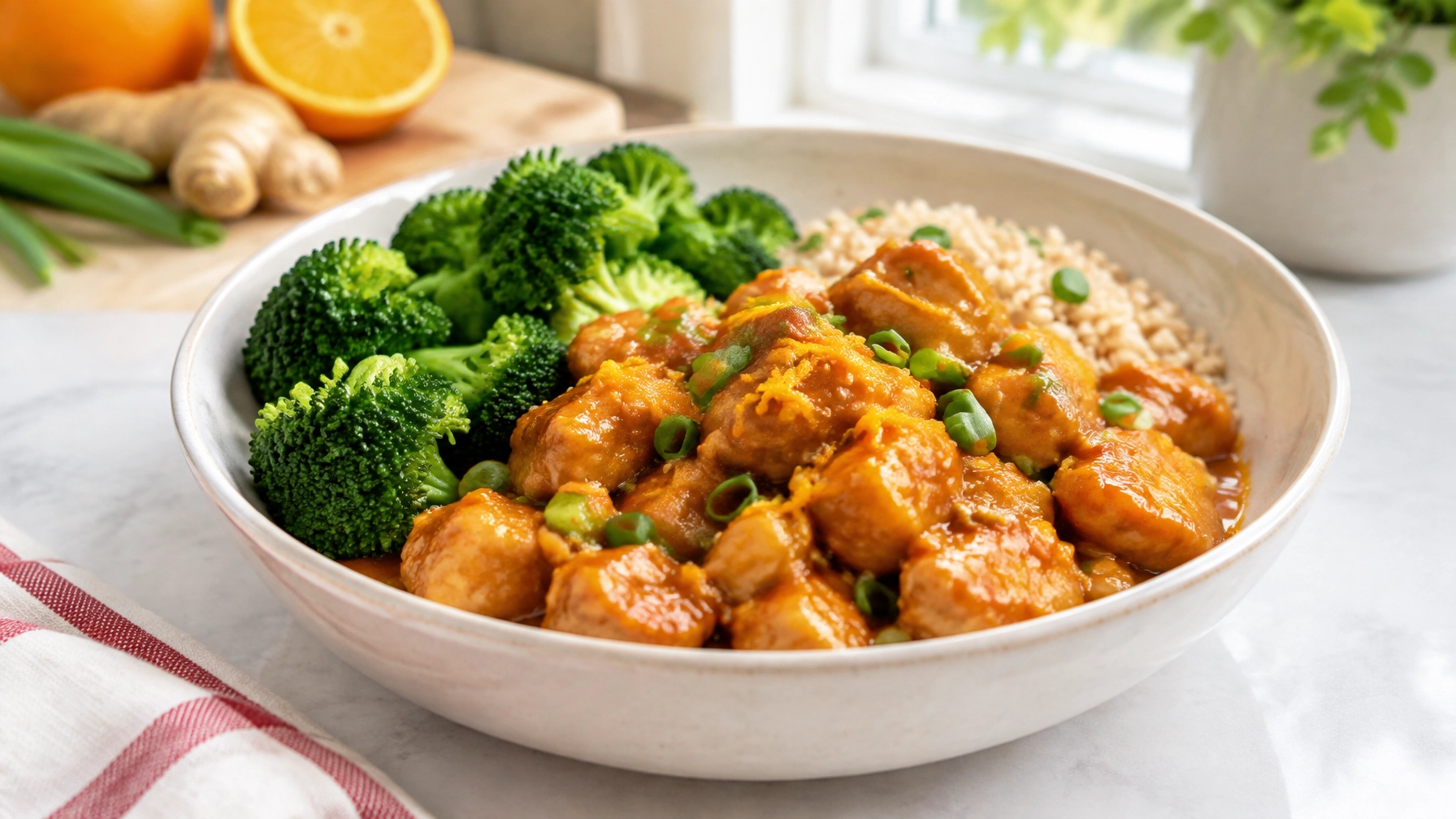
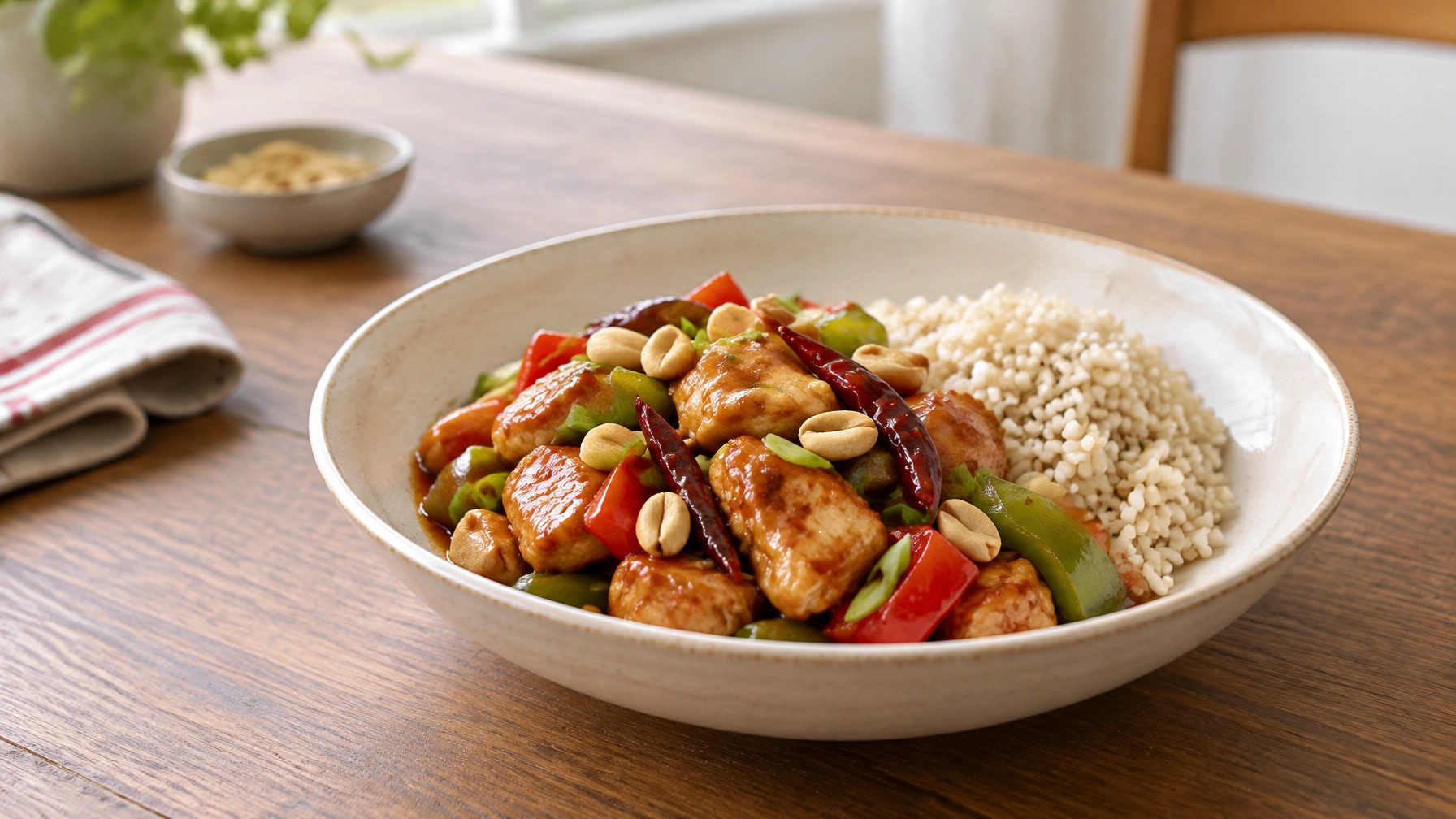
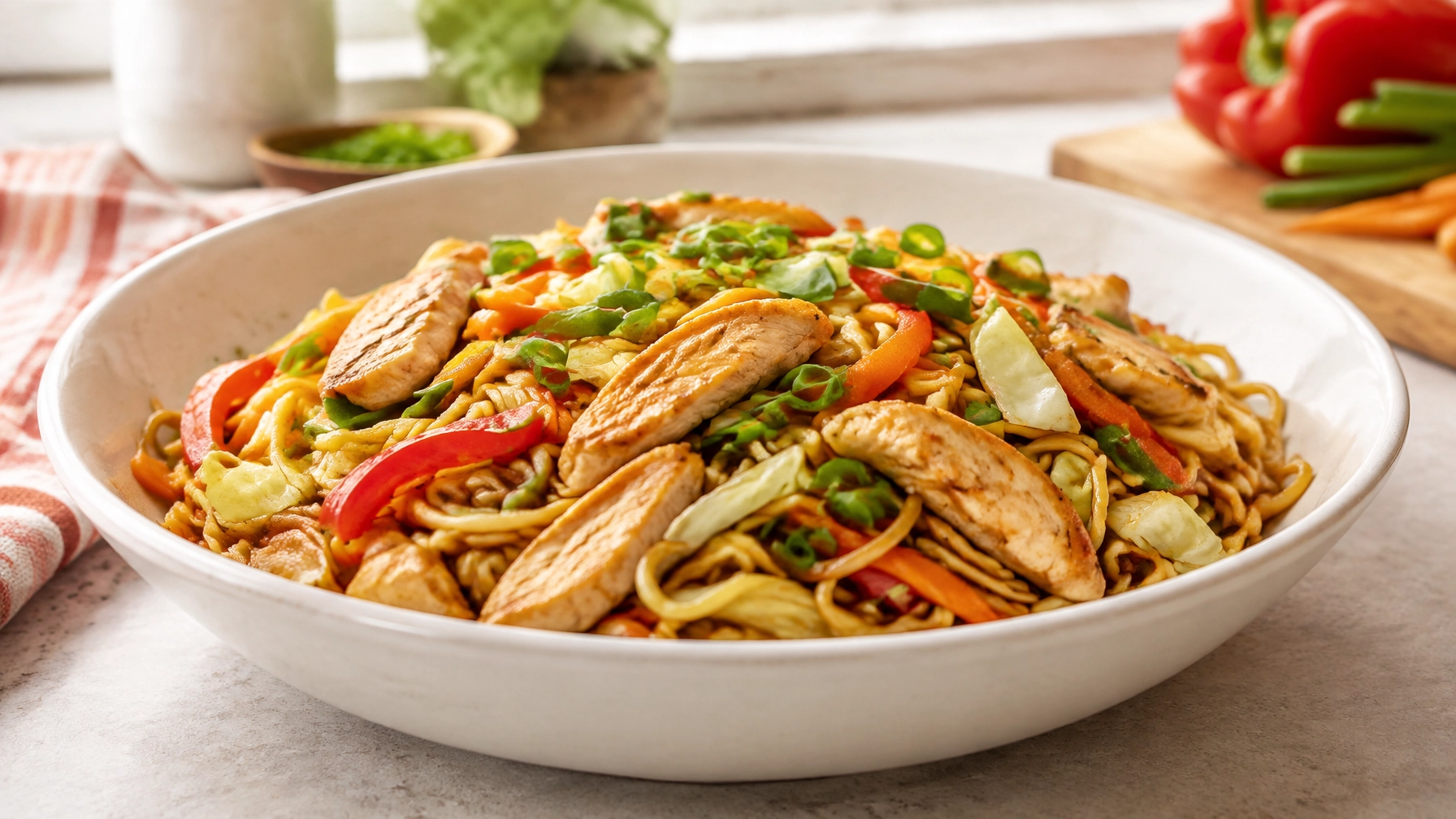
A 20-minute skillet dinner with lightly browned chicken, fresh orange juice, ginger, garlic, and a glossy sauce. This version uses no deep frying and includes practical food-safety instructions.
Overview
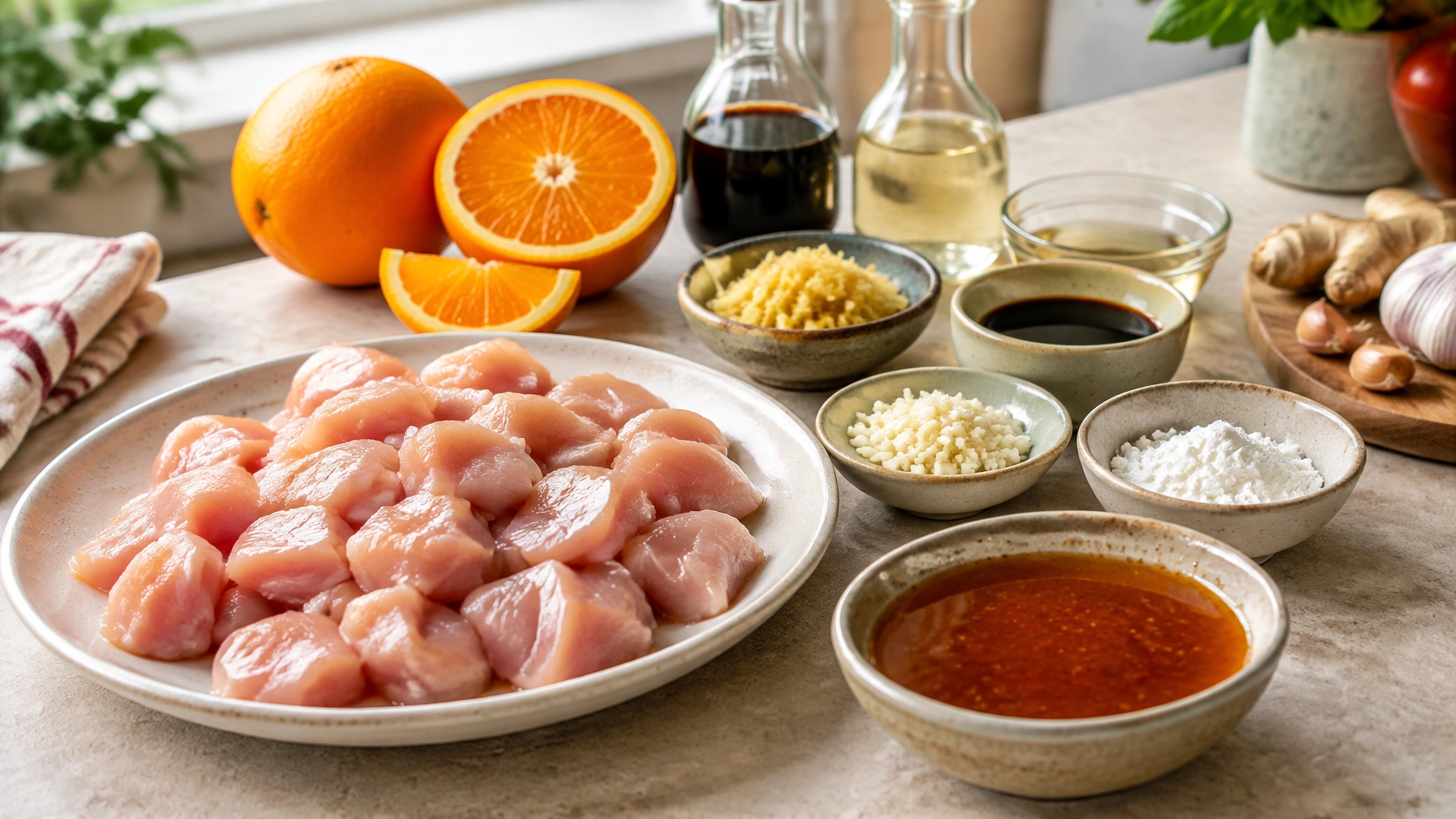
Healthy orange chicken is prepared by searing bite-size chicken in a small amount of oil, then finishing it in a fresh orange and ginger sauce. The sauce uses orange juice, orange zest, reduced-sodium soy sauce, rice vinegar, honey, garlic, and ginger.
The method does not require a deep fryer or a heavy breading mixture. The cornstarch is used in the sauce to create a light glaze. Serve the chicken with steamed broccoli and brown rice for a complete dinner.
The stated 20-minute preparation assumes that the chicken is cut before cooking and that the broccoli and rice are prepared at the same time.
Safety
Chicken must reach a minimum internal temperature of 165°F or 74°C. Measure the thickest piece with a food thermometer rather than relying on colour or the cooking time alone. The FDA safe food handling guidance provides additional information.
Use a separate cutting board and plate for raw chicken. Wash hands, utensils, and work surfaces after contact with raw poultry. Do not place cooked chicken on a plate that previously held raw chicken unless the plate has been washed with hot, soapy water.
Refrigerate leftovers within 2 hours of cooking. If the room temperature is above 90°F or 32°C, refrigerate them within 1 hour. Store the chicken in a shallow, covered container. The FDA storage chart lists cooked poultry leftovers as suitable for refrigeration for 3 to 4 days.
Reheat leftovers to 165°F or 74°C. Discard leftovers that have been held at room temperature beyond the recommended time.
Tips
Cut the chicken evenly. Pieces of similar size cook at a similar rate. Pieces that are too large may brown before the centre is fully cooked.
Avoid overcrowding. If the skillet is crowded, the chicken may steam instead of sear. Use a large skillet or cook in two batches.
Use fresh zest. Orange zest adds more concentrated flavour than juice alone. Avoid grating the bitter white pith beneath the coloured peel.
Control the consistency. For a thinner sauce, add 1 tablespoon of water while the sauce simmers. For a thicker sauce, continue cooking briefly, stirring continuously.
Prepare the sides simultaneously. Start the rice before the chicken. Steam the broccoli while the sauce thickens.
Check the soy sauce. Regular soy sauce produces a saltier dish. Reduced-sodium soy sauce or tamari gives more control over the final flavour.
Variations
Use chicken thighs. Boneless, skinless chicken thighs remain moist and provide a richer result. Cut them into pieces of equal size and verify that they reach 165°F or 74°C.
Increase the vegetables. Add broccoli, snap peas, bell pepper, or thinly sliced carrots. Firm vegetables should be partially cooked before the chicken is added to the sauce.
Make it hotter. Add red pepper flakes, a small amount of chilli garlic sauce, or thinly sliced fresh chilli.
Reduce the sweetness. Use 1 to 2 teaspoons of honey instead of 1 tablespoon. The sauce will taste sharper and more citrus-forward.
Use tofu. Replace the chicken with extra-firm tofu that has been pressed and cut into cubes. Brown the tofu separately, then add it to the finished sauce.
Serve without rice. Use steamed broccoli, cauliflower rice, or shredded cabbage when a lower-carbohydrate side is required.
FAQ
Can orange chicken be made without deep frying?
Yes. This recipe sears the chicken in 1 tablespoon of oil and thickens the sauce with a small amount of cornstarch. It does not use a deep fryer or a deep layer of oil.
Can I use bottled orange juice?
Fresh orange juice is preferable because it provides a brighter flavour and can be paired with fresh zest. Bottled juice can be used when necessary. Select a product without added sugar if possible.
Why is my orange sauce not thickening?
The cornstarch may not have been fully mixed with the water, or the sauce may not have reached a simmer. Stir the sauce before adding it to the skillet and simmer for several minutes. Do not add dry cornstarch directly to the hot pan because it can form lumps.
Can I make this recipe ahead?
The sauce can be mixed up to 24 hours ahead and stored in the refrigerator in a covered container. For the best texture, cook the chicken shortly before serving. Shake or whisk the sauce before adding it to the skillet.
How should I store orange chicken?
Refrigerate the cooked chicken in a shallow, covered container within 2 hours. Use it within 3 to 4 days. Reheat each portion to 165°F or 74°C before serving.
Can I freeze the leftovers?
Freezing is possible, although the sauce may separate slightly after thawing. Cool the chicken promptly, transfer it to a suitable freezer container, and thaw it in the refrigerator. Reheat thoroughly to 165°F or 74°C.
Is this recipe suitable for gluten-free diets?
Use certified gluten-free tamari instead of standard soy sauce. Check the labels on all packaged ingredients, including cornstarch and stock-based products if substitutions are made.