Recipe
Servings
Servings 1×
Ingredients
- Chicken
- Lemon
- Cooking oil
Method
- Use a properly hot oven, around 400°F to 425°F (204°C to 218°C).
- Pat the chicken dry before seasoning it.
- Arrange the breasts in a single layer with room for hot air to circulate.
- Use a thin coating of olive oil to help the herbs adhere and encourage even heat transfer across the surface.
- Use lemon to balance the richness of the chicken and olive oil.
- Add herbs such as rosemary, thyme, parsley, oregano, or basil according to the mood of dinner.
When dinner needs to be simple, reliable, and something everyone will actually eat, baked lemon herb chicken breasts deserve a permanent spot in your rotation. The flavor is bright, savory, and comforting without becoming heavy. More importantly, this method teaches you the few things that make chicken succeed: control surface moisture, manage heat, and stop cooking at the right temperature. Do those three things and dry chicken loses its usual plot twist.
Why This Method Works: Heat, Moisture, and Browning
The best easy dinner recipes do not depend on culinary heroics. They depend on a few repeatable principles. Chicken breasts are lean, which makes them quick to cook but less forgiving than thighs. They contain plenty of water and very little fat to protect the meat, so the oven needs to brown the outside efficiently without pushing the center too far.
Use a properly hot oven, around 400°F to 425°F (204°C to 218°C). This range gives the chicken enough energy to develop appealing color and roasted flavor while keeping the cooking time short. A cooler oven may eventually cook the meat, but it gives moisture more time to escape and can leave you with pale chicken and a sad little puddle of juices.
Pat the chicken dry before seasoning it. This is not busywork. Surface water has to evaporate before browning can begin, and evaporation consumes heat. A damp breast spends the early part of baking steaming instead of browning. Dry the surface thoroughly and the oven can get to the flavorful part sooner.
The Maillard Reaction Does the Heavy Lifting
Browning is more than a color upgrade. It is the result of the Maillard reaction, a group of chemical reactions between amino acids and sugars that creates toasted, savory, nutty flavors. It is why browned chicken tastes much more interesting than chicken that has merely turned opaque.
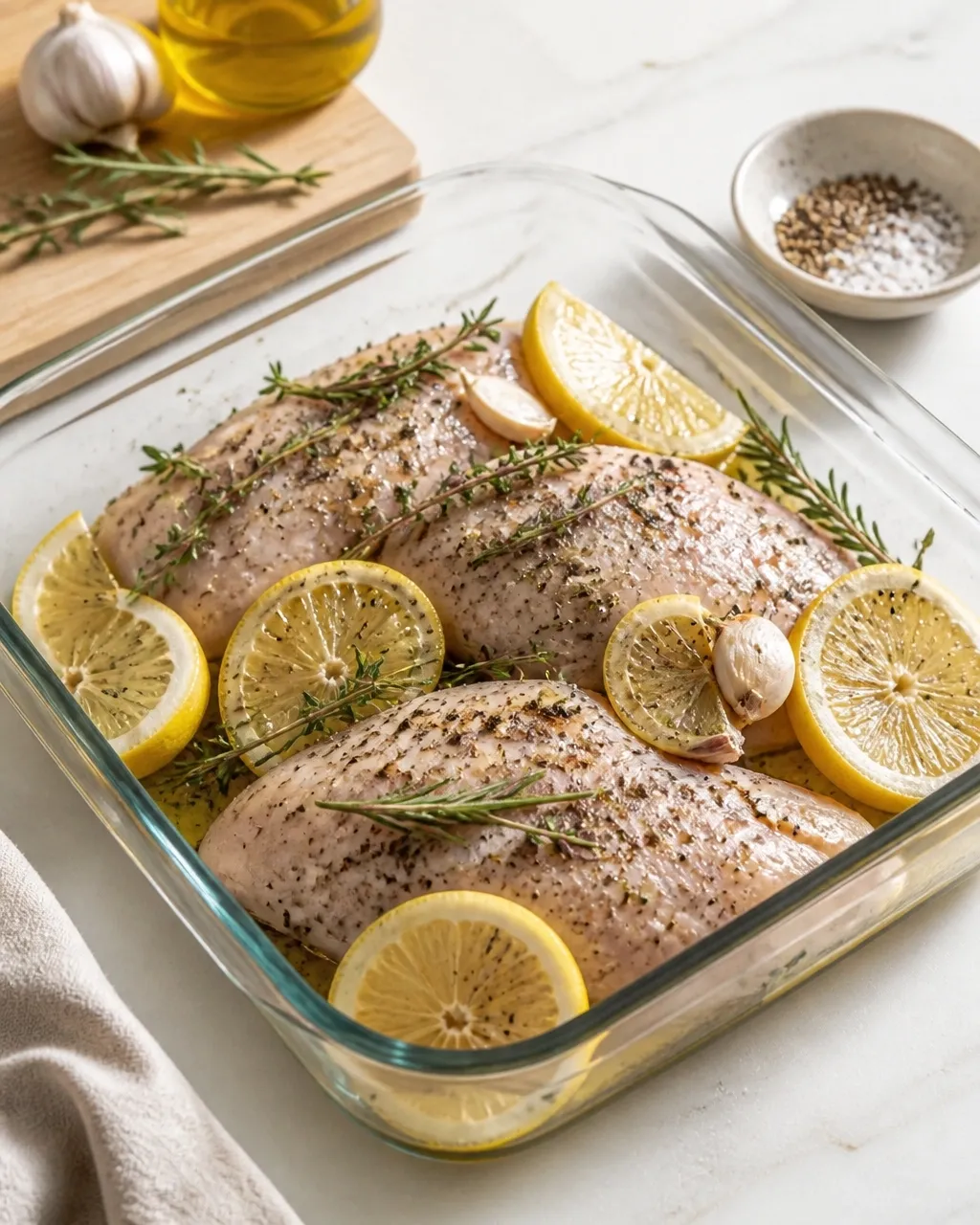
Encourage that reaction by leaving space between the chicken pieces. Crowding traps steam, and steam is excellent for softening food but terrible for browning it. Arrange the breasts in a single layer with room for hot air to circulate. If your baking dish looks like a chicken traffic jam, use a larger pan.
Use a thin coating of olive oil to help the herbs adhere and encourage even heat transfer across the surface. The oil also carries fat-soluble flavors from herbs and spices, helping the aromatic notes spread more evenly over the chicken. Lemon zest is particularly useful here because it delivers intense citrus fragrance without adding as much liquid as lemon juice.
Lemon Brings Contrast, Not Instant Juiciness
Lemon juice gives the chicken brightness, but do not ask it to perform miracles. Acid affects the surface proteins and contributes a tender, seasoned outer layer, but it does not prevent overcooking. Internal temperature controls moisture far more than lemon does.
Use lemon to balance the richness of the chicken and olive oil. Acidity makes savory flavors feel cleaner and more lively, especially when the meat has picked up browned bits from the pan. Add herbs such as rosemary, thyme, parsley, oregano, or basil according to the mood of dinner. Woody herbs bring depth; leafy herbs add freshness.
Avoid marinating the chicken in strong lemon juice for an excessively long time. Extended acid exposure can make the outer surface soft or slightly chalky while doing very little for the center. A short seasoning period is enough for this recipe. Let heat and timing handle the actual cooking.
Cook by Temperature, Not by the Clock
Chicken breasts vary wildly in size and thickness, so cooking time is only a rough estimate. Treat the thermometer as your most dependable kitchen assistant. Insert an instant-read thermometer into the thickest part of the breast, approaching from the side if necessary. Avoid touching the pan, which can give you a falsely high reading.
For the safest and juiciest result, remove the chicken when the center reaches about 158°F to 160°F (70°C to 71°C), then let it rest until it reaches at least 165°F (74°C). Carryover cooking will usually raise the temperature several degrees as heat travels from the hotter outer layers toward the center.
If you prefer to cook directly to 165°F, that is also a sound approach. Just understand that the final temperature may climb higher while the chicken rests, increasing the chance of dryness. Either way, check the thickest piece rather than trusting the color of the juices or the number of minutes on the timer.
Resting Protects the Juices
Rest the chicken for five to ten minutes before slicing. This is not a decorative pause while everyone stares at the plates. It is part of the cooking process.
During baking, the muscle fibers contract and push moisture toward the center and outer edges. Slicing immediately gives those juices a quick escape route onto the cutting board. Resting allows the temperature to even out and the moisture to redistribute through the meat.
Cover the chicken loosely if you like, but avoid wrapping it tightly. A tight foil cover traps steam and softens the browned surface. Let the meat rest while you toss a salad, warm a side dish, or locate the serving spoon that somehow vanished.
Variations: Change the Flavor, Keep the Science
Once you understand the method, turn this recipe into several different dinners without changing the basic cooking principles.
Try Mediterranean herbs. Replace the usual rosemary-heavy profile with oregano, parsley, garlic, and a pinch of smoked paprika. Add a few olives or crumble feta over the finished chicken for salty contrast. Keep the lemon because its acidity prevents the flavors from feeling too dense.
Make it mustardy. Add Dijon mustard to the lemon and oil mixture. Mustard brings acidity, gentle heat, and savory depth. It also helps the seasoning cling to the chicken. Balance the stronger flavor with fresh parsley or chives after baking.
Go garlic-forward. Use whole garlic cloves in the baking dish. They soften in the oven and become sweet and spreadable rather than aggressively sharp. Spoon the mellowed garlic and pan juices over the chicken before serving.
Flatten the chicken. Pound very thick breasts to a more even thickness. Uniform pieces cook at a more predictable rate, reducing the chance that the thin end dries out while the center catches up. This is one of the most useful tricks for busy cooks because it improves consistency without adding much work.
Use the air fryer for smaller portions. If you are cooking only a few chicken pieces, fast-moving hot air can brown the surface quickly. Adapt the seasoning, check the thickest part with a thermometer, and remember that air fryers vary. It is a smart option when searching for air fryer recipes dinner ideas, but temperature still matters more than the appliance’s confidence.
Side Dish Pairings: Build Contrast
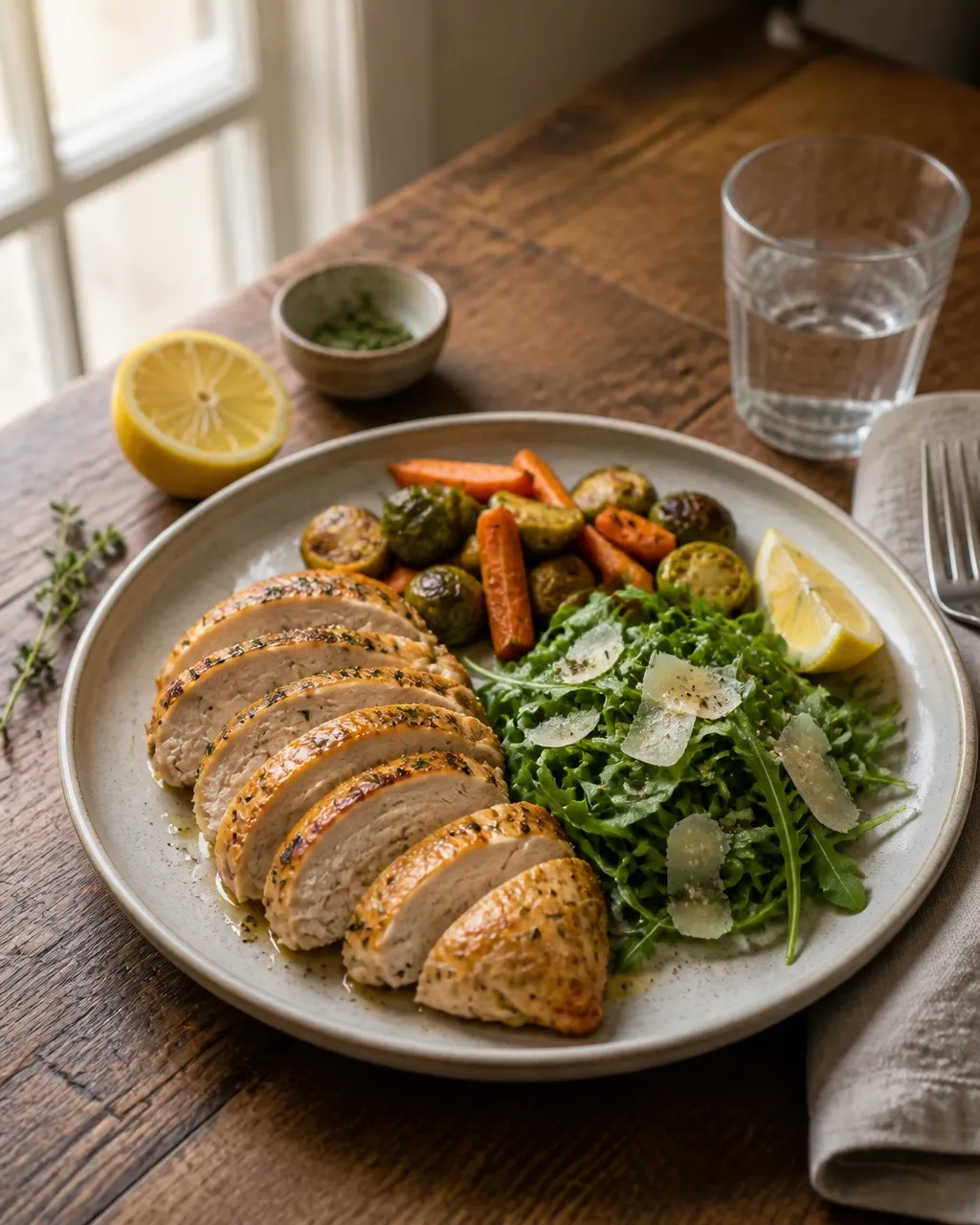
Pair the chicken with sides that bring acidity, crunch, color, or a different texture. A peppery arugula salad with a sharp dressing is an excellent match because the greens cut through the savory richness. Cookpedia’s zesty arugula salad gives you that fresh contrast without competing with the chicken.
Add a simple starch when you need a more filling plate. One-pan creamy garlic parmesan pasta catches the lemony pan juices beautifully, although a smaller serving keeps the meal balanced.
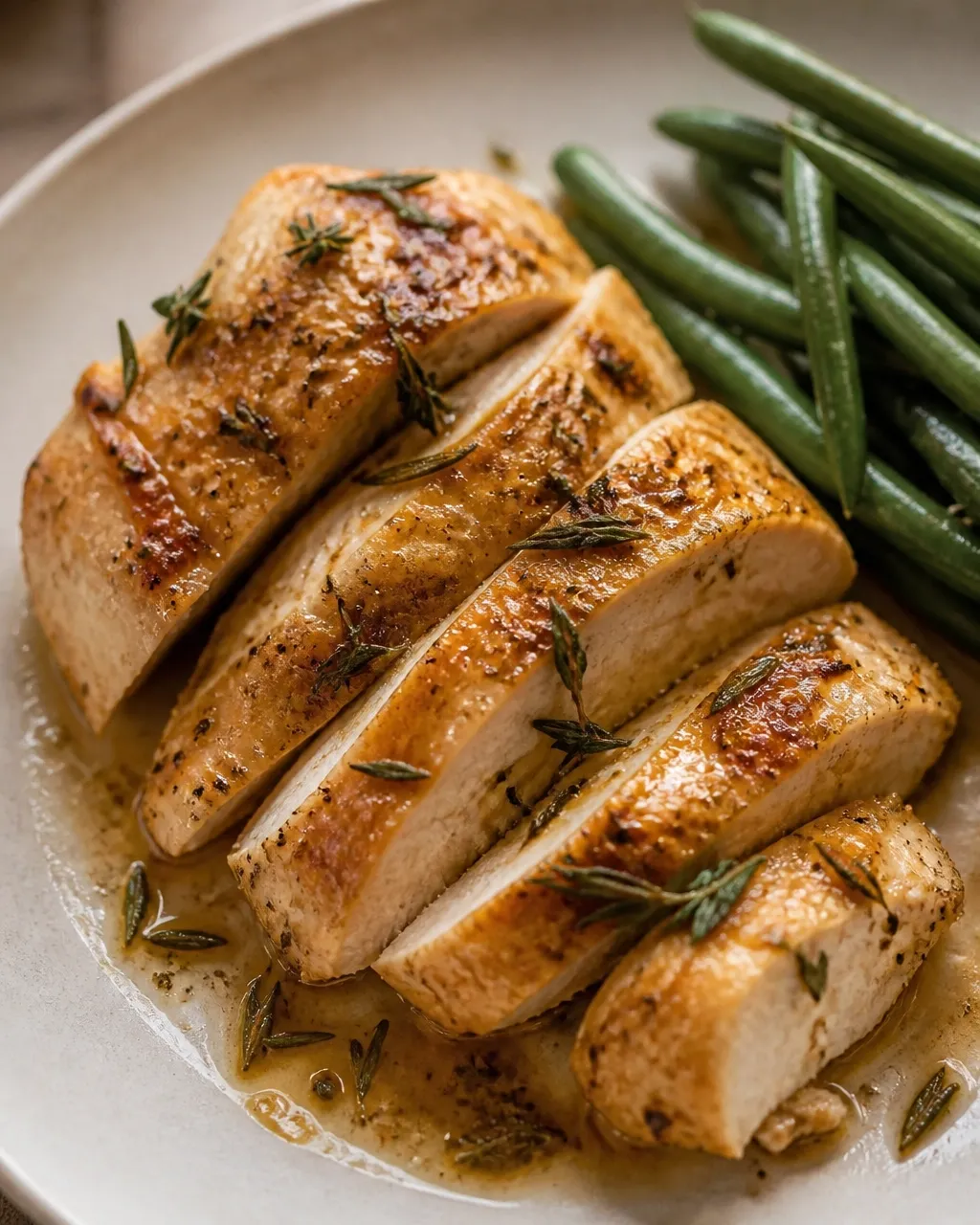
For lighter healthy dinner ideas, choose roasted vegetables, steamed green beans, or a crisp cucumber salad. Root vegetables echo the chicken’s caramelized notes, while something vinegary provides a welcome palate reset. For quick family meals, use one prepared side and one no-cook side. Dinner does not need three pans and a supporting cast.
FAQ: Troubleshooting Baked Chicken Breasts
Why did my chicken turn out dry?
Usually, it cooked past the ideal internal temperature. Chicken breast has little fat or connective tissue, so its texture declines quickly once it becomes overcooked. Check the thickest part with a thermometer and begin checking early, especially if the breasts are small or uneven. Resting also helps, but it cannot rescue severely overcooked meat.
What if the chicken is browned outside but still raw inside?
The pieces may be too thick, the oven may be running cooler than its setting, or the pan may be overcrowded. Move the chicken to a roomier dish if needed and continue baking until the thickest part reaches at least 165°F. Do not judge doneness by surface color. Brown skin tells you about the outside; the thermometer tells you about the center.
What if my chicken breasts are different sizes?
Even them out before baking. Pound the thickest sections gently or tuck thinner ends underneath. Otherwise, the smallest breast may be dry by the time the largest one is safe. If you cannot make them similar in size, remove smaller pieces as they finish and let larger ones continue cooking.
Can I use frozen chicken breasts?
Thaw them first for the most even result. Frozen chicken releases extra moisture as it cooks, which can interfere with browning and make timing less predictable. Thaw in the refrigerator rather than on the counter, then pat the chicken dry before seasoning.
What if I do not own a meat thermometer?
Use one if you can; it is a small investment that removes a great deal of guesswork. If you have no alternative, cut into the thickest part and check that the meat is opaque all the way through, but recognize that this method is less precise and releases juices. A thermometer is the non-negotiable tool for consistently safe chicken.
Can I bake chicken in the marinade?
Yes, provided the chicken and the surrounding marinade are cooked thoroughly. Any marinade that touched raw chicken must be cooked rather than reused as a cold sauce. For extra flavor at the table, reserve a clean portion before it touches the raw meat.
Why does the lemon flavor seem weak?
Lemon juice adds acidity, but the aromatic oils in the zest provide much of the recognizable lemon fragrance. Use zest with the juice, and finish with a small squeeze over the rested chicken. Adding lemon only at the beginning can make the flavor less lively after baking.
What if the herbs burn?
Woody herbs usually handle the oven well, but delicate herbs can darken quickly. Keep tender herbs such as parsley for the finish, or tuck them into the pan juices rather than placing them directly on the hottest surface. If the top is browning too fast, loosely tent the chicken with foil.
Can I prepare this ahead of time?
You can season the chicken several hours ahead and keep it refrigerated. Bring the baking dish out while the oven preheats, but do not leave raw chicken sitting at room temperature for a long stretch. Cooked leftovers are useful in salads, wraps, grain bowls, and sandwiches. Store them promptly and reheat gently so they do not become tomorrow’s dry chicken problem.
What should I do with leftovers?
Slice the chicken cold for sandwiches or warm it gently with a splash of broth or a spoonful of pan juices. Avoid blasting it in the microwave for several minutes, which drives out moisture quickly. Leftovers are also excellent over one-pot chicken and spinach pasta or alongside a quick salad for an easy next-day lunch.
ラックバック