Recipe
Servings
4 1×
Serves 4Prep 15 minCook 20 min
Ingredients
- 1 pound ground turkey, ideally 93% lean
- 1 large egg
- 1/3 cup whole-wheat breadcrumbs or almond flour
- 2–3 garlic cloves, finely minced
- 2 tablespoons chopped fresh parsley
- 1 teaspoon dried Italian seasoning
- 2 tablespoons finely grated Parmesan, optional
- 1 tablespoon olive oil
- 3/4 teaspoon kosher salt
- 1/2 teaspoon black pepper
- 2 medium zucchini, cut into half-moons
- 1 tablespoon olive oil
- Salt and pepper
- A pinch of chili flakes, optional
- Lemon wedges, for serving
Method
- Heat the oven to 400°F and line a large rimmed sheet pan with parchment.
- Toss the zucchini with olive oil, salt, pepper, and chili flakes. Spread it out in a single layer.
- Combine the meatball ingredients gently until just mixed. Shape the mixture into 16 meatballs.
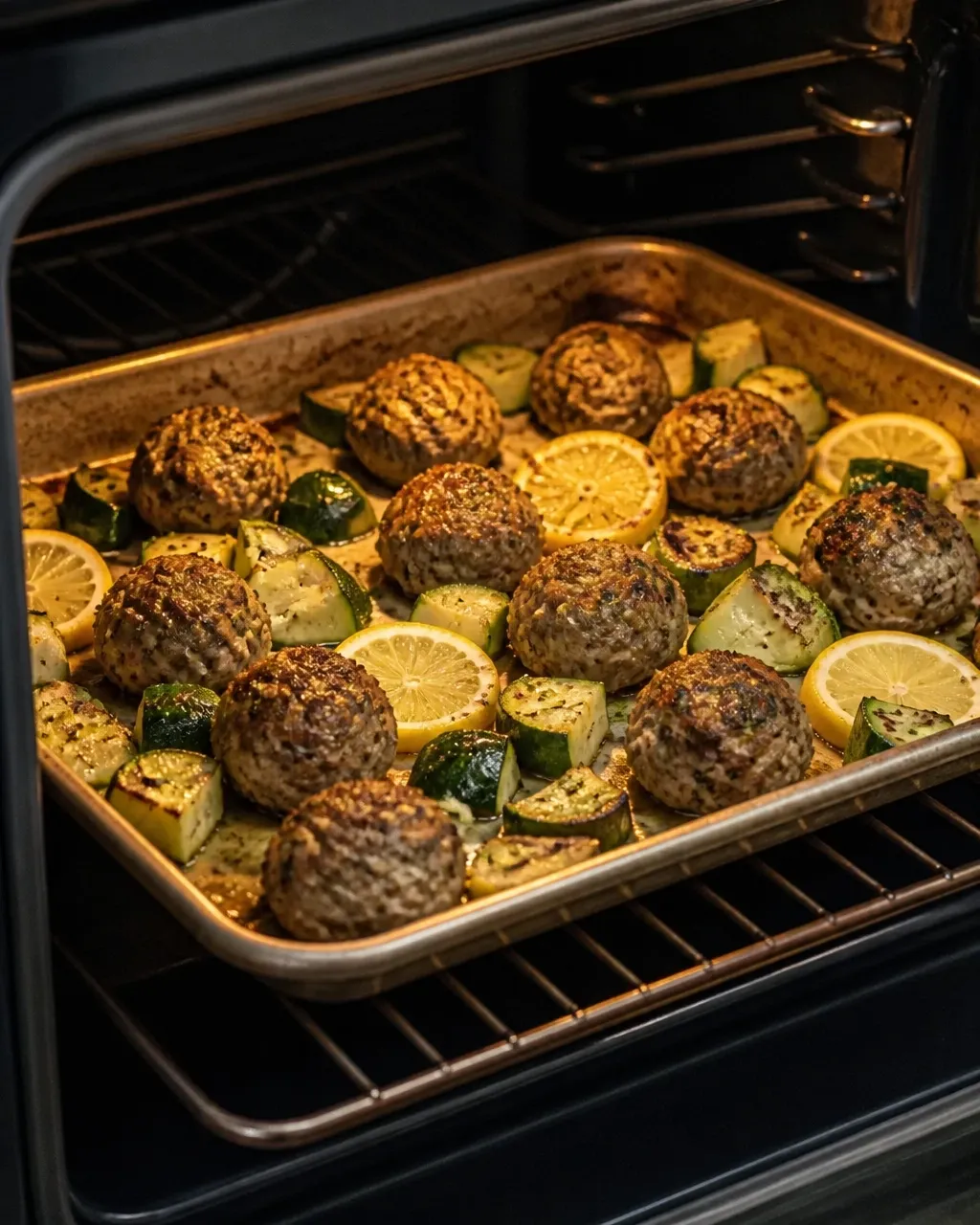
- Arrange the meatballs beside the zucchini, leaving space between them.
- Roast for 18–22 minutes, or until the meatballs reach 165°F in the center and the zucchini is tender with browned edges.
- Finish everything with fresh lemon juice and chopped parsley.
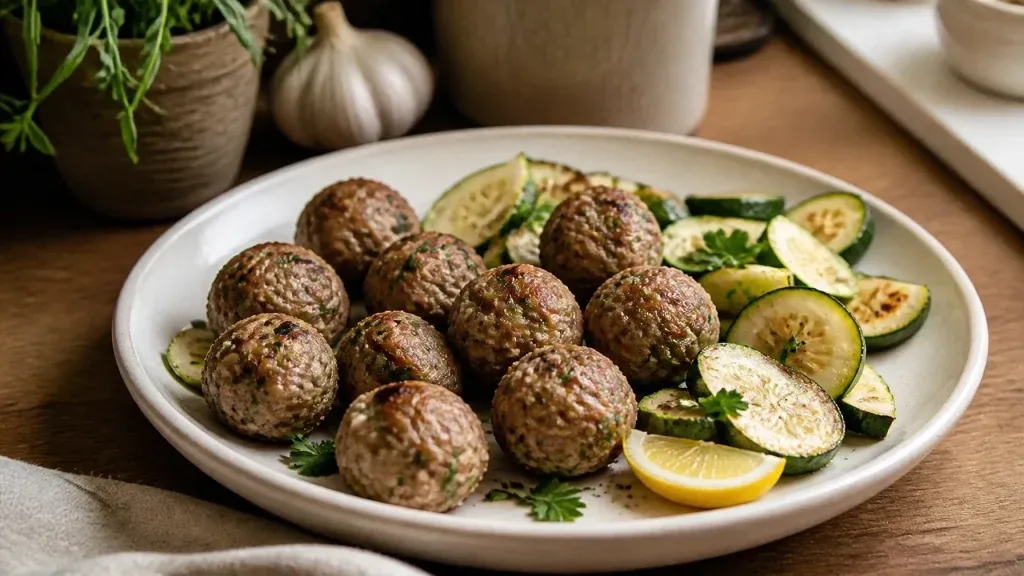
Some weeknight dinners ask you to choose between healthy and satisfying. These garlic herb turkey meatballs with zucchini refuse to participate in that argument. They bring lean protein, roasted vegetables, bright lemon, and plenty of savory flavor to one sheet pan, with very little drama.
This is one of my favorite healthy dinner ideas when I want something comforting but not heavy. Serve it as written for a lighter plate, or add a grain when everyone arrives at the table especially hungry.
Tips & Technique: The Science of Tender Meatballs
Build a moisture trap with a panade
Lean ground turkey can go from juicy to “why am I chewing a tennis ball?” surprisingly quickly. The fix is a simple panade: a mixture of a dry binder and moisture.
Here, the egg and breadcrumbs work together. The breadcrumbs absorb liquid as they hydrate, while the egg helps the mixture set during cooking. That gives the meatball structure without making it dense. Almond flour works as a gluten-free alternative, although it creates a slightly softer, more delicate texture.
Mix the binder into the turkey gently. Do not knead the mixture like bread dough. Ground meat contains proteins that become tighter and more elastic when worked aggressively. Overmixing develops those proteins and produces compact meatballs. Stop as soon as there are no obvious streaks of egg or dry crumbs.
Choose turkey with enough fat to stay juicy
Use turkey that is lean but not extremely lean. Around 93% lean gives you a better balance of flavor and moisture than extra-lean turkey. The small amount of fat melts into the meatballs as they roast, helping them stay tender.
If extra-lean turkey is all you have, add the olive oil listed in the recipe and be especially gentle when mixing. You can also fold in a tablespoon of finely grated onion or zucchini. The added moisture helps, but squeeze grated zucchini lightly first so the mixture does not become impossible to shape.
Give the meatballs room to brown
Spacing is not a decorative detail. It is dinner science.
When meatballs are packed tightly together, the moisture they release becomes trapped in the pan. Instead of browning, the meatballs steam. Steaming is useful for dumplings; it is less exciting for turkey meatballs.
Leave a little room between each one and spread the zucchini into a single layer. The hot air can then circulate around the food, surface moisture can evaporate, and browning can happen. That browning comes from Maillard reactions, which create the deep, savory flavors we associate with roasted food.
Cut zucchini for texture, not just appearance
Zucchini contains a great deal of water. Cut it too thinly, and it can collapse into a soft, watery heap before the meatballs finish cooking. Half-moon pieces about 1/2 inch thick hold their shape better and develop lightly browned edges.
Avoid crowding the zucchini. If the pan looks packed before it goes into the oven, use a second pan. Yes, that creates one more item to wash. It also prevents a soggy vegetable situation, which is the sort of small sacrifice future-you will appreciate.
Use moderate oil rather than flooding the pan. Oil conducts heat across the surface and helps the zucchini brown, but too much can make the vegetables greasy instead of roasted.
Cook by temperature, not by guesswork
Ground poultry should reach an internal temperature of 165°F. Check the thickest meatball with an instant-read thermometer, inserting the probe from the side toward the center.
Do not rely only on color. Turkey meatballs can look done before the middle reaches a safe temperature, or remain slightly pink even when fully cooked. A thermometer lets you stop cooking at the right moment instead of roasting the meatballs into tiny herb-scented bricks.
Finish with lemon after cooking. Acid brightens savory flavors and cuts through the richness of the turkey and olive oil. Add it at the table rather than before roasting so its fresh, sharp character remains noticeable.
For another approachable weeknight idea, browse Cookpedia’s healthy recipes and 30-minute meals.
Variations That Keep the Balance
Make them Mediterranean
Add crumbled feta, dried oregano, and a little lemon zest to the meatball mixture. Serve with cucumber, tomatoes, and a spoonful of plain Greek yogurt mixed with lemon juice. The cool yogurt and crisp vegetables balance the warm, savory meatballs.
Add a tomato-pepper sauce
Roast the meatballs without zucchini, then warm them in a quick tomato sauce after they reach a safe temperature. Add spinach at the end. The sauce brings acidity and moisture, while the greens add color and bulk. Serve with whole-grain pasta or crusty bread.
Try a lower-carb plate
Replace breadcrumbs with almond flour and serve the meatballs over cauliflower rice, sautéed greens, or extra roasted zucchini. Add a creamy lemon-herb yogurt sauce for contrast. Keep the sauce bright rather than overly rich; the meatballs already have plenty of savory depth.
Use the air fryer
For air fryer recipes dinner fans, cook the meatballs in a lightly oiled air-fryer basket at 375°F, turning once, until the centers reach 165°F. Cook the zucchini separately if your basket is small. Crowding still causes steaming, even when the appliance has a very enthusiastic name.
Side Dish Pairings for a Complete Plate
Pair these meatballs with something that adds contrast rather than repeating the same soft, savory notes.
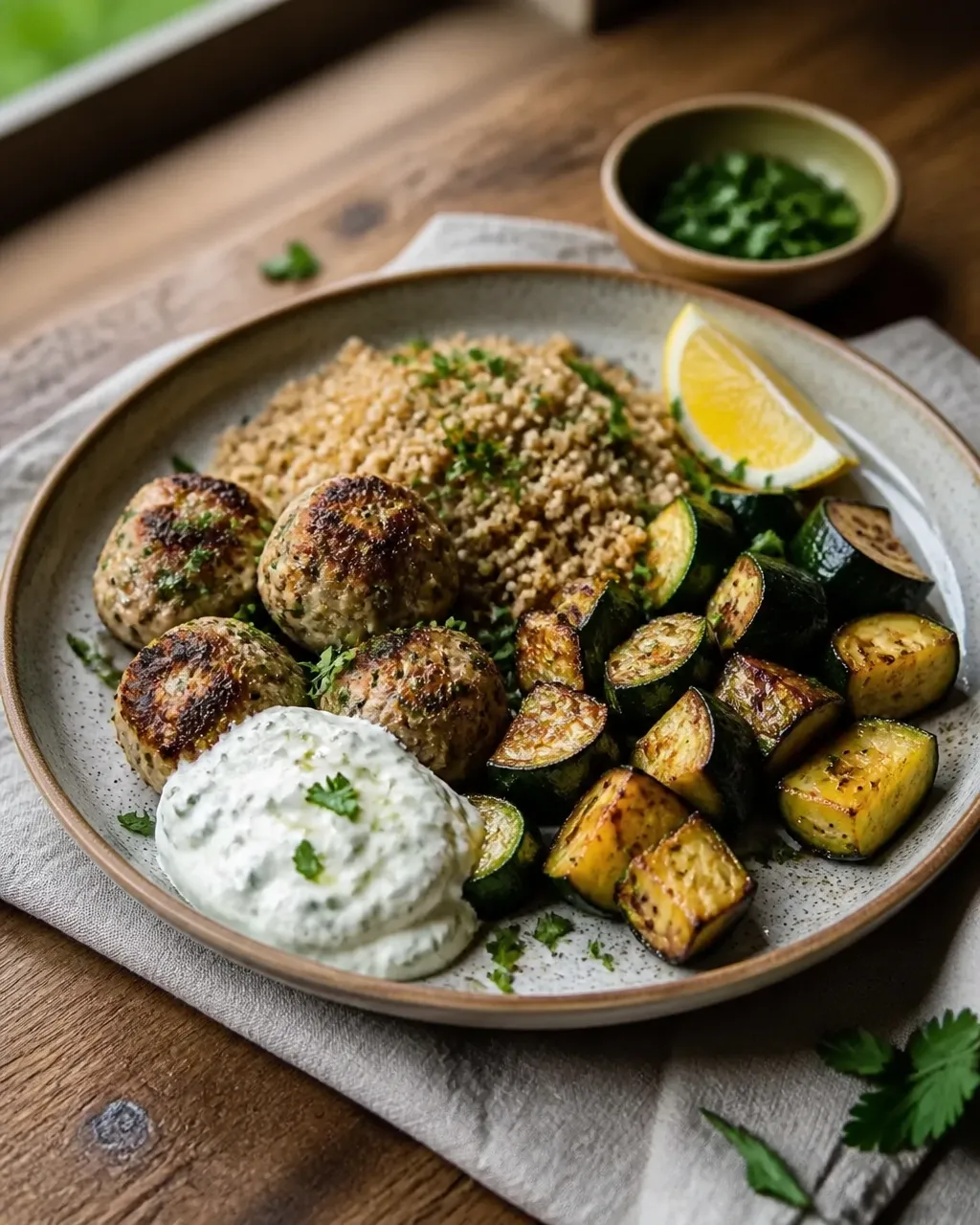
Choose quinoa, brown rice, or whole-wheat couscous when you need a more filling meal. Their mild flavor gives the garlic and herbs room to shine. For a lighter option, serve the meatballs with a crunchy salad dressed with lemon vinaigrette. The acidity and crisp texture make each bite feel fresher.
A small bowl of tzatziki or lemony Greek yogurt is another excellent match. Its coolness balances the roasted meatballs, while the tang keeps the plate from feeling heavy. Add warm pita if you are feeding a hungry family, or keep it simple with extra zucchini for one of those quick family meals that still feels properly dinner-like.
FAQ: What If the Meatballs or Zucchini Go Wrong?
What if my turkey meatballs are dry?
The most common causes are extra-lean turkey, overmixing, or cooking beyond 165°F. Use 93% lean turkey when possible, mix only until combined, and check the temperature early. Rest the meatballs for a few minutes after cooking so their juices settle.
If they are already dry, serve them with lemony yogurt, tomato sauce, or a spoonful of warm broth-based sauce. Moisture on the plate can rescue a dinner without requiring you to pretend the texture was intentional.
What if the mixture is too wet to shape?
Add a tablespoon of breadcrumbs or almond flour and wait two minutes. The binder needs a little time to absorb moisture. If the mixture is still loose, add another small spoonful rather than dumping in a large amount and creating dense meatballs.
Wet hands also help. Dip your fingers in cold water before shaping so the mixture does not cling to them like it has unfinished business.
What if the meatballs brown before they are cooked inside?
Lower the oven temperature slightly and continue cooking until the center reaches 165°F. You can also loosely cover the pan with foil if the outside is becoming too dark. Make smaller meatballs next time so the center cooks more quickly while the surface browns.
Avoid cutting every meatball open to check it. That releases moisture and makes it harder to judge the final texture. Use a thermometer instead.
What if the zucchini turns watery?
The pan was probably crowded, the pieces were too thin, or the zucchini was salted too far in advance. Salt draws water toward the surface, so season shortly before roasting. Spread the pieces out and use a second pan if needed.
You can also roast the zucchini for a few minutes before adding the meatballs. That gives the vegetables a head start on moisture evaporation and browning.
Can I prepare this dinner ahead of time?
Yes. Shape the meatballs up to one day ahead and refrigerate them in a covered container. Keep the zucchini separate and cut it shortly before roasting for the best texture.
Cooked meatballs and zucchini keep in the refrigerator for up to three days. Reheat gently in a covered skillet or microwave, adding a splash of water or broth to prevent the turkey from drying out. Store sauce separately when possible.
Can I freeze the meatballs?
Freeze the shaped, uncooked meatballs on a tray until firm, then transfer them to a freezer-safe container. Thaw them in the refrigerator before roasting so they cook evenly. You can also freeze cooked meatballs, but expect them to be slightly less tender after reheating.
Always check the center temperature rather than relying on the cooking time alone. That one small habit keeps weeknight cooking both simple and safe.