Recipe
Serves
4 1×
Serves 4Prep 15 minCook 43 minTotal 58 min
Ingredients
Method
- Heat the oven to 200°C fan or 220°C conventional . Line a large roasting tray with baking paper.
- Put the halved potatoes on the tray. Add the olive oil and season with salt and black pepper. Toss to coat, then arrange the potatoes cut-side down in a single layer.
- Roast the potatoes for 20 minutes. Meanwhile, whisk together the soy sauce, honey, rice vinegar, sesame oil, garlic and ginger in a small bowl.
- Remove the tray from the oven. Add the green beans, red pepper and red onion. Turn the vegetables through the oil on the tray and spread them around the potatoes. Roast for 8 minutes.
- Place the salmon fillets on the tray, leaving space between them. Spoon the honey soy mixture over the fillets. Return the tray to the oven and roast for 15 minutes, or until the salmon is thoroughly cooked. Check the thickest part of each fillet with a clean food thermometer.
- Scatter the spring onions and sesame seeds over the tray. Serve with lime wedges.
Honey Soy Glazed Salmon Traybake
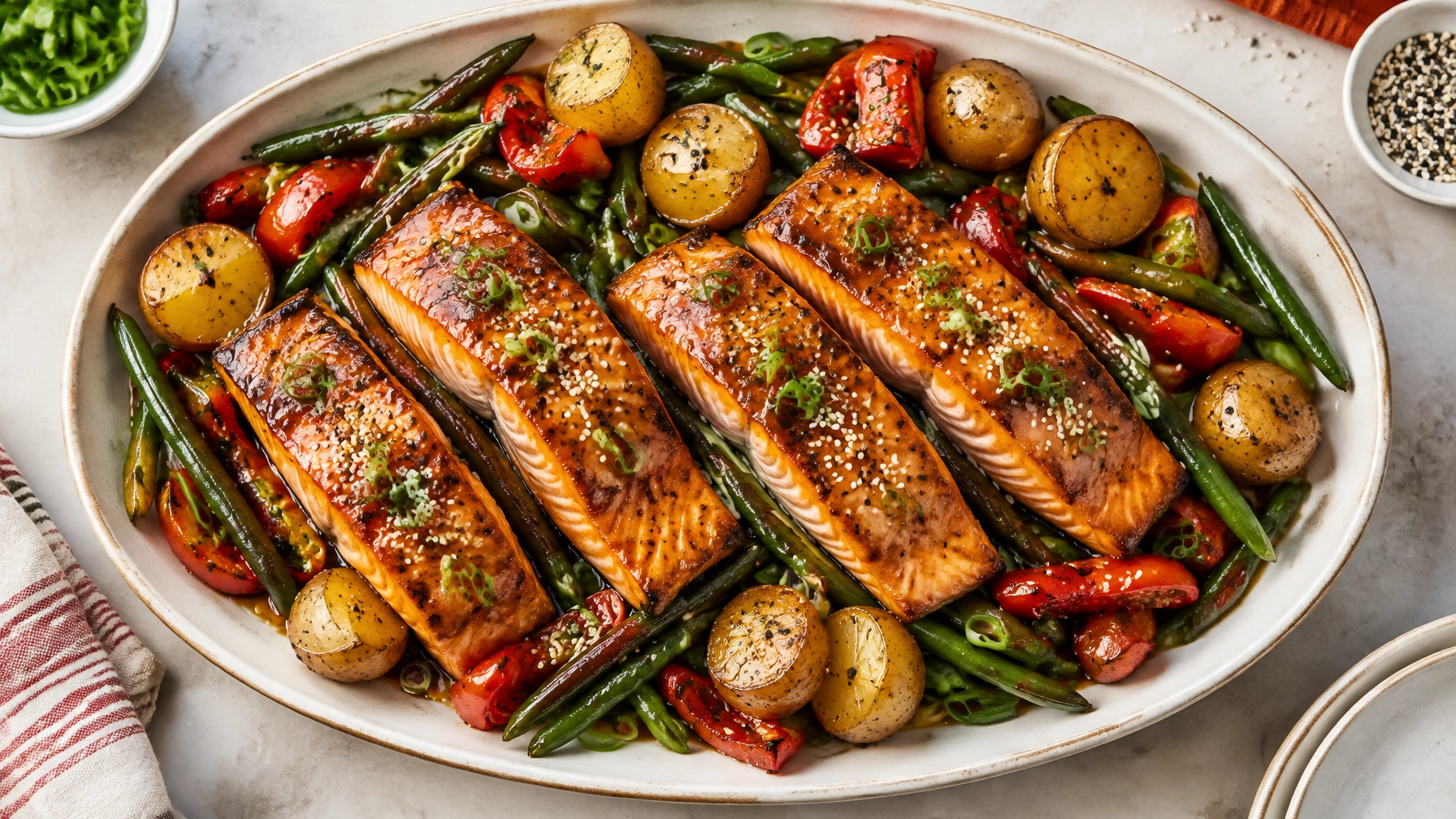
This honey soy glazed salmon traybake combines salmon fillets, baby potatoes and vegetables on one oven tray. A glaze of soy sauce, honey, garlic and ginger gives the fish a savoury-sweet finish. The ingredients are added in stages so the potatoes have time to soften before the salmon goes into the oven.
The method keeps washing up to a minimum and uses ingredients that are easy to find. Cut the potatoes into similar-sized pieces, spread the ingredients out in a single layer and check the thickest part of the salmon before serving. Fillets vary in thickness, so treat the cooking time as a guide and use the food-safety check in the method.
Traybake
Traybake (noun): a meal cooked on a shallow oven tray, with ingredients arranged in a single layer.
The order of cooking matters. Baby potatoes take longer than salmon, so they begin roasting first. Green beans, pepper and onion go onto the tray later, followed by the salmon and glaze. This staged approach helps the potatoes cook through without leaving the fish or vegetables in the oven for too long.
Use a tray large enough to hold the ingredients without crowding. When vegetables are packed tightly together, they release moisture and can steam rather than roast. If your tray is small, divide the ingredients between two trays and rotate their positions halfway through cooking.
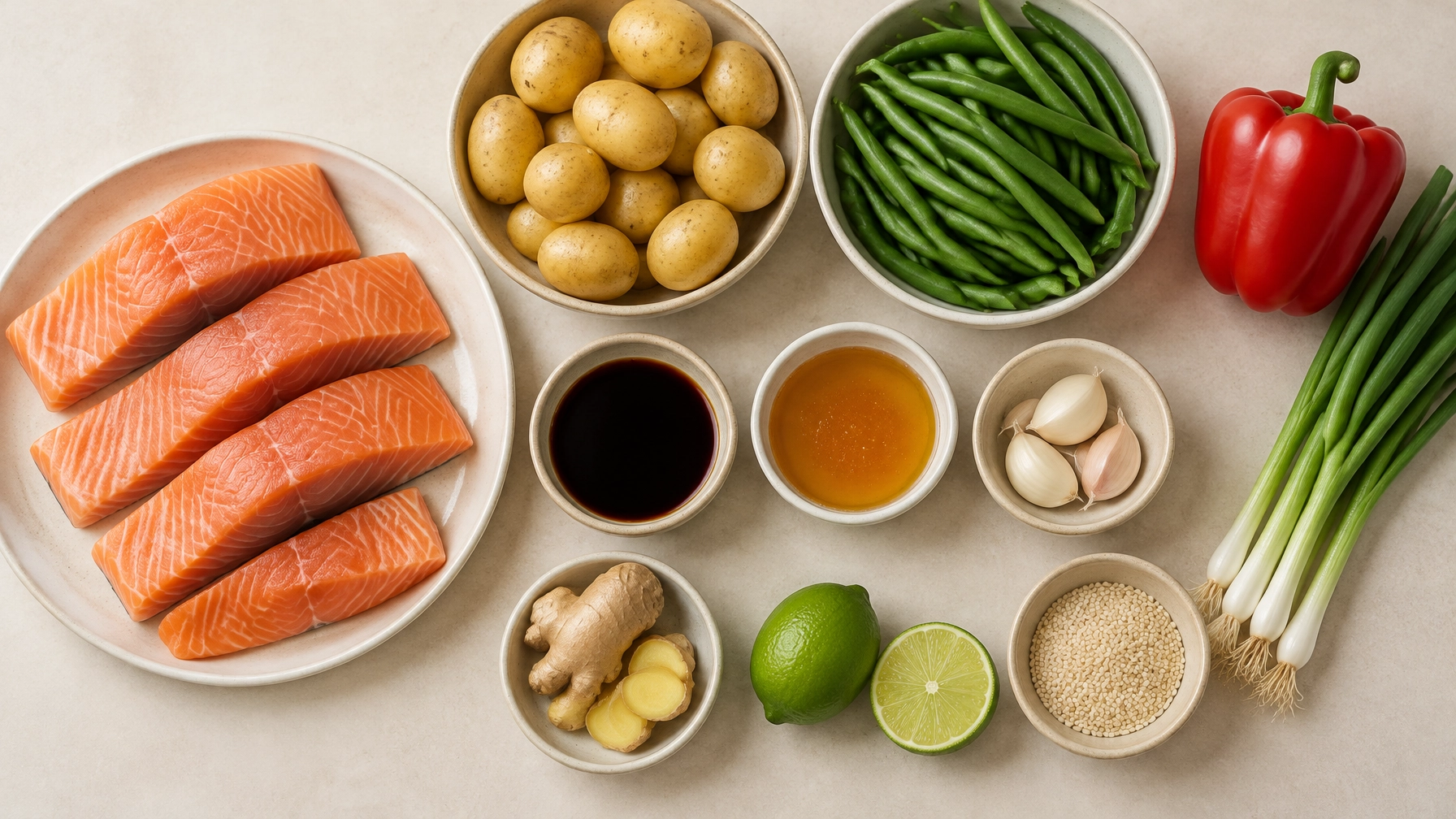
The glaze balances salty soy sauce with honey, rice vinegar, garlic and ginger. Reduced-salt soy sauce works well, though you may want to adjust the seasoning after tasting the glaze. The rice vinegar adds acidity to balance the honey; lime wedges provide a fresh, sharp finish at the table.
Timing
Prepare the glaze while the potatoes are in the oven. This keeps the steps moving in sequence and gives you time to trim the beans and slice the other vegetables. Keep the salmon chilled until you are ready to add it to the tray.
Pat the salmon dry before cooking. Excess moisture on the surface can dilute the glaze and make it run off the fillets. Place each fillet with a little space around it so heat can circulate. Spoon the glaze over the fish rather than pouring it across the entire tray.
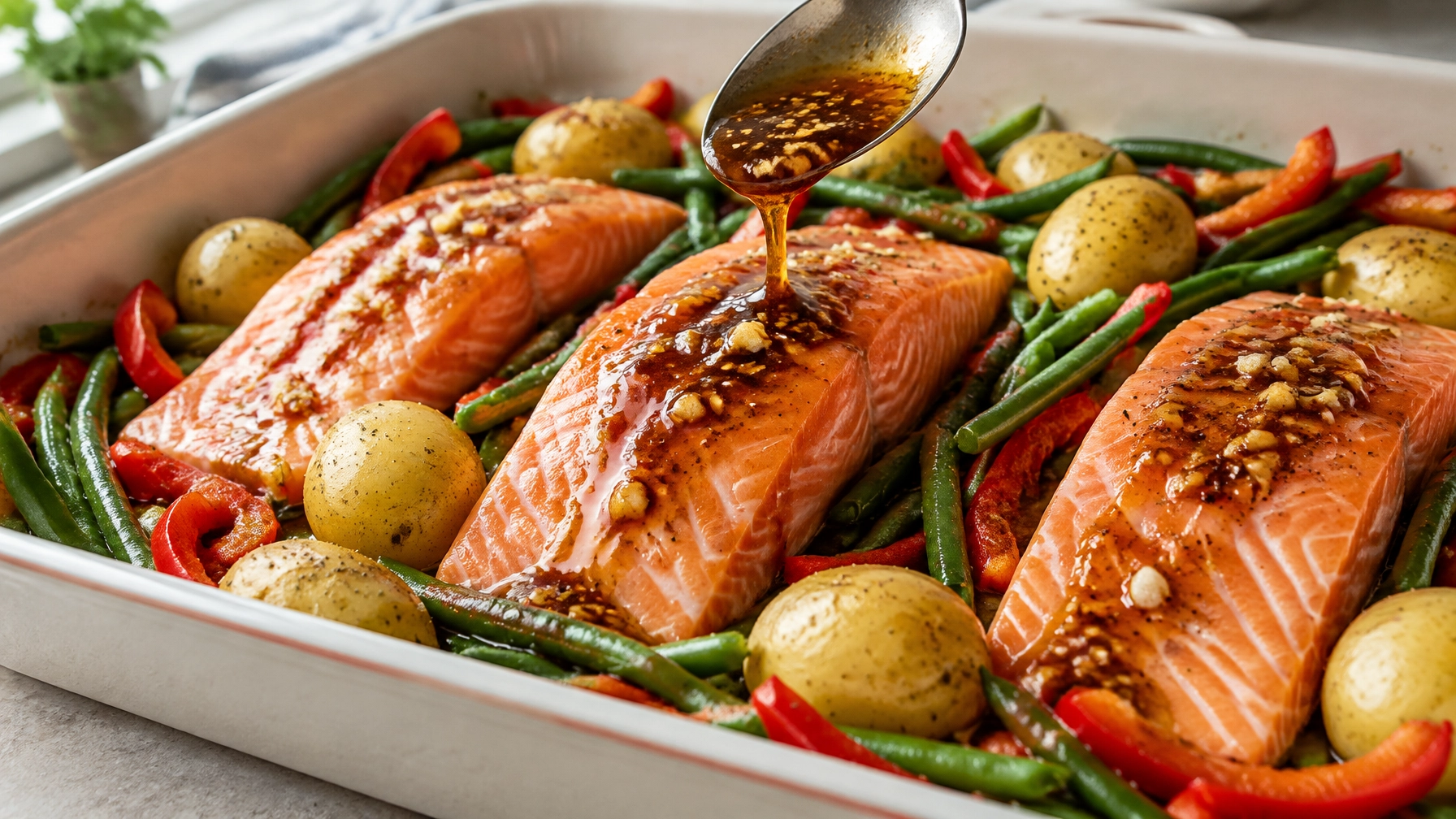
Honey can darken quickly in a hot oven. If the glaze starts to catch before the salmon is cooked, cover the fish loosely with baking paper or foil for the rest of the cooking time. Avoid adding extra glaze to the tray too early; the salmon receives it for the final part of roasting.
Safety
The Food Standards Agency advises that food should reach 70°C for 2 minutes, or an equivalent time-and-temperature combination, to be thoroughly cooked. Check the thickest part of each fillet with a clean food thermometer. Follow the FSA's cooking guidance.
If a fillet has not reached the recommended temperature, return the tray to the oven and check it again after a short interval. As a visual check, cooked salmon should be opaque and separate into flakes. A thermometer gives a more direct check than appearance alone, particularly when fillets vary in thickness.
Recipe
Servings
4
Prep time
15 minutes
Cook time
43 minutes
Total time
58 minutes
Tips
- Cut the potatoes into similar-sized pieces so they cook at the same rate. Halve smaller potatoes and quarter larger ones.
- Use a tray that gives the ingredients room. Divide them between two trays if necessary rather than piling them up.
- Keep most of the glaze on the salmon. Honey that pools on the baking paper can darken before the fish is ready.
- Cooking time depends on the thickness of the salmon. Check the fish rather than relying on the clock or colour alone.
- If using skin-on fillets, place them skin-side down on the tray.
- For easier serving, transfer a fillet and a portion of vegetables directly to each plate.
Variations
- Replace the red pepper with sliced courgette and add it to the tray with the green beans.
- Use small broccoli florets instead of green beans. Keep the pieces small so they cook in the same time.
- Add a pinch of chilli flakes to the glaze for heat.
- Use lemon wedges instead of lime if preferred.
- For a less sweet glaze, reduce the honey to 1 tablespoon and taste the mixture before using it.
- Add a handful of sliced spring onions after cooking for a sharper, fresher garnish.
FAQ
Can I cook the salmon from frozen?
This method is written for thawed fillets. Thaw frozen salmon safely before cooking, following the package instructions, and pat the surface dry before adding the glaze.
How can I tell when the salmon is cooked?
Check the thickest part with a clean food thermometer and follow the temperature guidance above. The flesh should also look opaque and separate into flakes.
Can I prepare the glaze in advance?
Yes. Mix the glaze ahead of time and keep it covered in the refrigerator. Stir it before use, and keep the salmon chilled until you are ready to cook.
Can I use a different kind of soy sauce?
Yes. Reduced-salt soy sauce can be used. As soy sauces vary in saltiness, taste the glaze before adding extra salt to the tray.
How should I store leftovers?
Refrigerate leftovers promptly in a covered container. Reheat until piping hot throughout and avoid reheating the same portion more than once.