Recipe
Servings
2–4 servings 1×
Serves 2–4Prep 10 minCook 20 minTotal 30 min
Ingredients
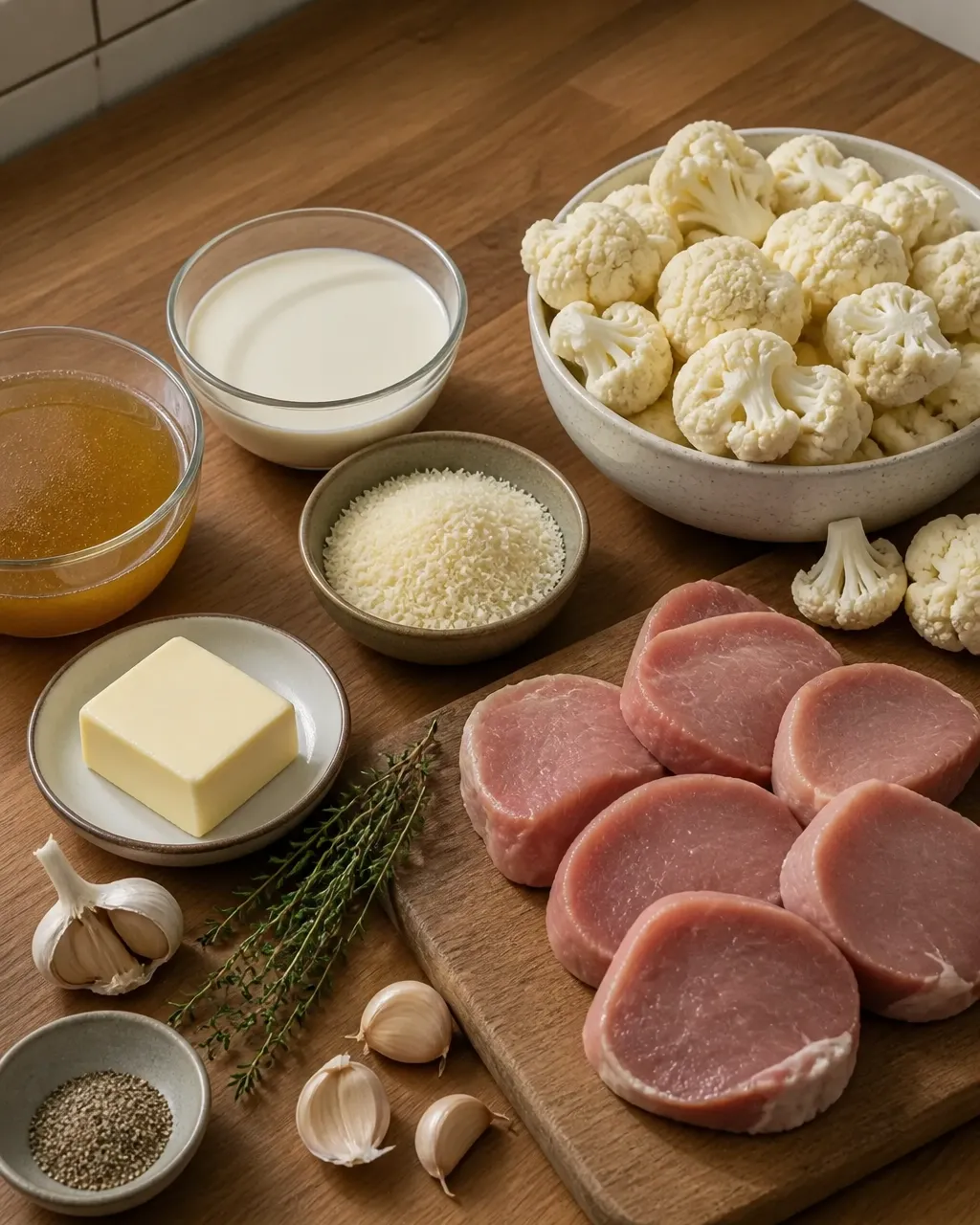
- 1 pound boneless pork chops or pork tenderloin, cut into bite-size pieces
- 1 tablespoon olive oil
- 4 cups cauliflower florets
- 3 garlic cloves, minced
- 1 cup low-sodium chicken broth
- 1/2 cup heavy cream
- 1/2 cup grated Parmesan
- 1 tablespoon chopped fresh parsley
- Salt and black pepper, to taste
Method
- Pat the pork dry and season with salt and pepper. Heat the oil in a large skillet over medium-high heat and sear the pork in a single layer until browned. Transfer it to a plate.
- Add the garlic to the skillet and cook briefly until fragrant. Pour in the broth and scrape up the browned bits from the bottom.
- Lower the heat and stir in the cream. Add the cauliflower, cover, and simmer gently for 8–10 minutes, until the florets are tender but still hold their shape.
- Stir in the Parmesan and simmer gently until the sauce thickens. Return the pork and its juices to the skillet and cook until the pork reaches 145°F (63°C).
- Finish with parsley, taste for salt and pepper, and let the pork rest briefly before serving.
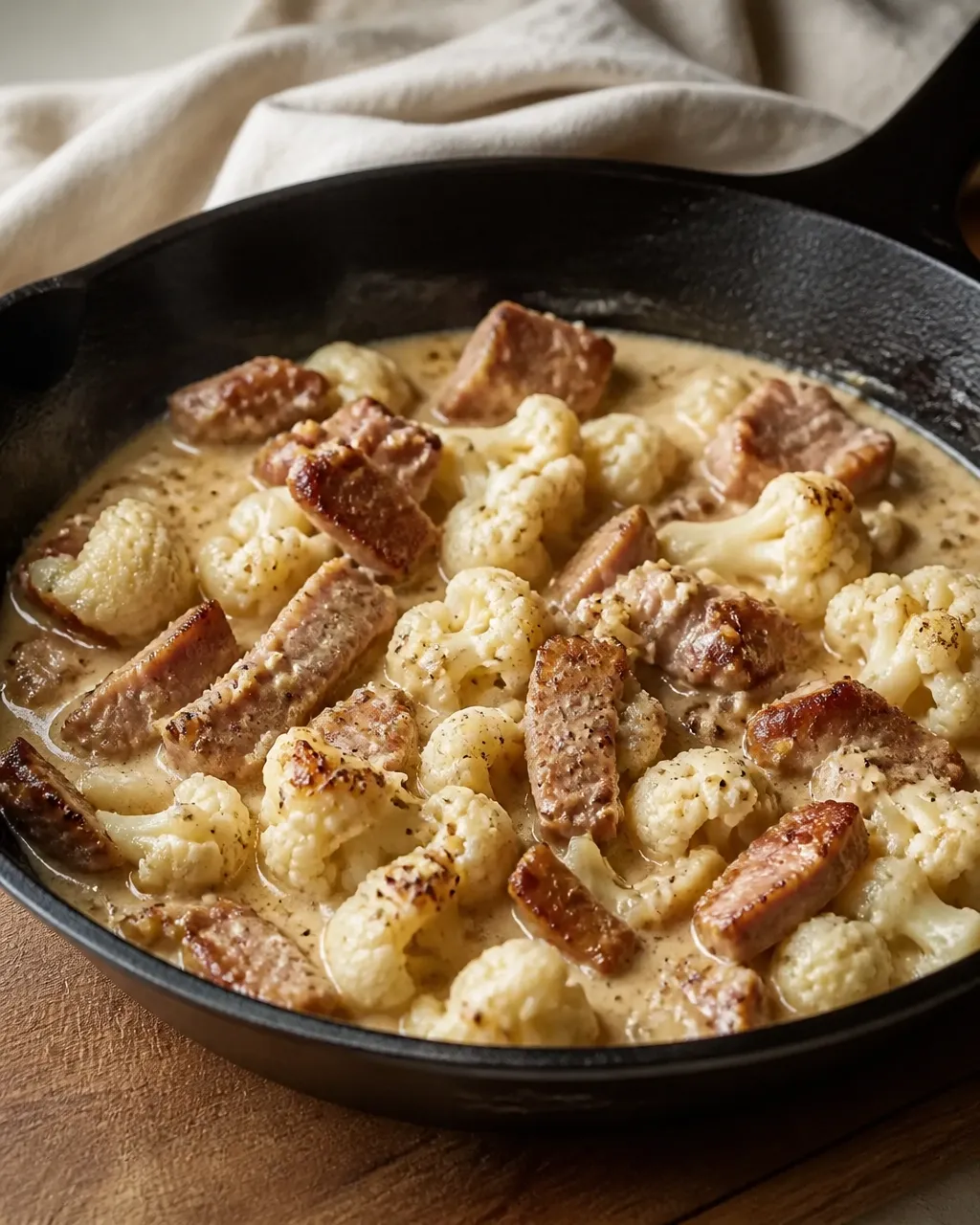
If you are new to keto cooking, start with a skillet. It keeps the ingredient list sensible, the washing-up civilized, and the flavor miles away from “diet food.” This creamy garlic pork and cauliflower skillet brings together browned pork, tender cauliflower, and a silky Parmesan sauce in one pan. It is rich, comforting, and practical enough for a Tuesday night when everyone is hungry now.
Recipe at a glance: Serves 2–4 | One skillet | About 30 minutes | Low-carb and keto-friendly
For more simple ideas, browse Cookpedia’s healthy recipes, 30-minute meals, and one-pot meals.
Tips & Technique: Make the Skillet Work Smarter
Build flavor with proper browning
Do not toss the pork into a cold, crowded pan and hope for a miracle. Heat the skillet first, pat the pork dry, and give each piece enough room to make contact with the surface.
That contact triggers the Maillard reaction, the browning process that creates hundreds of savory flavor compounds. It is not the same as simple caramelization, and it is the reason a well-seared piece of pork tastes deeper and more satisfying than pale, gently steamed meat.
Use medium-high heat and leave the pork alone long enough to develop a golden-brown crust. Constant flipping is not multitasking; it is mostly interrupting the browning. Once the pork is colored, move it to a plate while you make the sauce. This prevents the lean meat from overcooking while the cauliflower softens.
Turn browned bits into instant flavor
Look at the bottom of the skillet before cleaning it. Those brown patches are called fond, and they are concentrated pork flavor waiting for a liquid rescue.
Add broth and scrape the surface with a wooden spoon. The liquid loosens the fond and carries it into the sauce. This is deglazing, and it is one of the easiest ways to make a weeknight dinner taste as if you planned ahead.
Avoid adding cold cream directly to an aggressively hot, dry pan. Let the broth loosen the browned bits first, then lower the heat before the dairy arrives. Your sauce will be smoother, and your skillet will be less likely to stage a dramatic separation.
Keep cream sauces gentle
Heavy cream thickens mainly through reduction: water evaporates while the fat remains, giving you a richer texture. Parmesan helps further by adding protein and salt, creating body without flour or cornstarch.
The non-negotiable rule is this: simmer gently, never boil violently. High heat can cause dairy sauces to split, especially when cheese is involved. A gentle simmer gives the cream time to reduce and the Parmesan time to melt into the liquid.
Add the cheese gradually and stir until it disappears into the sauce. If the mixture becomes too thick, loosen it with a small splash of broth. If it is too thin, give it another minute or two over low heat. Sauce thickening continues slightly as it cools, so stop before it reaches the texture of wall plaster.
Give cauliflower the right amount of moisture
Cauliflower is an excellent low-carb substitute for rice or potatoes, but it is not indestructible. Its cell walls soften as heat and moisture break down the vegetable’s structure. Cook it too briefly and it remains hard; cook it too long and it turns into creamy rubble.
Cut the florets into reasonably similar sizes, but do not chase perfection. Home cooking is not a geometry exam. Small florets absorb more sauce and cook faster, while larger pieces retain a pleasant bite.
Let the cauliflower simmer directly in the garlic cream sauce. This does two jobs at once: it tenderizes the vegetable and infuses it with flavor. Check it with a fork and stop when it is tender but still holds its shape.
Finish the pork without drying it out
Return the pork to the skillet only after the cauliflower and sauce are nearly ready. The pork will finish cooking in the gentle heat while its juices mingle with the sauce.
Use an instant-read thermometer rather than guessing by appearance. Pork is safely cooked at 145°F in the thickest part, followed by a short rest. The thermometer is especially useful for beginners because it replaces nervous slicing with actual information. Every cut and skillet behaves a little differently; data wins.
Taste the sauce at the end, not just at the beginning. Reduction concentrates salt, garlic, and Parmesan, so seasoning that seemed mild early on may become plenty later. Add black pepper, herbs, or salt in small amounts and reassess.
Variations: Keep the Same Cooking Logic
The basic structure is flexible: brown the protein, build a fond-based sauce, cook the vegetable in that sauce, and finish everything together. Change the accents without abandoning the method.
For a sharper version, stir in a small amount of Dijon mustard before returning the pork. Mustard adds acidity and gentle heat, which keeps the cream from tasting heavy. A squeeze of lemon at the very end works similarly, but use it sparingly so the sauce stays creamy.
Add thyme for an earthy, classic flavor or rosemary for something more assertive. If you like heat, use red pepper flakes with the garlic. Smoked paprika will push the dish in a warmer, barbecue-adjacent direction without adding sugar.
Swap pork medallions for boneless pork chops, but adjust the cooking time according to thickness. Chicken thighs can also work, although they need to reach a different safe internal temperature. For a meat-free variation, use thick slices of portobello mushroom and add extra cauliflower; brown the mushrooms well so they develop enough savory depth.
Want more vegetables? Add a small handful of spinach near the end and let it wilt into the sauce. Broccoli works too, though it brings a stronger flavor and may need a little extra simmering time.
If you are comparing this with air fryer recipes dinner ideas, remember that the air fryer is excellent for crisping pork, but this skillet is better when your priority is a cohesive creamy sauce.
Side Dish Pairings: Add Contrast, Not More Heaviness
This skillet is rich, so pair it with something fresh, crisp, or acidic. A simple green salad with a sharp vinaigrette is the easiest answer. Vinegar cuts through the cream and refreshes your palate between bites.
Roasted asparagus, green beans, or broccolini add texture without competing with the garlic. Keep the vegetables lightly seasoned; the skillet already has plenty of personality.
For extra brightness, serve lemon wedges at the table. A small squeeze over the pork wakes up the sauce immediately. Pickled radishes or cucumbers also work beautifully because their acidity and crunch balance the soft, savory skillet.
If you are feeding a larger group, keep portions sensible and add a vegetable side rather than a starchy filler. That is the useful trick behind many quick family meals: make the main dish satisfying, then use contrast to make the plate feel complete.
FAQ: Beginner Questions, Solved
Can I use cauliflower rice instead of florets?
Yes, but watch it closely. Cauliflower rice has much more surface area, so it cooks faster and releases moisture more quickly. Add it later and simmer only until tender. If it cooks too long, the sauce can become watery and the texture mushy.
Why did my cream sauce split?
The usual culprit is excessive heat. Boiling cream with cheese can force the fat and water apart. Lower the heat, use a gentle simmer, and add Parmesan gradually. If the sauce has only just started separating, remove the skillet from the heat and whisk in a small splash of warm broth.
What if my sauce is too thin?
Let it reduce uncovered over low heat for a few minutes. Stir occasionally and remember that Parmesan thickens as it melts. Avoid adding a large amount of cheese all at once; that can make the sauce salty and grainy rather than smooth.
What if the sauce is too thick?
Add broth one tablespoon at a time and stir until the sauce loosens. Do not add cold water if you can avoid it, because it dulls the flavor and can cool the sauce unevenly. Warm broth keeps the emulsion more stable.
Can I prepare this ahead of time?
You can, but creamy sauces are best shortly after cooking. If you refrigerate leftovers, cool them promptly and store them in a covered container. Reheat gently over low heat with a splash of broth. High microwave heat may dry the pork and split the sauce.
How do I know when the pork is done?
Check the thickest part with an instant-read thermometer. Aim for 145°F, then let the pork rest briefly. Do not rely on the color of the center alone; pork can remain slightly pink when safely cooked, and browned meat can still be underdone.
Is this automatically a healthy dinner?
“Keto” and “healthy” are not magic stamps. This skillet provides protein, cauliflower, and a filling sauce, but portion size and your overall eating pattern still matter. If you are collecting healthy dinner ideas, focus on variety, vegetables, and the amount that satisfies you: not just whether a recipe fits one dietary label.
Can I freeze the leftovers?
Freezing is not ideal because cream sauces may separate when thawed, while cauliflower can become soft. Refrigerate leftovers for better texture, and reheat them slowly. If you do freeze a portion, expect the sauce to need vigorous stirring and a little broth when reheated.